Sight in Kruger National Park
Masorini Archaeological Site
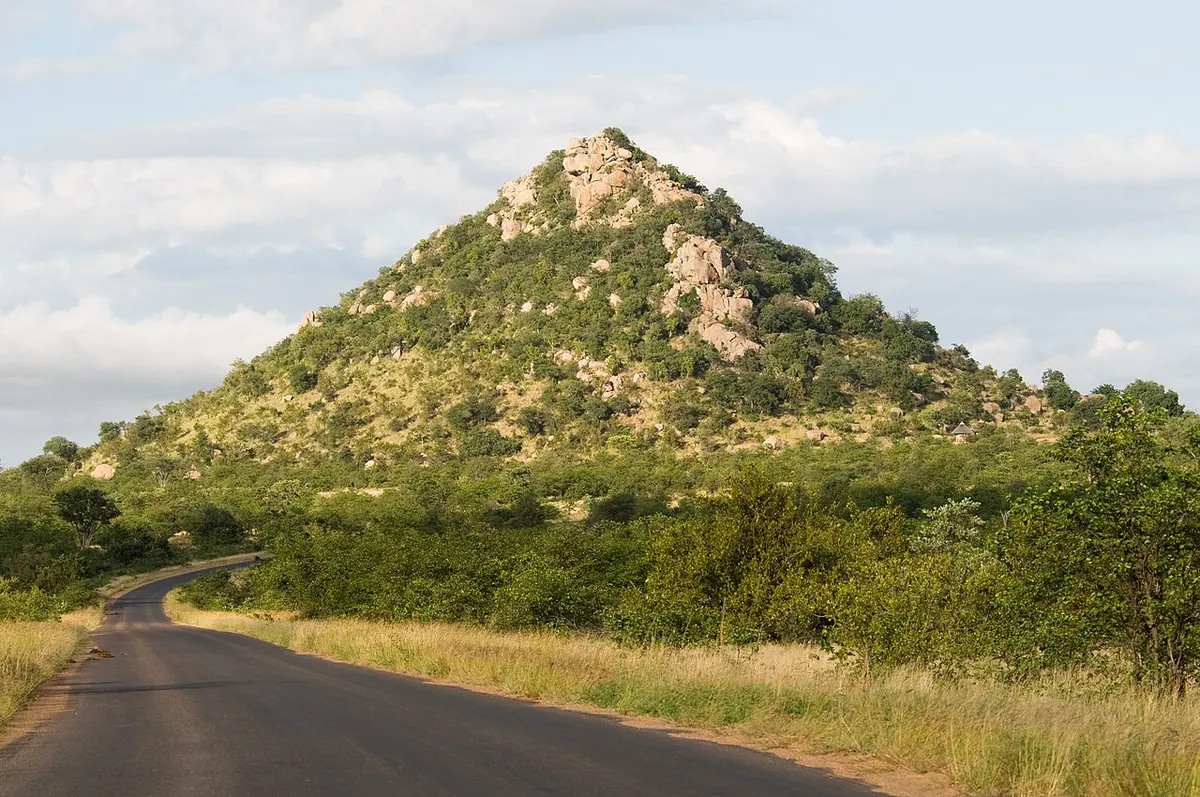
A reconstructed BaPhalaborwa iron-smelting village on a hill near Phalaborwa Gate, with a small site museum, picnic spot and guided walks to the top.
.jpg)
Masorini is an Iron Age hill village just inside Kruger’s Phalaborwa Gate, rebuilt so visitors can see how the BaPhalaborwa people mined, smelted and traded iron. It sits beside the tar road to Letaba, which makes it one of the few places in the park where you can leave the car and learn something about the people who lived here before it was a reserve. It fits neatly into the drive to Letaba.
What to expect
At the foot of the hill are a small site museum and a picnic area. From there a guide leads you up to the reconstructed huts and furnaces. Smelting happened in dome-shaped clay furnaces fed by clay pipes and skin bellows, and the resulting iron was beaten into spearheads, arrowheads and hoes. The huts were rebuilt on their original floors, with low doorways that make you stoop, a defensive design. Guides also explain why women were kept away from the smelting area. The people of Masorini traded their metalwork with the Venda to the north and with Portuguese traders on the coast.
Practical details
- Location: on the road from Phalaborwa Gate to Letaba, about 11 km to 12 km from the gate and roughly 40 km from Letaba.
- The hilltop is visited with a guide.
- Phalaborwa Gate is the closest entrance.
Good to know
Sources date occupation differently: one guide puts Northern Sotho smelters here from about 1300 to the late 1800s, while others focus on the 1800s. Restoration began in 1973, and local BaPhalaborwa community members have since renovated the huts. Tour times can change, so ask at Phalaborwa Gate before you set off.
Park fees
Masorini Archaeological Site is inside Kruger National Park. International visitors pay from R602 a day. See all Kruger National Park fees
Nearby in Kruger National Park
- 44.4 KM
- 49.6 KM
- 91.8 KM
- Rhino Post Plains Camp112.9 KMCampsite
- 118.3 KM
- 123.5 KM