City · Gauteng, South Africa
Krugersdorp
Short answer
Krugersdorp is in Gauteng, South Africa. This page lists 9 places to stay, 11 places to eat and drink, 15 sights and 5 hiking trails. The nearest park with an entry fee on this site is Kgaswane Mountain Nature Reserve, about 73 km away, where international adults pay from R275.

- Places to stay
- 9
- Eat and drink
- 11
- Sights
- 15
- Park fee nearby: Kgaswane Mountain Nature Reserve
- US$16 €14 · R275about 73 km away
In and around Krugersdorp
40 places listedWhere to stay in Krugersdorp 9
- 25.97°S 27.84°EHotel26 Degrees South+27 00 000 000026dsouth.co.za
- 25.98°S 27.84°EHotelGlenburn LodgeMuldersdrift
- 26.08°S 27.71°ECampsiteKrugersdorp Game ReserveKrugersdorp
- 26.02°S 27.78°EHotelForum Homini
- 26.09°S 27.72°EHotelGoldn Sands Lodge
- 25.96°S 27.78°EChaletGuest accommodation
- 25.98°S 27.79°EHotelKenjara Lodge
- 25.96°S 27.77°EChaletLog Cabins
- 26.09°S 27.70°EHotelMogale Country Lodge
Sights 15
 Bothongo WonderCaveCave+27 11 957 0349rhinolion.co.za
 KromdraaiArchaeological site+27 14 577 9000maropeng.co.za
 SterkfonteinAttractionwhc.unesco.org
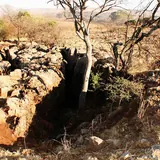 Cooper's CaveCave
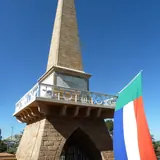 Paardekraal MonumentMonument
- Sterkfontein CavesMuseumgauteng.net
- JacoAttraction · The Avenue
- Animal crecheZoo
- BlokhuisMonument
- Christine’s CaveCave
- Fault CaveCave
- Glover’s CaveCave
Show all 15 sights
- Kings Kloof Natural Heritage · Archaeological site
- Makiti - Wedding and Function Venue · Attraction
- Vulture Hide · Viewpoint
Hiking trails 5
- Blue RouteHiking trail · 9.7 km · Easy
- Green RouteHiking trail · 4.7 km · Easy
- Red RouteHiking trail · 14.2 km · Easy
- Kings Kloof Hiking TrailHiking trail · 2.6 km
- Kings Kloof Hiking TrailsHiking trail · 30.6 km
Restaurants and cafes 10
- Eagle's FareRestaurant+27 82 671 8382eaglesfare.co.za
- Neck & DeckRestaurant · Kromdraai Road+27 11 957 0349rhinolion.co.za
- Bootlegger Coffee CompanyCafe · coffee shopbootlegger.coffee
- Super Save SupermarketCafe · regional
- Hennie's KrugersdorpRestaurant · pub, lunch
- Rhino & Lion ParkRestaurant · steak house
- Vat n BikiRestaurant
- NandosRestaurant
- The Thatch CafeCafe
- DebonairsRestaurant · pizza
Bars and pubs 1
- Coco PalmBar
History and culture
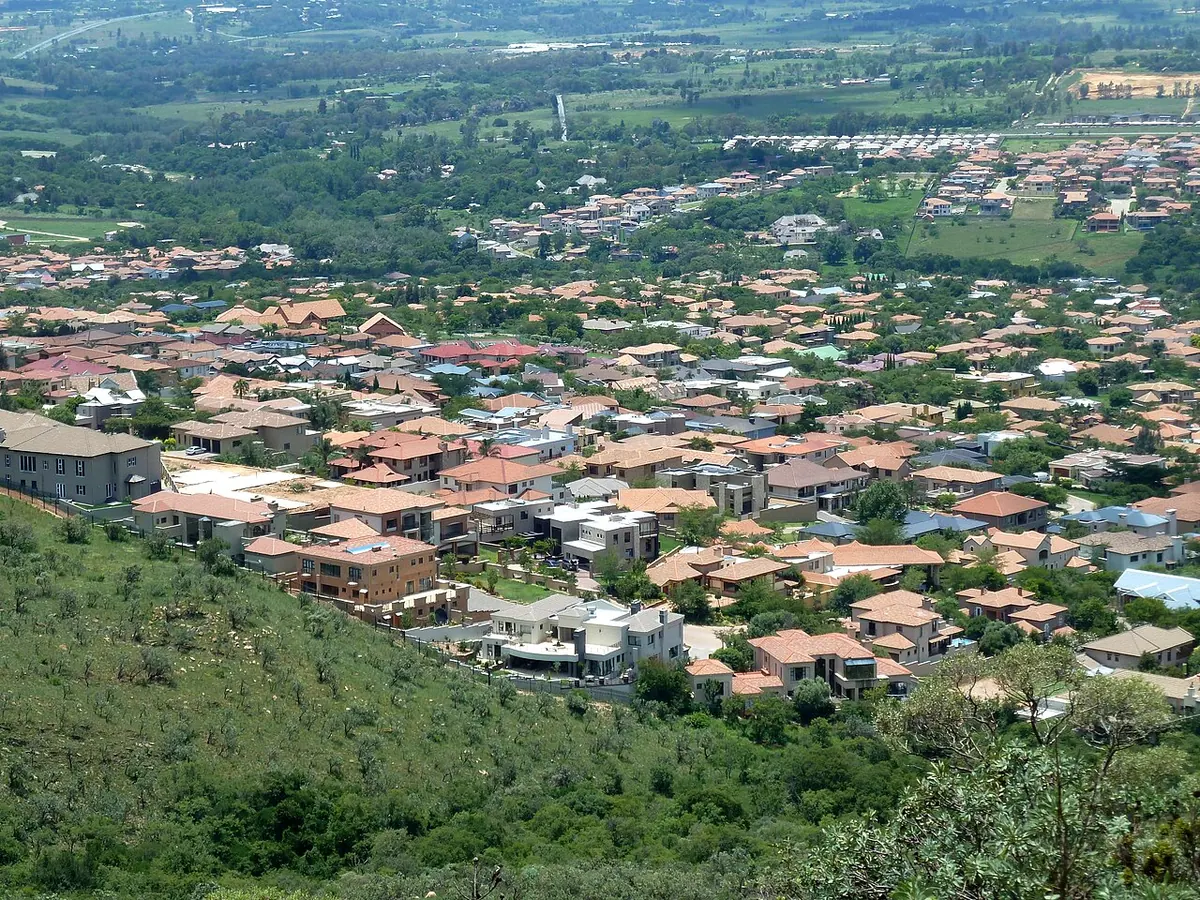
Krugersdorp is a gold rush town on the West Rand, west of Johannesburg, and today the seat of Mogale City municipality. Most visitors pass through on the way to the Sterkfontein Caves and the Cradle of Humankind, but the town itself has a big place in Afrikaner history, and it is where Desmond Tutu once taught.
- December 1880
Between 6,000 and 8,000 Boer burghers (citizens of the Transvaal republic, mostly farmers of Dutch descent) met at Paardekraal on the call of Paul Kruger and pledged to win back the republic's independence, three years after Britain annexed it in 1877. They piled stones into a cairn to mark the vow. The First Anglo-Boer War followed, and the Boers won it at Majuba on 27 February 1881. source
- 1887
After gold was found on the Witwatersrand in 1886, the Transvaal government bought part of the farm Paardekraal in April 1887 and laid out a new town, named after President Paul Kruger. It was proclaimed a separate gold field in 1888. source
- 2 January 1896
The Jameson Raid, an armed raid meant to topple Kruger's government, was met by a small Boer force at Krugersdorp on 1 January and ended next morning at Doornkop nearby. The raiders lost around thirty men before Leander Starr Jameson surrendered to Commandant Piet Cronje. source
- 1899 to 1902
During the South African War (the Second Anglo-Boer War), the British army held civilians in concentration camps in the valley now under the Centenary Dam, with a camp for Boer families and a separate camp for Black people. source
- 1905 and 1911
Munsieville was gazetted in 1905 as a "native location" (a segregated area where Black workers had to live) north-west of town, and formally set up in 1911. It took its present name in 1941, after the chief sanitary inspector, James Munsie. source
- 1980s
In the 1980s the apartheid government planned to demolish Munsieville, because it sat close to white suburbs, and move its people to Kagiso. Munsieville was one of only two Black townships in the Transvaal that resisted relocation in that period, and it is still there. source
- Language
- In the 2011 census Afrikaans was the most common first language in Krugersdorp itself (42%), followed by English (19.5%) and Setswana (14.5%), with isiZulu, isiXhosa, Sesotho and others making up the rest. source
- Townships
- Kagiso, the largest township, was started in 1920 by former mineworkers and squatters from nearby Luipaardsvlei. Its name means "peace" in Setswana. source
For American visitors: The Jameson Raid that ended at Doornkop was meant to back an uprising by Johannesburg's Reform Committee, and one of its leaders was the American mining engineer John Hays Hammond, who ran Cecil Rhodes's mines. He was sentenced to death for high treason, the sentence was commuted, and he was released in 1896 after paying a heavy fine, then went home to the United States. source
For German visitors: After the raid's defeat at Doornkop, Kaiser Wilhelm II sent Paul Kruger the famous Kruger telegram congratulating him on beating off the raiders "without the help of friendly powers". It was read in Britain as an offer of German support for the Boers and caused a storm of anti-German feeling there. source
Main sights in Krugersdorp
4- Paardekraal Monument
The stone monument on Market Street, designed by the Transvaal state architect Sytze Wierda, was built in 1890 over the spot where the 1880 cairn of pledge stones stood and unveiled by Paul Kruger on 16 December 1891. British troops removed the stones in 1901 and threw them into the Vaal River. It was declared a national monument in 1936.
South African History Online: Paardekraal Monument, Market Street, Krugersdorp - Sterkfontein Caves
The best known fossil cave in the Cradle of Humankind, where Robert Broom found the skull nicknamed Mrs Ples in 1947 and Ron Clarke's team found the near complete Little Foot skeleton in 1997. The caves were closed in 2024 after flooding and reopened to visitors on 15 April 2025, so check before you go.
Wikipedia: Sterkfontein - Maropeng Visitor Centre
The official visitor centre of the Cradle of Humankind World Heritage Site, with exhibitions on human evolution. The name means "returning to the place of origin" in Setswana.
Maropeng (official site) - Bothongo WonderCave
South Africa's third largest cave chamber after the Cango and Sudwala caves, reached by 87 steps and then a lift, about 40 metres down in all. Italian miners found it in 1898 and took out about 15% of its calcite formations, burnt to powder for cement, before mining stopped in 1902.
Rhino and Lion Park: WonderCave visitors guide
Did you know?
- In 1952 the West Rand Consolidated Mine at Krugersdorp became the first mine in the world to extract uranium as a byproduct of refining gold. source
- Desmond Tutu, later Archbishop and Nobel Peace Prize winner, taught English and history at Krugersdorp High School from 1955. His parents had moved to Munsieville while he was still at school. source
- The first fossil of Paranthropus robustus, a heavy-jawed early human relative, was found at Kromdraai just north of town in June 1938 by a local schoolboy, Gert Terblanche. It reached the palaeontologist Robert Broom, who went on to dig there. source
- The Cradle of Humankind, the fossil landscape that begins just north of Krugersdorp, was made a UNESCO World Heritage Site in 1999 and covers about 47,000 hectares. source
Checked 7 October 2026.
Map of Krugersdorp
See every place on this map as a list