City · Eastern Cape, South Africa
KuGompo City
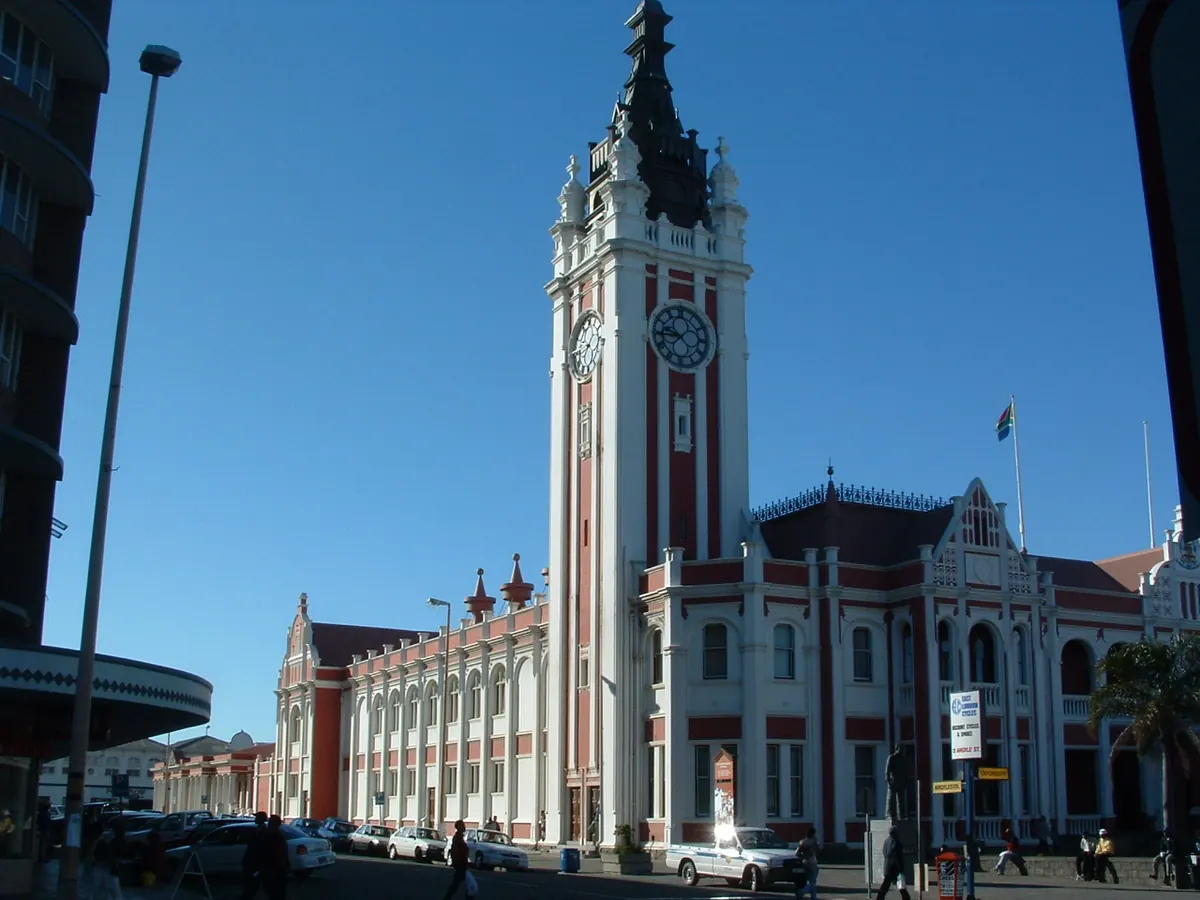
The Eastern Cape port city long known as East London, now KuGompo City, with surf beaches, the museum that holds the 1938 coelacanth and the road onto the Wild Coast.
Short answer
KuGompo City is in Eastern Cape, South Africa. This page lists 24 places to stay, 29 places to eat and drink and 15 sights.

- Places to stay
- 24
- Eat and drink
- 29
- Sights
- 15
- Where
- Eastern Cape, South Africa33.02°S 27.90°E
In and around KuGompo City
68 places listedWhere to stay in KuGompo City 24
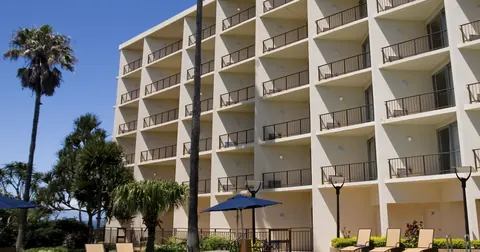 HotelGarden Court East LondonJohn Bailie Road, East London+27 43 722 7260southernsun.com
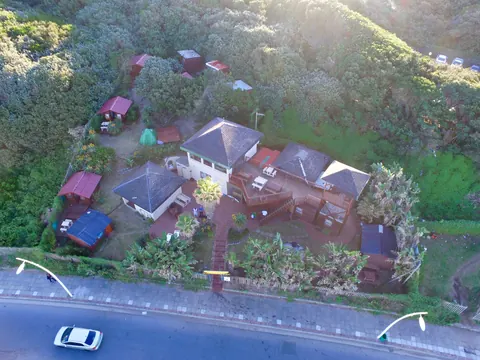 HostelSugarshackEastern Esplanade, KuGompo City+27 74 890 8405sugarshack.co.za
- 33.02°S 27.92°EHotelPremier Hotel RegentEsplanade Street, KuGompo City
- 32.98°S 27.95°EGuest houseSounds of the SeaBlue Bend Place, KuGompo City+27 82 320 1325soundsofthesea.co.za
- 33.00°S 27.93°EGuest houseHathaway HouseTurnberry Avenue+27 43 735 2696hathaway.co.za
- 33.02°S 27.92°EHotelKennaway HotelEsplanade Street, KuGompo Citykatleisure.co.za
- 32.98°S 27.92°EGuest houseTu CasaAscot Road+27 82 061 9117eastlondon-stay.co.za
- 32.99°S 27.90°EHotelLuneburgh CottagesWestern Avenueluneburgh.co.za
- 33.00°S 27.92°EGuest houseSee More Guest HouseMontrose Avenue
Show all 24 places to stay
- Palmieros guest house · Guest house · Epsom Road+27 43 735 3394
- Santa Paloma Guest Farm · Hostelsantapaloma.co.za
- Angle Court Residence · Hostel · Fleet Street, East London
- Hotel Osner · Hotel · Court Crescent, KuGompo City
- Majestic Boutique Hotel · Hotel · KuGompo City
- Oasis · Guest house · Gately Street, KuGompo City
- Blue Lagoon · Hotel
- Buffalo Backpackers · Hostel
- Ebenhaeser · Guest house
- Marsha’s house · Chalet
- Nahoon Camp Site · Caravan park
- Nahoon Eco Lodge · Guest house
- Nature's Rest · Campsite
- Sunrise Inn · Guest house
- Road Lodge · Motel
Sights 15
 East London AquariumZoo · Esplanade Street, KuGompo Citykugompocity.co.za
 Queens Park Zoological GardensZoo · KuGompo City
- Bat's CaveCave
- East London MuseumMuseum · Oxford Street, KuGompo Cityelmuseum.za.org
- Gately House MuseumMuseum · KuGompo City
- Orient BeachBeach
- The Cenotaph East LondonMemorial
- Thornycroft RoadAttraction · Thornycroft Road
- Cambridge CenotaphMemorial
- German Settlers MemorialMemorial
- John Bailie MemorialMemorial
- Kimmerling PlaqueMonument
Show all 15 sights
- Nahoon Nature Wal Viewsite Picnic table Upper · Viewpoint
- Paradise Naturist Beach · Beach
- Washed out bridge · Ruins
Restaurants and cafes 23
- FootprintsRestaurant · regional · KuGompo City
- GINGER&CoRestaurant · breakfast, cake, coffee shop, deli · Frere Road, KuGompo City
- ChatterboxCafe · Tecoma Street, East London
- Friesland Milk BarCafe · Tennyson Street
- GraziaRestaurant
- Guido's Family RestaurantRestaurant · KuGompo City
- Pla's Thai RestaurantRestaurant · thai
- SanookRestaurant · burger
- Cafe NeoRestaurant
- DulcéCafe
- Promenade CafeCafe
- SunsetRestaurant
Show all 23 restaurants and cafes
- The Beach Break · Cafe
- The Reef Café · Cafe
- Nando's · Restaurant · chicken, portuguese · Oxford Street, KuGompo City+27 43 722 7801nandos.co.za
- Mugg & Bean · Cafe · coffee shop · KuGompo City
- Nando's · Restaurant · chicken, portuguese · KuGompo City
- Engen Truck Stop · Restaurant · Settlers Way, KuGompo City
- Ocean Basket · Restaurant · seafood
- Wimpy · Restaurant · burger, breakfast
- Silver Eagle Spur · Restaurant
- Silver Eagle Spur · Restaurant
- Steers · Restaurant
Bars and pubs 6
- BuccaneersPub · Tram Track, KuGompo City+27 43 743 5171facebook.com
- Zaza Beach ClubPub · Esplanade Street, KuGompo City+27 66 176 0493
- Green DoorPub · KuGompo City
- CatzBar
- East London Surf Lifesaving ClubPub
- ShootersPub
Since February 2026, KuGompo City has been the official name of East London, the port city at the mouth of the Buffalo River in the Eastern Cape. The name comes from the sound of waves breaking on Gompo Rock, a site sacred to the Xhosa. It is a working city built around the country’s only river port, not a resort. Travellers mostly pass through on the way to the Wild Coast, but the beaches and one famous fish make it worth a night.
Getting there
King Phalo Airport has flights from Cape Town, Johannesburg and Durban. By road the N2 runs west to Gqeberha and Cape Town, and north east through Mthatha to Durban, roughly 676 km. The N6 heads inland to Bloemfontein. Johannesburg is about 982 km by road and Cape Town about 1,100 km. Shosholoza Meyl long distance trains and Translux and Greyhound coaches also serve the city.
When to go
The climate is oceanic and mild, with spring and autumn the wettest times of year. Summer is the obvious time for the beaches.
What to do
The East London Museum on Oxford Street is the one place everyone should see. It holds the coelacanth, a fish thought to be long extinct until a live one was caught off the nearby Chalumna River in 1938 and recognised by the museum’s curator, Marjorie Courtenay-Latimer. The museum also has maritime and regional cultural collections.
The city has a string of sandy beaches, and surfers know it for Nahoon Reef. Inkwenkwezi is a Big Five reserve nearby, and the botanical garden is in the suburb of Bunkers Hill.
Most people use the city as a jumping off point. Chintsa, with some of the best beaches in the region, and Morgan’s Bay, about 85 km east, are the first stops on the Wild Coast, and the N2 and R61 lead on to Coffee Bay and Port St Johns.
Good to know
Once you head up the Wild Coast, plan to arrive before dark. Livestock stray onto the roads, the surfaces are badly broken in places, and help can be a long way off if you break down, so keep drinking water and a basic toolkit in the car. Because the renaming is recent, search under both East London and KuGompo City when booking flights, trains and rooms.
History and culture
KuGompo City (East London until February 2026) began as a British army supply port on the Buffalo River during the frontier wars with the Xhosa, and German soldier-settlers arrived soon after. In the 20th century it was a sharply segregated city: thousands were forcibly moved out to Mdantsane, and its newspaper, the Daily Dispatch, took an openly anti-apartheid line under editor Donald Woods. It is also where the coelacanth, a fish thought extinct, turned up alive in 1938.
- Before the 1800s
Khoisan people (San hunter-gatherers and Khoekhoe herders) lived along the Buffalo River and the coast, and were pushed out of the area by later white settlers. The country around the river then saw about a century of wars between the Xhosa and the colonists over the grazing land of the Eastern Cape. source
- 1836
In November 1836 John Rex and John Bailie surveyed the mouth of the Buffalo River and reported it fit for a harbour, and the spot was named Port Rex. The British army wanted it because its supply lines to the frontier had grown dangerously long, but the plan was dropped for another decade. source
- 1847 to 1848
During the War of the Axe (1846 to 1847), one of the frontier wars against the Xhosa, the army built Fort Buffalo on the West Bank of the river in 1847. On 14 January 1848 Governor Sir Harry Smith annexed the port and the land for about 3 km around it to the Cape Colony and named it East London, and the larger Fort Glamorgan went up nearby the same year. source
- 1856 to 1857
The Xhosa cattle killing: after the prophet Nongqawuse said the ancestors would return and drive out the whites if all cattle and crops were destroyed, about 400,000 cattle were slaughtered and some 40,000 people starved to death. Governor Sir George Grey used the famine to take Xhosa land and parcel it out as farms for colonial settlers. source
- 1857
In 1857 men of the British German Legion, Germans recruited by Britain for the Crimean War, were shipped out as soldier-settlers to British Kaffraria, the frontier territory inland. A number of them later made their homes on the east bank of the Buffalo River. source
- 1870s
The river port began working in 1870. In 1873 the settlements of East London, East London East and Panmure were merged into one municipality, and from 1876 a railway was built inland from the east bank, which turned a garrison landing into a proper port town. source
- 1952
On 9 November 1952 about 1,500 people met at Bantu Square in Duncan Village, a Black township about 5 km from the city centre, in support of the ANC's Defiance Campaign against apartheid laws. Police broke up the meeting and fighting followed. Newspapers reported nine dead, among them Sister Aidan (Elsie) Quinlan, an Irish nun and doctor, though one witness later put the number shot by police at about 200. source
- 1963 to 1980s
The apartheid government built Mdantsane, about 15 km from the city, and from 1963 forcibly moved Black residents there from the East Bank and Duncan Village. It was made a homeland township in 1966 and became part of the Ciskei, one of the apartheid 'homelands' set up for Xhosa speakers, which was declared nominally independent in 1981. source
- Language
- isiXhosa is the first language of most people in the city, about 62% in the 2011 census, followed by English (21%) and Afrikaans (13%). source
- Communities
- In 2011 about 70% of residents were Black African (mostly Xhosa), 16% white, 12% coloured (South Africa's term for people of mixed descent) and just under 2% Indian or Asian. source
- Boxing
- Boxing runs deep in Mdantsane. The township has produced around 50 national and 23 international champions, Vuyani Bungu among them, and the writer Njabulo Ndebele called boxing a street sport there. source
- Sport on the water
- The Buffalo Regatta on the Buffalo River has run since 1881 and is the largest rowing regatta in South Africa. Surfing is big too, with Nahoon Reef the best known break and four-time world champion Wendy Botha from the city. source
For German visitors: The town of Stutterheim, inland from the city, is named after Major General Richard von Stutterheim, who recruited the British German Legion in German port cities from 1855. The Crimean War ended before the legion saw much action, and most of its men were resettled in the Eastern Cape rather than going home. source
For German visitors: Mercedes-Benz cars have been built here since 1958, when Daimler-Benz signed a contract with a local firm, Car Distributors and Assemblers, to assemble the W120, W121 and W180 models. The East London plant now builds the C-Class for export, and in 1990 its workers built a red S 500 in unpaid overtime as a gift for Nelson Mandela after his release. source
For American visitors: The 1987 film Cry Freedom, about Donald Woods and his friendship with Steve Biko, starred the American actors Kevin Kline as Woods and Denzel Washington as Biko, a role that earned Washington an Oscar nomination. source
For American visitors: Lana Marks, the handbag designer who was United States Ambassador to South Africa from 2020 to 2021, was born in East London and went to school there. source
Main sights in KuGompo City
5- East London Museum
The city's museum holds the coelacanth found in 1938, along with maritime history and cultural heritage collections. Open Monday to Thursday 9am to 4pm, Friday to 3.30pm and Saturday to 1pm, closed Sundays and public holidays; adults R30 when we checked.
East London Museum: Plan your visit - Gately House
A Victorian house that belonged to the town's mayor in the 1870s, now a national monument.
Wikivoyage: East London - German Settlers Memorial
A memorial to the German settlers, many of whom came in 1857 after serving in the British German Legion raised for the Crimean War.
Wikipedia (German): East London (Südafrika) - Ann Bryant Art Gallery
The city's art gallery, with work by the 19th century painter Thomas Bowler and by George Pemba.
Wikivoyage: East London - Hood Point Lighthouse
A 19 m round stone tower with a red lantern dome on the West Bank, lit on 4 June 1895 and declared a provincial heritage site in 1998.
Wikipedia: Hood Point Lighthouse
Did you know?
- The coelacanth was found on 22 December 1938 in the catch of the trawler Nerine, skippered by Hendrik Goosen. The museum's curator, Marjorie Courtenay-Latimer, took the five foot fish back to the museum in a taxi. The professor who identified it, J.L.B. Smith, named it Latimeria chalumnae after her and the Chalumna River. source
- The new name is said to come from the sound of waves crashing on Gompo Rock, a site sacred to the Xhosa. 'City' was added because a suburb called Gompo already exists, which is why a 2018 attempt to rename the city plain KuGompo failed. The isiXhosa name eMonti is also used. source
- The double decker bridge over the Buffalo River, with road and rail on two levels, was finished in 1935 and is still the only bridge of its kind in South Africa. source
- The Prince George circuit hosted Formula One South African Grands Prix, and Jody Scheckter, the country's only Formula One world champion, started racing there in a Renault Gordini. source
- Donald Woods, editor of the Daily Dispatch from 1965, seated Black, white and coloured reporters in the same newsroom in defiance of apartheid rules and befriended Steve Biko. After Biko was beaten in police detention and died in September 1977, Woods was banned and stripped of his editorship, and on 30 December 1977 he slipped out of the country disguised as a Catholic priest. source
Checked 7 October 2026.
Map of KuGompo City
See every place on this map as a list