City · Gauteng, South Africa
Vereeniging
Short answer
Vereeniging is in Gauteng, South Africa. This page lists 5 places to stay, 5 places to eat and drink and 3 sights. The nearest park with an entry fee on this site is Kgaswane Mountain Nature Reserve, about 130 km away, where international adults pay from R275.

- Places to stay
- 5
- Eat and drink
- 5
- Sights
- 3
- Park fee nearby: Kgaswane Mountain Nature Reserve
- US$16 €14 · R275about 130 km away
In and around Vereeniging
13 places listedWhere to stay in Vereeniging 5
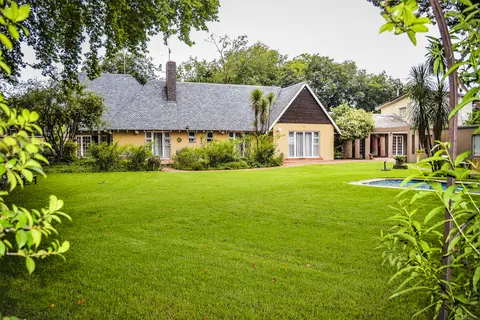 Guest houseBordeaux Haven+27 83 938 1000bordeauxhaven.co.za
- 26.64°S 28.07°EGuest houseB & B Ikhamanzi11th Road, Mooilande
- 26.67°S 27.94°EHotelRiviera On Vaal Hotel & Country Club
- 26.70°S 27.93°ECampsiteSoet Dorings
- 26.65°S 27.93°EHotelSUN1 VereenigingBeethoven St & Voortrekker Street, Duncanville, Vereeniging+27 16 422 0704southernsun.com
Sights 3
- Vaal TeknoramaMuseum
- VoortrekkermonumentjieMemorial
- VryheidsmonumentMonument
Restaurants and cafes 5
- Rio SolRestaurant · portuguese
- MimosRestaurant
- NandosRestaurant
- WimpyRestaurant · burger, breakfast
- Maverick SpurRestaurant
History and culture
Vereeniging is an industrial city on the Vaal River in southern Gauteng, built on coal and later on steel. Its name is on the 1902 peace that ended the war between Britain and the two Boer republics (states run by Dutch-speaking settlers, the Boers), and next door is Sharpeville, where police shot dead 69 people protesting against the pass laws in 1960.
- 1879 to 1882
The geologist George William Stow found a coal seam about twelve feet thick on the farm Leeuwkuil on the Transvaal side of the Vaal River. The businessman Sammy Marks bought the land, and from 1881 coal went by ox-wagon to the diamond diggings at Kimberley. A village was surveyed on the farms and named after Marks's company, the Zuid Afrikaansche en Oranje Vrijstaatsche Kolen en Mineralen Vereeniging. source
- 1892 onwards
In 1892 Marks set up a new company to mine the coalfields of the southern Transvaal and northern Free State. His firm, Lewis & Marks, opened collieries at Viljoensdrif and elsewhere, started Vereeniging Estates to farm the land along the Vaal, and backed flour mills and brick and tile works in the town. source
- 1900 to 1902
During the South African War (the Anglo-Boer War, 1899 to 1902) the British ran a concentration camp at Vereeniging for Boer civilians, never much over 1,000 people, and a separate camp nearby for Black people that held over 2,000, mostly women and children. The white camp had a school with up to 300 pupils and closed around the end of October 1902. source
- May 1902
Sixty Boer delegates, 30 from each republic, met at Vereeniging from 15 May to decide whether to accept Britain's peace terms. On 31 May 1902 they voted 54 to 6 in favour, and the treaty was signed later that day at Melrose House in Pretoria. The two republics became British colonies. source
- 21 March 1960
In a Pan Africanist Congress campaign against the pass laws (rules that forced Black South Africans to carry a pass book), a crowd of about 5,000 gathered at Sharpeville police station. Police opened fire for about two minutes, killing 69 people and seriously wounding 180, many of them shot in the back as they ran. source
- 3 September 1984
A stay-away against rent increases in the Vaal townships turned into riots in Sharpeville, Sebokeng and Evaton that left an estimated 29 people dead. This was the start of the Vaal uprising, a township revolt that spread across the country over the next two years. source
- 17 June 1992
Armed men from the KwaMadala hostel attacked the nearby township of Boipatong and killed 45 people. The attackers were Inkatha Freedom Party supporters, and whether police helped them was disputed for years. The ANC pulled out of the negotiations to end apartheid for a time afterwards. source
- 10 December 1996
President Nelson Mandela chose Sharpeville to sign the country's final constitution into law, on International Human Rights Day. It took effect on 3 February 1997. source
- Language
- Vereeniging is a mixed city. In the 2011 census 34.9% of residents spoke Afrikaans at home, 26.2% Sesotho, 15.5% English and 8.3% isiZulu. source
- Human Rights Day
- Since 1994, 21 March, the date of the Sharpeville shootings, has been Human Rights Day, a public holiday across South Africa. source
Main sights in Vereeniging
5- Sharpeville Human Rights Precinct
A stone memorial marks the spot where the 1960 shooting happened, and the museum beside it tells the story with photographs, witness accounts and archive material, including how the pass laws worked. Entry is free and guided tours are available.
Gauteng Tourism Authority: Sharpeville Heritage Precinct - Sharpeville World Heritage site and Phelindaba Cemetery
In 2024 the site of the shooting and its memorial became part of the Nelson Mandela Legacy Sites on the UNESCO World Heritage List. The people killed in 1960 are buried in a long row of graves at Phelindaba Cemetery in Sharpeville.
Wikipedia: Sharpeville massacre - Vredesmonument (Vryheidsmonument)
A peace monument by the sculptor Coert Steynberg, unveiled by H.F. Verwoerd on 10 October 1961: a wounded Boer fighter in blue granite with a stainless steel figure rising from his heart. Its makers meant it to show the Afrikaner people defeated in 1902 but rising again, and the only words on it read Gewond, maar onoorwonne (wounded but unconquered). It was moved to the garden in front of the Civic Centre in 1988.
Wikipedia (Afrikaans): Vredesmonument - Witkop Blockhouse
A three-storey stone blockhouse beside the R59 north of town, the only one left of the Vereeniging pattern the British built to guard the railway from Vereeniging to Germiston (then Elandsfontein). It was declared a national monument in 1948.
South African Military History Society: Witkop Blockhouse - Vaal Teknorama
The local museum in Vereeniging, which has run booked tours of Sharpeville township. Phone ahead (+27 16 450 3030) to check what is on before you go.
SA-Venues: Sharpeville Township and Memorial
Did you know?
- Vereeniging is the old Dutch word for "association", taken from the name of the coal company that founded the town. Modern Dutch spells it vereniging, with one e. source
- The Treaty of Vereeniging was not signed in Vereeniging. The delegates debated and voted there, but the signing happened at Melrose House in Pretoria. source
- Sharpeville was set up in 1935 as Sharpe Native Township and named after John Lillie Sharpe, mayor of Vereeniging from 1935 until he died in 1937. source
- The United Nations marks 21 March as the International Day for the Elimination of Racial Discrimination, in memory of Sharpeville. source
- F.W. de Klerk first went to parliament in 1969 as the member for Vereeniging. source
- The city's motto is Per pacem ad industriam (through peace to industry), and its coat of arms carried a dove of peace on two clasped hands. source
Checked 7 October 2026.
Map of Vereeniging
See every place on this map as a list