Place to stay · Kamanjab
Oppi Koppi Restcamp
Rest camp with rooms, self-catering units and eight campsites about 300 m from the centre of Kamanjab, roughly 70 km from Etosha's western Galton Gate.
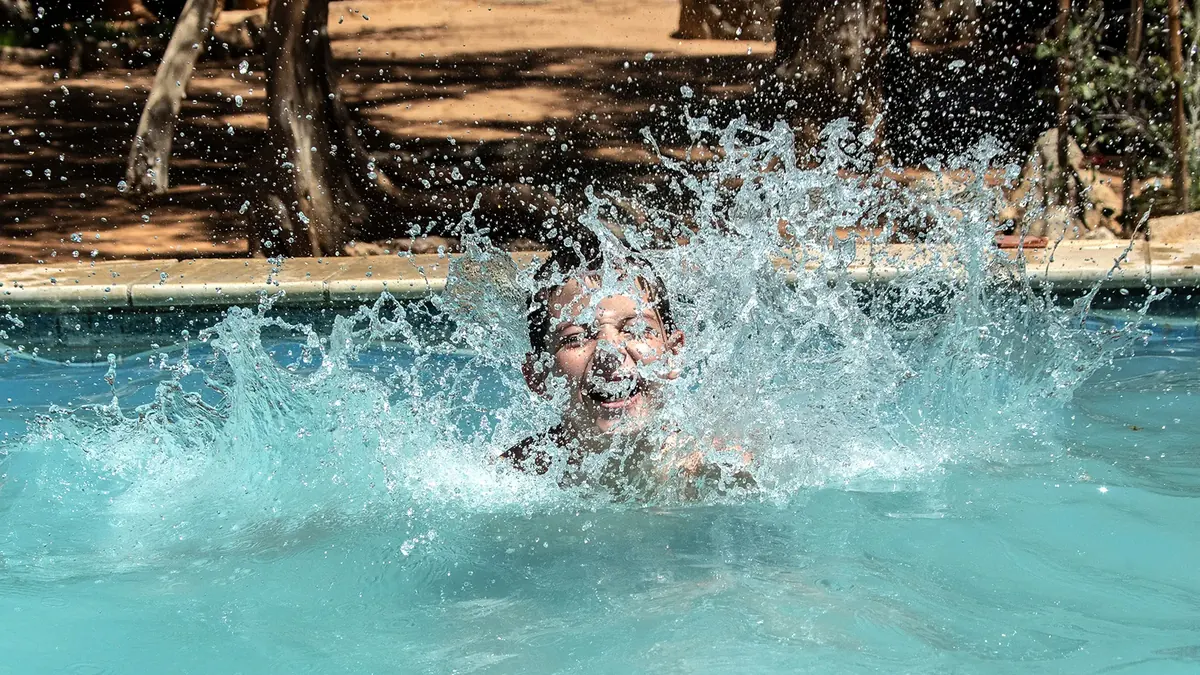
Oppi Koppi is a rest camp in Kamanjab, a village of about 3,900 people in the Kunene Region. It lies roughly 300 m from the village centre and the junction of the C40 and C35, and about 70 km before Galton Gate, the western entrance to Etosha. That makes it a natural overnight stop on the way to or from western Etosha, Damaraland, Kaokoland or Epupa Falls. It is a practical stopover with a bar and restaurant, not a safari lodge.
What to expect
The camp has twelve luxury rooms of 28 m² with two three-quarter beds, a fridge, a safe and a kettle, plus two smaller standard rooms and a family room with a double and two three-quarter beds. Three self-catering units sleep four in single beds and have a full kitchen and an outside braai. The luxury, self-catering and family rooms have air conditioning (the site is unclear on the standard rooms). There are also two guide rooms with a fan and shared ablutions.
The eight campsites each have a braai, a power point with two sockets and a light, and a tap with spring water. They share one ablution block with two toilets and two showers. The restaurant serves breakfast, lunch and dinner.
Practical details
- Kamanjab, Kunene Region. GPS S 19 37.244, E 14 50.866.
- Phone +264 67 330 040. Email info@oppi-koppi-kamanjab.com.
- Group bookings go through Eden Travel.
- Rooms have both European and African plug sockets.
Good to know
The camp can arrange a visit to a Himba settlement 2 km out of town towards Ruacana, in your own car with a local guide. The Peet Alberts rock engravings are 4 km out of Kamanjab towards Outjo, a walk among rocks carved by San people thousands of years ago. There is also a guided quad bike sundowner. Kamanjab’s name comes from the Otjiherero Okamanja, place of big stones.
Last updated 7 October 2026. Sources: Oppi Koppi Restcamp, Oppi Koppi Restcamp, Rooms, Oppi Koppi Restcamp, Campsite, Oppi Koppi Restcamp, Activities, Wikipedia, Kamanjab.
The camp where a foreign number plate slept free
In mid-2014 a crew who had driven more than 20,000 km down the west side of Africa pulled into Kamanjab and stayed six nights. They serviced the car, stocked up for Angola, shared a braai and a film night with two Italians on an Aprilia 650, and paid nothing for the pitch. That was the house rule. Vital, the Belgian who ran Oppi Koppi with Marianne, had been an overlander himself, and anyone who arrived on foreign number plates camped free for as long as they liked.
A rule that put Kamanjab on the trans-Africa map
For a village most people only pass through on the way to Etosha’s western gate, this mattered. Camping in Namibia costs two or three times what it does in West Africa, as one New Zealander who came down the same coast pointed out in 2019, and here was a pitch with power, hot showers and a bar next door for nothing. So the long-haul crowd collected at Oppi Koppi: motorcyclists, people months into a trip, people with something to fix (one campsite directory mentions a village workshop run by a German who trained on Unimogs). One crew stayed about a week editing videos on wifi they called not so great.
The accounts differ on the small print. Some say European plates, some say any foreign plate. One couple understood they were expected to eat at the restaurant, another wrote that nobody expected them to buy a thing. A crew driving from Cape Town to Kigali, who limped in with a dead alternator in March 2019, say they were given a pitch in return for telling the story of their journey.
The camp’s own website now says nothing about any of this, and an undated advert placed by Vital offers the whole 30 fenced hectares for sale because the owners “have new dreams”. I could not confirm whether it has changed hands.
Porcupines at the kitchen scraps
Staff put the restaurant’s leftovers out after dark and wild porcupines come for them. New Era reported the feeding in 2019, and the Kigali-bound crew counted two that March, the first they had ever seen. One listing promises only a chance of seeing them, which is fair: these are wild Cape porcupines, 10 to 24 kg of rodent that live in pairs but feed alone, and two is the only count I found for this camp. The big numbers were at Porcupine Camp, a farm about 8 km out on the C40, where the owner put food out every evening. A camper in December 2010 described the feed, and another in 2012 counted nineteen one night and twenty-five on another. Whether the farm still does it I do not know.
Daylight brings a different visitor. The sale advert lists two ostriches and a springbok as part of the property, and the Kigali crew had ostriches wander up at breakfast.
The key at reception
The name is Afrikaans for “on the hill”, and the camp has a 2.5 km walking trail of its own. Oppi Koppi has also been the keeper of the gate to the Peet Alberts engravings: in August 2023 a couple described filling in a form at the camp and being handed a key to let themselves in, then posing for the camp’s overlander album. They met a snake on the rocks up there, so watch were you put your feet.
The bar is where the place earns its reputation. The manager told New Era in 2019 that the camp employed 38 people on average, most of them from the area, and the paper described a long outdoor table made for shared meals. On the night the Kigali crew were there, the talk at the bar ran in German, Afrikaans and English, between them, the camp manager and a German liquor salesman.