Sight · Otjozondjupa
Ombu Village and Museum
Ovaherero history museum at Ombu Cultural Village, off the B1 between Otjiwarongo and Okahandja, seen on a guided 90-minute tour of the village homestead and museum.
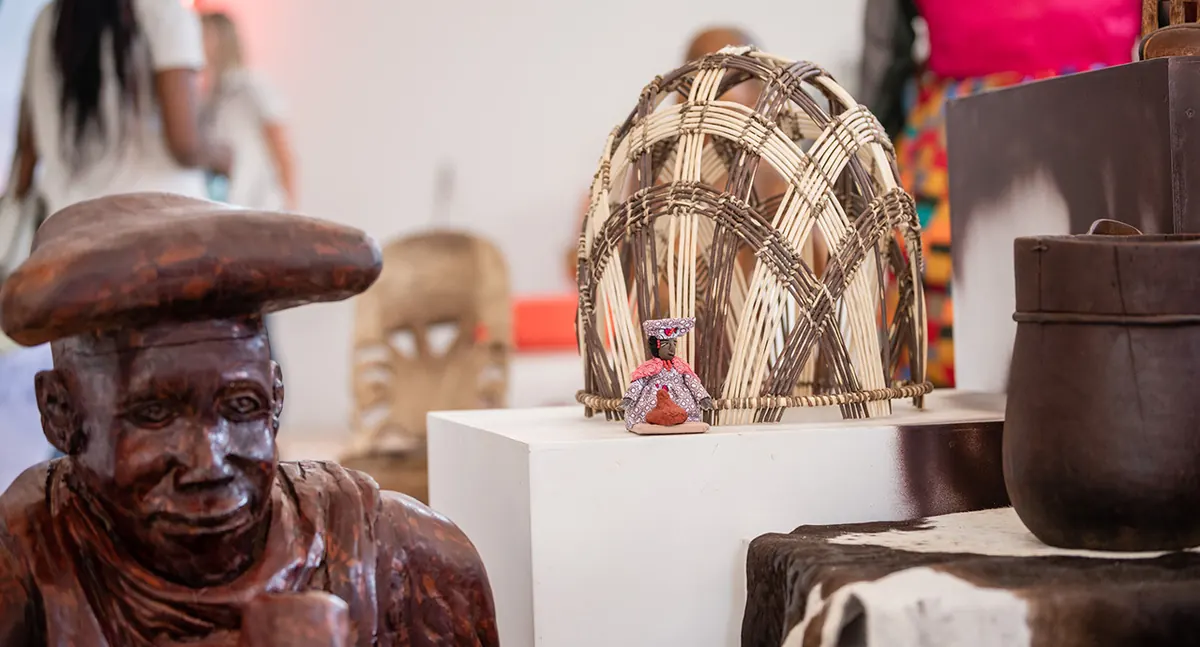
The Ombu Museum sits beside Ombu Cultural Village on Farm Ombu, off the B1 roughly halfway between Etosha and Windhoek. It tells the story of the Ovaherero (Herero) people over the last 200 years or so, from cattle and household life to migrations and wars. It makes a good break on the long B1 drive, and it covers history most roadside stops leave out.
What to expect
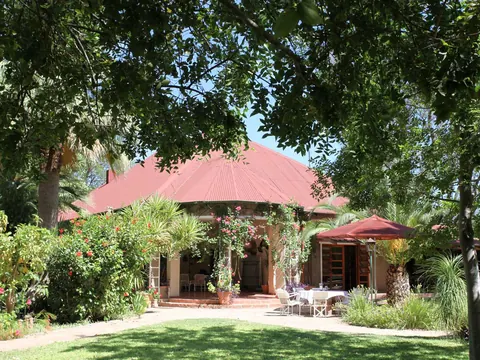
You see the museum as part of a guided tour of the village. The village is a traditional homestead of nine houses, built in styles from about 1880 onwards, from cow dung and anthill sand through to iron sheeting and brick. Guides take you into the houses and explain food, perfumes, dress, marriage, initiation and the sacred fire (okuruuo) that stands between the main house and the cattle kraal.
The museum tells Ovaherero history through statues, displays, audio-visual material and objects. Look for the hunting weapons and the kitchen kit, including the calabash used to make omaere. Afterwards there is a curio shop and an upstairs balcony for a drink over the village.
Practical details
- Phone: +264 61 244 535 or +264 81 452 2399.
- Tours last 1.5 hours and run daily between 10am and 4pm, for groups of up to 12. Children of all ages are welcome.
- The turn-off from the B1 is about 48 km from Otjiwarongo and 122 km from Okahandja, at the gate shared with Okonjima Nature Reserve. Drive 10 km, turn right and the village is 1.5 km on.
- Five campsites, each with its own toilet and wood-heated shower.
Good to know
Singing and dancing happen only by special arrangement, so ask when you book. Of the wars in that history, the one to read up on before you go is 1904 to 1908, which Wikipedia describes as a genocide committed by the German Empire. Displacement during it is the reason there are Ovaherero communities in Botswana today.
Last updated 7 October 2026. Sources: Ombu Cultural Village, the museum, Ombu Cultural Village, the village, Ombu Cultural Village, the tour, Ombu Cultural Village, contact and directions, Ombu Cultural Village, the campsite, Wikipedia, Herero people.