Town · KwaZulu-Natal, South Africa
Bergville
Small farming and trading town on the R74 in KwaZulu-Natal, used mainly as the last stop for fuel and supplies before Royal Natal and the northern Drakensberg.
Short answer
Bergville is in KwaZulu-Natal, South Africa. This page lists 7 places to stay, 3 places to eat and drink and 1 sight. The nearest park with an entry fee on this site is Golden Gate Highlands National Park, about 71 km away, where international adults pay from R358.

- Places to stay
- 7
- Eat and drink
- 3
- Sights
- 1
- Park fee nearby: Golden Gate Highlands National Park
- US$20 €19 · R358about 71 km away
In and around Bergville
11 places listedWhere to stay in Bergville 7
- 28.64°S 29.16°EHostelAmphitheatre Lodge and Backpackers+27 82 855 9767amphibackpackers.co.za
- 28.71°S 29.33°EHotelSandford Park Country Hotelsandford.co.za
- 28.64°S 29.16°ECampsiteAmphitheatre Backpackersamphibackpackers.com
- 28.83°S 29.47°EGuest houseDrakensberg Bush Lodge and Backpackers
- 28.73°S 29.36°ECampsiteBergville Caravan Park
- 28.71°S 29.45°EGuest houseDalmore Farm
- 28.70°S 29.54°EHotelSpion Kop Lodge
Sights 1
- Battle of Spion KopMemorial
Restaurants and cafes 2
- Bingelela Restaurant and B&BRestaurant+27 83 640 0743bingelela.co.za
- The Coffee PatchCafe
Bars and pubs 1
- Bingelela RestaurantPub
Bergville is a small agricultural town on the R74, about halfway between Johannesburg and Durban. Few people come for the town itself. They come because it is the gateway to the northern Drakensberg: the Amphitheatre in Royal Natal National Park, the Mnweni valley and the Cathedral Peak area are all within reach. It has the supermarkets, banks, pharmacists and fuel you will not find once you are in the mountains.
Getting there
Drivers coming down the N3 from Johannesburg have two choices. The quick one is the R616, which leaves the highway a little south of Ladysmith and reaches Bergville after 35 km. The prettier one is the R74 via Oliviershoek Pass, with views over Sterkfontein Dam, and it skips the N3 tolls. From Durban, come off the N3 once you pass Estcourt and follow the R74 through Winterton. The resorts and trailheads are spread out along the foothills, so a car makes life much easier.
When to go
The pick of the year is March to May, at the tail end of summer, with green slopes, clear air and water in every stream. From April to September, pack for cold and the chance of snow up high.
What to do
Royal Natal is the main draw. The Amphitheatre is the sight: a cliff some 5 km across that rises as much as 1,200 m, with the Tugela Falls spilling off the top. The Tugela Gorge walk is a 23 km return day hike with river crossings. In the Mnweni valley, a traditional tribal area, the community cultural centre has beds and can find you a guide for the hikes there. Cathedral Peak is reached from Bergville too. Also nearby are Spioenkop Dam and Rugged Glen Nature Reserve, and you can ride horses or do a canopy tour.
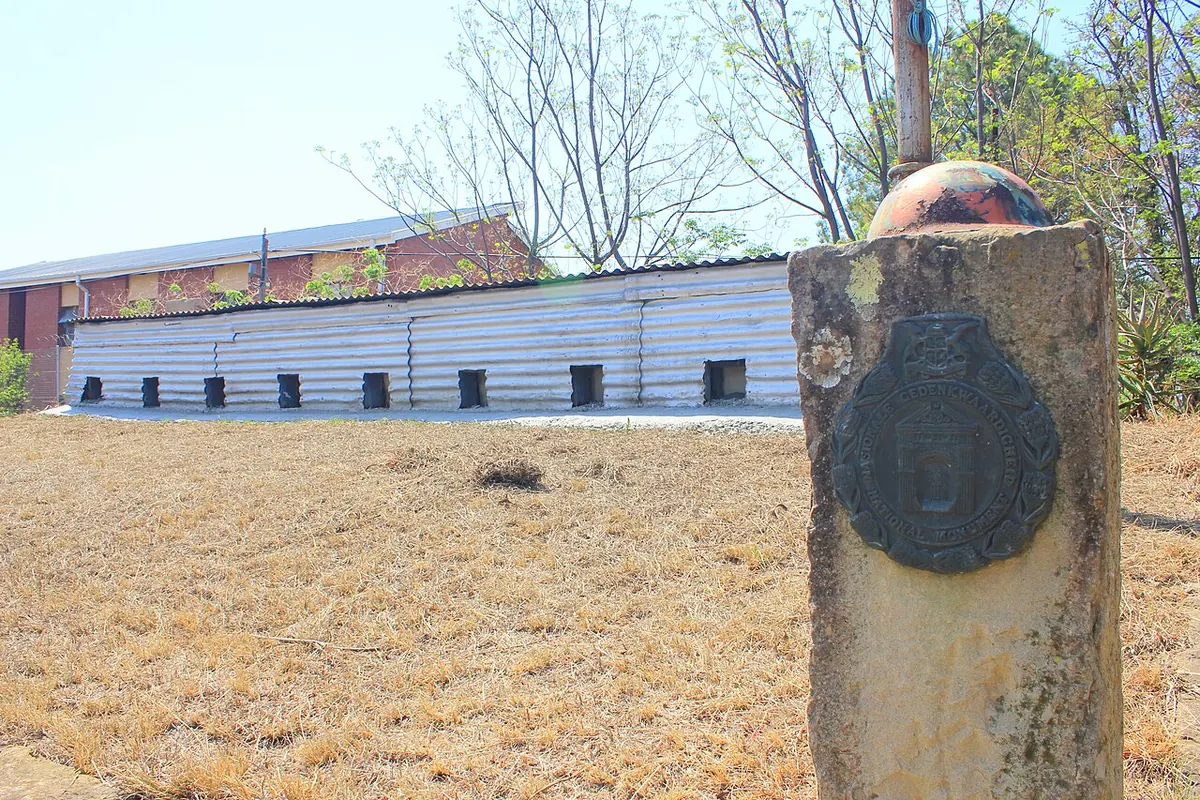
In town, look for the old British blockhouse next to the courthouse. The British took the others down in 1902, and this one, kept on at the magistrate’s request, is the last in the province. It is now a museum.
Good to know
Fill up in Bergville. There is no closer fuel or tyre repair for Royal Natal, and sources put the park somewhere between 40 and 48 km away. Planning a long walk? Write your route in the mountain rescue register at the information centre or Thendele camp before setting off.
History and culture
Bergville is a small farming and trading town on the Thukela (Tugela) River, the last stop for supplies before the northern Drakensberg. The town itself only dates from the 1890s, but the valleys around it hold San rock art, Zulu-speaking chiefdoms with roots older than the town, a German mission from 1847, the pass the Voortrekkers came down in 1837 and one of the bloodiest battlefields of the Anglo-Boer War.
- Thousands of years ago
The San, hunter-gatherers once called Bushmen, lived and hunted in these mountains for at least 3,000 years and left paintings in the rock shelters. Nguni-speaking farming people, among them the amaZizi and amaNgwane, arrived about a thousand years ago and settled the Mnweni valley and the land around it. source
- About 1818 to 1822
During the Mfecane, a time of wars and forced migrations across the region, King Matiwane of the amaNgwane attacked the Hlubi, killed their king and settled at Ntenjwa, ruling the upper Thukela near present-day Bergville for three or four years. Expecting an attack from Shaka's Zulu army, he fled over the Drakensberg in 1821 or 1822. His son Zikhali later brought the amaNgwane back to the foot of Mont-aux-Sources. source
- November 1837
The first party of Voortrekkers (Dutch-speaking settler families leaving British rule at the Cape) to enter Natal, led by Piet Retief, brought 66 wagons down the Drakensberg by what is now called Retief's Pass, west of Bergville, between 14 and 18 November. source
- 1847
Missionaries Carl Wilhelm Posselt and Wilhelm Guldenpfennig of the Berlin Missionary Society founded the Emmaus mission station about 18 km from where Bergville now stands. Rev. C. Zunckel took over from them, and the Zunckel name is still well known in the district. source
- 1897
A retired sea captain named Wales owned the farm where the town now stands, and in 1897 a cluster of trading stores went up on it. The settlement was named Bergville in 1903 and became a municipality in 1962. It is now the seat of the Okhahlamba municipality. source
- January 1900
In the Anglo-Boer War (1899 to 1902, Britain against the two Boer republics) General Buller's army tried to break through to besieged Ladysmith by taking Spioenkop hill, east of Bergville. Louis Botha's Boers held on, and the British lost 243 dead and about 1,250 wounded or captured against 68 Boer dead. source
- 1900 to 1902
Fearing Boer raids into Natal, the British built a line of stone blockhouses (small fortified guard posts) in and around Bergville. They pulled most of them down in 1902, but the magistrate asked for the one next to the courthouse to be kept, and it became the town's police station. source
- May 1947
In May 1947 King George VI, Queen Elizabeth and the princesses Elizabeth and Margaret visited the national park in the mountains west of town. After the visit it was renamed Royal Natal National Park. source
- Language and people
- This is deeply Zulu-speaking country. In the 2011 census 93% of people in the Okhahlamba municipality (about 132,000 people, with Bergville as its seat) spoke isiZulu as their first language. source
- The town
- Bergville town itself is more mixed than the farms and villages around it. In 2011 about 60% of residents were Black African, 20% white and 15% Indian South African, and while isiZulu was the first language of 83%, one in ten spoke English at home. source
- Traditional areas
- The amaZizi and amaNgwane are the best-known of the Zulu-speaking groups here, and the Mnweni valley where they settled is still traditional (tribal) land, with villages spread across the foothills. The community there runs a cultural centre with beds and local guides for the hikes. source
- Music
- The area has given South Africa some well-known voices: the singer Sjava (Jabulani Hadebe) and the rapper Big Zulu (Siyabonga Nene) both come from Bergville. source
For German visitors: The Emmaus mission near Bergville was started by Carl Wilhelm Posselt and Wilhelm Guldenpfennig of the Berlin Missionary Society, a Lutheran mission. Posselt, a schoolteacher's son from Diekow in the Prussian Neumark, trained at a seminary in Berlin, sailed from Hamburg in 1839 and became known as the missionary with the violin. The station is still there. source
Main sights in Bergville
5- Anglo-Boer War Blockhouse
A small stone blockhouse on Sharratt Street, near the courthouse, built by British troops in the later part of the war as a link in Natal's defences against Boer guerrilla raids. It is the only survivor of the blockhouses that once stood in and around the town. The heritage record lists its current use as a clubhouse, while other sources call it a museum, so ask in town before you count on getting inside.
Wikipedia: List of heritage sites in KwaZulu-Natal (SAHRA records) - Spioenkop Battlefield
The hilltop where the British attack failed in January 1900. Spioen means spy or lookout in Afrikaans and kop means hill. Many of the British dead were buried in the trenches where they fell, so the rows of graves on the summit still trace the old front line, and there are memorials on the battlefield. It lies about 15 km east of Bergville.
Wikipedia: Battle of Spion Kop - Retief's Pass and Retiefklip
The route by which Piet Retief's Voortrekker wagons came down the Drakensberg in November 1837, now a heritage site near Sterkfontein Dam. Nearby is Retiefklip, the rock on which his daughter Deborah painted his name on his birthday that year.
Routes Travel Info Portal: Bergville (archived) - Royal Natal National Park
Proclaimed in 1916 and given its royal name after the 1947 royal visit. Despite the name it is a provincial park run by Ezemvelo KZN Wildlife, not a SANParks park. Beyond the Amphitheatre and the Thukela (Tugela) Falls, it has San rock paintings from the time these mountains were their hunting grounds.
Wikipedia: Royal Natal National Park - Mnweni Cultural Centre
A community-run centre in the Mnweni valley, a traditional area, where you can sleep over and hire a local guide for the walks into one of the most rugged corners of the Drakensberg.
TheDrakensberg.net: Bergville
Did you know?
- Berg is Afrikaans for mountain, so Bergville simply means mountain village. The name was only given in 1903, six years after the first trading stores opened. source
- The Kop, the famous steep terrace at Liverpool's Anfield, and many other Kop stands at British football grounds are named after Spioenkop, the hill just east of town. The Anfield bank got the name in 1906, partly in honour of the many Liverpool men killed in the battle. source
- Two men who later shaped the 20th century were at Spioenkop: Winston Churchill, a war correspondent who also held a lieutenant's commission and carried messages to and from the hill, and Mohandas Gandhi, a stretcher-bearer in the Indian Ambulance Corps he had organised, who was decorated for it. source
- Bergville's blockhouse is a provincial heritage site, and the heritage record describes it as the only known blockhouse of its kind. source
- The uKhahlamba Drakensberg Park, which takes in the mountains west of town, became a World Heritage Site in 2000 for both its nature and its culture. It is described as the greatest gallery of rock art in the world, with hundreds of sites and many thousands of images painted by the San. source
Checked 7 October 2026.
Map of Bergville
See every place on this map as a list