City · Mpumalanga, South Africa
eMalahleni
Short answer
eMalahleni is in Mpumalanga, South Africa. This page lists 8 places to stay and 6 places to eat and drink.

- Places to stay
- 8
- Eat and drink
- 6
- Where
- Mpumalanga, South Africa25.88°S 29.21°E
In and around eMalahleni
14 places listedWhere to stay in eMalahleni 8
- 25.90°S 29.29°ECampsiteWitbank Dam Leisure ResortWitbank Emalahleni+27 13 697 0151
- 25.89°S 29.26°EGuest houseLavender
- 25.88°S 29.27°EHotelCorridor Hostel
- 25.89°S 29.27°EHotelStay Easy
- 25.86°S 29.24°EGuest houseThe Big 5
- 25.87°S 29.23°EGuest houseWillow House
- 25.91°S 29.23°EHotelSUN1 WitbankPioneer Ave, Witbank, Emalahleni+27 13 692 4387southernsun.com
Restaurants and cafes 4
- Bootlegger Coffee CompanyCafe · coffee shopbootlegger.coffee
- CappuccinosRestaurant · eMalahleni+27 13 656 3134cappuccinos.co.za
- masango fastfoodRestaurant · fast food
- Nando'sRestaurant · chicken, portuguese · eMalahleni+27 13 656 1874nandos.co.za
Bars and pubs 2
- Die Heuwel Tshisa-NyamaPub · Gordon Street, eMalahleni
- Ekhoneni Pub and GrillPub · african
History and culture
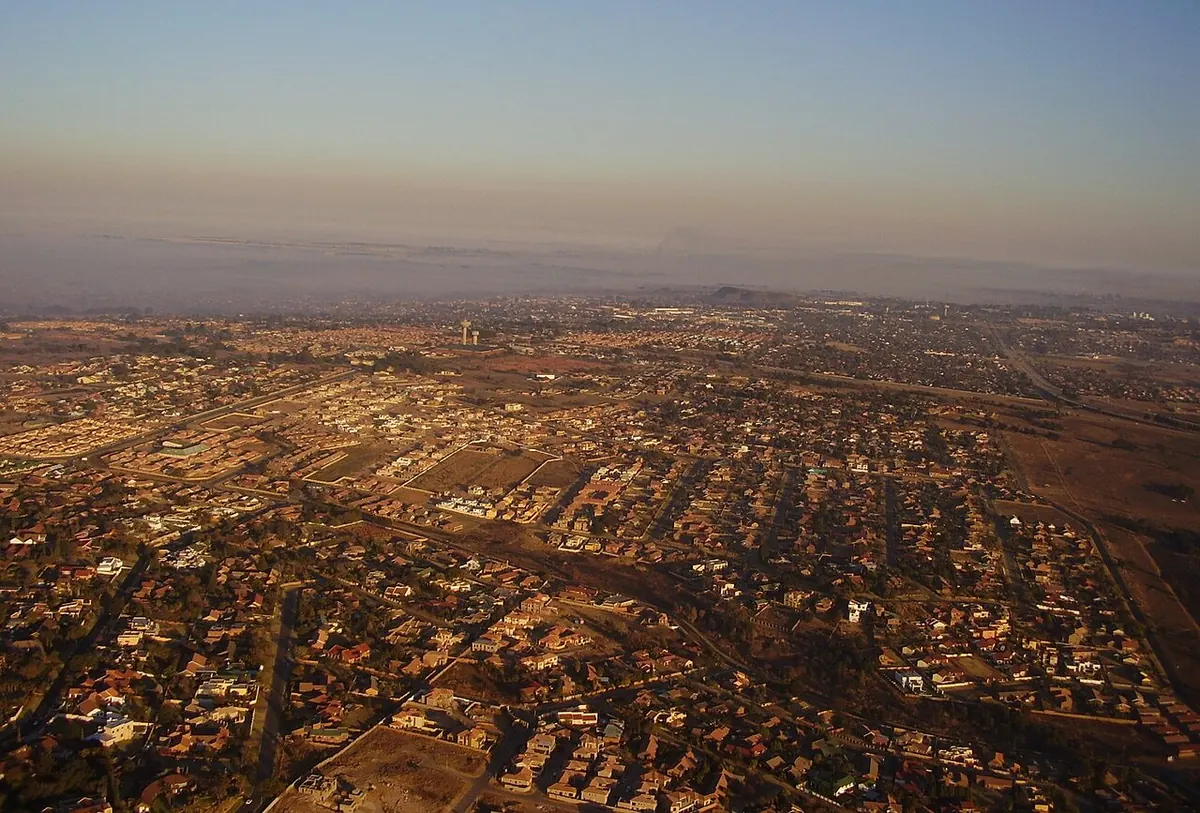
eMalahleni (most people still say Witbank) is a coal and power city on the Highveld, the high grassland plateau east of Pretoria, and most visitors only see it from the N4 on the way to the Kruger. It is not a pretty town, but its story explains a lot about South Africa: coal, railways, a famous escape by Winston Churchill, and the birthplace of the jazz trumpeter Hugh Masekela.
- 1890
Witbank was founded in 1890. The name is Afrikaans for "white ridge", after a white sandstone outcrop where transport riders (the men who hauled goods by ox wagon) outspanned and rested. source
- 1894
Early attempts to mine the coal here failed until the railway from Pretoria reached the area in 1894. This was the line to Delagoa Bay (today's Maputo in Mozambique), and for many years the town served as the transport gateway to that port. source
- December 1899
During the South African War (the Anglo-Boer War of 1899 to 1902, fought between Britain and the two Boer republics), the young soldier and journalist Winston Churchill escaped from Pretoria, where the Boers held him prisoner, and hid in a colliery near Witbank on his way out of the country. source
- 1903
Witbank was proclaimed a town in 1903. source
- 1980s
Eskom started building Duvha Power Station east of the town in November 1975, and its first unit went into service in August 1980. With the collieries and later power stations around it, the area now calls itself the energy centre of South Africa. source
- 2006
On 3 March 2006 Witbank was officially renamed eMalahleni, meaning "place of coal", to match the name of the municipality. Many road signs still say Witbank, and most locals still call the city by its old name. source
- Language
- In the 2011 census Afrikaans was the first language of about 42% of people in the town itself, followed by isiZulu (about 18%), English (about 14%) and Sepedi (Northern Sotho, about 8%). isiSwati and isiNdebele are also widely spoken. source
- Communities
- West of the city are the large, mostly Black townships of KwaGuqa ("place of kneeling" in isiZulu) and Vosman, plus smaller ones such as Lynnville and Ackerville. A township in South Africa means a residential area set aside for Black, Coloured or Indian people under segregation and apartheid. Many people there would like to move to the suburbs nearer the centre, but few can afford it. source
- Music
- Hugh Masekela, often called the father of South African jazz, was born here in 1939. He was raised largely by his grandmother, who ran an illegal bar (a shebeen) for mine workers, and he later wrote "Bring Him Back Home", which became an anthem of the campaign to free Nelson Mandela. source
For American visitors: Witbank-born Hugh Masekela studied at the Manhattan School of Music in New York from 1960 to 1964, played the Monterey Pop Festival in 1967 and had a US number one in 1968 with "Grazing in the Grass". He was befriended by Harry Belafonte and later toured with Paul Simon on the Graceland tour. source
Main sights in eMalahleni
1- Witbank Dam
The dam, its catchment and the neighbouring nature reserve are where the town goes for its outdoor recreation. A power station stands at the dam, a reminder of what built this place.
South African History Online: Witbank, Mpumalanga
Did you know?
- The municipality calls itself the largest coal-producing area in Africa. Duvha, Kendal, Matla and Kusile power stations all sit within its borders. source
- Kendal Power Station's cooling towers are 165 m high and 165 m wide at the base. When it was finished in 1993 it was the largest indirect dry-cooled power station in the world, built that way to save water. source
- The two 300 m chimneys at Duvha Power Station, east of the city, are the second and third tallest structures in Africa. Only a chimney at the Secunda fuel plant is taller. source
- Underground coal fires in old, disused mines around the town have at times threatened the railway line to Maputo. source
- In 2018 Greenpeace analysed satellite data and found Mpumalanga, with its cluster of twelve coal-fired power stations, was the world's biggest hotspot for nitrogen dioxide air pollution. eMalahleni sits in the middle of it. source
Checked 7 October 2026.
Map of eMalahleni
See every place on this map as a list