City · Northern Cape, South Africa
Kimberley
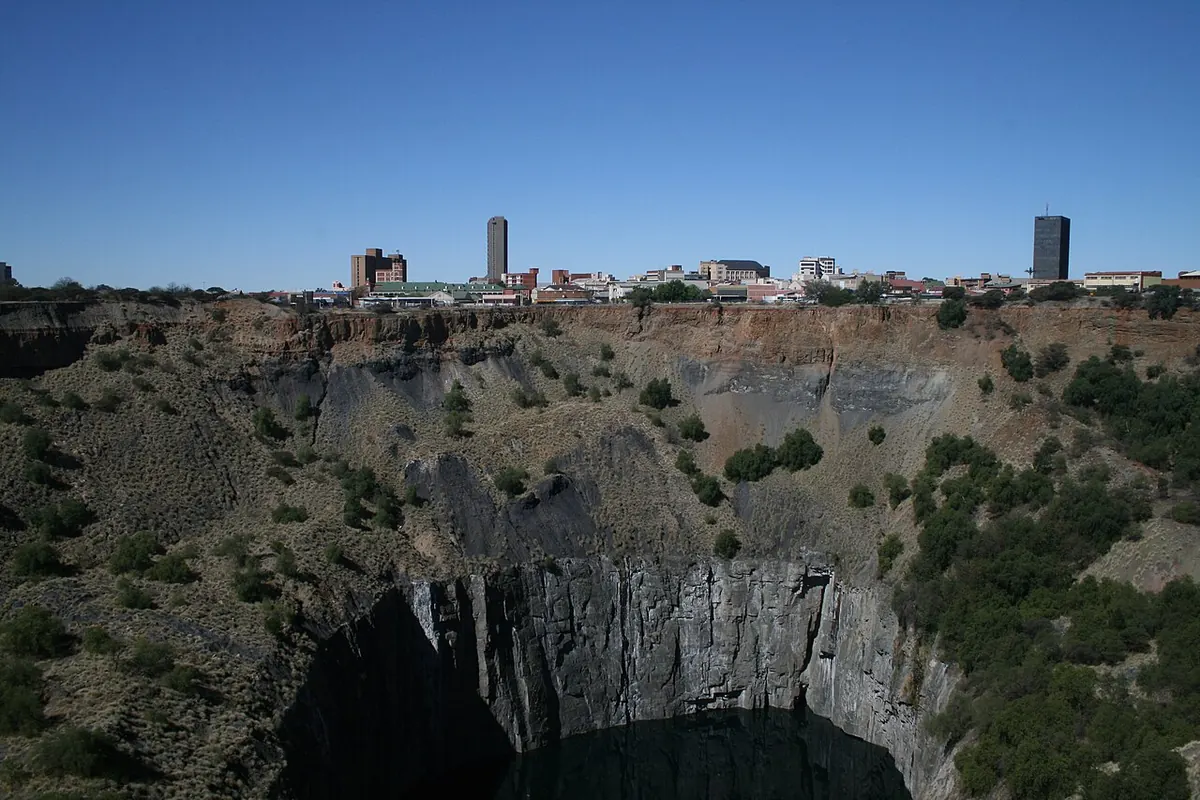
Diamond city and capital of the Northern Cape, built around the Big Hole, the largest hand-dug pit in the world. Victorian mining history, Boer War battlefields and tens of thousands of flamingos.
Short answer
Kimberley is in Northern Cape, South Africa. This page lists 25 places to stay, 20 places to eat and drink and 20 sights. The nearest park with an entry fee on this site is Mokala National Park, about 56 km away, where international adults pay from R306.

- Places to stay
- 25
- Eat and drink
- 20
- Sights
- 20
- Park fee nearby: Mokala National Park
- US$18 €16 · R306about 56 km away
In and around Kimberley
65 places listedWhere to stay in Kimberley 25
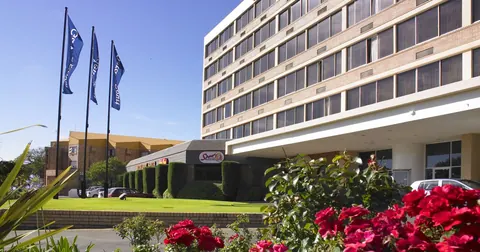 HotelGarden Court KimberleyDu Toit Span Street, Kimberley+27 53 833 1751southernsun.com
- 28.75°S 24.77°EHotelBishops LodgeBishops Avenue, Kimberley+27 53 831 7876bishopslodge.co.za
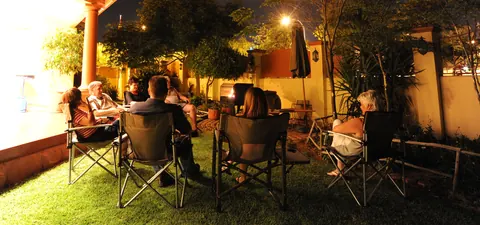 Guest houseMilner House B&B+27 82 686 5994milnerlodge.co.za
- 28.76°S 24.75°EGuest houseRenosterberg LodgeJacobus Smit Street, Kimberley+27 60 538 9066renosterberg.co.za
- 28.74°S 24.75°ECampsiteOpen Mine Caravan ParkKimberley+27 53 830 6322kimberley.co.za
- 28.62°S 24.81°EChaletDronfield Nature Reserve+27 53 839 4455
- 28.74°S 24.76°EHotelRoyal Paume HotelOld Main Street+27 53 833 9007
- 28.72°S 24.74°EGuest houseBatsumi Luxury GuesthousePhakedi Street
- 28.74°S 24.77°EHotelSPU Diamond Lodge ResidenceDu Toit Span Street, Kimberley
Show all 25 places to stay
- The Guesthouse Kimberley · Guest house · Jacobus Smit Street, Kimberley
- Airport Hotel · Hotel
- Carrington Lodge · Guest house
- Dronfield 1 · Chalet
- Dronfield 2 · Chalet
- Dronfield 3 · Chalet
- Dronfield 4 · Chalet
- Dronfield 5 · Chalet
- Dronfield 6 · Chalet
- Five Acres B&B · Guest house
- Gum Tree Lodge · Hostel
- Horseshoe Motel · Motel
- Kalahari Lodge · Motel
- Kimberley Caravan Park · Caravan park
- SUN1 Kimberley · Hotel · Cnr. Memorial & Welgevonden Street, Kimberley+27 53 831 2552southernsun.com
- Protea Hotel · Hotel+27 53 802 8200
Sights 20
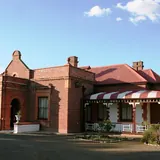 Duggan-Cronin GalleryGallery · Egerton Road, Kimberleymuseumsnc.co.za
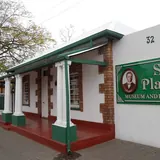 Sol Plaatje Museum and LibraryMuseum · Angel Street, Kimberley
 William Humphrey's Art GalleryGallery+27 53 831 1724whag.co.za
- Alexander McGregor Memorial MuseumMuseum · Chapel Street, Kimberley+27 53 839 2700museumsnc.co.za
 Big HoleAttraction
- Dunluce House MuseumMuseum · Lodge Road, Kimberleymuseumsnc.co.za
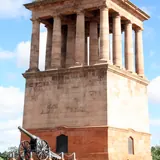 Honoured Dead MemorialAttraction
- Kimberley Transport MuseumMuseum+27 53 838 2376
- Open Mine MuseumMuseumthebighole.com
- Carter's Ridge MonumentMonumentsamilitaryhistory.org
Show all 20 sights
- Carter's Ridge · Battlefield
- De Beers Mine · Viewpoint
- Flamingo Viewpoint · Viewpoint
- Kimberley Mine · Viewpoint
- Memorial to the Pioneers Of Aviation · Memorial
- Miners Memorial · Attraction
- Second World War Memorial · Memorial
- Wimbledon Ridge · Battlefield
Restaurants and cafes 15
- Bootlegger Coffee CompanyCafe · coffee shopbootlegger.coffee
- HonchosRestaurant · Bultfontein Street+27 67 290 3273
- Mini PakistanRestaurant · indian+27 73 716 6659
- MochachosRestaurant · chicken · Roper Street
- PanarottisRestaurant · italian
- BarcelosRestaurant · chicken
- Cafe 786Cafe · Green Street
- Midnight CafeCafe · Compound Street
- Munchies PizzaRestaurant · Mathews
- Tasty Foods Restaurant and Take AwayRestaurant · Stead Street
- Tramways CaféCafe · Tucker Street
- Lyve CafeCafe
Show all 15 restaurants and cafes
- The Estate Private Hotel · Restaurant
- Choctaw Spur · Restaurant · steak house · Kimberley+27 53 832 4231spursteakranches.com
- Ocean Basket · Restaurant · seafood · Du Toitspan Road
Bars and pubs 5
- Halfway House PubPub+27 53 831 6324halfwayhousehotel.com
- Australian ArmsPub
- Occidental BarPub
- Phoenix HotelPub
- Star of the WestPub
Kimberley is the capital of the Northern Cape and the city that diamonds built. The Eureka diamond was found in the district in 1866, diggers swarmed a low hill in 1871, and by 1914 they had dug the Big Hole 240 m deep by hand and taken out 2,722 kg of diamonds. De Beers was formed here in 1888. It is a long way from anywhere, which is why most visitors are on a road trip between Johannesburg and the Cape or the Kalahari.
Getting there
Kimberley Airport has Airlink flights from Johannesburg and Cape Town. By road, the N12 brings you 480 km from Johannesburg and 960 km from Cape Town; the N8 runs 160 km east to Bloemfontein and 402 km west to Upington. Passenger train services were suspended in 2025. The historic centre is walkable by day, but a car is needed for the outlying sites.
When to go
The climate is semi-arid, with about 404 mm of rain a year, nearly all in summer. Summer days from December to February often reach 36 °C and the record is above 43 °C; winter nights from June to August often drop below freezing while the days stay sunny and clear. Autumn and spring are the comfortable seasons, and there is no real tourist peak.
What to do
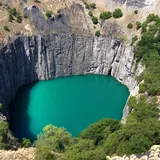
The Big Hole and Kimberley Mine Museum is the reason to stop. The pit is 463 m across and 17 ha in area; what you see from the viewing platform is 175 m deep, with another 40 m of water below. The museum complex has a reconstructed mining town of original and rebuilt buildings, an underground mine experience with a cage descent, and the Eureka diamond itself. The orange tram, introduced in 1887, makes a 20-minute circuit of the hole from the museum.
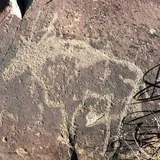
The McGregor Museum, in a building from 1897, is the main history museum, and the Duggan-Cronin Gallery holds some 8,000 photographs of southern African peoples taken between 1919 and 1939. The Honoured Dead Memorial remembers the siege of Kimberley, which ran from 14 October 1899 to 15 February 1900, and the Star of the West has been pouring drinks since 1873. Magersfontein battlefield, 30 km south, has a museum on the Anglo-Boer War battle fought there. Kamfers Dam, 7 km north, holds the largest permanent population of lesser flamingos in southern Africa, tens of thousands of birds at times. Galeshewe township and the Sol Plaatje Museum tell the other side of the city’s history, and the Wildebeest Kuil Rock Art Centre outside town has San engravings.
Good to know
Kimberley has the ordinary South African city problems: keep valuables out of sight, do not walk around the centre at night, and use a car or taxi after dark. Distances between towns in the Northern Cape are long and fuel stops are far apart, so fill up before leaving. Summer heat is serious; carry water and plan outdoor sightseeing for early morning.
History and culture
Kimberley grew out of a single hill of diamonds in 1871 and within a few years was the second biggest town in South Africa. The rush here started the country's mining economy, the migrant labour and compound system that later spread to the gold mines, and the fortunes of Cecil Rhodes and De Beers. It is also where Sol Plaatje wrote and Robert Sobukwe lived out his banishment, so the city tells both sides of that story.
- Before the 1870s
The land around Kimberley was Khoe-San country, and the rock engravings at Wildebeest Kuil just outside the city show that history running into the 1800s. The area lay beyond the lands the Tswana occupied before colonial times. source
- 1867
A 15-year-old, Erasmus Jacobs, picked up a shiny pebble near Hopetown on the Orange River, well south of where Kimberley now stands. It turned out to be a 21.25 carat diamond, later called the Eureka, the first diamond found in South Africa. De Beers bought it in 1967 and gave it to the country, and it is on show at the Kimberley Mine Museum. source
- 1871
Diamonds were found on Colesberg Kopje (a kopje is a small hill) on the farm Vooruitzigt, and the stampede that followed was called the New Rush. Within a month 900 claims were pegged and two to three thousand men were digging. The Griqua leader Nicolaas Waterboer, the Boer republics and the Cape all claimed the fields, and Britain proclaimed them as Griqualand West on 27 October 1871. source
- 1873
New Rush was renamed Kimberley after the British Colonial Secretary, Lord Kimberley, who refused to have his new colony's towns called New Rush or Vooruitzigt, a name he said he could neither spell nor pronounce. By then about 40,000 people lived here. source
- 1888
Cecil Rhodes's De Beers and Barney Barnato's Kimberley Central merged in 1888 as De Beers Consolidated Mines, which went on to hold a near monopoly of the world diamond market. From the 1880s African mineworkers, most of them migrant labourers, were housed in closed compounds, a system later copied on the gold mines. source
- 1899 to 1900
In the South African War (the Anglo-Boer War, Britain against the two Boer republics) Boer forces besieged Kimberley for 124 days, from 14 October 1899 to 15 February 1900. The shortage of fresh food hit the town's roughly 15,000 Black residents hardest. From January 1901 to January 1903 the British held Boer women and children and Black refugees in a concentration camp here. source
- 1952
In November 1952, during the Defiance Campaign against apartheid, volunteers led by Dr Arthur Letele sat on the 'Europeans Only' benches at Kimberley station and chose jail over fines. On 8 November anger over the beer hall in Galeshewe township turned into a riot, and police opened fire, killing 13 people and wounding 78. It is remembered as the Mayibuye Uprising. source
- 1994
When the Northern Cape province was created in 1994, Kimberley became its capital. The city council was later renamed the Sol Plaatje Municipality, and the provincial legislature was deliberately built between a township and the former white suburbs to bridge the divided city. source
- Languages
- At the 2011 census Afrikaans was the first language of 55.5% of people in Kimberley proper, Setswana 18.7%, English 15.6% and isiXhosa 4.6%. In Galeshewe, the big township (a residential area set aside for Black South Africans under segregation), Setswana is the main language at about 57%. source
- !Xun and Khwe San
- Platfontein, just outside the city, is home to the !Xun and Khwe San, who came originally from Angola and Namibia and acquired the land in 1996. Their own community radio station, XKfm, broadcasts in the !Xun and Khwedam languages. source
- Old pubs
- Diggers' Kimberley was famous for its bars, and it is said there were once more pubs than pharmacies and churches. A few of the old ones survive, including the Star of the West, the oldest pub in town, and there is a guided historic pub tour. source
- Sol Plaatje
- Sol Plaatje, journalist, linguist and first secretary-general of the South African Native National Congress (later the ANC), ran his newspaper Tsala ea Batho from Kimberley. He translated four Shakespeare plays into Setswana and wrote the novel Mhudi (1930). source
For American visitors: George Labram, an engineer from Detroit, ran the De Beers workshops during the siege. His team built Long Cecil, the gun that now stands at the Honoured Dead Memorial, along with a fresh-water supply and a refrigeration plant for food. He was killed by a Boer shell on 9 February 1900, and a Kimberley suburb is named after him. source
For American visitors: Gardner Williams from Saginaw, Michigan, who studied mining at Freiberg in Saxony, became De Beers' manager in Kimberley in 1887 and brought in proper shafts and tunnels in place of the dangerous open workings. source
For German visitors: Alfred Beit, a diamond buyer from Hamburg, was sent to Kimberley in 1875, became a close business ally of Cecil Rhodes and later a life governor of De Beers. source
For American visitors: Sol Plaatje went to Canada and the United States in December 1920 and travelled widely until 1923. He met leaders of the NAACP and arranged an American edition of his book Native Life in South Africa. source
For American visitors: Robert Sobukwe, founder of the Pan Africanist Congress, was confined to Kimberley under house arrest from 1969 until his death in 1978. In 1970 the University of Wisconsin offered him a teaching post, but the government refused him a passport. source
Main sights in Kimberley
7- Big Hole and Kimberley Mine Museum
The pit covers 17 ha, is 463 m across and was dug to 240 m between 1871 and 1914. The museum's Old Town has preserved and restored buildings, including Barney Barnato's boxing academy, a church shipped out from Europe and the De Beers railway coach Rhodes used between Cape Town and Kimberley.
The Big Hole official site - McGregor Museum
The building was a sanatorium put up by Rhodes in 1897, and he stayed in it during the siege. Its galleries cover human history in the region from about 3 million years ago, the siege of Kimberley and the struggle against apartheid in the province.
McGregor Museum - Honoured Dead Memorial
A sandstone memorial designed by Herbert Baker for those who died defending Kimberley in the siege, with 27 soldiers buried inside and a Rudyard Kipling inscription. The Long Cecil gun, built in the De Beers workshops during the siege, stands in front.
Wikipedia: Siege of Kimberley - Wildebeest Kuil Rock Art Centre
About 16 km out on the R31 to Barkly West. An 800 m walkway leads over a small sacred hill with more than 400 engravings, on land surrounded by the !Xun and Khwe community's farms, with community guides and a shop selling their craftwork.
McGregor Museum: Wildebeest Kuil Rock Art Centre - Sol Plaatje Museum and Library
Plaatje's house at 32 Angel Street, where he spent his last years, is a provincial heritage site and a small museum and library run by the Sol Plaatje Educational Trust.
Wikipedia: Sol Plaatje - Duggan-Cronin Gallery
Alfred Duggan-Cronin arrived in 1897, worked in the De Beers compounds and began photographing the mineworkers there, then travelled across southern Africa recording people and traditional dress. The gallery shows his work and that of three later photographers, taken between 1919 and 1980, in a house built in 1889.
McGregor Museum: Duggan-Cronin Gallery - Magersfontein Battlefield
About 30 km south of town. On 11 December 1899 Boer forces under General Piet Cronje, dug into trenches below the hill, threw back the British Highland Brigade marching to relieve Kimberley. There is a small museum on the site, open daily.
McGregor Museum: Magersfontein Battlefield Museum
Did you know?
- On 2 September 1882 Kimberley switched on electric street lights, the first town in the Southern Hemisphere to do so. Only Philadelphia had beaten it. The city also had South Africa's first stock exchange, opened in 1881. source
- Kimberlite, the diamond-bearing rock of the pipes that diamond mines follow down into the earth, is named after the town. source
- The Big Hole is often called the largest hand-dug hole on earth, but research in 2005 found that the Jagersfontein mine in the Free State is slightly larger, at 19.65 ha against Kimberley's 17 ha. source
- South Africa's first flying school opened at Alexandersfontein outside Kimberley in July 1913, and from that September it trained military pilots, five of whom became the first pilots of the South African Aviation Corps. One private student, Marie Bocciarelli, was the first woman in South Africa to train as a pilot. source
- The Kimberley Process, the international scheme meant to keep conflict diamonds off the market, takes its name from the meeting held in the city in 2000 that started it. source
- Kamfers Dam, a 400 ha pan just north of town, has typically held about 20,000 lesser flamingos and sometimes more than 50,000. In 2006 a local mining company moved 26,000 tons of material to build them an S-shaped breeding island. source
Checked 7 October 2026.
Map of Kimberley
See every place on this map as a list