City · North West, South Africa
Klerksdorp
Short answer
Klerksdorp is in North West, South Africa. This page lists 5 places to stay, 13 places to eat and drink and 3 sights. The nearest park with an entry fee on this site is Barberspan Nature Reserve, about 112 km away, where international adults pay from R275.
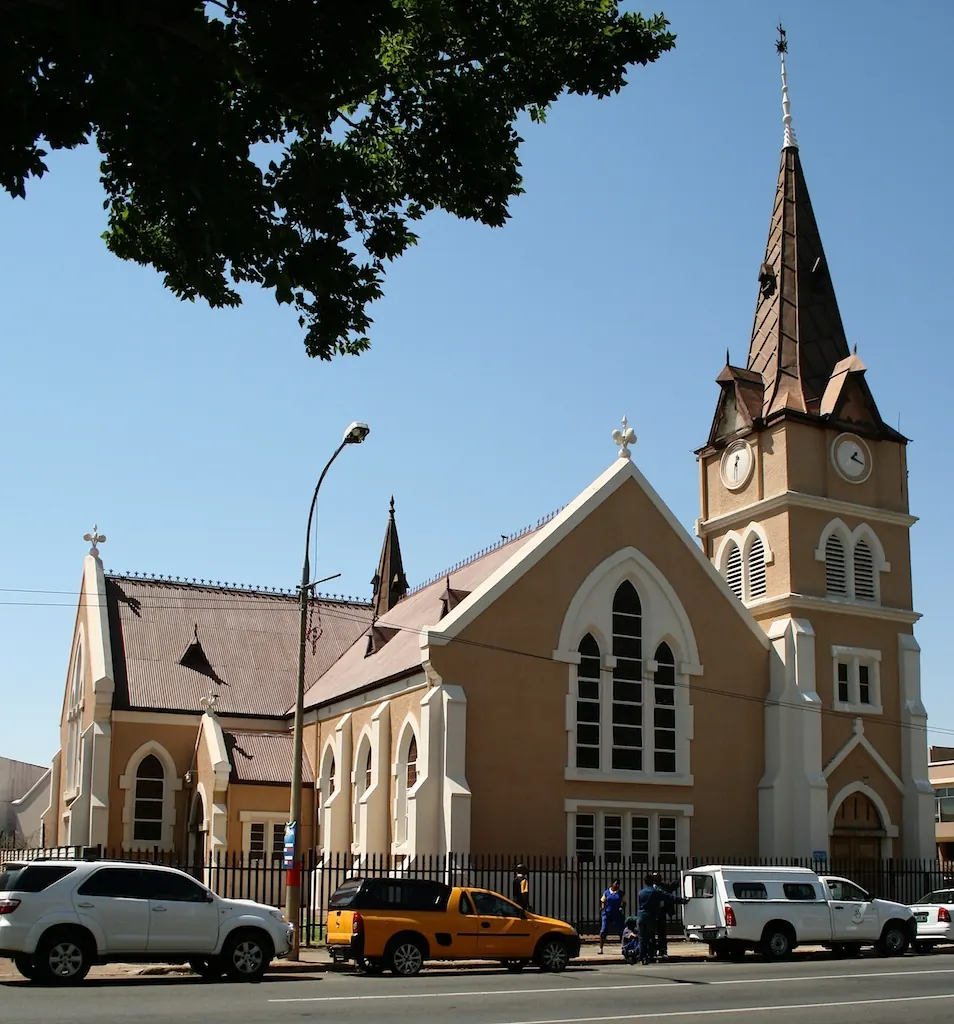

- Places to stay
- 5
- Eat and drink
- 13
- Sights
- 3
- Park fee nearby: Barberspan Nature Reserve
- US$16 €14 · R275about 112 km away
In and around Klerksdorp
21 places listedWhere to stay in Klerksdorp 5
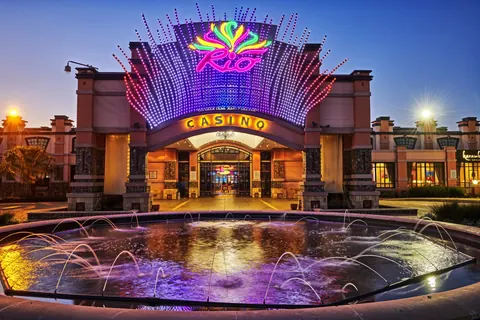 HotelRio Hotel Casino and Convention ResortJoe Slovo Road, Klerksdorp+27 18 469 9100riocasino.co.za
- 26.86°S 26.66°EGuest houseAromaFriedman Street, Klerksdorp
- 26.83°S 26.68°EGuest houseHouse Martin guest house
- 26.84°S 26.67°EGuest houseRose guesthouse
- 26.83°S 26.68°EGuest houseTwins guest house
Sights 3
- Goud Koppie MuseumMuseum
- Goudkop MuseumMuseum
- Klerksdorp MuseumMuseum
Restaurants and cafes 13
- Tarentaal Agility Pub & GrubRestaurant · local dishes+27 84 350 5592
- Verdant Coffee ShopCafe · Ian Street
- WasabiRestaurant · japanese
- Charleens cafeCafe
- Dolls cafeCafe
- Makadu Restaurant and Driving RangeRestaurant
- Mike's KitchenRestaurant
- Place resturantRestaurant
- Bear Creek SpurRestaurant · steak house · Klerksdorp+27 18 468 1249spursteakranches.com
- Nebraska SpurRestaurant · steak house · Central Avenue, Klerksdorp+27 18 464 1320spursteakranches.com
- RocoMamasRestaurant · Williams Street, Klerksdorp+27 18 468 2497rocomamas.com
- Nando'sRestaurant · chicken, portuguese
Show all 13 restaurants and cafes
- Equatorial engen · Cafe
History and culture
Klerksdorp is a gold mining city on the Schoonspruit in North West province, the seat of the City of Matlosana. It claims to be the oldest white settlement north of the Vaal River, had a short and wild gold rush in the 1880s, saw the last big battle of the South African War nearby, and is where Desmond Tutu was born.
- Before the 1800s
Goudkoppie, a hill in town, holds original Khoesan rock art and stone tools (Khoesan is the umbrella name for the San hunter-gatherers and Khoekhoe herders). source
- 1837 to 1838
Voortrekkers (Dutch-speaking farmers who left the British-ruled Cape by ox wagon) settled on the banks of the Schoonspruit. The town is named after Jacob de Clercq, the first landdrost (magistrate) of the area. source
- 1885 to 1888
M. G. Jansen van Vuuren found gold in the district in November 1885. Thousands of diggers arrived, the town was proclaimed in 1888 and it opened its own stock exchange the same year. source
- Late 1890s
The reef needed costly equipment to mine, so most of the diggers moved on. The railway from Krugersdorp arrived in 1897, opened by President Paul Kruger on 3 August. source
- 1899 to 1902
During the South African War (Anglo-Boer War) the British ran two concentration camps here, one for white Boer families and a separate one for Black Africans. Close to a thousand of their dead are buried in the Old Cemetery Complex. source
- 11 April 1902
At Rooiwal near Klerksdorp about 1,700 mounted Boer fighters under Commandant Ferdinandus Potgieter and General Jan Kemp charged an entrenched British position early in the morning and were stopped about 30 metres short. Potgieter and about 50 of his men were killed. It was the last major battle of the war. source
- 1931
Desmond Tutu was born in Klerksdorp on 7 October 1931, in the Black residential area then called the "native location" (since renamed Makoeteng), where his father ran a Methodist primary school. The family moved away in 1936. source
- 1932 to 1950s
Big mining houses revived gold mining from 1932. In 1949 the council began building Jouberton and moved the people of the old Black location there (a township is a residential area set aside for people who were not white). Alabama was surveyed for Coloured residents from 1956. source
- Languages
- In the 2011 census the most common first languages in the town were Setswana (42.7%), Afrikaans (23.8%), isiXhosa (11.7%) and Sesotho (10.7%). About three quarters of residents were Black African, 18% white, 6% Coloured and just over 1% Indian. source
- Communities
- Klerksdorp is the seat of the City of Matlosana, which also takes in the townships of Jouberton, Kanana and Khuma and the mining towns of Orkney and Stilfontein. Across the municipality Setswana was the most common first language in 2011, followed by Sesotho and Afrikaans. source
Main sights in Klerksdorp
3- Klerksdorp Museum
Housed in the old sandstone prison designed by the Dutch-born architect Sytze Wierda, finished in 1891 and a museum since 1978. It covers prison cells from the apartheid years, rock art, horse and ox-drawn vehicles, the South African War and Indian South African heritage. Opening hours are listed as Monday to Friday 09:00 to 16:00, Saturday 09:00 to 11:45 and Sunday 14:00 to 17:00.
SA-Venues: Klerksdorp Museum - Goudkoppie Heritage Hill
A provincial heritage site championed by the Klerksdorp Museum, with a replica Iron Age village, Khoesan rock art, a Boer War blockhouse and graffiti, and old gold workings. It was named one of the country's top ten endangered heritage sites in 2017 because its fence had been stolen and it was being vandalised, so ask at the museum before going.
The Heritage Portal: Goudkoppie Heritage Hill - Old Cemetery Complex
Just outside town, this is where nearly a thousand people who died in the two South African War concentration camps are buried.
Wikipedia: Klerksdorp
Did you know?
- During the 1880s rush Klerksdorp had around 70 taverns and its own stock exchange, which traded up to the equivalent of R20,000 in a day. The exchange building became a cinema in 1912 and was knocked down in 1958. source
- The "Klerksdorp spheres" are small grooved balls, mostly hematite or pyrite, from wonderstone quarries near Ottosdal. Fringe writers claim they were made by intelligent beings. Geologists say they are natural concretions that formed about 3 billion years ago, and none tested is harder than glass. The Klerksdorp Museum has some on show. source
- Archbishop Desmond Tutu, who won the Nobel Peace Prize in 1984, was born here on 7 October 1931. source
- Klerksdorp's first prison was a clay-brick building that also took in patients in the 1880s, before the town had a hospital. Its sandstone replacement, now the museum, held prisoners of war during the South African War, stayed a prison until May 1973 and never saw an execution. source
Checked 7 October 2026.
Map of Klerksdorp
See every place on this map as a list