City · Eastern Cape, South Africa
Mthatha
Short answer
Mthatha is in Eastern Cape, South Africa. This page lists 3 places to stay, 1 places to eat and drink and 2 sights.

- Places to stay
- 3
- Eat and drink
- 1
- Sights
- 2
- Where
- Eastern Cape, South Africa31.59°S 28.79°E
In and around Mthatha
6 places listedWhere to stay in Mthatha 3
- 31.59°S 28.78°EGuest houseThe Tree Tops Guest HouseWesley Street+27 83 251 5561
- 31.59°S 28.78°EGuest houseBarbara'sNelson Mandela Drive
- 31.59°S 28.76°EChaletUnik Civil Engineering
Sights 2
- Grosvenor HotelRuins
- Nelson Mandela MuseumMuseum
Restaurants and cafes 1
- Hungry LionRestaurant
History and culture
Mthatha (Umtata until 2004) is the main city of the former Transkei, a colonial magistracy that became the capital of an apartheid homeland. Most overseas visitors come for Nelson Mandela: the museum about his life is in the old parliament building in town, and the villages where he was born and grew up are a short drive away.
- 1875
A colonial magistrate's office opened here on the Mthatha River, at a settlement kept as a buffer zone between the Mpondo and the Thembu. It became a British military post in 1882 and the town itself was founded in 1883 (some sources say 1879). source
- 1903
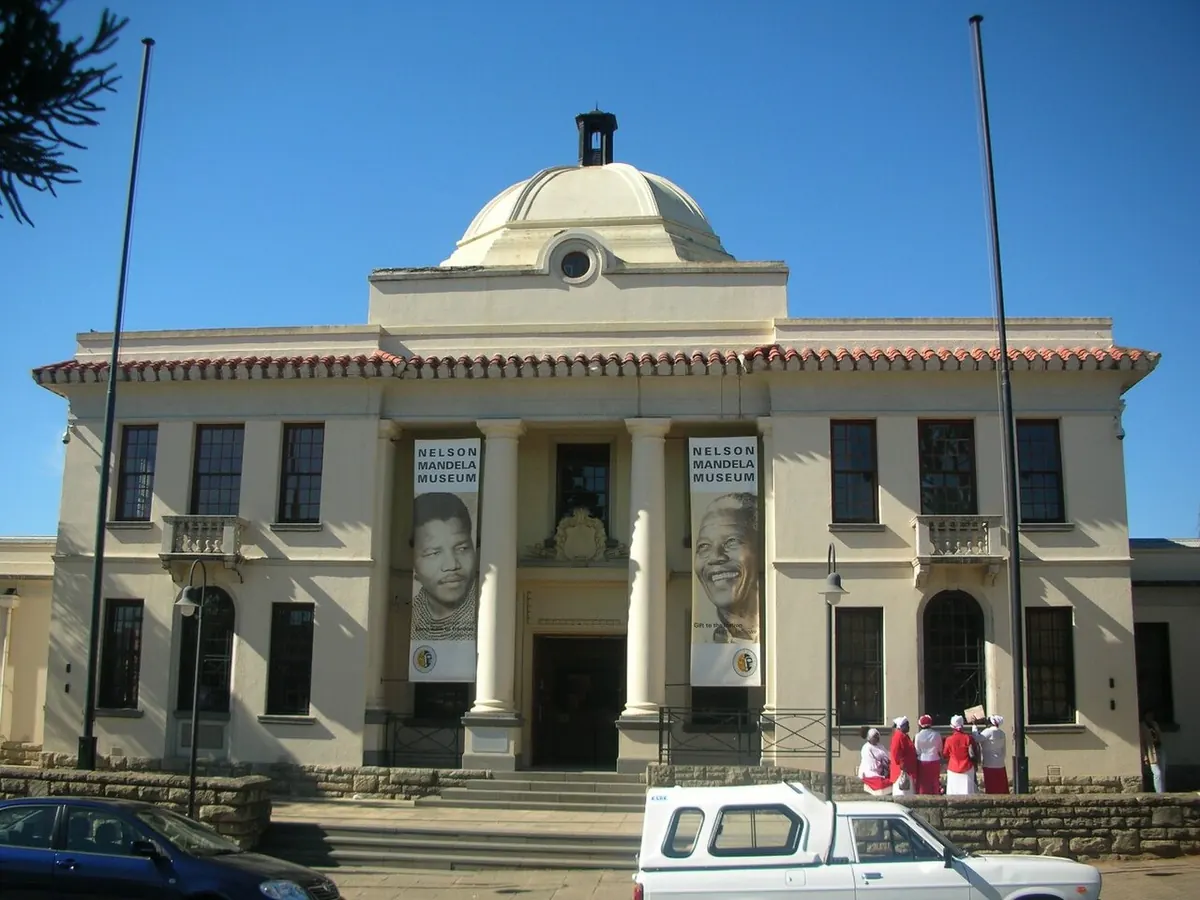
By the early 1900s Mthatha was the main administrative centre of the Transkeian Territories, with Anglican and Catholic cathedrals. The building that later served as Transkei's parliament, known as the Bunga (Bhunga), went up in 1903. source
- 1918
Nelson Mandela was born on 18 July 1918 in Mvezo, a village on the Mbashe River near Mthatha. He grew up in Qunu after his father lost his position as chief of Mvezo. source
- 1963
Transkei got its own Legislative Assembly under the apartheid government's homeland policy. Kaiser Matanzima, a relative of Mandela who in 1955 had persuaded the Bhunga (the council of Transkei chiefs) to accept the Bantu Authorities scheme, became its Chief Minister in 1963. source
- 1976
On 26 October 1976 Transkei was declared an independent state with Umtata as its capital. It was a bantustan, a homeland set up under apartheid for Xhosa-speaking people, and only South Africa and the other homelands it created ever recognised it. source
- 1987
General Bantu Holomisa of the Transkei Defence Force forced out Prime Minister George Matanzima (Kaiser's brother) in October 1987 and his successor Stella Sigcau in December. Military rule lasted until the homeland ended. source
- 1994
On 27 April 1994, the day of South Africa's first democratic election, Transkei was reincorporated into South Africa and became part of the new Eastern Cape province. source
- 2004
Umtata was officially renamed Mthatha on 2 March 2004. You will still see the old spelling on older maps and signs. source
- Language
- This is isiXhosa country. In the 2011 census 85% of people in the city named isiXhosa as their first language and 8.6% English. source
- The Thembu kingdom
- The abaThembu are an isiXhosa-speaking people whose kingdom, Thembuland, took shape around the 1500s. The great house of the Eastern Thembu, the Bumbane Great Place, is at Mthatha, and Mandela belonged to the Madiba clan of the Thembu royal line. source
Main sights in Mthatha
4- Nelson Mandela Museum (Bhunga Building)
The museum opened in 2000 in the Bhunga Building, the old Transkei parliament, and its main exhibition presents Mandela as comrade, leader, prisoner, negotiator and statesman. Listed hours are 9am to 4pm on weekdays and 9am to 1pm on Saturdays, closed Sundays, so check before you go.
Nelson Mandela Museum - Qunu Youth and Heritage Centre
The museum's second site, opened by Mandela himself in 2006 in the village where he grew up, tells the story of his childhood. His grave is nearby on family land.
Nelson Mandela Museum - Mvezo
Mandela's birthplace on the Mbashe River, where the Mandela family still holds the chieftaincy. Wikipedia lists a Nelson Mandela Birthplace Museum here, but the Nelson Mandela Museum now says it runs only two sites (Mthatha and Qunu), so check it is open before you make the trip.
Wikipedia: Mvezo - Mthatha Town Hall
A sandstone building finished in 1908, with gardens in front.
South African History Online: Mthatha
Did you know?
- The city is named after the Mthatha River. One explanation is that the name comes from the word thatha, "taker", after the damage and deaths the river caused in floods. source
- The airport was built under the Transkei government and named K.D. Matanzima Airport after its leader. It is now plain Mthatha Airport. source
- The University of Transkei began in 1976 as a branch of the University of Fort Hare at the homeland government's request. In 2005 it merged with two technikons to form Walter Sisulu University, which still has a campus here. source
- Mandela was buried at Qunu, about 32 km south-west of Mthatha on the N2, on 15 December 2013, on family land at a spot he had picked himself. He called Qunu the place of his happiest childhood days. source
- The DJ and producer Black Coffee, a Grammy winner, was born in eThekwini (Durban) but grew up in Mthatha's Ngangelizwe township and calls the city his hometown. source
Checked 7 October 2026.
Map of Mthatha
See every place on this map as a list