City · KwaZulu-Natal, South Africa
Pietermaritzburg
Short answer
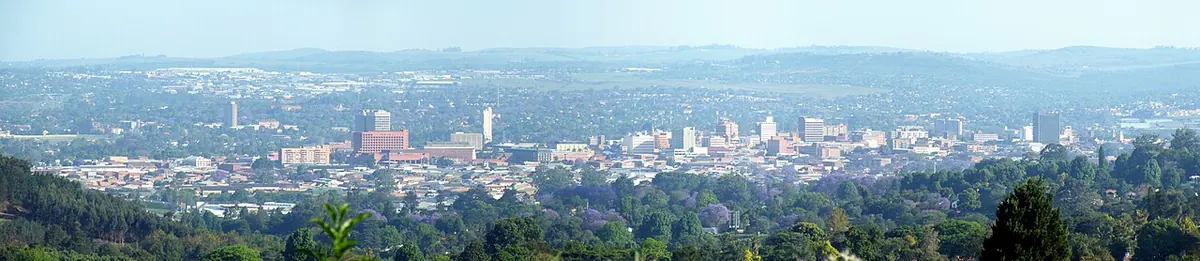
Pietermaritzburg is in KwaZulu-Natal, South Africa. This page lists 4 places to stay, 12 places to eat and drink and 8 sights. The nearest park with an entry fee on this site is uKhahlamba / Drakensberg Park, about 82 km away, where international adults pay from R180.

- Places to stay
- 4
- Eat and drink
- 12
- Sights
- 8
- Park fee nearby: uKhahlamba / Drakensberg Park
- US$10 €9 · R180about 82 km away
In and around Pietermaritzburg
24 places listedWhere to stay in Pietermaritzburg 4
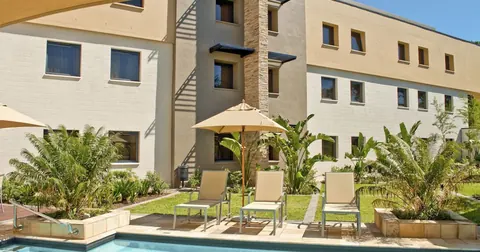 HotelStayEasy PietermaritzburgSanctuary Rd, Woodlands, Pietermaritzburg+27 33 897 6650southernsun.com
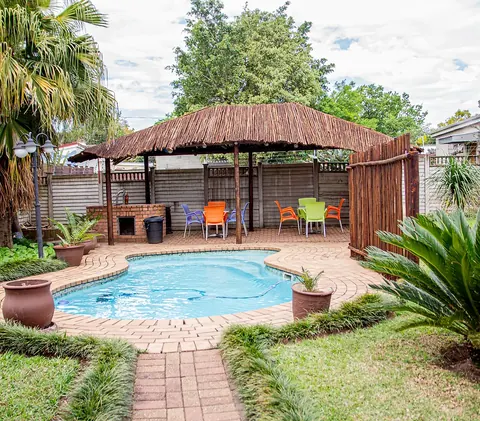 Guest houseThembelelihleMilborrow Road, Scottsville+27 33 386 0144thembelihlebnb.com
- 29.61°S 30.39°EGuest houseTancredi B&BWoodhouse Road
- 29.61°S 30.39°EMotelRegal Inn
Sights 8
- Kwa-Zulu Natal National Botanical GardensAttraction · Quince Road, Pietermaritzburg+27 33 344 1284sanbi.org
 Natal Lion ParkZoonatalzoo.co.za
 Mahatma GandhiMemorial
- Comrades Marathon HouseMuseum · Connaught Road, Pietermaritzburgcomrades.com
- Tatham Art GalleryGallerytatham.org.za
- VoortrekerMuseum · Langalibalele Street
- Delville Woods' Weeping CrossMemorial
- Nola Fourie MemorialMemorial
Restaurants and cafes 12
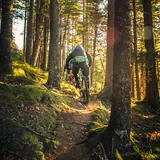 Two Wheel InnCafe · Town Bush Road, Pietermaritzburg+27 84 810 3628twowheelinn.co.za
- RJ's Famous Rib SteakhouseRestaurant · steak house, burger, ice cream, chicken, seafood · Chatterton Road+27 33 342 2189RJSKZN.CO.ZA
- Beanbag CafeRestaurant · cake, coffee shop, curry, pancake, sandwich, savory pancakes, tea, local, ice cream, breakfast · Murray Road
- Honchos ScottsvilleRestaurant · chicken · Alan Paton Avenue
- La Vita Italian ResaurantRestaurant · italian
- Golden DragonRestaurant · chinese
- HonchosRestaurant · chicken
- El Sombrero SpurRestaurant · steak house · Pietermaritzburg+27 33 940 3493spursteakranches.com
- Nando'sRestaurant · chicken, portuguese · Chatterton Road, Pietermaritzburg+27 33 342 1533nandos.co.za
- Nando'sRestaurant · chicken, portuguese
- RocoMamasRestaurant · burger
- Nando's ScottsvilleRestaurant
History and culture
Pietermaritzburg, Maritzburg or PMB to locals, is the capital of KwaZulu-Natal and one of the oldest towns in the province. Voortrekker farmers founded it in 1838, the British made it the capital of their Natal colony five years later, and a young Gandhi was thrown off a train here in 1893. The red-brick Victorian centre still carries all of that within a few blocks.
- 1838
Voortrekkers (Dutch-speaking farmers who left the British Cape Colony in the Great Trek of the 1830s) occupied the site in 1838, after their leader Piet Retief and about seventy of his men were killed on 6 February 1838 at uMgungundlovu, the royal homestead of the Zulu king Dingane. The commando that beat Dingane at Blood River (Ncome) on 16 December 1838 set out from here. source
- 1839 to 1843
The town was the capital of the Natalia Republic, a short-lived Boer state, and the seat of its Volksraad (people's council), until Britain annexed Natal in 1843. source
- 1843
Britain annexed Natal in 1843 and Pietermaritzburg became the seat of the colony's government, with the first lieutenant-governor, Martin West, making it his home. Fort Napier, named after the Cape governor Sir George Napier, was built to house the British garrison. source
- 1851
About 100 Black Christian families settled the farm Welverdiend, roughly 10 km south-west of town, and renamed it Edendale under the missionary James Allison. Unusually for Natal, the people there owned their land outright from the start. source
- June 1893
Mohandas Gandhi, then a young lawyer on his way to Pretoria, was put off the train at Pietermaritzburg station after refusing to leave the first-class compartment he held a ticket for. He spent a cold winter night in the station waiting room and decided to stay in South Africa and fight the discrimination against Indians there, the struggle out of which his non-violent method, satyagraha, grew. source
- 25 March 1961
About 1,400 delegates from 145 organisations met in Pietermaritzburg for the All-in African Conference and demanded a national convention elected by all adults regardless of race. Nelson Mandela was made secretary of the National Action Council that came out of it. source
- March 1990
In the Seven Day War, political violence killed around 200 people in Vulindlela and Edendale on the edge of the city. About 3,000 homes were looted and burned and some 30,000 people were forced to flee. Inkatha, allegedly helped by the police, was suspected of the attacks. source
- 1994 to 2004
After the first democratic elections the new province of KwaZulu-Natal split its capital between Pietermaritzburg (the legislature) and Ulundi, the Zulu royal capital when the British invaded in the Anglo-Zulu War and later capital of the KwaZulu homeland (bantustan). In 2004 Pietermaritzburg became the sole capital. source
- Language and people
- In the 2011 census isiZulu was the first language of 72.4% of people in Msunduzi, the municipality that includes the city, English of 19.0% and Afrikaans of only 1.9%. About 81% of residents are Black African, nearly 10% Indian, 6% white and 3% coloured (the South African term for people of mixed descent). source
- Architecture
- Red brick is the look of the city centre, but it came later. The few Voortrekker buildings that survive from the 1840s are plainer, with stone walls under thatch, and the Voortrekker House on Boom Street is one of the oldest double-storey buildings left. source
- Race days
- Sport is a big part of the city's calendar. The Comrades Marathon, an ultramarathon of about 88 km between Pietermaritzburg and Durban, has been run since 24 May 1921 and changes direction every year: in a down year it starts at the City Hall, around 660 m above sea level, and in an up year it finishes here. source
For American visitors: Alan Paton was born in Pietermaritzburg in 1903 and went to school and university here. He finished Cry, the Beloved Country in San Francisco on Christmas Eve 1946, and Maxwell Perkins, Hemingway's editor, saw it through publication at Scribner's. It became the Broadway musical Lost in the Stars, with music by the German-born Kurt Weill. source
For German visitors: During the First World War Fort Napier held a camp for German prisoners from Germany's African colonies, many of them from Lüderitzbucht in German South West Africa (now Namibia). source
Main sights in Pietermaritzburg
8- City Hall
Built in 1899 to 1901 after the first town hall burned down in 1898, in a Flemish Renaissance Revival style with red-brick walls and a 47 m corner clock tower. It was opened in August 1901 by the Duke of Cornwall.
Wikipedia: Pietermaritzburg City Hall - Tatham Art Gallery
The city's art gallery sits across the road from the City Hall in the former Supreme Court, a double-storey red-brick building with an arcaded front and a Romanesque touch. The building and its gardens are a listed heritage site.
Wikipedia: List of heritage sites in Pietermaritzburg (SAHRA records) - uMsunduzi Museum (formerly Voortrekker Museum)
Founded in 1912 as a Voortrekker memorial and renamed in the 1990s, when it widened its focus to other communities' history. It includes the 1840 Church of the Vow, built to keep the promise the Voortrekkers made before the Battle of Blood River (Ncome), plus a Zulu hut interior and a replica Hindu Shiva temple. At 351 Langalibalele Street; when we checked it was open weekdays 9am to 4pm and Saturdays 9am to 1pm.
uMsunduzi Museum: About - KwaZulu-Natal Museum
The city's big museum of natural and cultural history. The Warren Mammal Hall holds what the museum says is Africa's largest collection of mounted African mammals, and there are galleries on San rock art, Mapungubwe, Indian South Africans and Victorian period rooms. Adults paid R20 when we checked, and it opens daily.
KwaZulu-Natal Museum: Exhibitions - Gandhi statue and the railway station
A bronze statue of Gandhi on Church Street was unveiled by Archbishop Desmond Tutu in June 1993, a hundred years after Gandhi was put off the train. The station where it happened is still a stop for Shosholoza Meyl long-distance trains.
Wikipedia: Pietermaritzburg - Old Natal Houses of Parliament
Queen Anne Revival buildings on Langalibalele Street (formerly Longmarket Street), put up for the colony of Natal's legislature from 1887. They are still used as the assembly hall and offices of the provincial parliament.
Wikipedia: List of heritage sites in Pietermaritzburg (SAHRA records) - Comrades Marathon Museum
Opened in 1988 in Comrades House, a restored Edwardian red-brick building at 18 Comrades Marathon Road (formerly Connaught Road), Scottsville, which is also the race's headquarters. The race association says it is one of only three museums in the world given over to road running. When we checked it was open Monday to Friday, 8am to 4.30pm.
Comrades Marathon Association: Comrades Marathon Museum - KwaZulu-Natal National Botanical Garden
Laid out in 1874 on Mayor's Walk in the western suburbs, with an avenue of plane trees more than a century old and footpaths up a forested hillside.
Wikipedia: KwaZulu-Natal National Botanical Garden
Did you know?
- Neither man the city is named after ever saw it. Piet Retief was killed by Dingane's men in February 1838, and Gerrit Maritz died of illness near present-day Estcourt that September. source
- The Zulu name, uMgungundlovu, is usually translated as place of the elephant, and the elephant ended up on the city's coat of arms. Look at the older lampposts and public buildings: many early versions show an Asian elephant, not an African one. source
- South African History Online calls the City Hall the largest red-brick building in the southern hemisphere. source
- Savages FC, founded here in 1882, is said to be the oldest football (soccer) club in South Africa and on the continent. The city's cricket oval is also one of only two first-class grounds with a tree inside the boundary; the other is in Canterbury, England. source
- The writer Bessie Head was born in the Pietermaritzburg mental hospital in 1937 to a white mother and a Black father whose name is unknown, at a time when such relationships were illegal. She grew up with a coloured foster family in a poor area of the city and is usually counted as Botswana's most influential writer. source
Checked 7 October 2026.
Map of Pietermaritzburg
See every place on this map as a list