City · Matabeleland North, Zimbabwe
Bulawayo
Zimbabwe's second city and the old Ndebele capital, 1,358 m up and cool from May to August, with the Khami ruins 22 km west and Matobo's granite hills, rhino and rock art 30 km south.
Short answer
Bulawayo is in Matabeleland North, Zimbabwe. This page lists 38 places to stay, 71 places to eat and drink and 25 sights. The nearest park with an entry fee on this site is Khami Ruins, about 21 km away, where international adults pay from US$10.
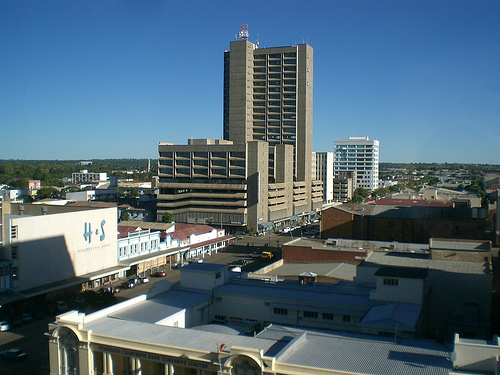

- Places to stay
- 38
- Eat and drink
- 71
- Sights
- 25
- Park fee nearby: Khami Ruins
- US$10 €9about 21 km away
In and around Bulawayo
134 places listedWhere to stay in Bulawayo 38
- 20.16°S 28.59°EHotelHotel St Patrick's12th Avenue+263 297 4424
- 20.19°S 28.59°EHotelCumberland Guest LodgeCumberland Drive, Bulawayo+263 29 224 2643cumberlandguestlodge.com
- 20.20°S 28.56°EGuest houseEbuhleni Guest LodgeGladstone Road+263 77 241 4046
- 20.22°S 28.60°EHostelBurkes' Backpackers ParadiseInverleith Drive, Bulawayo+263 78 231 1011burkes-paradise.com
- 20.16°S 28.61°EHotelHoliday Inn Bulawayo+263 29 225 2464ihg.com
- 20.22°S 28.60°EHotelHornung Park LodgeBurnside Rd, Bulawayo, Zimbabwe
- 20.15°S 28.62°EHotelKhumalo Hotel & Conference CentreTrenchard Road+263 29 223 1236khumalo-hotel.co.zw
- 20.19°S 28.61°EHotelBanff Lodge+263 29 224 3176banfflodgehotel.com
- 20.21°S 28.58°EHotelCresta Churchill Hotel+27 11 881 1200crestahotels.com
Show all 38 places to stay
- Jule's Self Catering Accommodation · Guest house · Fitch Road+263 77 558 1205
- Munda lodge · Hotel+263 29 224 4428mundahotel.com
- YWCA Hostel · Hostel · 9th Avenue+263 29 226 0185
- City of Bulawayo Caravan Park · Campsite · Bulawayo
- Jule's Guesthouse and Backpackers ( Home Away from home) · Guest house · Heyman Road
- Lalani Hotel and Conference Center · Hotel · Derwent Road
- Berkeley Place · Hostel · Josiah Tongogare Street
- Bulawayo Club · Hotel
- Burkes' Paradise · Campsite · Inverleith Drive, Bulawayo
- Caravan Park Lodge · Hotel
- Chisora · Guest house · Gwanda Rd
- Granite Park Lodge · Campsite · Laidlaw close, Bulawayo
- Mai Zvidzai · Guest house · Leopold Takawira Avenue
- Nesbitt Castle · Hotel · Percy Avenue
- Sekuru Mahonye · Guest house · Tait Road
- The Grey's Inn · Hotel · Robert Mugabe
- Blueberry Guest House · Guest house
- Bulawayo Rock Tourist Inn · Hostel
- Burombo · Hostel
- Hotel Plaza · Hotel
- Ingrids Guest Lodge · Guest house
- Mavuna Guest Lodge & Conference Centre · Guest house
- Mpala Lodge · Guest house
- Packers Paradise · Hostel
- Retreat Lodges · Guest house
- Selboune Hotel · Hotel
- Sethule lodges · Mountain hut
- Travellers Guest Lodge · Guest house
- Park Road Lodge · Hotel
Sights 25
 The Natural History Museum of ZimbabweMuseum · Park Road, Bulawayo+263 29 225 0045naturalhistorymuseumzimbabwe.com
 Bulawayo Railway MuseumMuseum · Crew Road
- National Art Gallery BulawayoGallery · Leopold Takawira Avenue+263970721nationalgallery.co.zw
- Khami Ruins (World Heritage Site)Attraction
- The CenotaphMemorial
- Canella GardensAttraction · Sherwood road
- NesbittCastle · Percy Rd
- 12443 NkulumaneAttraction
- Bajoy bluesViewpoint
- Bess Harper Memorial LanternMemorial
- Charles Frederick Lendy MemorialMemorial
- Cross Hill RuinsViewpoint
Show all 25 sights
- Dam Wall · Viewpoint
- Esporeni Outdoor Market · Attraction
- Game Board · Viewpoint
- Hill Complex · Viewpoint
- Information Board · Viewpoint
- Inkosi Mzilikazi Memorial Site · Monument
- Joshua Nkomo Statue · Memorial
- King Mzilikazi Tomb · Archaeological site
- Michael W. Gardiner Memorial Bench · Memorial
- Monolith · Viewpoint
- Nothern Platform · Viewpoint
- Old Bulawayo · Monument
- Passage Platform · Viewpoint
Restaurants and cafes 41
- Chicken Hut BulawayoRestaurant · portuguese, international · Robert Mugabe Way, Bulawayo+263 78 004 5271chickenhut.co.zw
- Indaba Book CafeCafe · Josiah Tongogara Street+263967068facebook.com
- Kings KraalRestaurant · Hillside Road+263 78 099 2696
- Earth CafeCafe · Corner Oak St & 12th Avenue, Bulawayo+263 77 764 5044
- The Art Grove Coffee ShopCafe · Various · Leopold Takawira Avenue+263 77 238 3810
- 3 Daughters Restaurant and Jazz SportsRestaurant · Ludlow Hewit Road+263 77 172 9750
- Shangrila Restaurant & TakeawayRestaurant · chinese
- Sports 747Restaurant · african
- The Bon HillsideCafe · various
- African DeliRestaurant · african
- Brooks Cafe and DeliCafe · Bulawayo
- Cafe BakuCafe · J.M. Nkomo Street, Bulawayo
Show all 41 restaurants and cafes
- Cafe Espresso · Cafe
- Chicken Inn · Restaurant · chicken
- Haefeli's Restaurant · Restaurant
- KaMaNdazi · Restaurant+263 77 274 1784
- Middy's Coffee Shop · Cafe · burger
- Mumsie's Kitchen · Restaurant · african
- Shake'N'Toss · Restaurant · international
- Xai Xai · Restaurant · mozambican
- Africa Delight local food · Restaurant
- Barcelos · Restaurant
- Canela · Restaurant
- Cook House · Restaurant
- Dickies Restaurant · Restaurant
- Fish Chicken City · Restaurant
- Homely House Restaurant · Restaurant
- Homies local food · Restaurant
- Innscor · Restaurant
- McInn Local food · Restaurant
- Nabal's Restaurant & Diner · Restaurant
- Red Cafe · Cafe
- Rendevue Restaurant / Cafe · Cafe
- Roosters Restaurant · Restaurant
- Something Sweet Cafe · Cafe
- The Deck · Restaurant
- The Kraal · Restaurant
- Waverley · Restaurant
- Pizza Hut · Restaurant · pizza · Bulawayo
- Nando's · Restaurant · chicken, portuguese
- RocoMamas · Restaurant · burger
Bars and pubs 30
- MaKhumalo Big BhawaBar · african · Second Street
- StuntsPub · 6th Avenue, Bulawayo
- Dee & NoeBar
- East 68 Pub and GrillPub · Esigodini Road
- Tequila barBar
- Wise watersBar
- Bar LoungeBar
- CubanaBar
- Elangeni BarBar
- Hlanganni Bar LoungeBar
- Iminyela Beer GardenBar
- Kidza's Sports DinerBar
Show all 30 bars and pubs
- Luveve Cocktail · Bar
- Makhalanga Beer Garden · Bar
- Mathonisa · Bar
- Mganwini Social Club · Bar
- Nketa 8 Beer Garden · Bar
- Nketa Tavern · Pub
- Phekiwe Beer Garden · Bar
- Samuriwo Bar · Bar
- Sizinda North Beer Garden · Bar
- Sizinda South Beer Garden · Bar
- Stop Over Bar and Restaurant · Bar
- Suicidal Beer Garden · Bar
- The Clubhouse · Bar
- The Good Fellas Pub · Pub
- The Kings Head · Bar
- The Place · Bar
- The Skittle Inn · Pub
- Tin Cup · Bar
Bulawayo is Zimbabwe’s second city and the capital of the old Ndebele kingdom. Mzilikazi’s people settled here around 1840, Lobengula ruled from it until 1893, when the British South Africa Company took over. The centre’s streets were laid out wide enough for an ox wagon to turn in them. At 1,358 m it is cool, dry and slow, 665,952 people at the 2022 census and a lot of silent factories. Most visitors treat it as the gate to Matobo and Khami and leave too soon.
Getting there
Joshua Mqabuko Nkomo airport is 15 km north of the centre, with Airlink from Johannesburg, and Fastjet and Air Zimbabwe from Harare, Johannesburg and Victoria Falls. By road it is 430 km from Harare, five to six hours with five toll gates, and coaches from Johannesburg (Intercape, Greyhound, Eagle Liner) pull in daily. Buses from Harare or Victoria Falls take seven to eight hours.
The weekly sleeper to Victoria Falls has run again since October 2025, 472 km, out of Bulawayo at 19:00 on Fridays and due at 10:00 the next morning. People who have done it say it runs one to four hours late and that tickets are usually sold only on the day. The Harare train is still suspended. The road north to Hwange is in our self-drive guide.
When to go
May to August. Days sit around 22 to 24°C with almost no rain and June and July nights drop to 7°C, so bring a jersey. October is the hot one, an average high of 29°C. The rains fall as afternoon thunderstorms from about November to April, 594 mm in a normal year.
What to do
The Natural History Museum in Centenary Park has nine galleries in a 1962 building and allows no photographs. The Railway Museum at the station, set up in 1972, keeps Rhodes’ private saloon and Garratt steam locomotives.
Khami is 22 km west, a taxi ride: the Torwa capital for about two centuries from around 1450, with a 68 m retaining wall and World Heritage status since 1986. Matobo starts about 30 km south down Matopos Road (Robert Mugabe Way in town), roughly an hour: granite domes, over 3,000 recorded rock art sites, black and white rhino, the densest leopard population anywhere and Rhodes’ grave on Malindidzimu. Chipangali, the wildlife orphanage the Wilsons started in 1973, closes on Mondays.
Good to know
- Malaria: the Zimbabwe Tourism Authority puts Bulawayo at low to no risk. See our travel essentials guide.
- US dollar cash in small, clean notes. Torn ones get refused and some places do not take cards.
- Power cuts are long and the traffic lights go dark with them. Water is rationed in dry spells.
- Pickpockets work the centre after dark and street lighting is poor, so take care leaving banks and ATMs.
- Photographing government buildings, the airport, police or soldiers is illegal.
- Night buses have had serious accidents. Do not drive outside towns after dark.
History and culture
Bulawayo was the capital of the Ndebele kingdom, and Cecil Rhodes's company built its town on the ashes of the king's kraal in November 1893. For most of the twentieth century it was the industrial and railway city of the country, then the factories closed, and in the 1980s the Fifth Brigade killed thousands of civilians in the countryside around it. The wide streets, the old club and the museums make sense once you know that, and so does the slower, prouder mood of the place compared with Harare (Salisbury).
- 1838 to 1868
Mzilikazi, a chief of the Khumalo clan who had broken with Shaka's Zulu kingdom in 1823 and been driven out of the Transvaal by the Voortrekkers, crossed the Limpopo in 1838 and settled this country in 1840. He organised his people, the Ndebele (Matabele to the British), in regimental kraals (fortified homesteads) on the model of Shaka's, strong enough to beat off Boer attacks between 1847 and 1851. His first capital was at Inyathi, where his old friend the missionary Robert Moffat visited him. He died in September 1868 and was buried that November in a cave at Entumbane in the Matobo Hills. source
- 1870 to 1881
Lobengula, Mzilikazi's son, won a bloody succession fight and in 1870 moved his capital to a new site, renaming it Gubulawayo, from bulawa, to kill or persecute, after the ordeal of getting the throne. It was about a mile round inside a high wooden palisade, with a parade ground, the royal hut, a kraal for sacred goats that nobody entered without the king's permission and a hut for each of his wives. He held court under an indaba tree (indaba is a council or meeting), the London Missionary Society opened Hope Fountain nearby the same year and the Jesuits followed in 1879. In 1881, wary of the missionaries, he had the place burned and moved north to the ground where State House stands today. source
- 1888 to 1889
On 30 October 1888 Lobengula put his mark to the Rudd Concession, a 25 year grant of mining rights to Cecil Rhodes's agents Charles Rudd, Rochfort Maguire and Francis Thompson, in return for money and guns and on the understanding that it kept the Boers and Portuguese out. He could not read and only learned the real terms later. He protested to Queen Victoria on 23 April 1889, and the envoys he sent to London were held up by Alfred Beit's people; the reply from her advisers was that it was impossible to keep white men out. source
- October 1893 to January 1894
The company invaded in October 1893: about 700 men under Major Patrick Forbes with five Maxim guns, the first time Britain used the weapon in war, and 700 of Khama's Bechuana from the south. At the Shangani on 25 October roughly 1,500 Ndebele died for four company dead, and at Bembesi on 1 November about 2,500 more. Lobengula fled and his people burned the royal town, ivory, gold and ammunition store with it. The company moved in the next day and built its own town on the ruins of the king's residence. Allan Wilson's Shangani Patrol, sent to catch the king, was overwhelmed on the Shangani in early December, 34 men killed and three getting away, and Lobengula died of smallpox in January 1894. The izinduna (chiefs) then submitted and the kingdom of Mthwakazi was dissolved. source
- 1896 to 1943
In March 1896 the Ndebele rose against company rule and besieged the new town. Relief columns broke the siege in late May and the Ndebele surrendered their arms in October. Jameson had declared the settlement on 4 November 1893; Bulawayo became a municipality in 1897, and in 1940 three RAF stations were set up around it to train Empire aircrew. City status came in 1943. source
- 1947 to 1980
Joshua Nkomo, born in 1917 in the Matobo district to a poor Ndebele family, came back to Bulawayo in 1947 and rose to lead the union of black railway workers. He formed ZAPU here in 1961 after the National Democratic Party was banned, spent 1964 to 1974 in the Gonakudzingwa restriction camp, and in the 1980 election ZAPU won the 20 seats in Matabeleland while Robert Mugabe's ZANU formed the government. Nkomo turned down the ceremonial presidency and became Minister of Home Affairs. source
- 1980 to 1987
Fighting between former ZIPRA and ZANLA guerrillas broke out in the Bulawayo suburb of Entumbane in November 1980 and again in February 1981. From January 1983 the North Korean trained Fifth Brigade, answering directly to the Prime Minister's office, ran the campaign called Gukurahundi (Shona for the early rain that washes away the chaff) across Matabeleland and the Midlands. In Bulawayo, Ndebele men of fighting age were treated as dissidents; most of those detained were shot or sent to camps. The Catholic Commission for Justice and Peace documented at least 2,000 to 2,750 deaths and thought 8,000 possible, and scholars of genocide put the toll above 20,000. The Unity Accord of 22 December 1987 folded ZAPU into ZANU-PF and ended the killing. Mugabe called it a moment of madness in 2000; in July 2024 the government began village hearings led by chiefs, which survivors say come without any admission or accountability. source
- 2009 to 2014
Dollarisation in 2009 wiped out company savings and Bulawayo's factories never came back. G&D Shoes and the Zimbabwe Engineering Company (Zeco), which between them had employed about 2,000 people, were down to about 50; Merlin Textiles, Stewarts & Lloyds, Dunlop, Hunyani and Tregers are on the same list. A government rescue fund launched in 2011 was a fraction of what the industry minister said was needed. By 2014 the factories of Belmont were warehouses for South African imports and one had become a Pentecostal church, the railways were running at a tenth of capacity with staff unpaid for a year, and firms were moving to Harare (Salisbury), which many here read as deliberate neglect of a Ndebele city. source
- Language
- The city's language is isiNdebele, a Nguni language that shares more than 85 per cent of its words with Zulu; some linguists call it a Zulu dialect and the argument is as much political as linguistic. It has fifteen click consonants, written c, q and x, and it is one of Zimbabwe's sixteen official languages. source
- The Ndebele
- About 2.2 million people in Zimbabwe are Ndebele. The British took the name Matabele from the Sotho and Tswana; the people call themselves amaNdebele, and Mzilikazi named his nation Mthwakazi. The kingdom absorbed the Rozvi, who took on its language and customs, and overran the Kalanga. Most Ndebele today are Christian. source
- Makokoba
- Makokoba was the city's first black township. The name comes from ukukhokhoba, bending and walking with a stick, which is how people saw a Native Commissioner called Fallon. It produced the footballers Adam, Madinda and Peter Ndlovu, the Amakhosi theatre group and the Siyaya dance company, and after independence it sent ZAPU men to the council and to parliament. source
- Highlanders
- Highlanders, Bosso to everyone here, started in 1926 as Lions Football Club, founded by Rhodes, a grandson of Lobengula through his son Njube, with boys from Makokoba, and became Matabeleland Highlanders in 1936. Home is Barbourfields, which holds about 40,000, and a match against Dynamos of Harare is the Battle of Zimbabwe, the one to see if the dates line up. Seven league titles, the last in 2006. source
- Intwasa festival
- Intwasa is isiNdebele for spring, and the Intwasa Arts Festival koBulawayo takes over seven venues around the city in September, run by the playwright Raisedon Baya. It is a mixed arts festival with a high schools drama competition, and the 2012 edition was the eighth, so it dates from the mid-2000s. source
For American visitors: Frederick Russell Burnham of Minnesota, the American who scouted for the company in both wars, had his daughter Nada here in May 1894, the first white child born in the new Bulawayo. She died of fever and starvation during the siege on 19 May 1896 and lies in plot 144 of the Pioneer Cemetery. Rider Haggard, whose novel had given her the name, dedicated three books to her. Burnham went on to teach woodcraft to Baden-Powell in the Matobo Hills and died in Santa Barbara in 1947. source
For American visitors: Solusi, near the city, is where the Seventh-day Adventist church opened its first mission among non-Christian people in 1894,, staffed by its first party of American missionaries. Among them were W. H. Anderson, an Indiana man fresh from Battle Creek College in Michigan, and his wife Nora Haysmer; he went on to open mission stations in Zambia, Botswana and Angola and only went home in 1945. source
For American visitors: The novelist NoViolet Bulawayo (Elizabeth Zandile Tshele), born in Tsholotsho in 1981 and schooled at Njube and Mzilikazi high schools, built her career in the United States: Kalamazoo Valley Community College, Texas A&M-Commerce, Southern Methodist, a Cornell MFA in 2010 and a Stegner Fellowship at Stanford. We Need New Names made her the first black African woman on the Booker shortlist in 2013, and Glory was shortlisted in 2022. Her pen name joins the Ndebele word for with, her late mother's name and the city. source
Main sights in Bulawayo
8- Natural History Museum of Zimbabwe
Founded in 1901 as the Rhodesian Museum and in its round four storey building in Centenary Park since 1964. The Hall of Kings covers Mzilikazi and Lobengula. The Doddieburn elephant in the ground floor diorama, 3.52 m tall and 5.5 tonnes, is the second largest ever mounted, and the first floor has the Zeederberg coach and the gun carriage that carried Rhodes's coffin. There is also a coelacanth and a life-size reconstruction of the inside of a gold mine.
Zimbabwe Field Guide, Natural History Museum of Zimbabwe, Bulawayo - Bulawayo Railway Museum
Opened on 4 November 1972, the 75th anniversary of the line from Vryburg. Rhodes's private saloon is here, the coach that carried his coffin from Cape Town in 1902 for burial in the Matobo Hills, with Jack Tar, the 1889 tank engine that was the first locomotive to reach Victoria Falls on 25 April 1904, and a 1929 Beyer Peacock Garratt that ran 1.6 million miles. Most of the big engines stand outdoors and the museum lives on donations.
Zimbabwe Field Guide, National Railways of Zimbabwe Museum, Bulawayo - Joshua Nkomo Statue
The bronze of Nkomo at the corner of Joshua Nkomo Street and 8th Avenue, unveiled on Unity Day, 22 December 2013, the same day Main Street took his name. A first statue went up in 2010 and was pulled down before its unveiling: the family disliked the plinth, and many Zimbabweans objected that the contract had gone to North Korea's Mansudae Art Studio, from the country said to have trained the Fifth Brigade, over a Zimbabwean sculptor.
Wikipedia, Statue of Joshua Nkomo - Old Bulawayo
Lobengula's capital of 1870 to 1881, reached along Hillside, Burnside and Douglasdale Roads and then about 11 km of gravel on Criterion Road. The 1998 reconstruction, built with a team from Zululand (palace, eight beehive huts, cattle kraal, wagon shed, palisade), burned to ashes in a bush fire in August 2010; only the interpretive centre survived. Across the road is the site of the indaba tree where Lobengula held court; the original died in the 1960s and the strangler fig that killed it stands in its place.
Zimbabwe Field Guide, Gubulawayo or Old Bulawayo 1870 to 1881 and the Indaba Tree - Khami Ruins
The capital of the Torwa dynasty's Butua state for about 200 years from around 1450, 22 km west of town and a World Heritage Site since 1986. The builders terraced the granite into platforms with chequer, herringbone and cord patterned walls; the retaining wall of the precipice platform is 6 m high and 68 m long. Rozvi rebels under Changamire Dombo took it in 1683 and the Ndebele drove the Rozvi out in the 1830s.
Wikipedia, Khami - The Cenotaph
In the Post Office gardens, a granite pillar from the Matobo Hills, unveiled by the Prince of Wales in 1925 over a plaque laid on 30 March 1921. Plaques along its veranda name the dead of both world wars, the Malayan Emergency and the Rhodesian bush war, from Southern Rhodesian, BSA Police, South African and imperial units. It was renovated in 2017, and in 2019 plans were announced to widen it to everyone who has died in the service of Zimbabwe.
Wikipedia, The Cenotaph, Bulawayo - Bulawayo Club
Founded in 1895 by the men who had just taken the country, Carrington, Willoughby, Hans Sauer and Earl Grey among them, and housed since 1934 in a cream three storey building of sandstone and Oregon pine on 8th Avenue and Fort Street, the city's first prefabricated building, its foundation stone laid by the Duke of Kent. Women were let in once or twice a year into the 2000s; Jairos Jiri was the first black member. It opened to the public in 2008 and 2009 and lets 15 rooms, so you can sleep in the old order.
Wikipedia, Bulawayo Club - National Art Gallery Bulawayo
The Bulawayo branch of the National Gallery opened in 1970 in an old market building behind City Hall and since 1993 has occupied Douslin House, a two storey building of 1901 on Main Street. It is the smaller sister of the Harare gallery that the Queen Mother opened on 16 July 1957, and the building is as good a reason to go in as the art.
Wikipedia, National Gallery of Zimbabwe
Did you know?
- The streets in the centre are 120 feet (37 m) wide, laid out for ox wagons and the wide turning circle of a full span of oxen. source
- Bulawayo calls itself the City of Kings, and its Ndebele nickname is kontuthu ziyathunqa, smoke arising, after the cooling towers of its coal power station. The 2022 census counted 665,952 people, barely more than the 653,337 of 2012; the city council says the real figure is about 1.2 million. source
- The first aeroplane to reach the country landed on Bulawayo's racecourse at about 12:40 one day in March 1920: the Silver Queen II, a Vickers Vimy flown by Pierre van Ryneveld and Quintin Brand on their flight from England to the Cape. On take-off the next morning, 6 March, it crashed into the bush beyond the Matsheumhlope River near Hillside. The crew were badly shaken but not seriously hurt and finished the flight to Cape Town in a South African DH9, and a plaque beside the golf course at Fairbridge Way and Albemarle Road marks the spot near the crash. source
- Before the railway, you reached Bulawayo by Zeederberg coach from the railhead at Mafeking, about 850 km in five or six days when the mules were fit, longer when they were not. Zeederberg tried zebras when mules ran short and gave up because they had no stamina. During the 1896 rising the coaches were the only transport in or out, and one with nine passengers was attacked between the Shangani and the town. The railway's arrival in 1897 was the beginning of the end for the coaches, and the council's Concord coach, bought for anniversary parades in 1932, has stood in the Natural History Museum since 1964, one of two left in southern Africa. source
- The Zimbabwe International Trade Fair began in May 1960 as the Central African Trade Fair, and it is now run together with the older Bulawayo agricultural show. The 2025 fair opened on 21 April. source
- On 23 June 2018 a grenade went off at White City Stadium just as President Mnangagwa walked off the stage at a campaign rally. He was unhurt; 49 people were injured, among them both vice presidents, and two security men died two days later. Mnangagwa blamed the G40 faction of his own party on what he admitted was a hunch without evidence, two suspects were released without charge, and in 2024 he ordered a new investigation that covers it. source
Checked 19 October 2026.
Flush at half past seven: Bulawayo and the river it waits for
In September 2012 the mayor of Bulawayo, Thaba Moyo, asked a whole city to pull the chain at the same moment, half past seven every Monday evening. The idea came from the council’s chief engineer. Water was rationed for 72 hours a week, and with nothing moving through the pipes the waste was building up, so enough people flushing together might push it through and keep the pipes wet. The story went round the world as far as Radio New Zealand. In Bulawayo it was just the next thing to try, and it came back in 2019, when a councillor in Pumula North was asking residents to flush between six and half past in the morning and again between eight and half past at night, with bucket water if the taps were off.
A pipeline promised since 1912
Bulawayo has been looking north to the Zambezi for its water for more than a century. The colonial government floated the idea in 1901. A Matabeleland Zambezi Water Project was formed in 1912, a pre-feasibility study followed in 1934, and then very little happened until the droughts of 1991 and 1992 frightened everyone again.
The piece that exists is the Gwayi-Shangani Dam, started in September 2004. When it is full it should be the country’s third largest inland water body after Tokwe-Mukosi and Mutirikwi, and a pipeline of about 260 km is meant to carry its water to the Cowdray Park works on the edge of the city. In 2020 the completion date was December 2022. By May 2025 even the dam was in doubt for its 2025 target.
Meanwhile the city lives on its own supply dams, and when they drop the council sheds water. Shedding has been part of life since 2016, when some of those dams were taken out of use as their levels fell, and in 2019 it was 72 hours a week. A pipeline from Mtshabezi Dam, built by a Chinese firm in 2012 as the quick fix, pumps only when the power is on, which is the other thing Bulawayo is short of. So households keep drums and buckets, and those with money sink boreholes. If you are staying in a guesthouse, a full tank on the roof matters more than the thread count.
Fish eagles on the first reservoir
Some of the city’s first stored water came from Hillside, where work began in 1895 and the dams were finished and named in 1898. The council bought them in 1924, and the old reservoirs became a national monument in 1942 and a city bird sanctuary around the middle of the century. Stone Age tools and rock shelters have been found around them.
Birders go for the water birds and the evening. African fish eagles call over the dam, jacanas and black crakes work the edges, and around dusk the spotted eagle-owls and fiery-necked nightjars start up. Something among the trees and aloes is nearly always in flower, which keeps the sunbirds coming.
Giraffe on Matopos Road
Tshabalala is the surprise. About 12 km out on Matopos Road, on the way to Matobo, ZimParks keeps some 1,200 ha of acacia thornveld where you can leave the car at the gate and walk or cycle among giraffe, zebra, impala, warthog and tsessebe. BirdLife Zimbabwe has counted more than 200 bird species, kori bustard, secretarybird and purple roller among them. Lions arrived in 2019, brought in so that city families who could never afford Hwange would see one, and in 2022 a three year old male came down 280 km from Hwange in a cage on the back of a Land Cruiser to join two lionesses, Naughty and Skippy. The lions live in enclosures and walking is still allowed. One warning from the birders: the soil is black clay, and after heavy rain the roads close.
Suburbs named for princes and lonely men
Read a Bulawayo street map and you are reading the Ndebele royal family. Njube, Nguboyenja and Sidojiwe are sons of Lobengula. Luveve, built in 1931, is probably named for his daughter, Magwegwe for his senior induna, Matshobana for Mzilikazi’s father and Nkulumane for Mzilikazi’s heir apparent. Entumbane takes the name of the hill where Mzilikazi was buried.
The other names tell you how people lived. Iminyela was built for men only, and Mabuthweni, also called eZinkabini, gets its name from izinkabi, oxen, which is what men without wives were called. Pumula means rest, because people built there to retire. Pelandaba means “the matter is finished”, a name that marked the end of residents’ long fight for secure title to their homes.
Dorothy Masuka was born in this city in 1935 and at 12, in 1947, went to live with an aunt in South Africa and was put in school there. Her song Dr Malan named the apartheid prime minister, and her Lumumba of 1961 had its master tapes seized and destroyed, so no copy is known to survive. She spent 31 years in exile, 16 of them in Zambia working as an air hostess. Hamba Nontsokolo is the song people know, and Bulawayo jazz fans tie her to the stages at Amakhosi, McDonald Hall and Stanley Square. She was back in the city in 2018 to bury her sister, and died in Johannesburg in February 2019.
Guides for Bulawayo
Map of Bulawayo
See every place on this map as a list