Place to stay · Grünau
Grünau Chalets
Self-catering chalets and four private campsites beside the Shell station on the B1 at Grünau, 140 km north of the Noordoewer border and a base for the Fish River Canyon.
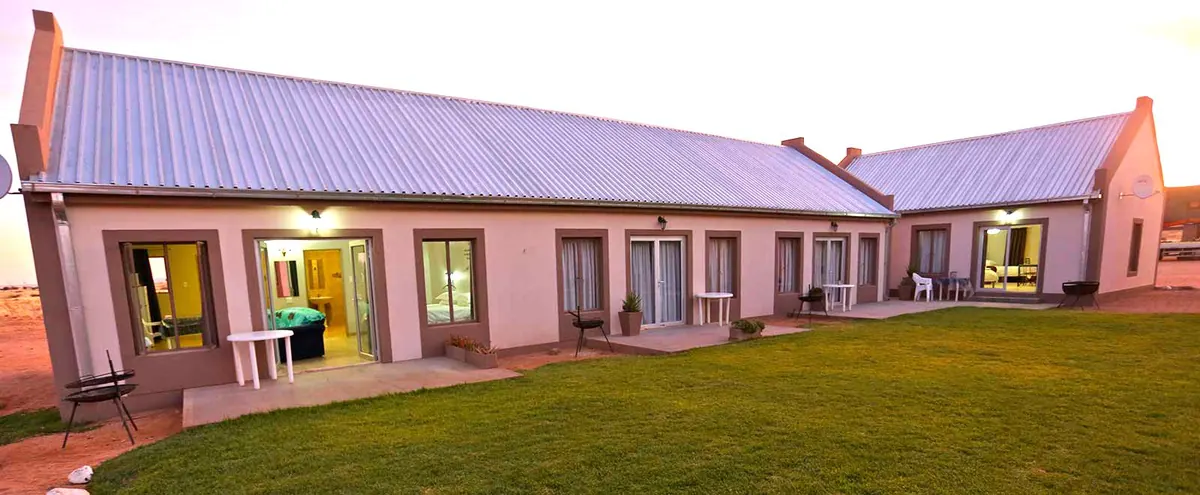
Grünau Chalets is an overnight stop right next to the Shell fuel station on the B1 at Grünau, in the ǁKaras Region. It is 140 km north of the Noordoewer border post and about 160 km south of Keetmanshoop, which makes it a sensible first or last night in Namibia on the road to or from Cape Town.
What to expect
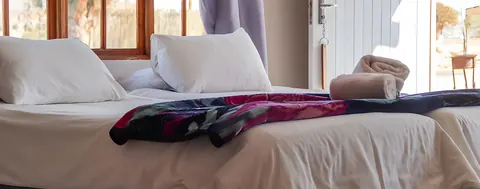
There are 12 en-suite, open-plan, self-catering rooms with 40 beds between them: four doubles, three three-bed rooms, three four-bed rooms, and two larger rooms for five and six people with a bath as well as a shower. Each has its own entrance, a kitchenette and parking at the door. The four campsites each have their own shower and toilet, a power point, a braai and a wash-up area. Wood and braai packs are sold at reception.
Practical details
- Phone and WhatsApp: +264 81 783 1313.
- Cards are accepted at reception. The Shell station next door has a bakery, takeaways, a shop and an ATM.
- The property is electric-fenced and a supervisor is on duty around the clock, so late arrivals are fine.
- Pets are welcome.
Good to know
The Intercape Mainliner bus stops at the Shell station, a short walk away. For the Fish River Canyon, the chalets suggest leaving early to reach the Hobas viewpoint before the heat, then going on to the hot springs at ǀAi-ǀAis. Heading north, the Quiver Tree Forest and Giant’s Playground are just past Keetmanshoop.
Last updated 7 October 2026. Sources: Grünau Chalets, Grünau Chalets, accommodation, Grünau Chalets, facilities, Grünau Chalets, activities, Wikipedia, Grünau, Namibia.
Km 129: the railway halt that became a truck-stop bed
Grünau was a number before it was anywhere to sleep. When the German colonial railway pushed a branch south from Seeheim towards Kalkfontein-Süd (today’s Karasburg), the engineers logged a halt here at kilometre 129. Klaus Dierks, the engineer who later wrote the standard study of Namibia’s railways, gives the dates: the branch was authorised on 18 May 1908, work started a fortnight later, and the full 180 km opened on 6 July 1909. The name is German for a green meadow, which is what the plain looks like after good rain and not otherwise.
The line that was joined from the wrong side
The Germans never meant this branch to reach the Cape. South African troops did that for them. By Dierks’s dates the Union began laying track from Prieska on 3 August 1914, crossed the border at Nakop on 20 November and met the German rails at Kalkfontein-Süd in June 1915, built to keep its army supplied. He calls it a “not entirely voluntary” connection. From then on Grünau sat on a through route.
The farm trade that used the railway has since moved to the tar. The old station is in the village, south of the chalets, and its building is no longer in use. The junction of the roads from the two South African borders is where the traffic is now, and it is where the fuel station, the Intercape stop and these rooms are.
New rooms in 2013, and the lorries
The rest camp at the garage used to go by Grünau Motors. A photograph on Wikimedia Commons from December 2012 shows a retired signboard for the Grünau Motors Rest Camp, and in May 2013 a poster on the 4x4 Community forum described the self-catering rooms at the Shell garage, under the Grunau Motors name, as new. Whether those are the same rooms sold as Grünau Chalets today, the record does not say. The same poster was blunt about the position: the rooms are right beside the road and you hear the trucks through the night. They said they would stay again anyway. That is one traveller’s account, but nobody who has looked at a map will doubt it.
Opinion on that forum has never been kind to Grünau as a place to linger. In 2010 a traveller planning two nights here was told by one member to give the place a miss and by another to go straight to Ai-Ais, and changed the plan. In the 2013 thread three of the four replies sent the asker to guest houses away from the forecourt. Treat it as what it is: a bed at the point where you run out of daylight.
Water worth knowing about
Water in this village has a story. In May 2010 The Namibian reported that Grünau’s roughly 900 residents were living on 30 cubic metres of water a day, with the taps open only from 07:30 to 09:00. The settlement clerk, Daniel Bantam, said people could not build flush toilets because of it. Ten years later New Era covered the opening of a small desalination plant in the village, described as the country’s first to pair renewable power with membrane treatment. It was sized to take in 47.3 cubic metres a day against a demand of 36.
Cold, for Namibia
Grünau stands at 1,098 m. July nights average about 4 °C and snow has been recorded on the hills, which surprises people who packed for a desert. The sky is clear most nights of the year, though you will have to walk away from the forecourt lights to see much of it.