Place to stay · Sesriem
Hoodia Desert Lodge
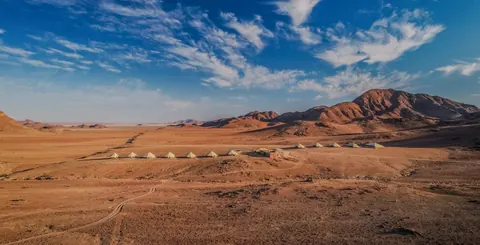
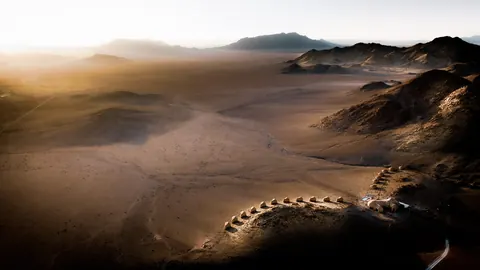
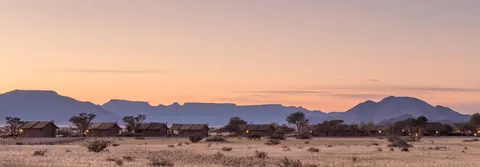
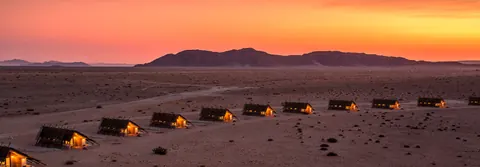
Owner-run lodge of 11 thatched, partly tented chalets on the Tsauchab River, about 20 minutes' drive from the Sesriem gate. Runs its own full-day Sossusvlei trips with a picnic lunch.
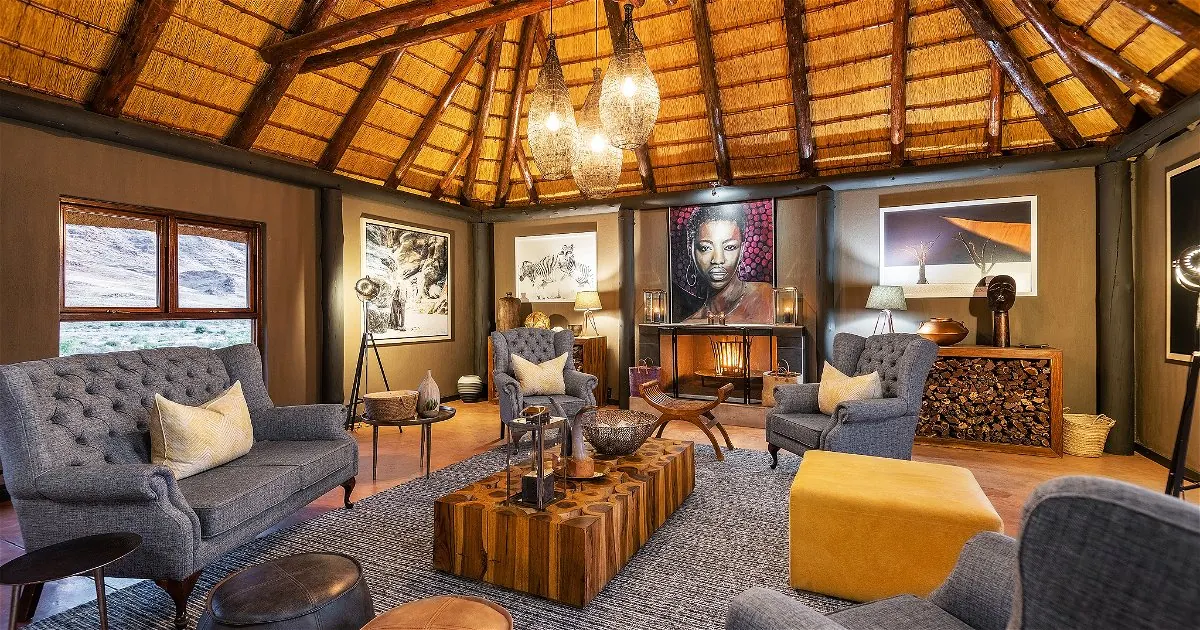
Hoodia Desert Lodge is on the banks of the Tsauchab River, with mountains behind it and a drive of about 20 minutes to the Sesriem gate. It opened in 2008 and is still owned and run by the family, Thomas and Henreza Becker. They kept it small on purpose, with the chalets spread well apart.
What to expect
There are 11 thatched chalets, partly tented, each with an indoor en-suite bathroom plus an open-air shower and a bath, air conditioning, a fridge, a coffee station, a mosquito net and a shaded private deck. The main building has a lounge and a restaurant, both with fireplaces, a bar, a shaded outside deck and a pool.
Practical details
- Reservations (Windhoek office): +264 61 237 294, hoodia@exclusive.com.na.
- Lodge reception: +264 63 293 298, management@hoodiadesertlodge.com.
- GPS: about -24.543, 15.967.
Good to know
The lodge runs its own Sossusvlei excursion, and it’s a full day. You leave after an early breakfast, before sunrise, in the lodge’s 4x4 with a guide, who talks about the park’s history, the lizards, beetles and other small desert life, and birds such as the dune lark, then walks you to Deadvlei and Sossusvlei on quieter routes. Lunch is a set-up picnic under camel thorns near Elim Dune, with Sesriem Canyon fitted in before or after, and you’re back at the lodge around 3:30pm to 4pm. The lodge says park entry is included in the trip, but check that when you book.
The sundowner drive takes you to a hill on the property and leaves you alone there with drinks and snacks, then fetches you about 45 minutes after sunset.
Last updated 7 October 2026. Sources: Hoodia Desert Lodge, Hoodia Desert Lodge, about, Hoodia Desert Lodge, features, Hoodia Desert Lodge, activities, Hoodia Desert Lodge, contact, Info-Namibia.
Named for a plant that smells of rotting meat
At the Windhoek show in 2008 Ulrike Kaderli was selling hoodia yoghurt. Pineapple, peach, banana and granadilla. She was project manager for the Hoodia Growers’ Association, which had European Union money to get 300 households in the communal areas of Hardap and Karas growing the plant. Thomas and Henreza Becker opened their lodge on the Tsauchab that same year and named it after the same plant. Before the year was out Unilever, the biggest company behind hoodia, dropped it after four years of work.
Not a cactus, and you will smell it first
Hoodia looks like a clump of spiny grey-green cucumbers. People call it a cactus, but it belongs to the milkweed family. The flowers are flat and papery, anywhere from straw to dark maroon, and they stink of bad meat because flies do the pollinating. In South Africa they come in August and September. The seed pods that follow look like small goat horns, which is why Afrikaans speakers call the plant bokhorings. A big old Hoodia gordonii can stand a metre high with 50 stems and weigh 30 kg.
The gordonii is Robert Jacob Gordon, the Dutch officer who commanded the Cape garrison. South Africa’s botanical institute has him and the botanist William Paterson finding the plant in the Upington area in December 1778. Gordon painted it, and Francis Masson put his name on it.
Don’t pick any. Hoodia is protected in Namibia, and growing, cutting, moving or selling it needs a permit. The environment minister, Philemon Malima, explained the worry in 2004: harvesting means taking the whole plant, and the plant is slow.
Why the slimming world wanted it
The San ate the stem to dull hunger and thirst. Their name for it is ǁhoba, and the Khoi one is khobab. South Africa’s state science council isolated the compound that does the work in 1977 and patented it in 1996. Pfizer took it up and dropped it in 2002. The San came into the deal late: an agreement on a share of the profits in 2003, and a trust in 2004 to pass most of it to San councils in Namibia, Botswana and South Africa. Then Unilever ran its own trials and said hoodia products would not meet its standards for safety or for working.
What guests log, and what they don’t
Expert Africa asks its travellers to tick off what they saw. Nearly nine in ten at Hoodia tick oryx. Under a third tick zebra or wildebeest, about one in ten brown hyena, and fewer still giraffe, meerkat or spotted hyena. The form does not say whether the animal was at the lodge or on the drive to the dunes. Jackal, kudu and guineafowl turn up in a single report. Nobody has ticked leopard or cheetah. The terrace over the riverbed is the place for birds.
The river itself is a gamble. A couple in March 2025 arrived the day after heavy rain and found water in it, which they called unusual. Guests three months earlier found it dry.
The last stretch of the C19
One driver in May 2026 found the C19 here rutted worse than any other road on their trip, and saw no sign before the turn. Another, in October 2025, called the last 10 km of it tortuous. Then come 6 km of track towards the mountains. Wind is the other repeated note: one guest thought the noise at night might bother some sleepers, another had sand blowing into the chalet.
The lodge is about 22 km from Sesriem, and one traveller in August 2026 would have preferred to stay nearer the dunes. A couple in December 2024 were the only guests. Dinner is a set menu, and the guide several of them name is Enos.