Village · Mpumalanga, South Africa
Dullstroom
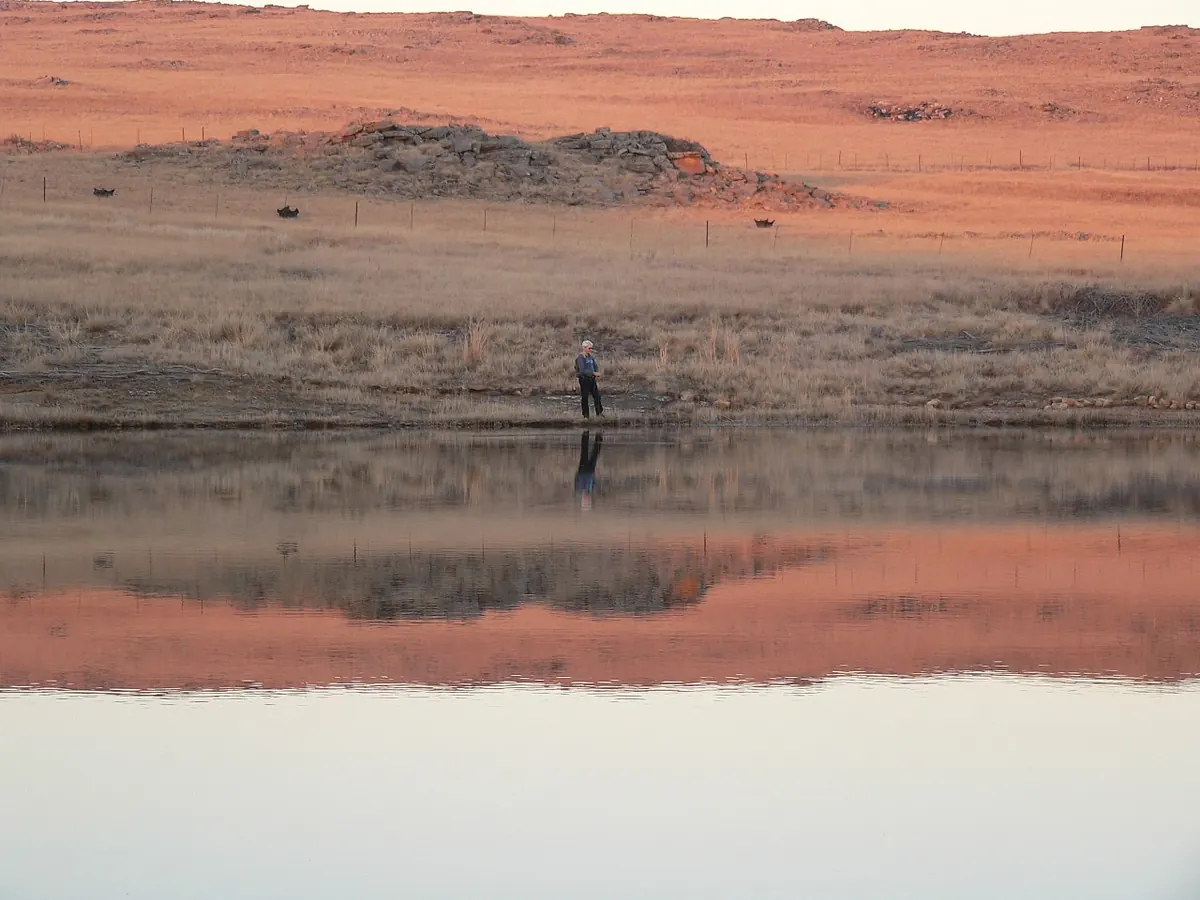
Highland village at about 2,100 m on the road from Johannesburg to Kruger, built around trout fishing, log fires and whisky. Cool in summer, frosty in winter, quiet on Mondays.
Short answer
Dullstroom is in Mpumalanga, South Africa. This page lists 7 places to stay, 14 places to eat and drink and 2 sights. The nearest park with an entry fee on this site is Blyde River Canyon Nature Reserve, about 114 km away, where international adults pay from R71.

- Places to stay
- 7
- Eat and drink
- 14
- Sights
- 2
- Park fee nearby: Blyde River Canyon Nature Reserve
- US$4 €4 · R71about 114 km away
In and around Dullstroom
23 places listedWhere to stay in Dullstroom 7
- 25.41°S 30.10°EHostelDullstroom BackpackersGunning Street
- 25.42°S 30.10°EGuest houseVilla Moria+27 82 336 9015
- 25.41°S 30.11°EHotelDullstroom Inn
- 25.41°S 30.11°ECampsiteDullstroom Nature Reserve
- 25.42°S 30.10°EHotelThe Highlander
Sights 2
- Dullstroom Bird Of Prey & Rehabilitation CentreZoobirdsofprey.co.za
- Dimitrov Art GalleryGallery+27 82 679 5698
Restaurants and cafes 12
- VineRestaurant+27 82 736 3814sohodullstroom.com
- Waffle & CoRestaurant · Naledi Drive+27 84 953 1313
- Fatima's KitchenRestaurant · indian+27 13 254 0173
- The CoachmanRestaurant · steak house
- Baker Boys Coffee CafeRestaurant · coffee shop, pastry, breakfast
- Rose Cottage RestaurantRestaurant · regional
- Duck and TroutRestaurant
- Harrie's PancakesRestaurant
- MayflyRestaurant
- Old Transvaal InnRestaurant
- The PoacherRestaurant
- Seattle Coffee CompanyCafe · coffee shopseattlecoffeecompany.co.za
Bars and pubs 2
- Wild about WhiskyBar · Naledi Drive+27 82 600 5388wildaboutwhisky.com
- Anvil BrewhousePub · Naledi Drive, Dullstroomanvilbrewery.com
Dullstroom is a village of a few hundred people on the Mpumalanga highveld at about 2,100 m, the highest town in South Africa by most reckonings. It was founded in 1883, named after Wolterus Dull of Amsterdam, and proclaimed a town by Paul Kruger in 1893. Gauteng people know it as the trout-fishing weekend place, with stocked dams on every farm and a main street of restaurants, galleries and a whisky bar, and a natural overnight stop on the way to the Lowveld.
Getting there
Dullstroom is on the R540, 35 km north of Belfast, which is on the N4 toll road from Pretoria and Johannesburg; turn off at Belfast and follow the signs. There is no local public transport, though the Lowveld Link and Bushveld Link shuttles pass through. The village is small enough to walk.
When to go
The climate is cool and temperate all year, with about 1,326 mm of rain, most of it in summer thunderstorms. Even in January you will want a jersey after dark. Winter, June to August, is dry and cold, and the village leans into it with the Winter Festival in July. The Ducktober beer festival in September claims to be the highest in southern Africa. Weekends are busy with Gauteng traffic and many places close on Mondays and Tuesdays, so a midweek visit needs some checking.
What to do
Fishing first. The dams and streams are stocked with rainbow and brown trout, and most guesthouses and estates either have their own water or can arrange a rod, tackle and a lesson. The Dullstroom Dam reserve on the edge of the village has an easy circular walk with views over the water.
Verloren Valei Nature Reserve, 13 km north, is a 5,891 ha Ramsar wetland of more than 30 linked marshes. It is one of the few places where all three of South Africa’s crane species, blue, wattled and grey crowned, breed. Visits are guided and by appointment only. The Dullstroom Bird of Prey and Rehabilitation Centre, 9 km out on the R540 towards Lydenburg, rescues injured raptors and flies them for visitors at 10:30 and 14:30 daily.
In the village, the Clock Shop holds more than 7,000 timepieces and calls itself the biggest collection in the southern hemisphere. Wild About Whisky stocks a long list for tasting, Anvil Ale brews on the outskirts, and the volunteer-run museum opens Friday to Sunday. The disused railway station, at 2,077 m, was the highest in the country.
Good to know
Pack warm clothes whatever the season; at this altitude the nights are cold. Summer thunderstorms arrive fast, so drive the R540 with care in the afternoons. Book accommodation ahead for weekends, long weekends and the July festival; a central reservations office in the village keeps a list of more than 120 places to stay. The R540 continues to Lydenburg and the Long Tom Pass to Sabie, which is the scenic way to Kruger and the Panorama Route.
History and culture
Dullstroom is a highland village founded in the 1880s by Dutch immigrants, burned in the South African War and rebuilt slowly around trout dams. Most people come for the fishing and the cold air, but the stone church, the old council house museum and the country's highest railway station tell a short, hard story of a settlement that nearly didn't survive.
- Mid 1800s
The country around Dullstroom was held by a branch of the Southern Ndebele under King Mabhoko, whom the settlers called Mapoch. He and later his son Nyabêla fought the Boer republic more than once (the Zuid-Afrikaansche Republiek, or ZAR, the Transvaal state of the Dutch-speaking farmers known as Boers). source
- 1882 to 1883
The ZAR under Piet Joubert besieged Nyabêla and the Ndzundza Ndebele at their stronghold of KoNomtjharhelo (Mapoch's Caves) near today's Roossenekal. The Boers destroyed Ndebele crops and seized their cattle, starving them into surrender in July 1883. Nyabêla was imprisoned, Ndzundza land was confiscated and given to the Boers who had fought in the siege, and Ndebele people were handed to Boer farmers as indentured labourers. source
- 1883
A settlement company named after Wolterus Dull, an Amsterdam merchant who chaired a committee helping Boer families after the First Anglo-Boer War, bought the farms Groot Suikerboschkop and Elandslaagte for Dutch immigrants. Settlers arrived between 1884 and 1887, and by 1893 there were 48 people in eight houses with a small store. The stroom (stream) in the name refers to the nearby Crocodile River. source
- 1892
President Paul Kruger proclaimed the settlement a town. SAHO and the Afrikaans Wikipedia give 1892, the English Wikipedia 9 October 1893. SAHO says the first settlers called it the place of eternal mist, and many went home to Holland, put off by the cold, the lack of houses and shops, and the poor farming land. source
- 1900 to 1902
In the South African War (the Second Anglo-Boer War) many local men fought on the Boer side, and their women and children were held in the British concentration camp at Belfast. The village was destroyed, only two buildings were left standing, and most of the Dutch settlers went back to the Netherlands. source
- 1905 to 1921
Some of the residents came back and rebuilt. The church was rebuilt in 1905, and the first town council met in 1921. source
- 1916 to 1927
Trout turned the village around. SAHO dates the release of trout to 1916 and further stocking of the dams to 1927, which is when Dullstroom started to make a name for itself with anglers. Fly fishing is still the main business. source
- Fly fishing
- With Underberg in KwaZulu-Natal and Barkly East in the Eastern Cape, Dullstroom is one of the three big fly-fishing centres in South Africa. The dams and streams around it are stocked with trout, and much of the village, from tackle shops to guesthouses with their own water, is built around that. source
- European trees and stone buildings
- The settlers planted lindens, beeches, cherries and other trees from Europe, and Dullstroom has the only substantial stands of elm and beech in the country. Cornerstones on the older stone buildings go back to the 1890s, and the cemetery has English, Irish and Boer surnames side by side. source
- Festivals
- The Winter Festival in July brings in South African bands, food stalls and whisky pairings. Ducktober, a beer, food and music festival inspired by the Bavarian Oktoberfest, was first held in September 2017 and is billed as the highest beer festival in southern Africa at about 2,100 m. source
Main sights in Dullstroom
6- NH stone church
The Nederduitsch Hervormde church on the village square was built in 1891, burned during the war in 1901 and reopened in 1905. It is the clearest link to the first Dutch settlers.
Rural Exploration: Dullstroom - Dullstroom Museum
The old council house, where the village board used to meet, is now a small museum and bookshop run by volunteers of the Dullstroom Heritage Society.
Rural Exploration: Dullstroom - Dullstroom railway station
The highest station in the country, at about 2,076 m. It is no longer in service but the building survives and makes a quick stop for anyone who likes railway history.
Rural Exploration: Dullstroom - Dullstroom Bird of Prey and Rehabilitation Centre
A non-profit centre, started in 1997, that rescues and releases injured raptors and other wild animals under permit from the provincial parks agency. Open Friday to Monday, 09:00 to 16:00, for self-guided walks (check the site for special dates).
Dullstroom Bird of Prey and Rehabilitation Centre - Verloren Valei Nature Reserve
A Ramsar wetland of more than 30 linked marshes about 13 km out of town. It has run a project rearing wattled crane chicks by people in crane suits so they don't imprint on humans. Visits are guided and by appointment only.
Wikipedia: Verloren Valei Nature Reserve - Mapoch's Caves
A drive north-west towards Roossenekal, this provincial heritage site is the Ndebele stronghold besieged in 1882 and 1883, with extensive stone walling of homes and defences. It is the other side of the story the settler buildings in Dullstroom tell.
Wikipedia: Mapoch's Caves
Did you know?
- The Dullstroom railway station sits at 2,076 to 2,077 m (about 6,810 ft), the highest station in South Africa. The line is still in use, but the station is not. source
- The village lies at the foot of De Berg, at 2,332 m the highest point in Mpumalanga. source
- Snow is possible in winter. The Afrikaans Wikipedia records 12 mm on 16 July 1996, and night temperatures regularly fall below freezing in winter. source
- The Steenkampsberg plateau around Dullstroom is one of the few places in South Africa where all three of the country's cranes breed: blue, wattled and grey crowned. source
- On the Boer side of the Battle of Bergendal near Belfast in August 1900, the last set-piece battle of the war, the Lydenburg commando's job was to stop the British taking the back road to Dullstroom. source
Checked 7 October 2026.
Map of Dullstroom
See every place on this map as a list