Town · Mpumalanga, South Africa
Waterval Boven
Short answer
Waterval Boven is in Mpumalanga, South Africa. This page lists 11 places to stay, 2 places to eat and drink and 10 sights. The nearest park with an entry fee on this site is Blyde River Canyon Nature Reserve, about 120 km away, where international adults pay from R71.

- Places to stay
- 11
- Eat and drink
- 2
- Sights
- 10
- Park fee nearby: Blyde River Canyon Nature Reserve
- US$4 €4 · R71about 120 km away
In and around Waterval Boven
23 places listedWhere to stay in Waterval Boven 11
- 25.46°S 30.21°EChaletMahem @ 1022Highland Gate Golf Estate, Dullstroom+27 83 309 8253hg-golfstays.co.za
- 25.68°S 30.36°ECampsiteTranqilitas Adventure Farm
- 25.68°S 30.36°EChaletTranquilitas Adventure Farm
- 25.65°S 30.37°EHotelAloe Inn
- 25.65°S 30.38°EGuest houseBergwater Lodge
- 25.61°S 30.43°EHotelBlack Eagle Lodge
- 25.59°S 30.45°ECampsiteElangeni Holiday Resort
- 25.60°S 30.45°EHotelMalaga
- 25.80°S 30.37°EMountain hutPongola Express
Show all 11 places to stay
- Schoonspruit Falls Cottage · Chalet
- Schoonspruit Falls House · Chalet
Sights 10
 baKoni RuinsArchaeological site
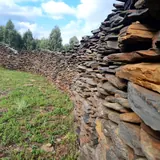 Blaauboschkraal Stone RuinsRuins
 Elands River FallsAttraction
- BoulderAttraction
- Paragliding Launch siteViewpoint
- petroglyphAttraction
- Schoonwater MillRuins
- SuidheuwelViewpoint
- WaterfallViewpoint
- Waterval Boven Train Disaster - 16 November 1949Monument
Restaurants and cafes 2
- Misty moun tainRestaurant
- Tickled TroutRestaurant
History and culture
Waterval Boven, officially Emgwenya, is a small railway town on the edge of the Mpumalanga escarpment, right above the Elands River Falls. It exists because of one stubborn engineering problem: getting President Kruger's railway to the sea up this cliff in the 1890s. The old tunnel and stone bridge are still there, and so is the cottage at Waterval Onder where Kruger ran his state in the winter of 1900, shortly before he left the country.
- Early 1890s
The Transvaal republic of Paul Kruger (the ZAR, the Boer state north of the Vaal) wanted a railway to Delagoa Bay in Mozambique so its trade would not depend on British ports. The Netherlands-South African Railway Company (NZASM), based in Amsterdam and Pretoria and funded by Dutch, German and Boer investors, built it, with about 1,500 people employed on the line. source
- 1894
The Elands River drops off the escarpment here, and the cliffs blocked the line. Rather than a long detour, the engineers built a 213 m tunnel and a 3.4 km stretch at 1 in 20 between Waterval Onder and Waterval Boven, with a toothed rack rail laid between the running rails so locomotives could grip the slope. The line reached Waterval Boven on 20 June 1894. source
- 1894 to 1895
Building finished on 20 October 1894 and the whole Pretoria to Delagoa Bay line opened to traffic on 2 November 1894. Kruger chaired the official opening ceremony on 8 July 1895, with the Portuguese colonial administrator of Mozambique, António Enes, in attendance. source
- June to August 1900
With Pretoria lost to the British in the South African War (the Second Anglo-Boer War), Kruger retreated east along his own railway. He lived in a small house at Waterval Onder from 30 June to 28 August 1900 and ran the affairs of the republic from there. source
- August 1900
The British broke the Boer line at the Battle of Bergendal (also called Dalmanutha) near Belfast, fought from 21 to 27 August 1900. It was the last set-piece battle of the war, and British troops marched into Machadodorp on 28 August. The war went on as a guerrilla campaign until the end of May 1902. source
- September to October 1900
After Lord Roberts declared the republic annexed on 1 September, Kruger left the Transvaal by train on 11 September for Lourenço Marques (now Maputo), where the Portuguese kept him under house arrest. The Dutch warship Gelderland took him to Europe on 20 October. Behind him the British burned Boer farms and held Boer women and children, and Black Africans in separate camps, in concentration camps where over 26,000 Boer women and children died. source
- 16 November 1949
A night train taking several hundred migrant workers home from the Witwatersrand to Mozambique (then Portuguese East Africa) derailed at the far end of a bridge 70 m above the Elands River. At least seven carriages fell off the bridge. 64 people died and 117 were injured. source
- Language and people
- Most people in town speak siSwati, the language of the Swazi people, whose kingdom of Eswatini lies not far to the south east. At the 2011 census siSwati was the home language of about 71% of residents, Afrikaans about 14%, English and isiZulu about 3% each. source
- Rock climbing
- Today the town is a well-known rock climbing base. The sandstone crags around the gorge carry the names you see in our listings (Restaurant Crag, the Gym, Superbowl and dozens more), and one local outfitter, Roc 'n Rope, has been running climbing trips since 1999, including abseils right next to the 70 m Elands falls. source
For German visitors: The four rack locomotives that pushed trains up the climb from Waterval Onder (the 32 Tonners, delivered in 1894 and 1897) were designed and built by the German firm Maschinenfabrik Esslingen. source
Main sights in Waterval Boven
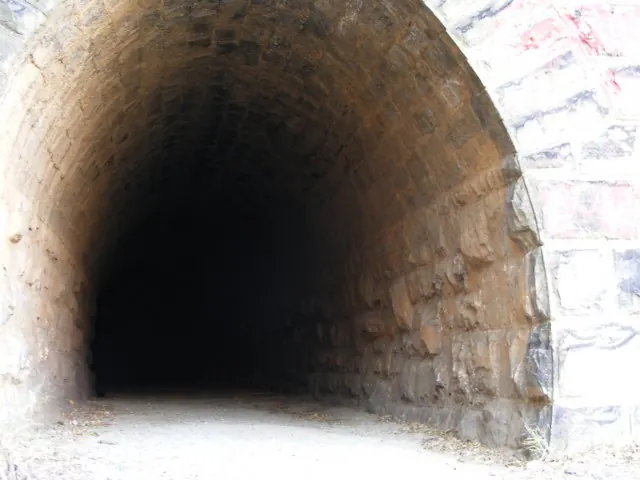
5- NZASM Tunnel
The railway tunnel built for the rack section of the Pretoria to Delagoa Bay line between 1891 and 1895. It is a provincial heritage site.
Wikipedia: List of heritage sites in Mpumalanga (SAHRA register data) - Five Arched Bridge
A fine stone railway bridge over the Dwaalheuwel Spruit on the farm Doornhoek, just below the tunnel, built for the same hard stretch of line. It is a provincial heritage site.
Wikipedia: List of heritage sites in Mpumalanga (SAHRA register data) - Elands River Falls
The waterfall between Waterval Boven and Waterval Onder, falling about 70 m in one drop. It is close to the NZASM tunnel, so most people see both on the same visit.
Wikipedia: Elands River (Mpumalanga) - Krugerhof, Waterval Onder
Kruger's last home in the republic, a provincial heritage site (a national monument under the old system) recorded as a museum, at Waterval Onder about 8 km down the escarpment road and reached off the N4. I could not confirm current opening times, so check before you drive down.
Wikipedia: List of heritage sites in Mpumalanga (SAHRA register data) - 1949 train disaster memorial
A monument in town to the train disaster of 16 November 1949, when a train taking migrant workers home to Mozambique came off the Elands River bridge.
OpenStreetMap: Waterval Boven Train Disaster - 16 November 1949
Did you know?
- The railway climb between Waterval Onder and Waterval Boven used the Riggenbach rack (cog) system, the kind of technology you normally find on Alpine mountain railways, laid on a gradient of 1 in 20. source
- Krugerhof, the cottage Kruger lived in at Waterval Onder, has no internal doors. Every room opens onto the wooden verandah that runs around it. source
- Waterval Boven is Dutch for above the waterfall, and its sister village Waterval Onder sits below it. Both were founded in 1895 because of the railway. source
Checked 7 October 2026.
Map of Waterval Boven
See every place on this map as a list