Town · Western Cape, South Africa
Durbanville
Short answer
Durbanville is in Western Cape, South Africa. This page lists 8 places to stay, 72 places to eat and drink and 3 sights. The nearest park with an entry fee on this site is Tygerberg Nature Reserve, about 6 km away, where international adults pay from R40.

- Places to stay
- 8
- Eat and drink
- 72
- Sights
- 3
- Park fee nearby: Tygerberg Nature Reserve
- US$2 €2 · R40about 6 km away
In and around Durbanville
92 places listedWhere to stay in Durbanville 8
- 33.80°S 18.62°EHotelMeerendal Boutique Hotel+27 21 200 2449meerendal.co.za
- 33.73°S 18.61°EGuest houseRondekuil+27 21 972 1031rondekuil.co.za
- 33.83°S 18.65°EGuest houseKolping Guest HouseBiccard Street, Durbanville
- 33.83°S 18.63°EHotelHighlands Lodge
- 33.86°S 18.65°EHostelIrene's House-Capetown
- 33.88°S 18.64°EGuest houseThe Bloemhof Grill and Guesthouse
- 33.86°S 18.63°EHotelProtea Hotel DurbanvilleJip De Jager Drive
Sights 3
- Bloemendal Tasting RoomAttractionbloemendalestate.co.za
- D'Aria Tasting RoomAttraction+27 21 801 6772dariawinery.co.za
- Rust-en-Vrede Gallery and Clay MuseumMuseum · Wellington Road, Durbanville, Cape Town+27 68 457 8589
Fishing spots 2
- Sonstraal DamFishing spot
- Vygeboom DamFishing spot
Restaurants and cafes 65
 KoffiemanCafe · coffee shop · Church Street, Durbanville+27 60 981 7023koffieman.co.za
 The Olive BistroRestaurant · burger, pizza, pasta, seafood · Main Road, Durbanville, Cape Town+27 21 975 5082olivebistro.co.za
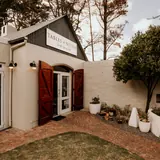
- Black Eagle CoffeeCafe · coffee shop · Goedemoed Road, Cape Town+27 63 704 2463toseyesther.wixsite.com
- Jéan RestaurantRestaurant · regional, coffee shop · Tygerberg Valley Road, Durbanville, Cape Town+27 86 057 2572kleinroosboom.co.za
- Woolworths Cafe Village SquareCafe · coffee shop, lunch, brunch · Oxford Street, Durbanville+27 21 970 1200woolworths.co.za
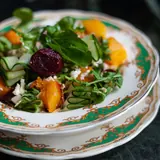
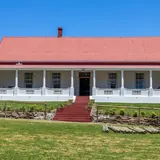
- Peppa Jack's Tex-Mex Grill & BarRestaurant · american, barbecue, burger, coffee shop, grill, mexican, steak house · Hooggelegen Road+27 21 975 5606peppajacks.co.za
- Plato CoffeeCafe · coffee shop · Church Street, Durbanvilleplato.coffee
- Alpine Deli & Eatery DurbanvilleRestaurant · pasta, hummus · Chenoweth, Durbanville+27 82 393 4704alpinedeli.co.za
Show all 65 restaurants and cafes
- Bootlegger Coffee Company · Cafe · coffee shop · Shamwari Close, Durbanvillebootlegger.coffee
- Bootlegger Durbanville · Cafe · coffee shop+27 21 206 6356bootlegger.coffee
- Bossa Winelands · Restaurant · burger, steak, pizza+27 21 008 5669meerendal.co.za
- Cattle Baron Durbanville · Restaurant · steak house · Marais Crescent, Durbanville, Cape Town+27 21 976 8962cattlebaron.co.za
- Cattle Baron Tyger Waterfront · Restaurant · steak house · Waterfront Road, Tyger Waterfront, Cape Town+27 21 914 1658cattlebaron.co.za
- Copper Club Durbanville · Restaurant · Queen Street, Durbanville+27 21 205 3778coppercollection.co.za
- LaRomantica · Restaurant · italian, pizza+27 28 008 5280meerendal.co.za
- Old Town Motorcycles · Cafe · Pampoenkraal Lane, Durbanville, Cape Town+27 72 260 7482oldtownmotorcycles.co.za
- Treat Coffee Pod - Vierlanden · Cafe · coffee shop · Vierlanden Road, Cape Town+27 82 214 6073
- Asami's · Restaurant · sushi · Verdi Boulevard, Cape Town+27 72 263 2262
- Bon Amis · Restaurant+27 21 976 2682bloemendalestate.co.za
- Salmon House · Restaurant · sushi · Lubbe Street, Durbanville+27 21 975 3290
- Saltwater Grill · Restaurant · seafood · Oxford Street, Durbanville, Cape Town+27 21 224 0063
- Brauhaus Durbanville · Restaurant · burger, pizza, german · Vrede Street, Durbanville
- Patina · Restaurant · steak+27 21 205 0572coppercollection.co.za
- The Dairy Shed · Cafe+27 21 972 1884facebook.com
- The Farm Eatery · Restaurant · tapasthefarmeatery.co.za
- Viva! Mexican · Restaurant · mexican · Vrede Street, Durbanville
- Bubble Up Boutique · Cafe · Pampoenkraal Lane, Durbanville, Cape Town+27 66 292 8921
- Coffee Couture · Cafe · sandwich, coffee shop · Wellington Road, Durbanville
- Steams Cafe · Cafe · Lords Walk, Durbanville
- The Terrace · Restaurant+27 21 205 0572coppercollection.co.za
- Bella Belotta · Restaurant · sushi
- Biospot Coffee Shop · Cafe+27 60 657 6344
- Die Boer · Restaurant · regional
- Dros · Restaurant · regional
- Hillcrest Estate · Restaurant · regional
- Mugg n Bean · Cafe · Durbanville Avenue
- Mythos · Restaurant
- Woolworths Café · Cafe
- Blomendal Bistro · Restaurant
- Cafe Grano · Cafe
- Die Nag Uil · Restaurant
- Durbanville Hills · Restaurant
- Eat @ Altydgedacht · Restaurant
- Hillcrest Quarry · Restaurant
- Olive Grove Bistro · Restaurant
- Pampoenkraal · Restaurant
- Phezantekraal Winery & Restaurant · Restaurant
- Soet Emporium · Cafe
- UKAMA · Restaurant
- Vineyard Deli · Restaurant
- Spur · Restaurant · steak house · Pampoenkraal Lane, Durbanville+27 21 976 6040
- Seattle Coffee Co. · Cafe · coffee shop · Oxford Street, Durbanville, Cape Town
- Vida e Caffè · Cafe
- Nando's · Restaurant · chicken, portuguese
- Ocean Basket · Restaurant · seafood
- RocoMamas · Restaurant · Durbanville Avenue
- Spur · Restaurant · steak house
- Vida e Caffè · Cafe · coffee shop
- Vida e Caffè · Cafe · coffee shop
- Vida e Caffè · Cafe · coffee shop
- Ocean Basket · Restaurant
Bars and pubs 7
- BotanyBar+27 21 205 0572coppercollection.co.za
- Bossa Tyger FallsBar · Niagara Way, Cape Town
- Buckley's Pub & Pool BarPub
- SpeakeasyPub
- Speakeasy SaloonPub
- StonesBar
- StonesBar
Wineries, breweries and distilleries 7
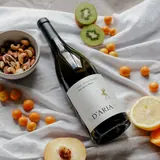
- DiemersdalWinery+27 21 976 3361diemersdal.co.za
- BloemendalWinerybloemendalestate.co.za
- Klein RoosboomWinery · Tygerberg Valley Road, Durbanville, Cape Townkleinroosboom.co.za
- House of Westerdale WinesWinery
- Meerendal Wine EstateWinery
- Nitida WineryWinery
History and culture
Durbanville began as Pampoenkraal, a spring and outspan (an overnight stop for ox wagons) on the road north out of Cape Town. Today it is a leafy suburb on the city's northern edge, but the old village core around Wellington Road and Oxford Street still has its 1826 church, the old magistrate's court and jail at Rust-en-Vrede and a row of 1800s cottages, and the farms on the surrounding hills have been making wine since the early 1700s.
- 1698
Governor Simon van der Stel granted land in the Tygerberg hills to Hendrik Sneewind on 18 September 1698, and the title deed records the name Diemersdal for the first time. By 1702 the farm had about 18,000 vines, and in 1705 it recorded its first wine, about 5,770 litres. source
- 1650s to 1838
The wine and wheat farms of the south-western Cape, these hills among them, ran on the labour of enslaved people brought mainly from India, Indonesia, Madagascar and Mozambique, and of Khoekhoe (Khoikhoi) herders who had lost their land to the farms and been pushed into service. Slavery at the Cape was abolished in 1834, but the people freed were held as "apprentices" to their former owners until 1838. source
- 1806
A spring of sweet water on an outspan made Pampoenkraal a regular stop on the road north, and a village was laid out there in 1806. source
- 1824 to 1826
Eleven Koeberg farmers asked Governor Lord Charles Somerset for their own church in September 1824. The cornerstone was laid on 1 April 1825 and the church was consecrated on 6 August 1826, serving a parish that stretched from the coast at Blouberg to the Stellenbosch and Paarl districts. source
- 1836 and 1886
On 2 September 1836 the village was renamed D'Urban after the Cape governor Sir Benjamin D'Urban. Port Natal on the east coast also took his name, as Durban, and the mix-ups that followed led to the change to Durbanville in 1886. source
- Late 1800s to early 1900s
King Brothers Wagon Works, said by some to be the biggest wagon works in South Africa, took up half a block of the village and employed about 80 people at its height, while the Baxter Brothers ran a large blacksmith's business nearby. The wagon works closed before the First World War. source
- 1996 and 2000
Durbanville lost its own municipality in 1996, when it was folded into the Tygerberg Municipality with Bellville, Parow and Goodwood, and in 2000 it became part of the City of Cape Town. source
- Language
- Afrikaans was the main home language at the 2011 census, spoken by about 59% of residents, with English at about 37% and isiXhosa and other languages making up the rest. source
- Wine
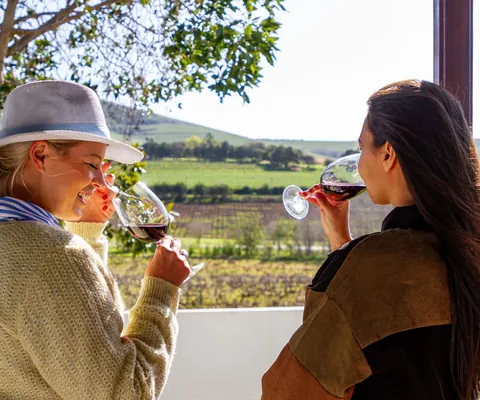
- The Durbanville Wine Valley is a cool-climate area with an ocean influence, and it has made its name with Sauvignon Blanc and reds such as Pinotage. Several of the farms also have restaurants, and the valley is about 20 minutes' drive from central Cape Town. source
Main sights in Durbanville
6- Rust-en-Vrede
Built in the 1840s as the village prison, police headquarters and magistrate's court, this building at 10 Wellington Road hosted the first municipal council meetings in 1901. Since 1984 it has been an art gallery with a clay (ceramics) museum, artist studios and a café, and it hosts the National Portrait Award.
Rust-en-Vrede Gallery and Clay Museum: About - Dutch Reformed Church
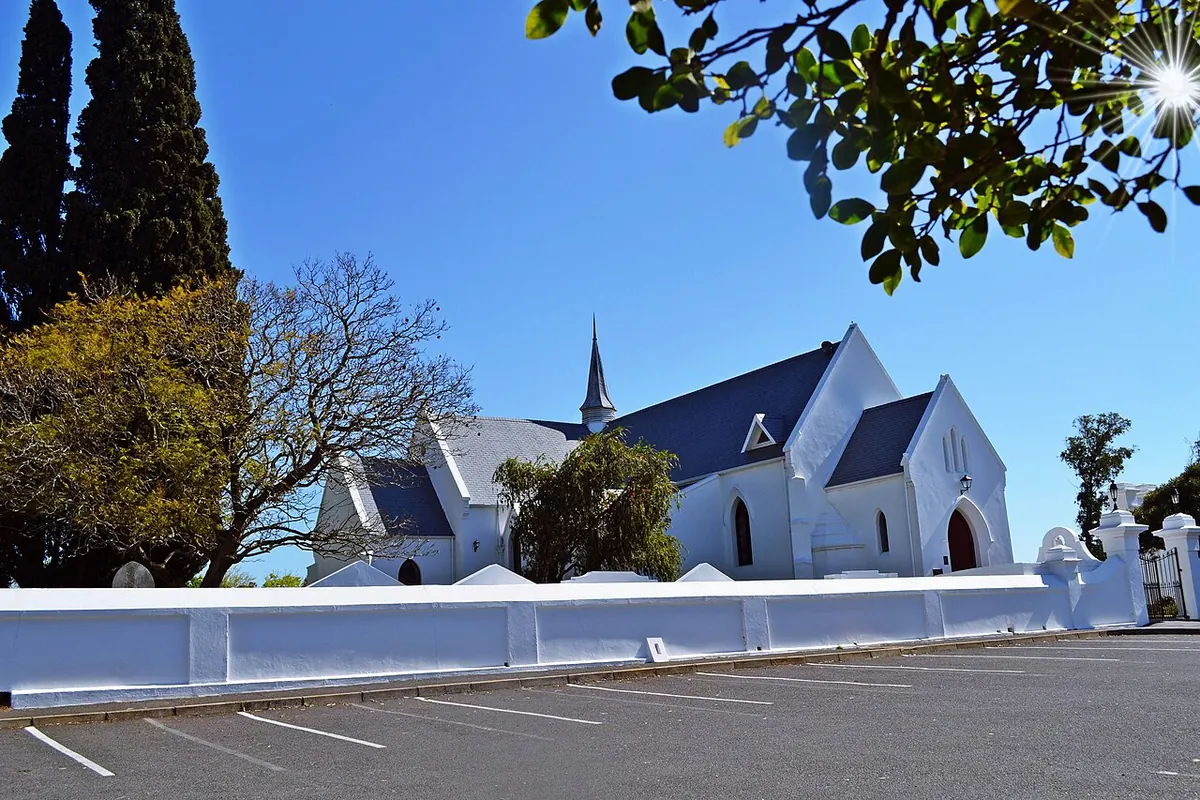
The 1826 church at the corner of Church Street and Weyers Avenue is the building the village grew up around. It began as a cross-shaped church with a thatched roof for the Tygerberg congregation, and it was extended in 1859 and again in 1891.
Durbanville Gemeente (Dutch Reformed congregation): Ons Geskiedenis - Oxford Street cottages
Numbers 20 and 22 Oxford Street may be the oldest houses in Durbanville, with inner walls of sun-baked brick, possibly from about 1835. Both have been altered and are now a pub and a coffee shop, and several more Victorian cottages line the same street.
The Heritage Portal: A walking tour of historic Durbanville - King's Court, 4 Church Street
An Edwardian house built around 1905 for John King of the wagon works, who was mayor of Durbanville many times. It has a double-storey bay window and wraparound balcony and is a Provincial Heritage Site, but it is private business premises, so you see it from the street.
The Heritage Portal: A walking tour of historic Durbanville - Onze Molen
A windmill built between 1837 and 1842 on the farm Johannesfontein, known locally as Die Ou Meul (the old mill). It was restored in 1984, though critics said the restorers copied Mostert's Mill in Cape Town rather than rebuilding the original, and a 1999 plan to get it working again was turned down.
Wikipedia: Onze Molen - Durbanville Rose Garden
Started in 1979 and opened in 1983 on Drakenstein Road, with around 4,500 bushes of 500 varieties. Part of it sits on the old Eversdal estate and it encloses the Schabort family burial ground.
South African History Online: Durbanville
Did you know?
- Pampoenkraal means roughly "pumpkin pen": pampoen is Afrikaans for pumpkin and a kraal is an enclosure for livestock. The story goes that pumpkins grew beside a dam behind where the town hall now stands. source
- A railway branch line from Bellville was planned but never built. Even so, Durbanville had a "station" from 1920 to 1930 on what is now Voortrekker Street, where you could buy a ticket to anywhere in South Africa and a porter carried your bags to the bus for Bellville. source
- The small Durbanville Synagogue was built in 1927 for the local Jewish community, designed by the town clerk and built by the Baxter Brothers on ground rented from the Dutch Reformed Church. The community bought the land in 1954. source
- Diemersdal has been in the Louw family since 1885, and a Louw ancestor, Jan Pietersz Louw, arrived at the Cape as early as 1660. The estate released its first Sauvignon Blanc in 1990, the grape the valley is now known for. source
- The 6 ha Durbanville Nature Reserve next to the racecourse was proclaimed in 1966 after a rare plant, Aristea lugens, was found there. It sits where two critically endangered vegetation types meet, Swartland Shale Renosterveld and Cape Flats Sand Fynbos. source
Checked 7 October 2026.
Map of Durbanville
See every place on this map as a list