Province · South Africa
Western Cape
Short answer
This page covers 12 parks and reserves and 83 towns and cities in Western Cape. 9 of the parks have checked entry fees: international adults pay from R40 at Tygerberg Nature Reserve to R358 at Karoo National Park.
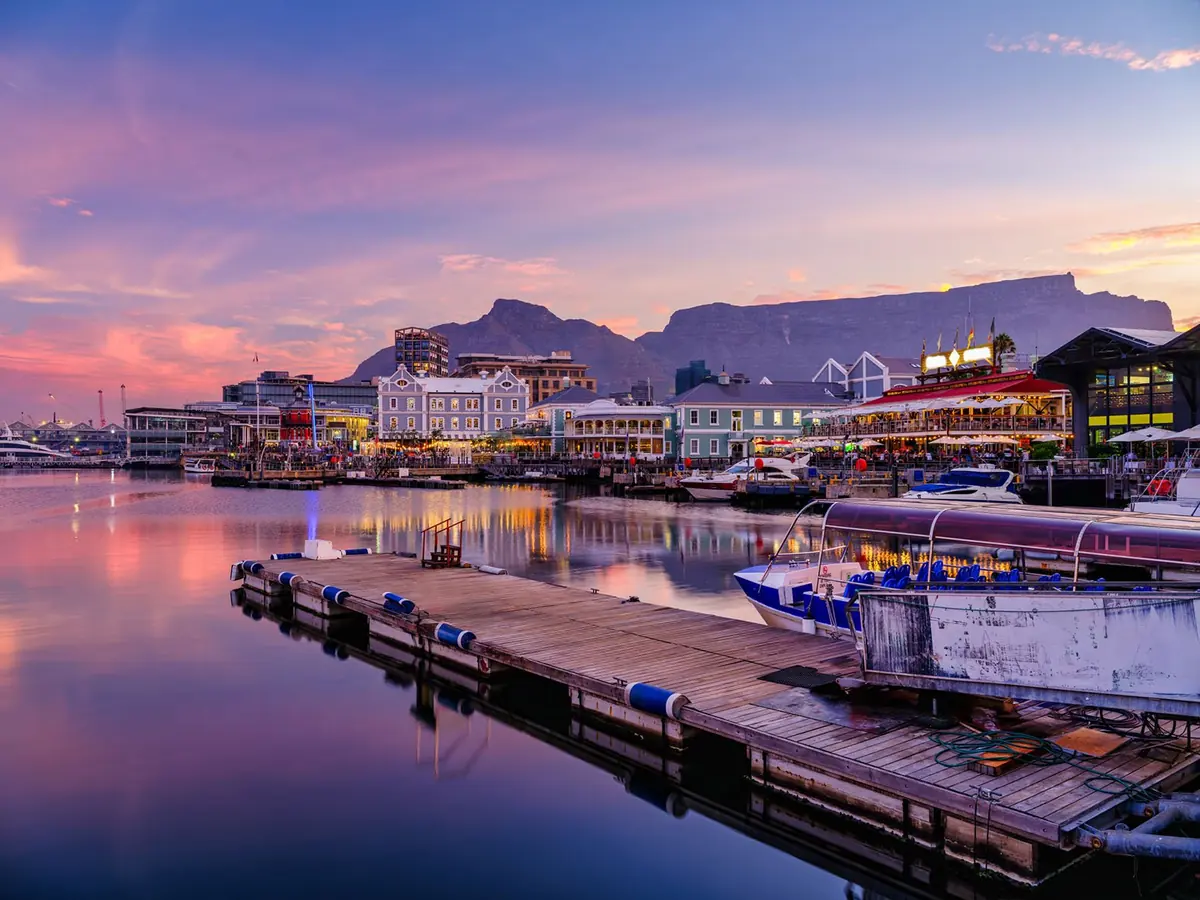
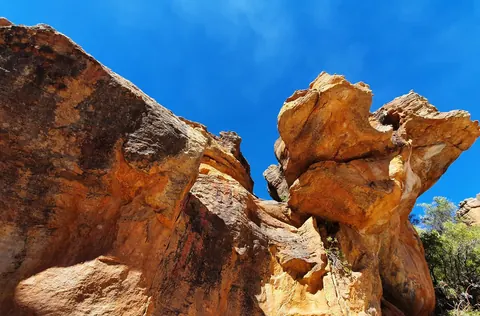
- Parks and reserves
- 12
- Towns and cities
- 83
- Places to stay
- 38
- Where
- South Africa32.73°S 22.07°E
Parks and reserves in Western Cape
12- Agulhas National ParkUS$17 €15 · R295 international adult
- Bontebok National ParkUS$13 €12 · R227 international adult
- Cederberg Wilderness Area
- De Hoop Nature Reserve
- Fernkloof Nature Reserve
- Garden Route National ParkUS$11 €10 · R190 international adult
- Karoo National ParkUS$20 €19 · R358 international adult
- Kogelberg Nature ReserveUS$4 €3 · R65 international adult
- Table Mountain National ParkUS$13 €12 · R230 international adult
- Tygerberg Nature ReserveUS$2 €2 · R40 international adult
- Walker Bay Nature ReserveUS$4 €3 · R65 international adult
- West Coast National ParkUS$10 €9 · R166 international adult
Towns and cities in Western Cape
83- Cape Town1059
- Stellenbosch263
- Hout Bay161
- Simon's Town141
- Milnerton132
- Hermanus122
- George103
- Somerset West97
- Knysna94
- Montagu94
- Durbanville92
- Franschhoek91
- Plettenberg Bay86
- Strand74
- Paarl73
- Oudtshoorn72
- Mossel Bay69
- Swellendam65
- Calitzdorp61
- Parow59
- Jamestown56
- Wilderness54
- Cederberg47
- Tulbagh44
- Sedgefield43
- Worcester42
- Masiphumelele41
- Robertson41
- Stanford41
- Clanwilliam39
- Porterville39
- Gansbaai37
- Barrydale34
- Keurboomstrand34
- Groendal30
- Prince Albert30
- Wellington30
- Langebaan29
- Darling27
- Groot-Drakenstein27
- McGregor27
- Helderberg Village26
- Ashton25
- Citrusdal25
- De Rust24
- Botha23
- Brenton on Sea23
- Kleinmond23
- Paternoster22
- Ceres20
- Riebeek-Kasteel20
- Witsand19
- Goudini18
- Stilbaai17
- Velddrif17
- Buffeljagsrivier16
- Danabaai16
- Yzerfontein16
- Eersterivier13
- Botrivier12
- Volmoed12
- Struisbaai10
- Wolseley10
- Arniston9
- Heidelberg9
- Herbertsdale9
- Tesselaarsdal9
- Villiersdorp9
- Baardskeerdersbos8
- Touws River8
- Vanrhynsdorp7
- Albertinia6
- Hermon6
- Boggomsbaai5
- Bonnievale5
- Wittedrif5
- Jacobsbaai4
- Uilenkraalsmond4
- Vredenburg4
- Dwarskersbos3
- Dysselsdorp3
- Struis Bay3
- Suiderstrand3
Written up in smaller places around Western Cape
66
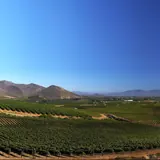
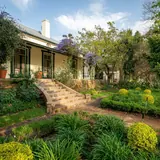
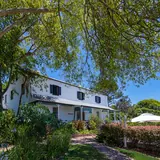
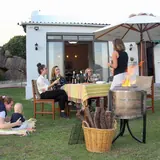
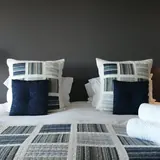
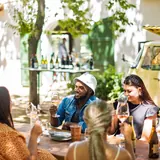
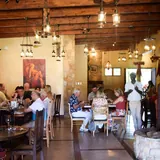

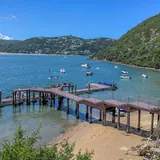
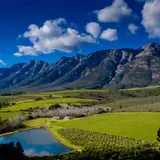
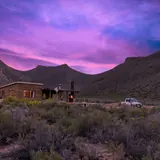
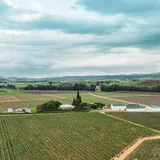
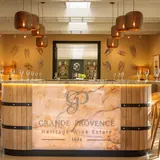
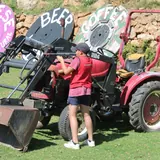
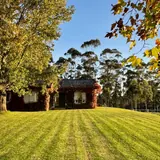
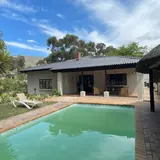
 T&H Sauer Guest House & Self-CateringGuest house · E. Mira Street, Dana Bay+27 83 704 1596sauerguesthouse.co.za
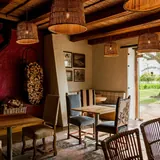
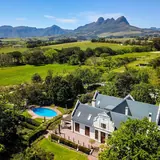
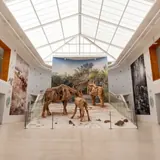
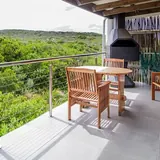 Wings Self-Catering AccommodationGuest house · Suiderstrand Struisbaai Road+27 82 940 4304xplorio.com
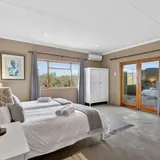 Zwartberg View Mountain LodgeMountain hut · Off N12 between Oudtshoorn and De Rust, Oudtshoorn+27 64 554 4905zwartbergview.co.za
History and culture
The Western Cape is where Europe, Asia and Africa first collided in South Africa. Khoekhoe herders and San hunters lived here long before the Dutch built a supply station in 1652, and slavery, colonial rule and apartheid all left marks you can still visit, from the Castle in Cape Town to Robben Island. The province itself was only created in 1994, when the old Cape Province was broken up into the Western, Eastern and Northern Cape.
- about 73,000 years ago
People at Blombos Cave, about 300 km east of Cape Town, drew nine red lines on a stone flake with an ochre crayon. It is the oldest known abstract drawing, and the same cave has given up engraved ochre and shell beads from the same period. source
- 1510
Khoekhoe herders (the cattle-keeping first people of the Cape) of the Goringhaiqua clan killed the Portuguese viceroy Francisco de Almeida and 64 of his men at the Battle of Salt River on Table Bay on 1 March 1510, after the Portuguese raided their village and took cattle and children. The herders used trained cattle as moving shields. source
- 1652
Jan van Riebeeck landed in 1652 to set up a refreshment station for Dutch East India Company (VOC) ships sailing to Asia. In 1657 the VOC gave Khoekhoe grazing land along the Liesbeek River to the first free burghers (settlers released from Company service), ignoring Khoekhoe objections, and the Khoekhoe fought the newcomers in wars from 1659 to 1660 and from 1673 to 1677. source
- 1653 to 1834
The first enslaved man, Abraham van Batavia, arrived in 1653. People were brought from Indonesia, India, Ceylon (Sri Lanka), Madagascar, Mozambique, Angola and West Africa, and there were 38,427 enslaved people at the Cape in 1833. Slavery ended in 1834, though a forced 'apprenticeship' kept them working for their former owners until 1838 or later. source
- 1795 to 1814
Britain took the Cape in 1795, handed it back to the Dutch (then the Batavian Republic) in 1803, and took it again after the Battle of Blaauwberg in January 1806. The Netherlands formally gave it up in 1814. source
- 1966 to 1982
On 11 February 1966 the apartheid government declared District Six, a mixed inner-city neighbourhood of Cape Town, a white area under the Group Areas Act. More than 60,000 people were forcibly moved out to the Cape Flats and their homes bulldozed, and by 1982 the community was gone. source
- 1990
Nelson Mandela spent his last 14 months as a prisoner in a house inside Victor Verster Prison (now Drakenstein Correctional Centre, between Paarl and Franschhoek) and walked out of its gate on 11 February 1990. The house is now a national heritage site and a statue of him stands outside the gates. source
- 1994
With the first democratic elections the old Cape Province was split into the Western, Eastern and Northern Cape, with a small part going to North West. Cape Town became the capital of the new Western Cape. source
- Languages and people
- The 2022 census counted 7.43 million people. Afrikaans is the most spoken home language (41%), then isiXhosa (31%) and English (22%), so expect to hear all three in Cape Town. source
- Cape Malay heritage and the Bo-Kaap
- The Bo-Kaap, on the slopes of Signal Hill, grew from small rental cottages built from 1763 and let to enslaved people. Muslims of Southeast Asian descent settled there, more came after emancipation in 1834, and its Auwal Mosque (1794) was the first in the area. The bright house colours many people photograph are mostly a late 20th century habit, not an old tradition. source
- Wine and the Huguenots
- Wine was first made at the Cape in 1659, but the trade only took off after about 200 French Huguenot refugees arrived in 1688 and 1689 and were given farms around Franschhoek ('French corner') and Paarl. Many Winelands farms still carry French names. source
- Kaapse Klopse (January)
- Every 2 January, Tweede Nuwe Jaar ('second new year'), thousands of minstrels in bright costumes march through Cape Town to the beat of the ghoema drum. The day off goes back to slavery, when enslaved people were given 2 January to celebrate, and the troupes see it as a celebration of their community's survival. source
For American visitors: On 6 June 1966 Senator Robert F. Kennedy gave his 'Day of Affirmation' speech at the University of Cape Town, invited by the NUSAS student union. Its line about each act of courage sending out 'a tiny ripple of hope' is one of his best known, and an empty chair stood on stage for student leader Ian Robertson, who had been banned by the government. source
For American visitors: American performers helped shape the Kaapse Klopse carnival. Christy's Minstrels, white performers in blackface, visited the Cape in 1862, and Orpheus McAdoo's Virginia Jubilee Singers, an African-American group, performed in Cape Town from 1890. The carnival's face painting tradition came from these shows, and it is still argued over today. source
For German visitors: Georg Schmidt, a German missionary of the Moravian Church (Herrnhuter Brüdergemeine), founded a mission among the Khoekhoe at Baviaanskloof in 1738. It was the first mission station in southern Africa. Schmidt was forced out in 1744, Moravian missionaries came back in 1792 and renamed it Genadendal ('valley of grace') in 1806, and it opened the country's first teachers' training college in 1838. source
For German visitors: Wupperthal in the Cederberg was founded in 1830 by Rhenish Mission missionaries Theobald von Wurmb and Johann Gottlieb Leipoldt, about a century before the German city of Wuppertal was formally established. It is known for handmade veldskoen (suede shoes) and rooibos, and a fire on 31 December 2018 destroyed much of the old mission station. source
For German visitors: German farming families arrived in three groups between 1860 and 1883 and settled the sandy Cape Flats at Philippi, where they became known for growing vegetables in poor soil. The Philippi Horticultural Area still grows much of Cape Town's fresh produce. source
Main sights in Western Cape
7- Robben Island
Used as a prison from the late 1600s and a leper colony in the 1800s, it held political prisoners under apartheid, Nelson Mandela among them for 18 years. The political prison closed in 1991 and the last prisoners left in 1996. It has been a museum since 1997 and a UNESCO World Heritage Site since 1999. Ferries leave from the V&A Waterfront and many of the guides are former prisoners.
Wikipedia: Robben Island - District Six Museum, Cape Town
Opened in 1994 in a former Methodist church, it tells the story of the forced removals. The floor is a large map of the old district where former residents have written in where their homes stood.
Wikipedia: District Six Museum - Castle of Good Hope, Cape Town
Built by the VOC between 1666 and 1679, partly with the labour of enslaved people, this five-pointed fort is the oldest surviving building in South Africa. It houses the Castle Military Museum and the William Fehr Collection of Cape paintings and furniture.
Wikipedia: Castle of Good Hope - Iziko Slave Lodge, Cape Town
One of the oldest buildings in Cape Town, it housed enslaved people and was later used as government offices and the Supreme Court. Today the lower level covers the long history of slavery at the Cape. Open Monday to Saturday.
Iziko Museums: Slave Lodge - Bo-Kaap Museum, Cape Town
Set in a house from the 1760s, the oldest in the area still in its original form, it shows how Muslim families lived in the 19th century and the trades, like tailoring and carpentry, they were known for.
Wikipedia: Bo-Kaap - Bartolomeu Dias Museum Complex, Mossel Bay
Set up in 1989 near where Dias landed in 1488, its maritime museum houses a life-size replica of his ship, built in Portugal and brought to Mossel Bay in 1988. It is a provincial museum with a shell museum and old cottages on the same site.
Wikipedia: Bartolomeu Dias Museum Complex - Huguenot Monument and Museum, Franschhoek
The monument, unveiled in 1948, and the museum next to it tell the story of the French Protestant refugees who settled the valley from 1688.
Wikipedia: Huguenots in South Africa
Did you know?
- The Cape Floral Kingdom is the smallest of the world's six plant kingdoms, yet it holds more than 9,000 species of plants, and 69% of them grow nowhere else. source
- Africa's southern tip is Cape Agulhas, not the Cape of Good Hope. The International Hydrographic Organization draws the line between the Atlantic and Indian oceans from there, and the Portuguese called it the Cape of Needles because compass needles pointed to true north there around 1500. source
- Cape Town City Hall, where Mandela gave his first speech as a free man, is built of honey-coloured limestone shipped out from Bath in England. A statue of him now stands on the balcony where he spoke. source
- Genadendal, the first mission station in southern Africa, gave its name to the president's official residence in Cape Town. source
Checked 7 October 2026.
In and around Western Cape
58 places listedWhere to stay in Western Cape 38
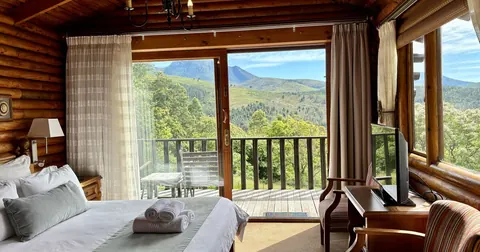
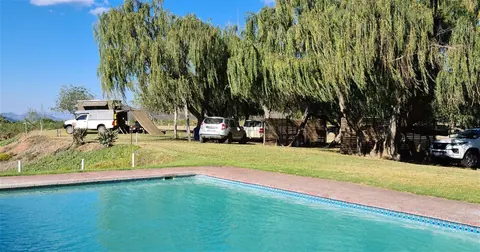
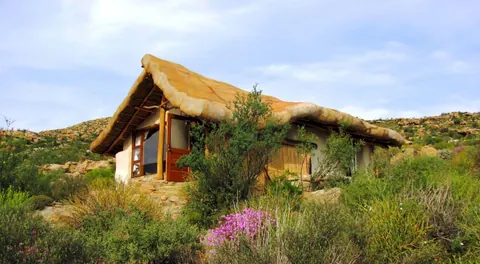
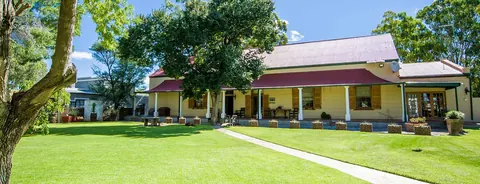
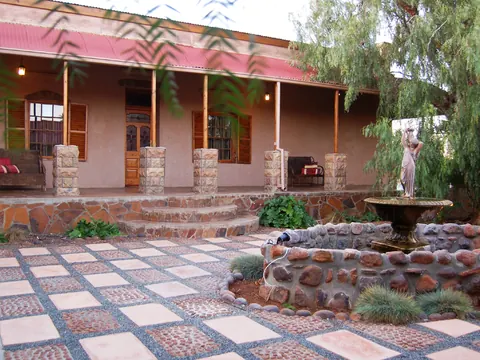
Show all 38 places to stay
- Grotto to Gravel · Chalet+27 76 085 2050grottotogravel.co.za
- Kagga Kamma Nature Reserve · Hotel · 4 star+27 23 004 0077kaggakamma.co.za
- Vergenoeg · Chalet+27 83 564 5510princealbert.org.za
- GaMamadi Guest Farm · Guest house+27 49 851 9402gamamadiguestfarm.co.za
- Jai Yen Yen Uitspankraal · Campsite · Biedouw Valley
- Sothemba Lodge · Campsitesothemba.co.za
- ECO Marine Lodge and Venue · Hotel · Coastal Road, Gouritz
- Rocky Sands · Guest house · Plathuis, plathuis
- Tankwa Town · Campsite
- Bergplaats Game Lodge · Campsite
- Biedouw Vallei Wegbreek · Campsite
- Bobbejaankrans · Campsite
- Dwyka Tented Lodge · Campsite
- Eagle Falls · Campsite
- Enjo Nature Farm · Chalet
- Enjo Nature Farm Campsite · Campsite
- Fiddler's Creek Rest Camp · Campsite
- Gamkapoort Dam Cottage · Chalet
- Gondwana Family Lodge · Resort
- Hillandale Farm · Campsite
- Koedoesberg 4x4 · Campsite
- Mertenhof Biedouw 4x4 · Campsite
- Rooiheuwel Farm and Ecotourism · Campsite
- Sanbona Wildlife Reserve · Resort
- Silwerkaroo Gastehuis · Hotel
- Tankwa Guest Farm · Guest house
- Toorwater Spa · Guest house
- Warmwaterberg Spa · Hotel
- Wild camp ground, nice stars · Campsite
Sights 10
- Southernmost point of AfricaAttraction
- Englishman's GraveMemorial
- Hippo PoolsBeach
- Hot springHot spring
- Leeuwenbosch 4x4 LookoutViewpoint
- Plaaitjieskraal Ghost TownRuins
- Toorwater WarmbadAttraction
- Welcome BellAttraction
- Western Cape Butterfly SanctuaryZoo
Restaurants and cafes 9
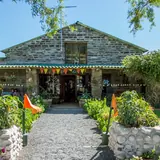
- Tankwa PadstalRestaurant · burger, coffee shop, bar
- AankomsCafe
- Da Doer PadstalRestaurant · burger, coffee shop, grill
- Eight BellsRestaurant · regional
- Grunters Restaurant & PubRestaurant+27 66 285 5166
- Jakkalsgat PadstalRestaurant · coffee shop
- Whistling Bridge CaféCafe+27 84 206 8536
- The Shed PadstalCafe
Bars and pubs 1
- Ronnies Sex ShopPub+27 28 572 1153ronniessexshop.co.za
Map of Western Cape
See every place on this map as a list