Park · Western Cape, South Africa
West Coast National Park
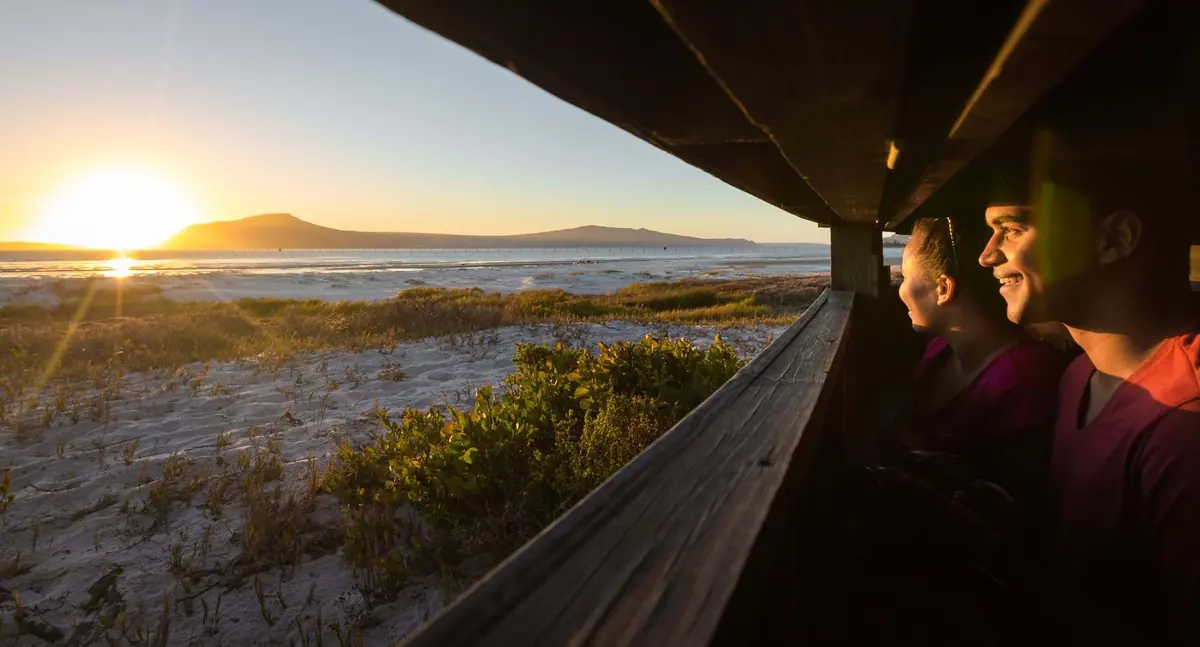
A turquoise lagoon, wading birds and empty beaches just over an hour north of Cape Town, plus the Postberg flower fields that open for two months of the year.
Short answer
At West Coast National Park, international visitors pay from R166 (about US$9.50, €8.50 or £7) per adult per day, depending on which section you visit. The rates apply from 1 November 2026 to 31 October 2027.
- Daily fee, international adult
- US$10 €9 · R166from, by section
- Places to stay
- 4
- Park fee nearby: Tygerberg Nature Reserve
- US$2 €2 · R40about 85 km away
- Where
- Western Cape, South Africa33.20°S 18.13°E
West Coast National Park fees 2026/27
Checked South African National Parks tariffValid 1 November 2026 to 31 October 2027, per person per day, in rand.
| Pay point | International visitors | SADC nationals | South African residents |
|---|---|---|---|
| In flower season (August and September) | US$20 €18 · R352child R176 | R206child R102 | R127child R63 |
| Outside flower season | US$10 €9 · R166child R83 | R141child R70 | R85child R43 |
- These rates apply from 1 November 2026.
- Adults are 12 and older. Child rate applies to ages 2 to 11; children under 2 enter free.
- Members of the SANParks WILD loyalty programme (Wild Card) do not pay daily conservation fees if they show ID and their card on arrival.
- Higher flower-season rates apply in August and September.
- Wild Card holders do not pay daily fees. Is the Wild Card worth it for you?
- Fees are set by South African National Parks. Official tariff · Seen a new rate? Tell us
US$1 = R17.47 · €1 = R19.20 · £1 = R22.93 (ECB rate, 20 Nov 2026). Converted amounts are approximate; you pay in rand.
How we got these figures
- Checked against the official SANParks tariff on 7 October 2026. Before that these figures came from published reports (places.co.za). They matched the official sheet.
- SANParks conservation fees 2026-11-01 to 2027-10-31 (official tariff) · official · checked 7 Oct 2026
West Coast National Park wraps around Langebaan Lagoon, a long shallow arm of sea that is far warmer and calmer than the Atlantic on the other side of the dunes. Proclaimed in 1985 and now roughly 36,000 hectares, it is a place of coastal scrub, tidal mudflats and a few lonely beaches rather than big game. Birders rate the lagoon, a Ramsar wetland, as one of the most important on the continent, and for two months each spring the Postberg section opens for the wildflowers.
Getting there
Take the R27 north out of Cape Town. The main gate is on the R27 just past the Yzerfontein turn-off, a little over an hour from the city; a second gate opens from the town of Langebaan at the northern end. Any car will do. Most roads are tar or good gravel, and only a few remote tracks suit high clearance. There is no fuel inside the park, so fill up in Cape Town, Yzerfontein or Langebaan.
When to go
August and September are when Postberg opens, 1 August to 30 September, and the daisies carpet the ground in orange, white and yellow. Flowers appear in numbers from mid-August and peak in early September. Weekends in September are busy, so go on a weekday if you can, and take water and sunblock.
Outside flower season the park is quiet. Summer brings up to 30,000 migrant waders from the northern hemisphere to the lagoon, and whales pass the Atlantic side from July to October. The West Coast is notorious for wind, especially in summer, so check the forecast before planning a picnic.
What to do
Geelbek, on the lagoon side of the main road, is the hub: a historic Cape Dutch farmhouse with a restaurant serving snoek and mussels, and bird hides on the mudflats below it. Time your hide visit with the tide; the birds come in close as the water rises. The Seeberg lookout on the northern side is the highest point in the park with a view over the whole lagoon, and Abrahamskraal hide covers a freshwater pan for different species.
Kraalbaai and Preekstoel on the lagoon are the swimming beaches, with warm shallow water and houseboats moored offshore. Tsaarsbank on the Atlantic side has braai spots and the best chance of whales. The Postberg and Strandveld trails are two-day hikes bookable through SANParks, and Eve’s Trail is a 30 km wilderness hike over two and a half days along the shores of Langebaan Lagoon, where the fossil footprints known as Eve’s footprints were found. Sources disagree on who books it (one says SANParks, an older tourism board article lists it under the West Coast Way operator, whose trail page has since gone), so check with SANParks that it is still running before you plan around it. Land animals include eland, bontebok, zebra, gemsbok, kudu, ostrich, bat-eared fox and caracal; there are no big predators.
Good to know
Gates open at 07:00 and close at 18:00 in winter and 19:00 in summer; Postberg keeps shorter hours, 09:00 to 17:00. Stay on the roads in Postberg and never walk into the flower fields. Alcohol is not allowed in the park and neither are pets. Cape cobras live in the scrub, so watch where you put your feet on the trails.
Wildlife you might see
12- very likelyMigrant waders (red knot, bar-tailed godwit, Eurasian curlew)Mudflats of Langebaan Lagoon, best from the Geelbek and Seeberg hides as the tide comes in. Summer, when up to 30,000 arrive from as far as Siberiasource
- likelyGreater and lesser flamingoOn the lagoon, at times in flocks big enough to turn patches of it pink. All yearsource
- likelyElandOpen strandveld, often in herdssource
- likelyBontebokHerds around Seeberg, and in the Postberg flower fields in seasonsource
- likelyAngulate tortoiseOn and beside the park roads, so drive slowlysource
- likelyOstrichPostberg section and open veldsource
- possibleCape mountain zebraPostberg section. Postberg is only open in August and Septembersource
- possibleGemsbok, springbok, kudu and red hartebeestMostly in the Postberg section. Postberg is only open in August and Septembersource
- possibleWhalesAtlantic side, with Plankiesbaai a good spot to look from. July to Octobersource
- possibleDolphinsOff the Atlantic coast. All yearsource
- rareBat-eared foxOpen strandveld, but shy. Early morning, right after the gates open, is the best chancesource
- rareCaracalAnywhere in the park, but shy. Late evening is the best chancesource
Likelihood is for a normal visit of two or three days, from the sources linked. Nothing is guaranteed in the wild.
Hikes and walks
4- Steenbok Day Trail
A one-day loop from the Postberg entrance through the flower fields, only open in flower season (August and September). Gentle enough for anyone of average fitness, with about 280 m of climbing. There is not much water on the route, so carry plenty.
Permit: Permit needed, and access is capped at 20 people a day, so book well ahead.
First Ascent - Strandveld Trail
Two loops of roughly 14 km each from the Geelbek visitor centre, through coastal strandveld and out to Sixteen Mile Beach. Mostly flat.
Permit: Booked through SANParks
PeakVisor - Postberg Hiking Trail
A two-day loop from Tsaarsbank in the Postberg section, with the first day 15.5 km and an overnight stop at Plankiesbaai. It only runs in August and September, when Postberg opens for the flowers.
Permit: Booked through SANParks
PeakVisor - Eve's Trail
A wilderness hike that starts on the beach south of the park and ends at Seeberg, through fynbos, along empty beaches and round the lagoon, with both nights at the Duinepos chalets. It stops at Kraalbaai, where the fossil footprints known as Eve's footprints were found.
Permit: Book ahead. Wesgro's 2021 write-up lists it under the West Coast Way, while Wander Cape Town says it is booked through SANParks, so check who runs it now before you plan around it.
Wesgro
Staying safe in West Coast National Park
- Snakes
- Cape cobras and puff adders live in the scrub and are most active in summer. Watch where you step on trails and give any snake plenty of room. source
- Wind and sun
- The West Coast is known for strong wind, worst in summer, so check the forecast. Carry plenty of water and sunblock, especially in Postberg. source
- Driving
- Tortoises and snakes cross the roads, so keep the speed down. Most roads are tar or good gravel and fine in an ordinary car, though a few remote tracks and beach access points suit high clearance. There is no fuel inside the park. source
- Ostriches
- Ostriches can turn aggressive if you get too close on foot. Keep your distance. source
- Swimming
- Swim on the lagoon side at Kraalbaai or Preekstoel, where the water is shallow, calm and much warmer than the Atlantic. Kraalbaai is best at low tide. source
Tips from travellers
- For the flowers, aim for early September. They start to show in numbers from mid August and peak in the first weeks of September. one source
- Pick a sunny, calm day for the flowers. The daisies close up when it is overcast, so a grey morning can look like there is nothing out. one source
- Go on a weekday in flower season if you can. The park gets packed and the queue at the gate can be long. one source
- Postberg keeps shorter hours than the rest of the park (09:00 to 17:00), so plan a flower day around that and not the main gate times. one source
- Fill up with fuel in Langebaan or Yzerfontein before you go in, as there is none inside the park. several sources
Checked 7 October 2026. Conditions change, so confirm with the park or venue before you go.
In and around West Coast National Park
17 places listedWhere to stay in West Coast National Park 4
- 33.23°S 18.13°EGuest houseAbrahamskraal Cottage
- 33.18°S 18.07°EChaletJoanne's Beach Farm
- 33.19°S 18.12°EGuest houseSteytler Cottage
- 33.19°S 18.12°EGuest housevan Brenda Cottage
Sights 9
- Abrahamskraal Bird HideAttraction
- Atlantic ViewpointViewpoint
- Geelbek Bird HideViewpoint
- PlankiesbaaiViewpoint
- PreekstoelAttraction
- Seeberg Bird HideViewpoint
- Seeberg View PointViewpoint
- TsaarsbankViewpoint
- UitkykViewpoint
Hiking trails 3
- Steenbok Day TrailHiking trail · 15 km · Easy
- Strandveld Trail Two-Day Hike (Day 1)Hiking trail · 13.8 km
- Strandveld Trail Two-Day Hike (Day 2)Hiking trail · 17.7 km
Restaurants and cafes 1
- Geelbek RestaurantRestaurant · regional
Quick answers
How much is the entry fee for West Coast National Park?
International visitors pay R352 (about US$20, €18.50 or £15.50) per adult and R176 per child per day. These rates apply from 1 November 2026 to 31 October 2027 and are set by South African National Parks (SANParks).
Do South Africans and SADC citizens pay less at West Coast National Park?
South African residents pay R127 per adult and SADC nationals pay R206 per adult per day. You need ID or a passport to get the lower rate.
When were these West Coast National Park fees last checked?
We last checked them on 7 October 2026 against 1 published source. We re-check every two weeks, but always confirm with South African National Parks (SANParks) before you travel.
What animals can you see in West Coast National Park?
Most visitors see migrant waders (red knot, bar-tailed godwit, eurasian curlew). You have a good chance of seeing greater, lesser flamingo, eland, bontebok, angulate tortoise and ostrich. Bat-eared fox and caracal are there but rarely seen.
What are the best hikes in West Coast National Park?
Steenbok Day Trail (13.5 km), Strandveld Trail (28 km), Postberg Hiking Trail and Eve's Trail (30 km). See the hikes section for times, difficulty and permits.
West Coast and the parks nearest it
| Park | International adult | Distance | Where |
|---|---|---|---|
| West Coast National Park | US$10 €9 · R166 | · | Western Cape |
| Tygerberg Nature Reserve | US$2 €2 · R40 | 85 km | Western Cape |
| Table Mountain National Park | US$13 €12 · R230 | 89 km | Western Cape |
| Kogelberg Nature Reserve | US$4 €3 · R65 | 140 km | Western Cape |
Where the West Coast fees come from
Open data: all park fees (CSV) · JSON (CC BY 4.0)
Cite as: Travel Africa Guide, "West Coast National Park fees 2026/27", checked 7 October 2026, https://travelafrica.guide/south-africa/west-coast-national-park/
Map of West Coast National Park
See every place on this map as a list