Town · Western Cape, South Africa
Langebaan
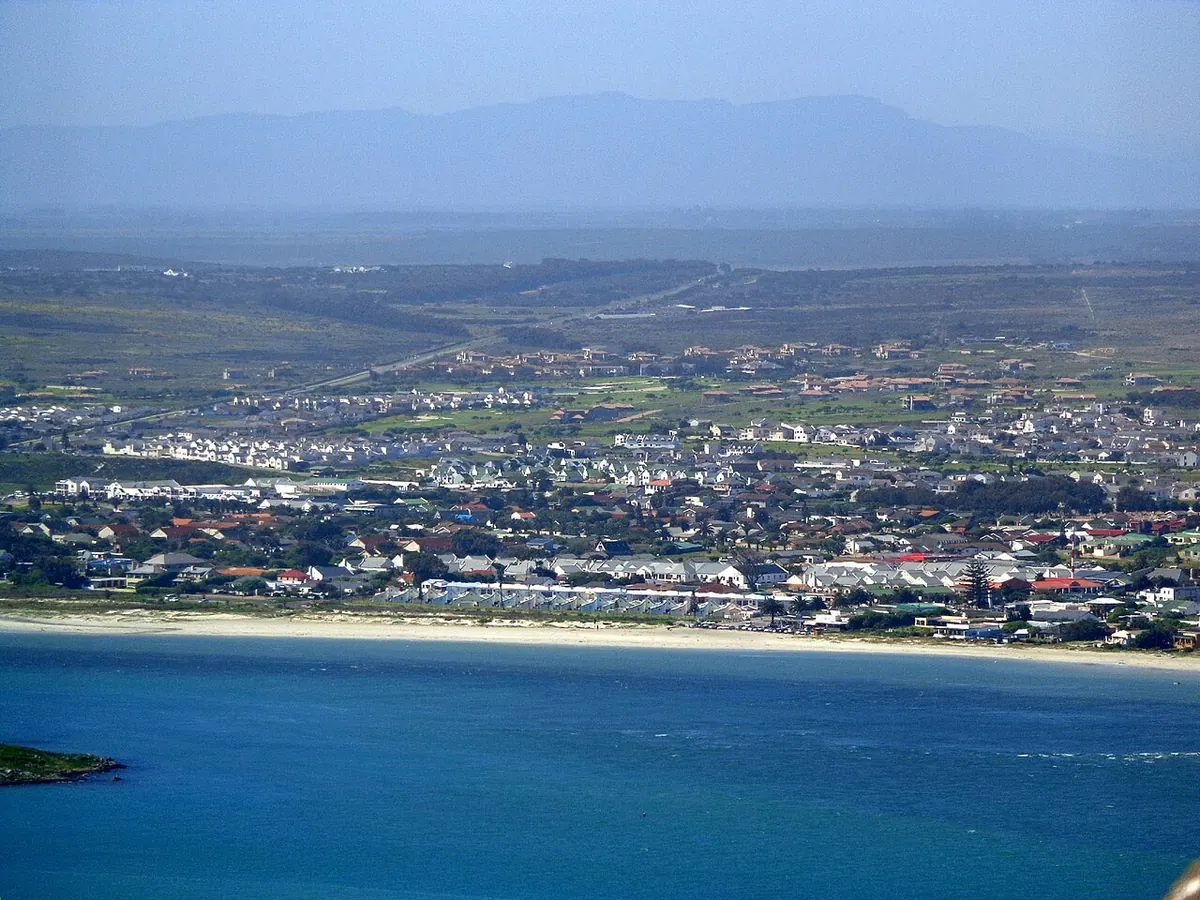
A holiday town on a 17 km saltwater lagoon 120 km north of Cape Town, with kitesurfing in the summer wind, spring flowers in the West Coast National Park and seafood on the beach.
Short answer
Langebaan is in Western Cape, South Africa. This page lists 13 places to stay and 15 places to eat and drink. The nearest park with an entry fee on this site is West Coast National Park, about 15 km away, where international adults pay from R166.

- Places to stay
- 13
- Eat and drink
- 15
- Park fee nearby: West Coast National Park
- US$10 €9 · R166about 15 km away
- Where
- Western Cape, South Africa33.09°S 18.03°E
In and around Langebaan
29 places listedWhere to stay in Langebaan 13
- 33.06°S 18.04°EGuest houseWaterfront Villa Retreat, LangebaanKraalbaai Close, Langebaanairbnb.com
- 33.09°S 18.04°EGuest houseBella Mia Langebaan+27 82 382 4462
- 33.10°S 18.04°EHotelFarmhouse Hotel
- 33.07°S 18.04°ECampsiteSeebries Caravan Park
- 33.09°S 18.05°EGuest houseCroeso Guest House
- 33.09°S 18.05°EGuest houseFalcons Rest Guest Lodge
- 33.04°S 18.05°EHostelHuis Pollard Residence
- 33.10°S 18.03°EHostelKite Basecamp
- 33.09°S 18.04°EHostelLangebaan 25 Middelburg St
Show all 13 places to stay
- Leentjiesklip Caravan Park · Caravan park
- Oostewal Holiday Resort · Campsite
- Seebries Caravan Park · Campsite
- Shark Bay Hotel & Spa · Hotel
Restaurants and cafes 13
 Thoban ChefsRestaurant · asian, sushi+27 67 352 6586thobanchefs.co.za
- La Petite MaisonRestaurant · cake, coffee shop, fine dining, fish, french, grill, international
- Die StrandloperRestaurant
- Dock Side RestaurantRestaurant
- DriftwoodsRestaurant
- Ginja BeanzCafe
- HuskysRestaurant
- KrustysRestaurant
- Pearlys on the BeachRestaurant
- Shark Bay ShackRestaurant
- The Secret GardenCafe
- Toeka & NouCafe
Show all 13 restaurants and cafes
- Westcoast Diner · Cafe
Bars and pubs 2
- Pirate BarBar
- Marc's Beach BarPub
Wineries, breweries and distilleries 1
- Black Eagle Brewing Co.Brewerybebc.co.za
Langebaan is a holiday town on the eastern shore of a long saltwater lagoon, about 120 km north of Cape Town just off the R27. The lagoon runs 17 km from Saldanha Bay down to Geelbek and is up to 4 km wide, shallow, calm and reliably windy, which has made it one of the country’s main kitesurfing spots. Its southern half lies inside the West Coast National Park. People come for water sports, spring flowers in the park’s Postberg section and long seafood lunches on the beach.
Getting there
It is about 90 minutes by car on the R27 (the West Coast Road) through Milnerton and Table View. Vredenburg is 28 km away and Saldanha 20 km. There is no train and no practical bus, so hire a car. The West Coast National Park has two gates: one on the edge of Langebaan town and one in the south-east off the R27, which is handy if you are coming straight from Cape Town.
When to go
The wind season for kitesurfing and windsurfing runs November to March, and the wind builds through the afternoon, so mornings are for swimming and paddling. Flower season is August and September, when the Postberg section opens to the public (1 August to 30 September) and the park roads fill at weekends; book accommodation early for those weeks. Whales pass in October and November, and migratory birds arrive from September through March. The Mussel Festival is on the first weekend of October. Regulars rate October to mid-May as the easy months.
What to do
Learn to kitesurf. Shark Bay, the last beach before the park gate, is shallow and protected and suits beginners; Pearly’s draws windsurfers; and schools on the main street rent kit and teach. Inside the park, Kraalbaai is the family beach: knee-deep water, no motorised sports, and stand-up paddleboard tours. The park has over 300 bird species, including flamingos and the world’s largest breeding colony of black harriers, plus eland, bontebok and mountain zebra. It opens 07:00 to 19:00 from September to March and closes an hour earlier from April to August.
The West Coast Fossil Park on the R45, near the Langebaanweg air force base, has a live excavation of five-million-year-old fossils from around 200 species and runs daily guided tours (Monday to Friday 08:00 to 16:00, weekends 09:00 to 12:00). Die Strandloper serves a ten-course seafood meal cooked over open fires on the beach that lasts three to four hours; people who have been say it books out about two months ahead. Darling, with its wineries, is an easy day trip.
Good to know
Langebaan was founded in 1922 and ran as a whaling station into the 1960s; the lagoon was declared a Ramsar wetland in 1988 and a marine protected area in 2000. Eve’s Footprint, a 117,000-year-old human footprint, was found in the park in 1995. The afternoon wind catches out people who planned a lazy beach day; go early or head for Kraalbaai. In flower season, be at the gate early.
History and culture
Langebaan is a young town, founded only in 1922, but the lagoon it sits on has one of the longest stories on this coast. People walked its shore 117,000 years ago, British ships captured a Dutch fleet in the bay, a Confederate raider from the American Civil War anchored here, and fossils five million years old lie just inland.
- About 117,000 years ago
Someone walked down a wet dune at the edge of the lagoon and left three footprints that later turned to sandstone. Found in 1995, they are known as Eve's footprints and are thought to be the oldest known prints of an anatomically modern human. source
- 1601
The name Saldanha comes from António de Saldanha, a Portuguese captain who called at the Cape in 1503. It was first used for Table Bay, where his ship anchored, and only moved to this bay in 1601, when Table Bay was given its present name. source
- 1781
During the Fourth Anglo-Dutch War a British squadron under Commodore George Johnstone sailed into the bay on 21 July 1781. Six Dutch East India Company ships had been sent here to hide from an expected attack on Cape Town; the British took five and the Dutch crew destroyed the sixth. source
- 1820s
Lord Charles Somerset, the British governor of the Cape Colony, had a hunting lodge built on the farm Oostewal on the lagoon. Before that a sailor called William Smith is said to have been the first settler here. source
- 1922
The town of Langebaan was founded in 1922. Across the lagoon the old whaling station at Donkergat, still visible from town, stayed in use until the 1960s, and a harpoon gun outside the municipal buildings is a reminder of that trade. source
- 1973 to 1988
The lagoon became a marine reserve in 1973. Langebaan National Park was proclaimed in 1985 and renamed West Coast National Park in 1987, the year state forestry land and neighbouring farms were added and Postberg joined as a contractual park. On 25 April 1988 the lagoon was declared a Ramsar wetland of international importance. source
- 1993 to 1996
Phosphate mining at Langebaanweg, inland from the town, had been turning up fossils for years. When the mine closed in 1993 the site became the West Coast Fossil Park, and it was declared a national monument in 1996. source
- Language and people
- This is an Afrikaans town first. In the 2011 census about 76% of Langebaan's 8,297 people spoke Afrikaans at home and 19% English. About 56% were white and 35% coloured (the South African term for the mixed heritage, mostly Afrikaans speaking community of the Western Cape). The 2022 town figures were not yet broken out in the sources I checked. source
- Mussel Festival
- The Langebaan Mussel Festival is held on the first weekend of October, when the town celebrates the West Coast's mussels and seafood. source
- No industry
- To keep its character as a fishing, holiday and retirement village, the town does not allow industry. source
For American visitors: The Confederate warship CSS Alabama, which hunted Union merchant ships during the American Civil War, anchored in Saldanha Bay on 29 July 1863 before going on to Cape Town. One of her officers, Assistant Engineer Simeon W. Cummings, died here in a shooting accident on 3 August 1863. source
Main sights in Langebaan
3- West Coast Fossil Park
A former phosphate mine at Langebaanweg, now a heritage site, where guided tours show one of the richest beds of five-million-year-old fossils anywhere. It is open Tuesday to Sunday and closed on Mondays, with guided tours on the hour (10:00 to 15:00 on weekdays, 10:00 to 13:00 at weekends); check the park's site before driving out.
West Coast Fossil Park - West Coast National Park and Postberg
The park wraps around the southern half of the lagoon. The Postberg section opens only in August and September, when it is famous for its carpets of spring flowers (rain daisies, gousblom and magriet). Bird hides on the lagoon shore let you watch migrant waders pushed in by the rising tide.
Wikipedia: West Coast National Park - Eve's footprints
The real 117,000-year-old prints are in Cape Town at the South African Museum, and a concrete replica was placed on the lagoon shore. The point of a stop is the place itself, on the shore where an early modern human once walked.
Wikipedia: Eve's footprint
Did you know?
- No river flows into Langebaan Lagoon. It was formed by changes in sea level, so it is pure seawater, which is unusual for a lagoon. It runs 17 km from Saldanha Bay down to Geelbek and is up to 4 km wide. source
- About 5.2 million years ago this dry coast had a more subtropical climate, with riverine forest and open grassland. The fossil beds at Langebaanweg hold sabre-toothed cats, short-necked giraffes, hunting hyenas and extinct African bears. source
- The visit of the Confederate raider CSS Alabama to the Cape in 1863 is still remembered in an Afrikaans folk song, "Daar kom die Alibama" (here comes the Alabama). source
- Eve's footprints were found in 1995 by the geologist David Roberts of the Council for Geoscience and announced with the palaeoanthropologist Lee Berger. The originals were moved to the South African Museum in Cape Town for safekeeping, and a concrete replica was placed on the shore of the lagoon. source
Checked 7 October 2026.
Map of Langebaan
See every place on this map as a list