Town · Western Cape, South Africa
Paternoster
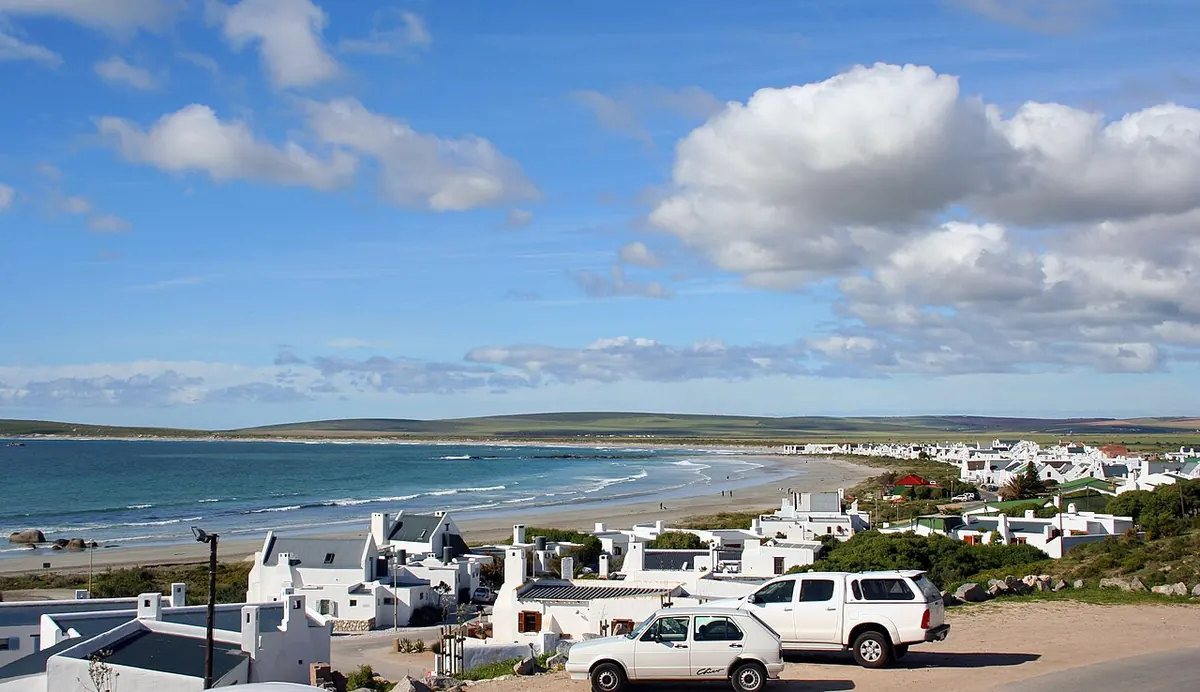
A small West Coast fishing village of whitewashed cottages about 145 km north of Cape Town, known for crayfish, a long empty beach and the Cape Columbine lighthouse.
Short answer
Paternoster is in Western Cape, South Africa. This page lists 8 places to stay, 12 places to eat and drink and 2 sights. The nearest park with an entry fee on this site is West Coast National Park, about 48 km away, where international adults pay from R166.

- Places to stay
- 8
- Eat and drink
- 12
- Sights
- 2
- Park fee nearby: West Coast National Park
- US$10 €9 · R166about 48 km away
In and around Paternoster
22 places listedWhere to stay in Paternoster 8
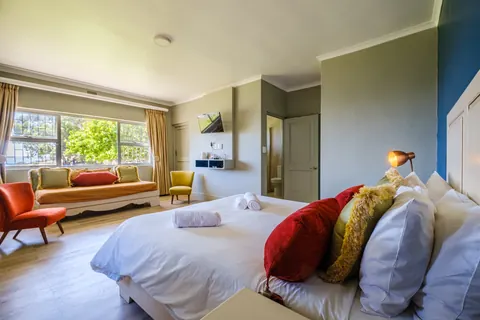 HotelPaternoster HotelSaint Augustine Road, Paternoster+27 22 752 2703paternosterhotel.co.za
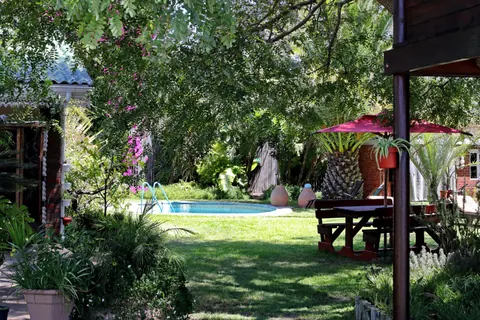 HotelGoblin’s Creek+27 22 742 1331goblinscreek.co.za
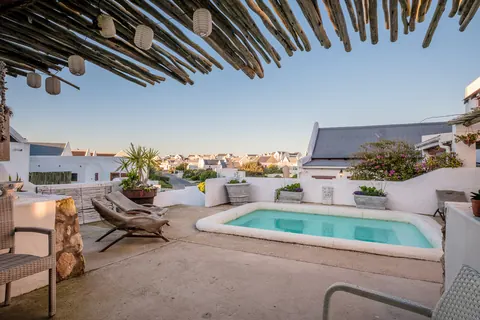 Guest houseOystercatchers' Haven Guesthouseoystercatchershaven.com
- 32.81°S 17.90°EHotelDeja-VuSchoonerklip Streetdeja-vu.co.za
- 32.81°S 17.90°EGuest houseZonnestraalJacobsklip Street
- 32.80°S 17.90°EHotelBaywatch Guest HouseAmbyl Street
- 32.82°S 17.89°EGuest houseFarr Out Guest houseSeemeeu Crescent, Paternoster
- 32.89°S 17.87°ECampsiteTrekoskraal
Sights 2
- Britannia BeachBeach
- Shelley Point LighthouseAttraction
Restaurants and cafes 12
 WolfgatRestaurant · Sampson Streetwolfgat.co.za
- Die Gaaitjie RestaurantRestaurant · Sampson Street+27 22 752 2242
- Junk and DisorderlyRestaurant · Saint Augustine Road
- Benguela BlueCafe
- Blikkie PizzeriaRestaurant
- DispensCafe
- Noisy OysterRestaurant
- The Drunken PecorinoRestaurant
- The Jolly Roger PaternosterRestaurant
- Voorstrandt RestaurantRestaurant
- Weskus BistroRestaurant
- WiesenhofCafe
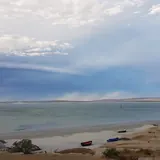
Paternoster is a fishing village of whitewashed cottages on the West Coast, about 145 km north of Cape Town and 15 km from Vredenburg, between Saldanha Bay and St Helena Bay. It is one of the oldest fishing settlements on this coast and the historic centre of the West Coast rock lobster trade; a commercial export industry was running by 1902 and painted wooden boats still work off the beach. People come to do very little: walk the sand, eat seafood, watch the sunset and drive out to the lighthouse.
Getting there
Count on about two hours by car. Take the R27 north for roughly 120 km, then turn west and go through Vredenburg to the coast; sources name the turn-off differently (R45 or R399), so follow the signs for Vredenburg. There is no useful public transport. A daily bus runs from Cape Town to Vredenburg and some guesthouses will collect you there, but without a car you will see nothing else on the coast. The village has one entrance at a four-way stop.
When to go
Spring is the sweet spot. Wild flowers cover the surrounding veld from around August into September, and whales pass offshore from about August; sources disagree on how long they stay, with some saying September and others into December. Summer is warm but windy, with strong winds most afternoons, which is why kayak trips go out early. Winter brings big swells that surfers like. January and summer weekends are the busy times. The Atlantic here is cold all year.
What to do
Walk the beach, which is long and mostly empty, and swim if you are brave. Guided sea kayak trips leave from the Crayfish Wharf each morning (minimum age nine) and regularly meet dolphins and seals. Cape Columbine Nature Reserve begins 5 km west of the village: 263 hectares of granite boulders and rocky shore with picnic and braai spots, hiking trails and the Tietiesbaai campsite, where you camp among the rocks with no electricity. The Cape Columbine lighthouse was built in 1936 on Castle Rock and is the last manually controlled lighthouse in South Africa; climb its 97 steps for the view, and watch the beam, which flashes every 15 seconds and reaches about 50 km out to sea. Longer trails run 17 km from Tietiesbaai to Swartriet and 30 km from Paternoster to Stompneus Bay.
Good to know
Building restrictions keep the village white, low and thatched, so do not expect a supermarket or a chain of anything. The famous restaurant Wolfgat takes bookings far ahead, and other kitchens fill on weekends, so reserve dinner before you arrive. Informal sellers will offer you crayfish at the roadside; seasons and permits apply, so eat it in a restaurant unless you know the rules. Drive slowly on the few streets, which double as pavements. The Crayfish and Seafood Festival takes place in spring, with dates announced close to the time.
History and culture
Paternoster is a tiny fishing village of whitewashed, thatched cottages on the Cape West Coast, and people have been eating from this shore for a very long time. There are ancient shell heaps and an archaeological cave in the village, Portuguese sailors met the Khoekhoe just up the coast in 1497, and the crayfish trade has kept the place going since the early 1900s.
- Last 2,000 years
Khoekhoe herders (the sheep and cattle keeping people of the Cape) and hunter-gatherers lived on this coast long before Europeans came. A first survey of the Wolfgat cave under a building in the village turned up pottery and sheep bones from some time in the last 2,000 years, along with shell, ostrich eggshell beads and stone tools. source
- 1497
Vasco da Gama's fleet anchored in St Helena Bay, just north of Paternoster, on 4 November 1497 to make repairs and find water. It was the Portuguese expedition's first meeting with the Khoekhoe (Khoikhoi), and it went badly: a misunderstanding led to spears being thrown and Da Gama was wounded in the thigh. source
- 1829
The barque Columbine was wrecked about 1.5 km north of where the lighthouse stands now, on 31 March 1829. The headland, Cape Columbine, is named after her. source
- 1902
By 1902 a proper West Coast rock lobster (crayfish) industry was running here, canning lobster and exporting it, mostly to France. Paternoster still has a lobster factory and the trade is a big local employer. source
- 1910
The Portuguese steamship Lisboa ran aground near Paternoster. Her crew called for help by radio telegraphy, the first time that had been done off the South African coast. source
- 1930s
The first Redro factory went up in Paternoster. Redro is a fish paste the Stephan family made to compete with Britain's Peck's Anchovette, and the brand now belongs to Pioneer Foods. source
- 1936
Cape Columbine Lighthouse was opened at sunset on 1 October 1936 by the wife of H. C. Cooper, who designed and built it. It stands on a rise called Castle Rock, which puts the light about 80 m above the sea. source
- 2009
The Paternoster Midden, a huge ancient shell heap 350 m long and 150 m wide, was declared a provincial heritage site on 9 April 2009. Besides shells it holds bones of seals, tortoises, eland and buffalo, even elephant remains, plus ostrich eggshell beads, which is unusual for middens on this coast. source
- Language and people
- This is an Afrikaans village. At the 2011 census Afrikaans was the first language of about 83% of Paternoster's roughly 2,000 people, isiXhosa of 9% and English of under 6%. Most residents are Coloured (South Africa's term for its largest mixed-heritage community), many of them from old fishing families. source
- Architecture
- The look of the village is protected on purpose. Building rules keep houses in the old West Coast fishing cottage style, white walls, blue shutters and thatch, and there are no shopping centres or chain stores. source
- Food
- Crayfish (West Coast rock lobster) is the thing here. Look out too for bokkoms, whole mullet that is salted and dried. It was long a cheap, practical protein on this coast, and these days much of it is made for export. source
- Strandveld cooking
- Strandveld is the low coastal scrub around the village, and chef Kobus van der Merwe built a cuisine on it at Wolfgat: foraged wild herbs, seaweed from the rock pools, seafood, meat and game. In 2021 Wolfgat was named the best restaurant in Africa and placed 50th on The World's 50 Best Restaurants list. source
Main sights in Paternoster
4- The old village
The old part of the village is the sight itself: whitewashed cottages with blue shutters and thatched roofs, built or kept in the style of a Western Cape fishing village. There are only a few streets, so park and walk, then carry on along the beach.
South African Tourism - Cape Columbine Lighthouse
Built in 1936 on Castle Rock and named after the barque wrecked nearby in 1829. It was the last staffed lighthouse to be built on the South African coast, and the reserve around it is good for a walk among the rocks.
Wikipedia: Cape Columbine - Cape Columbine Nature Reserve and Tietiesbaai
263 hectares of rocky headland and coast around the lighthouse, run by Saldanha Bay Municipality, with Tietiesbaai (Tieties Bay) on its southern side. People come for hiking, camping and birdwatching.
Wikipedia: Cape Columbine - Vasco da Gama monument, St Helena Bay
A short drive north at Stompneus Bay, two carved stone columns (padrões, the markers Portuguese navigators set up) stand on a granite dome near the spot where Da Gama probably came ashore in November 1497. Portugal gave the monument to South Africa and it was unveiled in 1969.
artefacts.co.za: Vasco Da Gama Monument
Did you know?
- Nobody is sure where the name comes from. Paternoster is Latin for "Our Father", and the popular story is that shipwrecked Portuguese sailors prayed here. An old map by Pieter Mortier calls it St. Martins Paternoster, which may point to Paternoster Row in London instead. source
- Cape Columbine, 5 km from the village, is the most westerly point of the Western Cape. Its lighthouse was the first in South Africa to get all three navigation aids: a light, a fog signal and a radio beacon. source
- The reefs off Cape Columbine have claimed plenty of ships, including the St Lawrence (1876), the Lisboa (1910), the Haddon Hall (1913) and the SS Columbine, torpedoed in 1944. source
- Wolfgat restaurant is named after a cave that sits under the building. Local legend says its passages run for kilometres inland, some say all the way to the Cape Columbine reserve. source
Checked 7 October 2026.
Map of Paternoster
See every place on this map as a list