Town · Western Cape, South Africa
Clanwilliam
Small rooibos town in the Olifants River valley about 200 km north of Cape Town, the usual base for the Cederberg, its rock art and the spring flowers.
Short answer
Clanwilliam is in Western Cape, South Africa. This page lists 24 places to stay, 9 places to eat and drink and 6 sights. The nearest park with an entry fee on this site is Tankwa-Karoo National Park, about 101 km away, where international adults pay from R295.
- Places to stay
- 24
- Eat and drink
- 9
- Sights
- 6
- Park fee nearby: Tankwa-Karoo National Park
- US$17 €15 · R295about 101 km away
In and around Clanwilliam
39 places listedWhere to stay in Clanwilliam 24
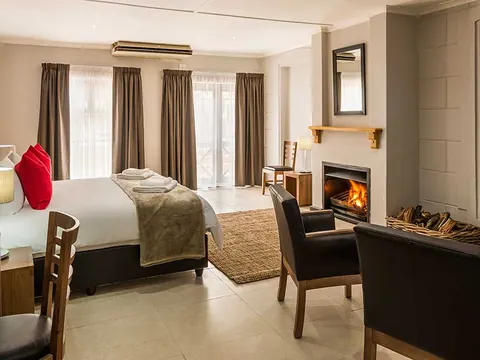
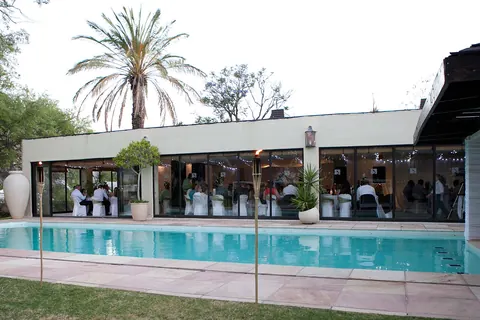
- 32.18°S 18.89°EHotelYellow Aloe Longhouse B&BPark Street+27 76 687 4360yellowaloe.co.za
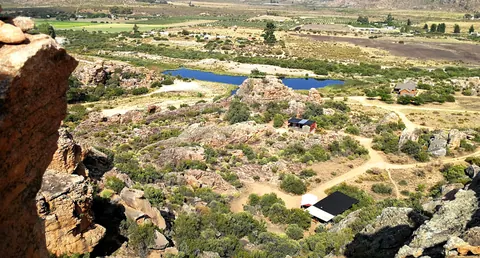
- 32.12°S 19.07°ECampsiteAfriCamps at de Pakhuys+27 71 840 4867depakhuys.com
- 32.18°S 18.89°EGuest houseYellow Aloe B&BPark Street+27 76 687 4360yellowaloe.co.za
- 32.07°S 19.08°EChaletTraveller's Rest+27 27 482 1824travellersrest.co.za
- 32.19°S 18.90°EGuest houseNdedema Lodge+27 27 482 1314
Show all 24 places to stay
- Sugarbird · Chalet
- Aardvark · Chalet
- Hoopoe · Chalet
- Boegoeberg 4x4 · Campsite
- Bulshoekdam Leisure Resort · Campsite
- Camp Clanwilliam · Campsite
- De Pakhuys · Campsite
- Elephant River Guesthouse · Guest house
- Johantjie · Chalet
- Karukareb · Hotel
- Keurbos · Chalet
- Keurbos Camp · Campsite
- Lebanon Citrus Holiday Farm · Campsite
- Rondeberg Resort · Campsite
- Vondelingsrust · Chalet
Sights 6
- BoegoebergViewpoint
- BoegoebergViewpoint
- BoegoebergViewpoint
- Rock PoolsAttraction
Restaurants and cafes 8
- Floris RestaurantRestaurant · pizza, burger, african · Main Street+27 27 482 2896
- De Klein SchuurCafe+27 22 125 0248
- Nancy’s TearoomRestaurant · Main Street, Clanwilliam+27 27 482 2661
- Khoisan KitchenRestaurant · regional
- OlifantshuisRestaurant
- Reinholds RestaurantRestaurant
- VelskoendraaiRestaurant
- Yellow Aloe Coffee ShopCafe
Bars and pubs 1
- De Kelder Pub & GrillPub
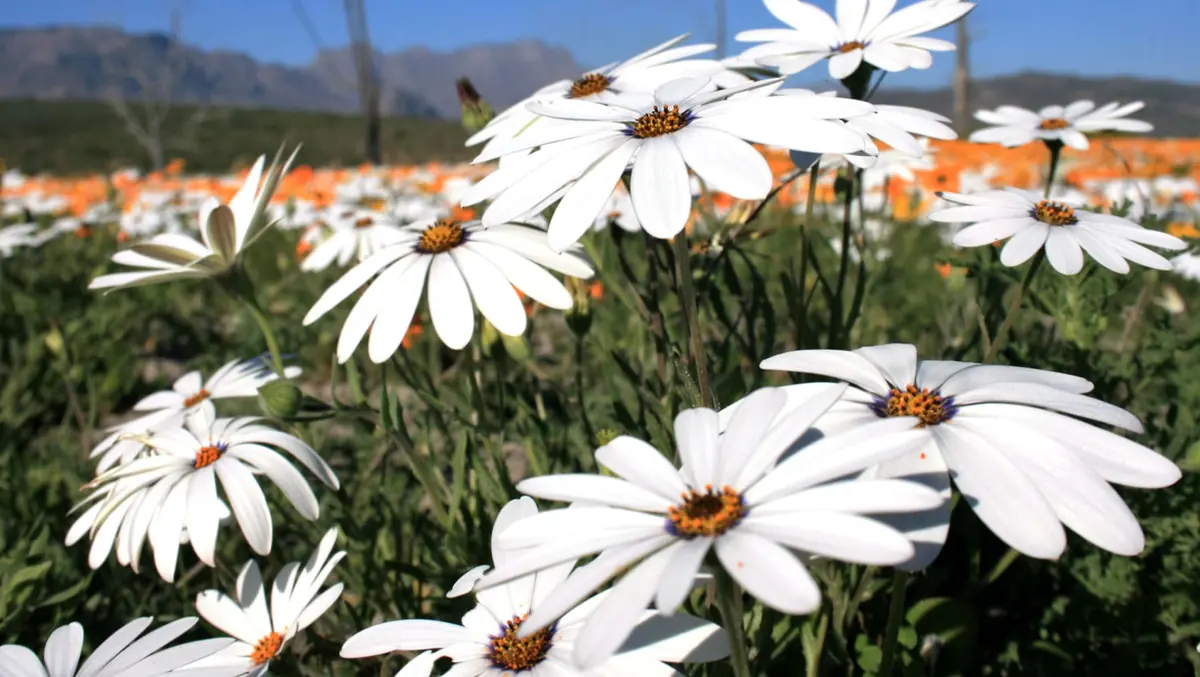
Clanwilliam is a small farming town in the Olifants River valley, squeezed between the river, which is dammed right beside it, and the sandstone wall of the Cederberg. It dates from the early 1800s and took its name from an Irish earl, the father-in-law of a Cape governor. This is rooibos country: a local doctor started cultivating the plant here in 1930, and it is still the crop the district is known for. People stop for the flowers in late winter and spring, the rock art and the mountains.
Getting there
The town is roughly 200 km north of Cape Town as the crow flies, nearer 230 km by road, just off the N7. The N7 runs along the western side of the Cederberg, and from Clanwilliam the R364, the Wupperthal road, heads east over the Pakhuis Pass into the mountains. Bulshoek Dam, another irrigation dam, is about 24 km further north on the N7.
When to go
August and September are the months to aim for if you want flowers; Clanwilliam Tourism singles them out for the Ramskop Nature Garden by the dam. Summers in the Cederberg are hot and dry, and in winter the high peaks occasionally get snow, so pack for both if you plan to hike. The angling club runs its Bass Classic on the dam each October.
What to do
Ramskop is an easy start: a garden of indigenous flowers reached from the chalets at the Clanwilliam Dam resort. Water skiers rate the dam highly (the tourism office claims it is the province’s favourite for the sport), and you can stay in a chalet or camp beside it.
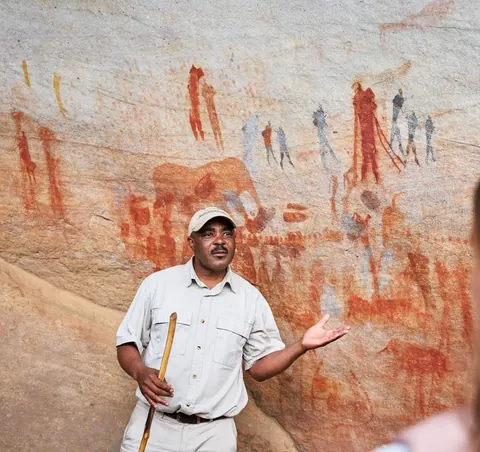
The best half day out is the Seville Rock Art Trail on Traveller’s Rest farm, 34 km out along the R364. It is a 5 km walk beside the Brandewyn River, stopping at nine rock painting sites, and part of it crosses a game camp with eland, springbok and red hartebeest. Buy your permit at the farm stall first. Leave the dog at home, because the game camp rules out pets.
Further in, the Cederberg stretches roughly 50 km from north to south, topped by Sneeuberg at 2,026 m. Its sandstone has weathered into formations such as the Wolfberg Arch and the Maltese Cross, and the range shelters the endangered Clanwilliam cedar.
Good to know
This is a small place of about 7,700 people, and Afrikaans is the main language. The Clanwilliam Arts Festival has run every year since 2001.
History and culture
Clanwilliam is one of the older country towns of the Western Cape, a magistrate's post from the early 1800s on the Olifants River below the Cederberg. Its story runs from San rock painters to Irish settlers, German missionaries over the mountain at Wupperthal and the doctor who turned a wild mountain shrub into rooibos, still the district's main crop.
- Thousands of years ago
San hunter-gatherers lived in these mountains for thousands of years and left paintings in the rock shelters around the town. source
- After European settlement
When European farmers moved into the Cederberg, the San who lived here were wiped out as a community, and settlers cut down thousands of the local cedars for telephone poles, furniture and houses. source
- 1808 and 1814
On 1 February 1808 the Cape governor, the Earl of Caledon, made the land north of the Berg River a sub-drostdy (an outpost of the magistrate at Tulbagh). In 1814 the next governor, Sir John Cradock, renamed it Clanwilliam after his father-in-law, the Earl of Clanwilliam. source
- 1820
Four groups of Irish settlers from the 1820 settler scheme were placed along the Jan Dissels River, which runs through the town. The scheme had little success. source
- 1837
On 1 January 1837 Clanwilliam was split off from Worcester and proclaimed a district of its own. source
- 1901
The village became a municipality, with Charles Fryer, a descendant of the 1820 Irish settlers, as its first mayor. source
- 1930
By the late 1920s wild rooibos could not keep up with demand, so Dr Pieter le Fras Nortier, the Clanwilliam district surgeon, began experimenting with growing it as a crop in 1930. He planted the first fields on his farm Eastside and on Klein Kliphuis, found the hard seeds needed scarifying (nicking the coat) before going into acid, sandy soil, and showed local farmers how to raise their own. source
- 1935 and 1964
The Clanwilliam Dam was built on the Olifants River in 1935 to water the farms downstream, and its wall was raised to 43 m in 1964. source
- Language and people
- Afrikaans is the home language of about 78% of people in town, followed by Sesotho (9%) and isiXhosa (8%), according to the 2011 census. Around two thirds of residents are classified as Coloured, the South African term for a community of mixed Khoekhoe, slave, African and European descent. source
- Rooibos
- Rooibos (Afrikaans for red bush) was drunk by the Khoi-descended people of the Cederberg before it was a business, a tradition recorded from the late 1800s. In 1904 the businessman Benjamin Ginsberg worked out how to cure it on Rondegat farm by fermenting the leaves in barrels, copying the Chinese method for Keemun tea, and Nortier's work from 1930 turned it into a farmed crop. source
- Veldskoen
- Veldskoene (field shoes, simple soft leather boots) are made by hand in Clanwilliam at Strassbergers, a factory running since 1954. The trade goes back to the shoe workshop the Rhenish missionaries set up at Wupperthal around 1834. source
- Arts festival
- The Clanwilliam Arts Festival, run by the Cape Town company Magnet Theatre, has been held every year since 2001. It is a week of workshops in art, dance, music and theatre for the town's children and young people. source
For German visitors: Wupperthal, over the Pakhuis Pass from Clanwilliam, was founded in 1830 by two German missionaries of the Rhenish Missionary Society (Rheinische Mission), Theobald von Wurmb and Johann Gottlieb Leipoldt. It became part of the Moravian Church in 1965, and a wildfire on 31 December 2018 destroyed 53 homes and the historic mission station, leaving the church standing. source
For German visitors: Leipoldt's grandfather was that same Johann Gottlieb Leipoldt, and his mother's father, Louis Franz Esselen, was another Rhenish missionary, so the best-known Afrikaans poet of the area had German roots on both sides. source
Main sights in Clanwilliam
6- Ou Tronk Museum
The town museum is in the Old Gaol (ou tronk means old jail) at the end of Main Road. It covers the Khoi and San, rooibos and local figures such as Leipoldt. Open weekdays 08:30 to 16:30 and Saturday mornings.
Clanwilliam Tourism: Ou Tronk Museum - Historical walkabout
A local guide leads a walk round the old town centre, taking in the museum, Leipoldt's house and the old Dutch Reformed church, now called the Flower Church. Book ahead.
Clanwilliam Tourism: Historical Walkabout - Leipoldt's grave
Leipoldt's grave lies in the Pakhuis Pass about 17 km from town on the R364 to Wupperthal, among the weathered sandstone near the rock outcrop called Soldaatkop.
Clanwilliam Tourism: Leipoldt's Grave - Sevilla Rock Art Trail
A fairly easy 5 km walk along the Brandewyn (Brannewyn) River on Travellers Rest farm, stopping at nine sites of San rock paintings. Pick up the free pamphlet at the farm stall, which explains each site.
Clanwilliam Tourism: Sevilla Rock Art Trail - Strassbergers Shoe Factory
A working veldskoen factory in town where you can watch the shoes being made and buy a pair. Groups should call ahead.
Clanwilliam Tourism: Strassbergers Shoe Factory - Cederberg Heritage Route
Four guided walking trails of three to five nights through the Moravian mission villages of Heuningvlei, Brugkraal and Wupperthal on the eastern side of the Cederberg, staying in community guest cottages while your bags go ahead by donkey cart or vehicle.
Clanwilliam Tourism: Cederberg Heritage Route
Did you know?
- Since May 2021 the name rooibos is protected in the EU the way Champagne is: it can only be used for Aspalathus linearis grown in the Cederberg region around Clanwilliam. source
- The Clanwilliam cedar grows wild only in the Cederberg, the range named after it, and is listed as critically endangered. Wildfires kill mature trees and it grows slowly, so it struggles to recover. source
- The poet and doctor C. Louis Leipoldt, one of the great Afrikaans writers, was the son of Clanwilliam's Dutch Reformed minister. He died in Cape Town in 1947, but his ashes were laid in the Pakhuis Pass outside town because of his love for this wild mountain country. source
- Dr Nortier, the rooibos pioneer, died in 1955 and left money in his will for a library in memory of his old friend Leipoldt. A local committee raised further funds, and the Leipoldt-Nortier Library opened on 11 October 1958. source
- The Clanwilliam Dam holds about 121.8 million cubic metres. Plans announced in 2015 were to raise the wall by another 13 m, adding roughly 70 million cubic metres. source
Checked 7 October 2026.
Map of Clanwilliam
See every place on this map as a list