Town · Western Cape, South Africa
Cederberg
Short answer
Cederberg is in Western Cape, South Africa. This page lists 30 places to stay, 2 places to eat and drink and 14 sights. The nearest park with an entry fee on this site is Tankwa-Karoo National Park, about 70 km away, where international adults pay from R295.
- Places to stay
- 30
- Eat and drink
- 2
- Sights
- 14
- Park fee nearby: Tankwa-Karoo National Park
- US$17 €15 · R295about 70 km away
In and around Cederberg
47 places listedWhere to stay in Cederberg 30
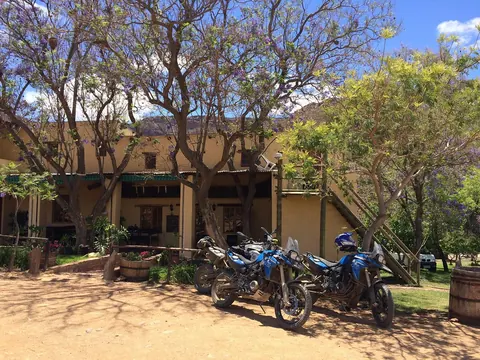
- 32.44°S 19.19°ECampsiteDriehoek Guest Farmcederberg-accommodation.co.za
- 32.54°S 19.28°ECampsiteKromrivercederbergpark.com
- 32.54°S 19.29°ECampsiteKromriviercederbergpark.com
- 32.47°S 19.41°EChaletLeopard Rock
- 32.49°S 19.27°EChaletSanddrif
- 32.65°S 19.41°EGuest houseMount Ceder+27 23 317 0848
- 32.64°S 19.42°ECampsiteMount Ceder+27 23 317 0848
- 32.56°S 19.38°ECampsiteNuwerust
Show all 30 places to stay
- Cederberg Oasis Campsite · Campsite
- Driehoek · Campsite
- Ferguson’s Rest · Caravan park
- Groothuis · Chalet
- Jupiter · Chalet
- Kliphuis · Campsite
- Mars · Chalet
- Mountain Club of South Africa private camping area · Campsite
- Ons Huisie · Chalet
- Orion · Chalet
- Ouplaas · Campsite
- Pluto · Chalet
- Protea Hoogte 1 · Chalet
- Protea Hoogte 2 · Chalet
- Protea Hoogte 3 · Chalet
- Protea Hoogte 4 · Chalet
- Stal · Chalet
- Suikerbossie Guest Farm - Kuilcamp · Campsite
- Uitrus · Chalet
- Venus · Chalet
- Waenhuis · Chalet
Sights 14
- TruitjieskraalAttractioncapenature.co.za
- Doc's RockArchaeological site
- Krom River CaveCave
- Lot's WifeAttraction
- Lunar CaveCave
- Maanskyn GrotCave
- Old Leopard TrapArchaeological site
- Rock overhangAttraction
- ruinRuins
- Stadsaal Rock ArtAttraction
- Valley of the Red GodsAttraction
Show all 14 sights
- Waterfall viewpoint · Viewpoint
- Wolfbergskeure · Attraction
Restaurants and cafes 2
- KromrivierRestaurantcederbergpark.com
- Coffee shopCafe
Wineries, breweries and distilleries 1
- Cederberg WinesWinery
History and culture
The Cederberg is a range of orange sandstone mountains north of Cape Town, not really a town at all, with a handful of farms, a mission village and a nature reserve office strung along the gravel roads. People have painted on these rocks for thousands of years, German missionaries settled here in 1830, and the valleys are where rooibos tea comes from.
- 6,000 to 300 years ago
San hunter-gatherers, and later Khoekhoe (Khoi) herders who kept cattle and sheep and moved with them, lived in the caves and overhangs of these mountains and painted on the rock. CapeNature counts more than 2,500 rock art sites, with paintings between about 300 and 6,000 years old. source
- After European settlement
European settlers took over the land and the San population of these mountains was wiped out. The settlers also felled thousands of the cedar trees that give the range its name, for telephone poles, furniture and housing. source
- 1830
Two German missionaries of the Rhenish Missionary Society (Rheinische Mission), Theobald von Wurmb and Johann Gottlieb Leipoldt, founded the mission station of Wupperthal on the eastern side of the range. It grew into a village of small farmers, with a shoe workshop and a tannery. source
- 1918
Local farmers began holding yearly gatherings at the Stadsaal Caves to raise money for the National Party, the Afrikaner nationalist party that later brought in apartheid. D.F. Malan, then MP for Calvinia (the constituency the Cederberg fell in) and later Prime Minister, visited in 1919. source
- 1930
Dr Pieter le Fras Nortier, the district surgeon at Clanwilliam, began experiments in growing rooibos as a farmed crop, using wild seed collected in the Pakhuis Mountains. He found the hard seed must be scarified (scratched) before it will germinate, and showed local farmers how. Until then rooibos had been cut from wild bushes on the mountains. source
- 1965
The Rhenish Mission handed Wupperthal over to the Moravian Church, which still runs it as a mission station. source
- 1973
The state proclaimed the Cederberg Wilderness Area, 66,811 hectares now managed by CapeNature. It forms part of the Cape Floral Region World Heritage Site. source
- 2018
On 31 December a wildfire burnt through Wupperthal, destroying 53 homes, the community hall, the clinic and the historic Moravian mission station, and leaving about 200 people homeless. The church was one of the few buildings left standing. One woman badly burnt in the fire died a month later. source
- People and language
- The people of the Cederberg villages are mostly Afrikaans-speaking and classed as Coloured (a South African census term for people of mixed Khoekhoe, enslaved, African and European descent). Wupperthal has about 1,500 people; at the 2011 census 97% were classed as Coloured and almost 97% gave Afrikaans as their first language. source
- Rooibos
- Rooibos (red bush) is a caffeine-free tea made from a fynbos shrub. The bushes are cut green and turn dark red as they dry in the sun, and the crop is farmed only in about 60,000 hectares of the Cederberg region, where it is a big employer at harvest time in summer. source
- Veldskoen
- Johann Leipoldt set up a shoe workshop at Wupperthal, and for nearly a century its hand-sewn veldskoene (soft suede shoes) were famous across South Africa for comfort and good craftsmanship. The workshop still runs, on a much smaller scale. source
For German visitors: Wupperthal was the first mission station in South Africa of the Rhenish Missionary Society (Rheinische Missionsgesellschaft), formed in Germany in 1828 out of older mission groups. In 1842 the society moved on to what is now Namibia, and Wupperthal later chose to join the Moravian Church. source
For German visitors: C. Louis Leipoldt, one of the best-known Afrikaans poets, was the grandson of Johann Gottlieb Leipoldt, the German missionary who co-founded Wupperthal. His ashes lie at the Pakhuis Pass. source
Main sights in Cederberg
6- Stadsaal Caves
A cluster of wind-eroded sandstone caves on CapeNature's Matjiesrivier Nature Reserve, where local farmers held fundraising gatherings for the National Party from 1918, with visitor names going back to the late 1800s on the walls. Get a day permit first from CapeNature at Algeria or Matjiesrivier, or from conservancy farms such as Dwarsrivier and Kromrivier.
Wikipedia: Stadsaal Caves - Stadsaal Rock Art
Near the caves, an overhang with San paintings of human figures and elephants. It needs the same day permit as the caves.
Wikipedia: Stadsaal Caves - Truitjieskraal
A 1.5 km interpretive trail on the Matjiesrivier Nature Reserve, past odd sandstone formations and rock paintings, with information boards on the history of the area. Day permits are sold at Algeria, Driehoek, Sanddrif, Kromrivier, Nuwerus and Oasis.
Roxanne Reid, Africa Addict: 15 things to do in the Cederberg - Wupperthal
The 1830 German mission village on the north-eastern side of the range, reached by gravel road over the Pakhuis Pass, with its rooibos fields and Moravian church community. The 2018 fire destroyed the historic mission station and most of the village (the church survived), so check what has been rebuilt before you make the drive.
Wikipedia: Wupperthal - C. Louis Leipoldt's grave, Pakhuis Pass
The Afrikaans poet, doctor and cookery writer, grandson of Wupperthal's co-founder, had his ashes laid to rest beside the Pakhuis Pass near Clanwilliam, at the foot of a rock overhang with faint San paintings above the grave.
Wikipedia: C. Louis Leipoldt - Wolfberg Arch and Maltese Cross
The two best-known sandstone formations in the central Cederberg, both reached on foot from conservancy farms with a day permit (for the Wolfberg Arch, from Sanddrif, Driehoek or Keurbosfontein). They are natural rather than historical, but they are what most people come for.
CapeNature: Cederberg Wilderness Area
Did you know?
- Since May 2021 rooibos has had protected designation of origin status in the European Union, so anything sold there as rooibos must be made only from leaves grown in the Cederberg region. source
- The Clanwilliam cedar that gives the mountains their name grows wild nowhere else in the world and is endangered, after heavy logging and frequent wildfires. It is a small tree, usually 5 to 7 m tall. source
- Wupperthal in the Cederberg had its name about a hundred years before the German city of Wuppertal got the same one. source
- Sneeuberg (Snow Mountain), the highest peak, reaches 2,026 m. The whole range is only about 50 km long and 20 km wide. source
- The walls of the Stadsaal Caves carry visitor names going back to the late 1800s, including D.F. Malan's. P.W. Botha and Dawie de Villiers added theirs in 1987, and those have since been defaced. source
Checked 7 October 2026.
Map of Cederberg
See every place on this map as a list