Town · Western Cape, South Africa
Gansbaai
Fishing town on the Overberg coast past Hermanus, known for boat trips to Dyer Island, whale watching from the cliffs and a shark cage diving industry hit hard by orcas.
Short answer
Gansbaai is in Western Cape, South Africa. This page lists 21 places to stay, 8 places to eat and drink and 7 sights. The nearest park with an entry fee on this site is Walker Bay Nature Reserve, about 11 km away, where international adults pay from R65.

- Places to stay
- 21
- Eat and drink
- 8
- Sights
- 7
- Park fee nearby: Walker Bay Nature Reserve
- US$4 €3 · R65about 11 km away
In and around Gansbaai
37 places listedWhere to stay in Gansbaai 21
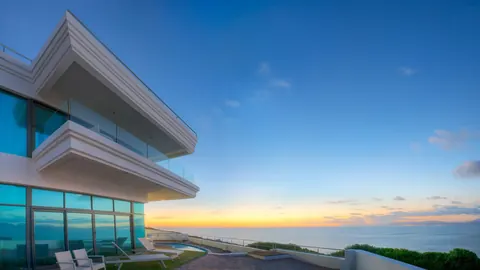
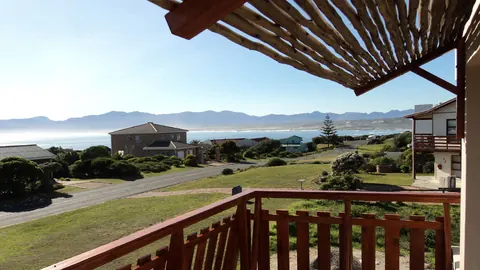
- 34.57°S 19.35°EGuest houseRomanza ApartmentWaterkant Street+27 83 761 4408sites.google.com
- 34.55°S 19.37°EGuest houseMarebella GuesthouseCliffstraat+27 28 384 2665marebella.co.za
- 34.56°S 19.36°EGuest houseThe RoundhouseIngang Street, Gansbaai+27 82 466 4519theroundhouse.co.za
- 34.54°S 19.41°EHotelGarden Lodge
- 34.54°S 19.41°EChaletVilla 1 - Fynbos Villa - Grootbosgrootbos.com
- 34.54°S 19.41°EChaletVilla 2, Fynbos Villa, Grootbosgrootbos.com
Show all 21 places to stay
- Gansbaai Caravan Park · Caravan park
- Guesthouse Bellamente · Guest house+27 28 384 0186
- Umnenge Lodge · Guest house · 4 star
- Ama-Krokka B&B · Guest house
- Anlo Guest House · Guest house
- Bodhi Khaya · Resort
- Buchu · Chalet
- Cloister · Chalet
- Cone Bush · Chalet
- De Kelders B&B · Guest house
- Die Stroom B&B · Guest house
- Saxon Lodge · Guest house
Sights 7
- Duiwelsgat SinkholeAttraction
- HemelshoogViewpoint
- Klipgat se PlaatBeach
- StablesAttraction
- View PointViewpoint
- Whale viewing siteViewpoint
- Whale WatchingViewpoint
Restaurants and cafes 5
- Blue GooseRestaurant · african, curry, fine dining, fish, portuguese, seafood · Hoopstraat+27 71 863 1514
- Coffee On The RocksRestaurant · Cliffstraat+27 28 384 2017
- TolhoekRestaurant · seafood, african · Kerkstraat
- De la MerRestaurant · regional
- Rosemary's Country KitchenRestaurant · regional
Bars and pubs 3
- Jimmy'sPub · Mark Street
- Buitesteen Pub and GrillPub
- Seaview Sports PubPub
Wineries, breweries and distilleries 1
- Lomond WinesWinery
Gansbaai is a working fishing town on the southern side of Walker Bay, about two hours’ drive from Cape Town beyond Hermanus. The name means bay of geese. Shark cage diving has been its main tourist draw since about 1995. The sharks have become scarce, but the boat trips to Dyer Island, the whales close to shore and the cliff and cave walks at De Kelders still make it a good day or overnight on the Overberg coast.
Getting there
Gansbaai is about 165 km southeast of Cape Town. Take the N2 towards Hermanus and turn off onto the R43, which runs through Hermanus and Stanford to the town. De Kelders, the cliff-top village, is on the edge of town as you arrive. Boat trips leave from Kleinbaai harbour.
When to go
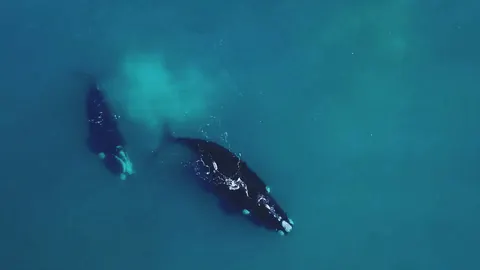
June to August, the southern winter, has traditionally been peak shark season, though that counts for less now (see below). Southern right, humpback and Bryde’s whales all use this coast, and the cliff path at De Kelders is a good place to watch for them.
What to do
Dyer Island lies about 8 km offshore and is home to some 5,000 African penguins, while neighbouring Geyser Rock holds around 60,000 Cape fur seals. The narrow channel between them is Shark Alley. Boat operators sell marine big five trips covering seals, penguins, dolphins, whales and sharks.
Be realistic about the sharks. A pair of male orcas known as Port and Starboard began killing great whites off the Western Cape around 2015, and the sharks have largely abandoned Gansbaai since. Trips still run, but a great white at the cage is far from certain; one operator’s log for 11 March 2026 records orcas at the dive site and no sharks, and the boat moved on to the seal colony instead. Ask operators about recent sightings before you book.
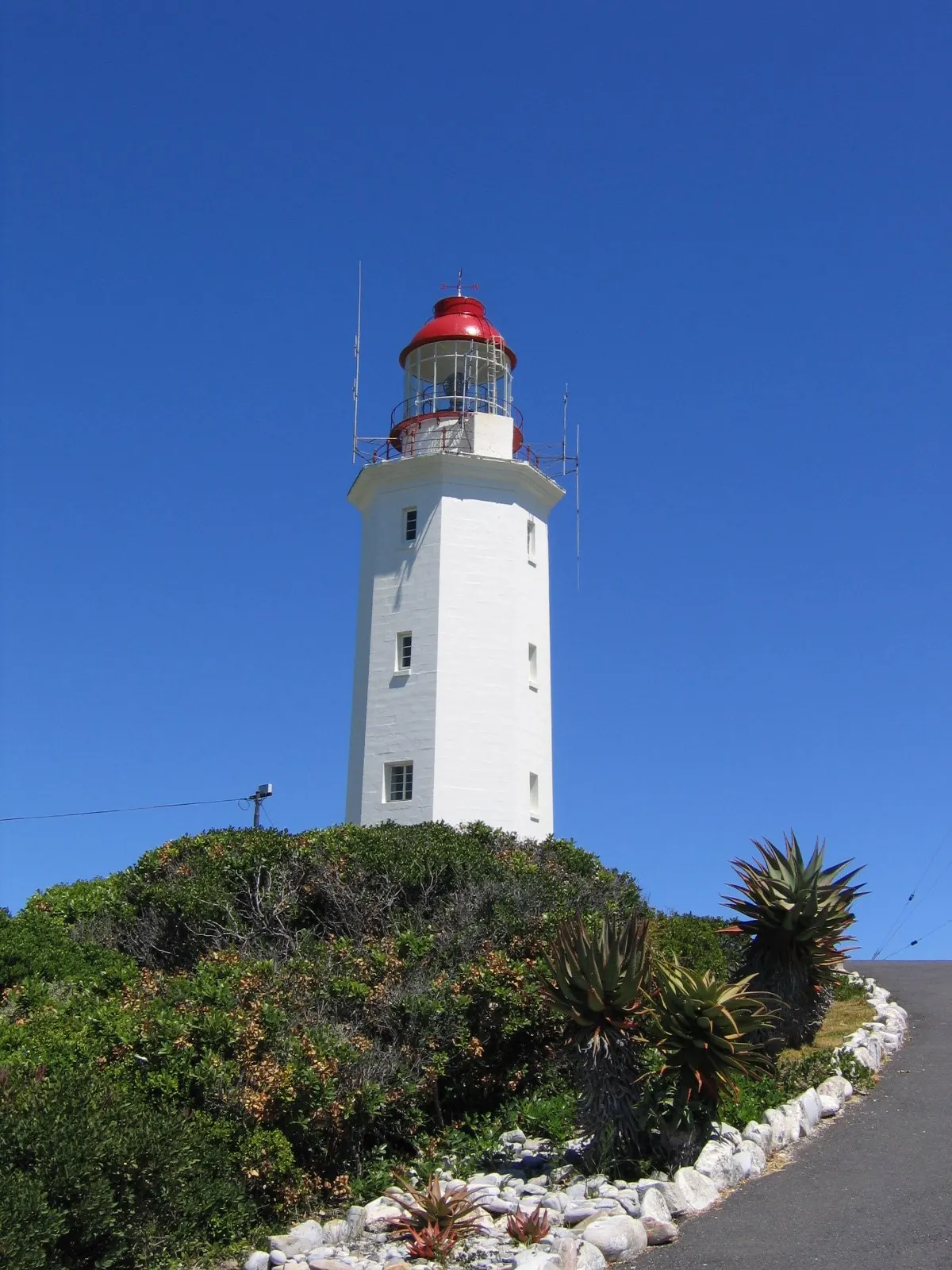
On land, the Walker Bay Nature Reserve gate at De Kelders gives access to Klipgat Cave, reached by boardwalk, where people lived between about 65,000 and 85,000 years ago and Khoi herders much later. The reserve gates are open from 07:00 to 19:00. Danger Point, at the tip of the peninsula, has a lighthouse first lit on 1 January 1895. Just offshore is Birkenhead Rock, where the troopship HMS Birkenhead sank in 1852 with heavy loss of life; it is remembered because every woman and child aboard was got into the boats and saved while most of the men drowned. A plaque on the lighthouse records it.
Good to know
Fishing is still the core of the local economy. The fish factory is thought to be the biggest employer in town, and its canning side is reckoned the largest in the Southern Hemisphere. Local menus lean on fresh fish, seasonal crayfish and perlemoen (abalone). Elim, an 18th-century Moravian mission village, is also in the area.
History and culture
Gansbaai is a fishing town on the Overberg coast, and its past is mostly written in the sea around it. People sheltered in the caves at De Kelders tens of thousands of years ago, an African-American harpooner gave his name to the island offshore, and the wreck of HMS Birkenhead off Danger Point made "women and children first" famous.
- 65,000 to 85,000 years ago
Middle Stone Age people lived in Klipgat Cave at De Kelders, and there is evidence that Khoi and San people lived around Walker Bay again about 2,000 years ago. source
- 1806
Samson Dyer, a whaler born in Newport, Rhode Island, sailed to the Cape and went to work culling seals on an unnamed island off this coast. He also dug guano (seabird droppings) there and sold it to Overberg farmers as fertiliser, and the island has been Dyer Island ever since. source
- 1811
People of Khoi descent built the first permanent settlement nearby, a group of fishing cottages under the milkwood trees at Stanfords Bay near De Kelders. source
- 1852
On 26 February the troopship HMS Birkenhead struck a rock off Danger Point on her way to Algoa Bay. She was carrying British soldiers to fight in the Eighth Xhosa War, Britain's war against the Xhosa in the Eastern Cape. The women and children were put into the boats and all survived, but only 193 of the roughly 640 people aboard lived. source
- 1881
Local tradition says the town began when an 18-year-old fisherman, Johannes Cornelis Wessels, walked over the dunes from Stanford, found good fishing and stayed. Other families followed and named the place after the Egyptian geese at the freshwater spring where the harbour is now. source
- 1895
Danger Point Lighthouse was first lit on 1 January 1895, after more than 140 ships had been wrecked between Danger Point and Cape Infanta. source
- 1939 to 1963
A small factory opened in 1939 to process shark livers for vitamin A and lubricant during the Second World War. After the war the school principal Johannes Barnard got the fishermen to form South Africa's first fishing cooperative, which deepened the harbour and built a fish meal factory, and Gansbaai became a municipality in 1963. source
- From about 1995
Cage diving with great white sharks became the town's main tourist draw, using the channel between Dyer Island and Geyser Rock known as Shark Alley. source
- Language and people
- At the 2011 census Afrikaans was the first language of 53% of Gansbaai's 11,598 people and isiXhosa of 40%, with English at about 3%. Expect to hear Afrikaans in the shops and harbour. source
- A working fishing town
- This is still a fishing town first. The fish factory is thought to be the biggest employer, and its canning side is reckoned the largest of its kind in the Southern Hemisphere. Tourism, mostly boats to Dyer Island and whale watching, is the growing second income. source
For American visitors: Dyer Island is named after Samson Dyer (1773 to 1843), an African-American whaler from Newport, Rhode Island, who had worked out of Nantucket before sailing to the Cape in 1806. He made his money from seal skins and guano, bought sheep farms in the Overberg and was described in 1824 as "a most extraordinary man of uncommon industry, honesty and sobriety". source
For German visitors: King Frederick William IV of Prussia was so struck by the discipline of the Birkenhead's soldiers that he ordered the account of the wreck to be read out at the head of every regiment in the Prussian army. source
Main sights in Gansbaai
4- Klipgat Cave
A two-chamber sea cave in the Walker Bay Nature Reserve, reached by boardwalk and a bit of rock-hopping from the De Kelders gate. Middle and Late Stone Age people lived here, CapeNature calls it one of the most remarkable early human dwellings in South Africa, and there is a view across the bay to Hermanus.
CapeNature: Klipgat Cave - Danger Point Lighthouse and the Birkenhead plaque
The white octagonal tower at the tip of the peninsula was first lit in 1895. A remembrance plate for HMS Birkenhead was fixed to its base in 1936, a memorial was put up nearby in 1995, and the wreck lies on a rock less than 2 km offshore.
Wikipedia: HMS Birkenhead (1845) - De Kelders whale lookout
The rocky shore at De Kelders was once the site of a whaling station, and the old lookout platform and its steps are still there. Now it is one of the best places on Walker Bay to watch southern right whales.
Wikipedia: Gansbaai - Platbos Forest
Billed as Africa's southernmost forest, a small remnant of indigenous woodland on Grootbos Road with trees over 1,000 years old, a forest trail and a labyrinth.
Platbos Forest Reserve
Did you know?
- Sheep bones from Klipgat Cave at De Kelders are some of the earliest evidence of Khoekhoe herders (the sheep and cattle keeping people of the Cape) anywhere in the Western Cape. source
- The Birkenhead wreck is where the phrase "Birkenhead drill" comes from, meaning calm courage when there is no hope. Rudyard Kipling used it in his 1893 poem "Soldier an' Sailor Too". source
- Rumour said the Birkenhead carried £240,000 in gold coin. A salvage dig in 1986 to 1988 found only a few gold coins, which seem to have belonged to people on board, and the wreck is a war grave. source
- Portuguese sailors in the 15th century called Dyer Island Ilha da Fera, the island of wild creatures. source
- Penguin eggs were once sold as a delicacy, and 16,400 were collected on Dyer Island in 1902 alone. Guano was scraped off the island until the 1980s, which left the penguins nesting in the open where gulls take their eggs. source
- Dyer Island and Geyser Rock are nature reserves and, since 2019, a Ramsar wetland site, and the public may not land. You see the penguins and the roughly 60,000 fur seals on Geyser Rock from a boat. source
Checked 7 October 2026.
Map of Gansbaai
See every place on this map as a list