Park · Western Cape, South Africa
Walker Bay Nature Reserve
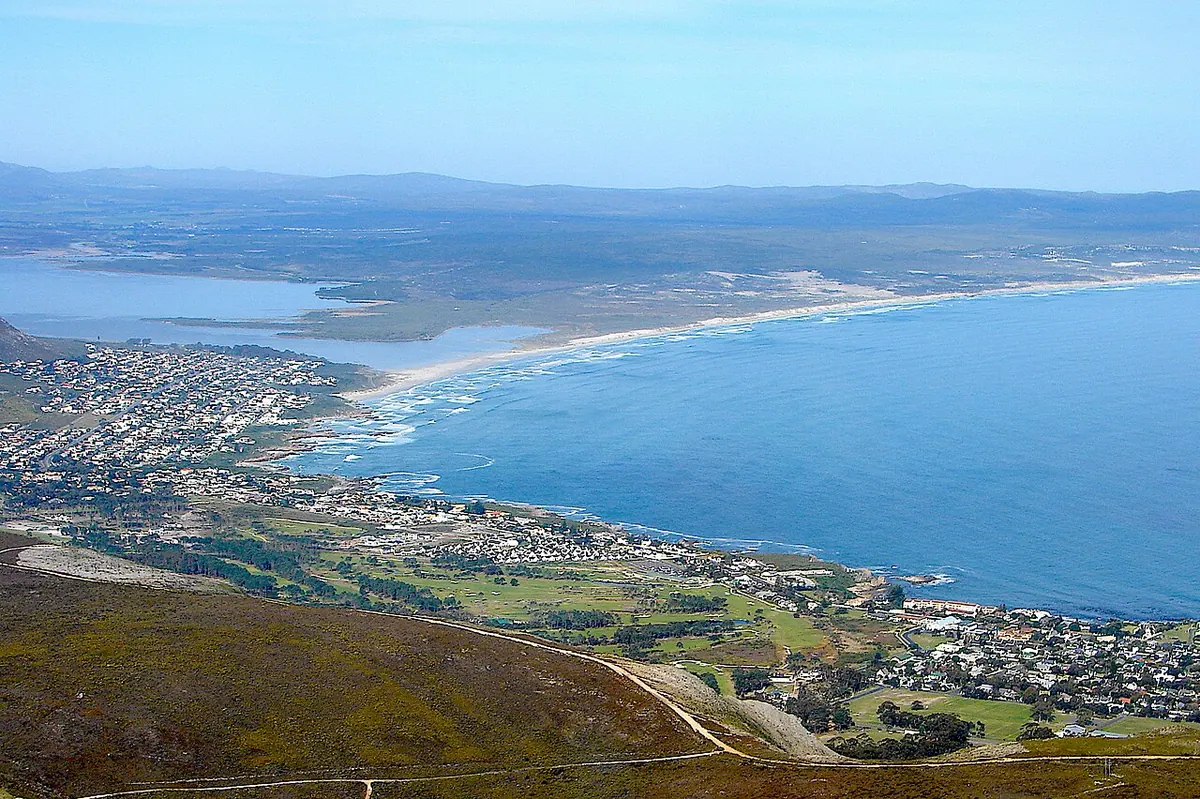
CapeNature coastal reserve between Hermanus and Gansbaai with a 17 km beach, Klipgat Cave and some of the best land-based whale watching in the country.
Short answer
At Walker Bay Nature Reserve, everyone pays from R65 (about US$3.50, €3.50 or £3) per adult per day, depending on which section you visit. These rates ran to 31 August 2026, and CapeNature had not published new ones when we last checked.

- Daily fee, every adult
- US$4 €3 · R65from, by section, ran to 31 Aug 2026
- Park fee nearby: Agulhas National Park
- US$17 €15 · R295about 46 km away
- Where
- Western Cape, South Africa34.48°S 19.37°E
Walker Bay Nature Reserve fees 2025/26
Checked CapeNature tariffValid 1 September 2025 to 31 August 2026, per person per day, in rand.
These rates ran to 31 August 2026. CapeNature had not published new ones when we last checked, so these are the latest known. Ask CapeNature before you travel.
| Pay point | All visitors |
|---|---|
| Day access (fishing, picnic and general access) | US$4 €3 · R65child R45 |
| Day hikes | US$4 €4 · R70child R50 |
| Klipgat Cave | US$4 €3 · R65child R45 |
- Child rate applies to ages 4 to 17.
- CapeNature publishes one rate for all visitors, with no separate rate for international visitors.
- The 4x4 fishing trail carries an activity fee on top of the access fee.
- Walker Bay is cashless: pay by card or Scan to Pay at the gate.
- Fees are set by CapeNature. Official tariff · Seen a new rate? Tell us
US$1 = R17.47 · €1 = R19.20 · £1 = R22.93 (ECB rate, 20 Nov 2026). Converted amounts are approximate; you pay in rand.
How we got these figures
- CapeNature's tariffs page (checked 2026-10-10) still says its tariffs apply from 1 September 2025 until 31 August 2026, and the 2025/26 tariff sheet is still the latest it has published, although that period has ended. The Walker Bay tariff page still shows the same rates. No source gives a 2026/27 period, so the period recorded here is the one CapeNature states.
- Day hikes: the live Walker Bay tariff page gives R70 adult and R50 child, but the 2025/26 tariff sheet gives R65 adult and R45 child. Access and Klipgat Cave are R65/R45 in both.
- CapeNature, Walker Bay Nature Reserve tariffs · official · checked 12 Oct 2026
- CapeNature, Walker Bay Nature Reserve · official · checked 12 Oct 2026
- CapeNature, Tariff Sheet 1 Sept 2025 to 31 Aug 2026 · official · checked 12 Oct 2026
- CapeNature news (cashless payments, 2 September 2026) · official · checked 12 Oct 2026
Walker Bay Nature Reserve is a string of five coastal sections managed by CapeNature along the Overberg shore between Hermanus and Die Dam near Struisbaai. The main piece runs from the Klein River mouth to De Kelders above Gansbaai: about 1,000 hectares of limestone, dune and strandveld with 17 km of coastline. It is known for the long white beach called Die Plaat, for Klipgat Cave, where people lived 65,000 to 85,000 years ago, and for whales close to shore.
Getting there
The reserve is about 160 km from Cape Town, a little over two hours. Take the N2, leave at the Hermanus R43 off-ramp and follow the R43 through Stanford towards Gansbaai. There are three ways in: the De Kelders gate (for Die Plaat), the Uilkraalsmond gate further south, and the Stanford side via Mierkom. You pay at the gatehouse, card or Scan to Pay only, as the reserve went cashless in 2026. The reserve office is in Hermanus, not at any of the gates, so phone it on 087 087 3841 (07:30 to 16:00) before you go to check which entrance suits what you want to do. Gates are open 07:00 to 19:00 daily. Note that the old access road to Die Polle has been closed for good because the dunes have moved over it.
When to go
Southern right whales are in the bay from about June to November, with August to November the surest months, and CapeNature calls the reserve one of the best land-based spots for watching them. Bryde’s whales, humpbacks and several dolphin species are around through the year. Summer brings warm, windy beach weather. Winter is quieter and wetter, with fewer people on the beach.
What to do
Klipgat Cave is reached from the De Kelders gate by a boardwalk and a little rock hopping. There are two chambers; the first opens onto the sea, and a small passage leads into the main site where the Middle Stone Age layers were excavated. Khoi and San people used it again about 2,000 years ago. The view back along the bay to Hermanus is a good reason to go even if archaeology leaves you cold. Day walks follow the coast along Die Plaat. Angling for galjoen, kabeljou and steenbras is permitted, as is swimming and picnicking. A 4x4 fishing trail runs 07:00 to 19:00 for genuine 4x4 vehicles only; driving or walking on the dunes is banned. The mammals (Cape clawless otter, bushbuck, duiker, grysbok, steenbok) are shy and you are more likely to see their tracks than the animals. African black oystercatchers breed on the beach in summer, and CapeNature says beach recreation puts their nests at risk, so keep your distance.
Good to know
No fires and no overnight camping anywhere in the reserve. Bring water and food; De Kelders and Gansbaai are minutes away for anything else. Take your rubbish out, stay off dune vegetation and give the shorebirds room. The reserve received a Green Coast award from WESSA for 2025/26 as one of the Western Cape’s best-managed stretches of coast. The Klein River lagoon off the north-western end only flows into the sea at times, and old milkwood thickets line its banks.
Wildlife you might see
8- likelySouthern right whaleOffshore in the sheltered bay. CapeNature rates Walker Bay one of the best places in the country to watch whales from land. About August to Novembersource
- possibleBryde's whaleOffshore in Walker Bay. All yearsource
- possibleHumpback whaleOffshore in Walker Bay. All yearsource
- possibleDolphins (several species)Offshore along the reserve coast. All yearsource
- possibleAfrican black oystercatcherOn the beaches. It nests on the sand, so give the birds room. Summer, when it breeds on the beachessource
- rareCape clawless otterAlong the shore. Shy, and you are far more likely to find tracks than the otter. All yearsource
- rareSmall antelope (grysbok, duiker, steenbok)Strandveld and dune bush. Shy, mostly seen as tracks. All yearsource
- rareBushbuckIn the reserve's bush. Shy, mostly seen as tracks. All yearsource
Likelihood is for a normal visit of two or three days, from the sources linked. Nothing is guaranteed in the wild.
Hikes and walks
2- Die Plaat beach walk
A walk along Die Plaat, the white sand beach of the reserve's main section, which has about 17 km of coastline between De Kelders and the Klein River estuary. Go out and back as far as you like. The wind blows here most of the time and there is no accommodation or camping in the reserve.
Permit: Day hike permit. Die Plaat is reached through the De Kelders gate
CapeNature, Walker Bay map and brochure (PDF) - Klipgat Cave walk
A short outing from the De Kelders gate on a boardwalk, then a little rock hopping into the cave. The first chamber has a rocky floor running down to the sea, and a small entrance on the left leads into the main site, which has a circular boardwalk. There is a good view back along the bay to Hermanus.
Permit: Klipgat Cave permit, a separate tariff from day hikes
CapeNature, Walker Bay Nature Reserve
Staying safe in Walker Bay Nature Reserve
- Sea conditions
- Swimming is allowed, but CapeNature warns that the sea along the reserve can be rough and dangerous. The water is cold for most of the year. source
- Rip currents
- The NSRI's advice is to swim only where lifeguards are on duty. If a rip pulls you out, do not fight it. Stay calm, float, and swim across the pull (at right angles to it) until you are out of it, then let the waves help you back in. If someone else is caught, throw them something that floats and call for help rather than going in after them. source
- Emergency numbers
- The NSRI emergency number is 087 094 9774, and 112 is the national emergency number. Pink rescue buoys stand on poles at selected beaches, and each sign shows the NSRI number and an ID number that tells rescuers where you are. source
- Klipgat Cave footing
- Getting into Klipgat Cave means a boardwalk and some rock hopping, and the first chamber's rocky floor runs down to the sea. Wear shoes with grip and watch the swell when you are on the rocks. source
- 4x4 fishing trail
- Only 4x4 vehicles may use the fishing trail, and no walking or driving is allowed on the dunes or coastal areas along it. Check your tyre pressure suits the sand, use the parking area at each fishing spot, and leave dogs at home. Fires are not allowed. source
Tips from travellers
- The gates are open 07:00 to 19:00 every day. The reserve office (07:30 to 16:00) is in Hermanus, not at the gates, so phone ahead on 087 087 3841 to check which entrance to use for what you want to do. official
- There is no overnight accommodation and no camping in the reserve, and fires are not allowed, so plan it as a day trip from Gansbaai, Stanford or Hermanus. official
- If you plan to fish or collect bait, sort out your marine recreational permit before you arrive (post offices sell them). Fishing in the Klein River lagoon and estuary needs a freshwater angling licence from CapeNature instead. official
- Each activity has its own fee. Day hikes are R70 an adult and R50 a child, while fishing, picnic or plain access and the Klipgat Cave visit are each R65 an adult and R45 a child. Check the tariff page before you go, as the rates do change. official
- The old access road to Die Polle is closed for good because the dunes have moved over it, so do not plan a visit around it. official
Checked 7 October 2026. Conditions change, so confirm with the park or venue before you go.
In and around Walker Bay Nature Reserve
1 place listedSights 1
- Klipgat CaveAttraction
Quick answers
How much is the entry fee for Walker Bay Nature Reserve?
Everyone pays R65 per adult and R45 per child per day, from 1 September 2025 to 31 August 2026.
When were these Walker Bay Nature Reserve fees last checked?
We last checked them on 12 October 2026 against 4 published sources. We re-check every two weeks, but always confirm with CapeNature before you travel.
What are the best hikes in Walker Bay Nature Reserve?
Die Plaat beach walk and Klipgat Cave walk. See the hikes section for times, difficulty and permits.
Walker Bay and the parks nearest it
| Park | International adult | Distance | Where |
|---|---|---|---|
| Walker Bay Nature Reserve | US$4 €3 · R65 | · | Western Cape |
| Agulhas National Park | US$17 €15 · R295 | 46 km | Western Cape |
| Kogelberg Nature Reserve | US$4 €3 · R65 | 47 km | Western Cape |
| Tygerberg Nature Reserve | US$2 €2 · R40 | 100 km | Western Cape |
Where the Walker Bay fees come from
- CapeNature, Walker Bay Nature Reserve tariffs
- CapeNature, Walker Bay Nature Reserve
- CapeNature, Tariff Sheet 1 Sept 2025 to 31 Aug 2026
- CapeNature news (cashless payments, 2 September 2026)
Open data: all park fees (CSV) · JSON (CC BY 4.0)
Cite as: Travel Africa Guide, "Walker Bay Nature Reserve fees 2025/26", checked 12 October 2026, https://travelafrica.guide/south-africa/walker-bay-nature-reserve/
Map of Walker Bay Nature Reserve
See every place on this map as a list