Place to stay · Okavango Delta
Khwai Hippo Pool Lodge & Campsite
Riverfront campsite and small lodge at Khwai, with 15 private camping areas, 10 lodge beds and guided drives, mokoro trips and San-led walks.
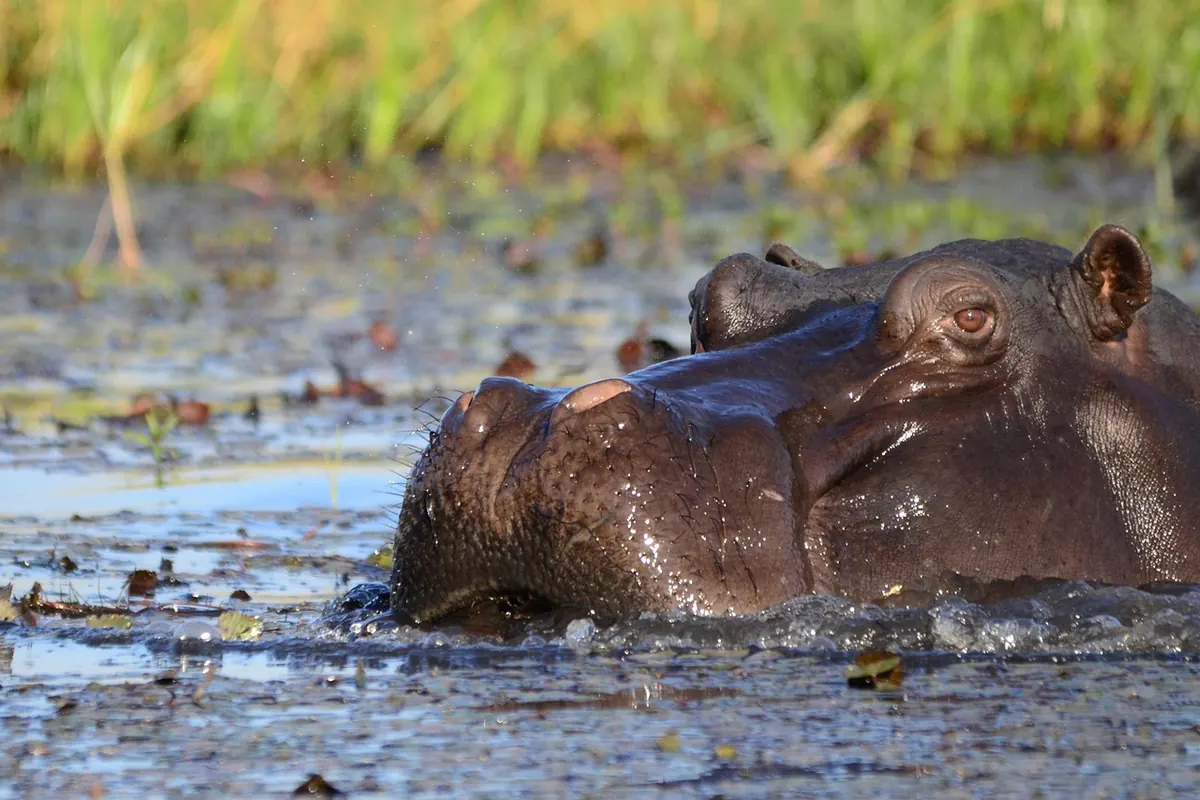
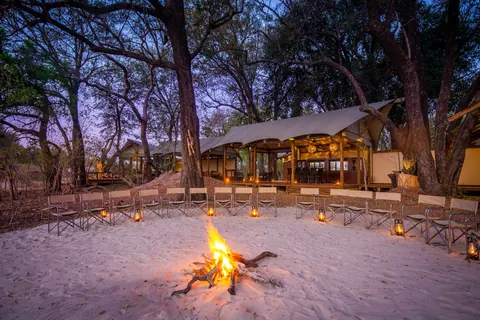
Khwai Hippo Pool is a campsite with a small lodge on the Khwai River, the river that forms the northern edge of Moremi Game Reserve. It now trades as Khwai Hippo Pool Lodge & Campsite. It works as a base for the Khwai area and for day trips into Moremi. You can pitch your own tent, rent a made-up one or take a room, all on the same river frontage.
What to expect
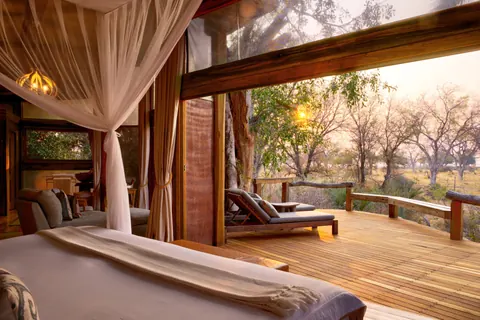
There are 15 private camping areas with toilets, warm showers and a braai area. If you are travelling light, bow tents come set up with mattress and bedding. The lodge side has 10 beds in en suite chalets, sold either bed and breakfast or full board with activities, and there is a family room.
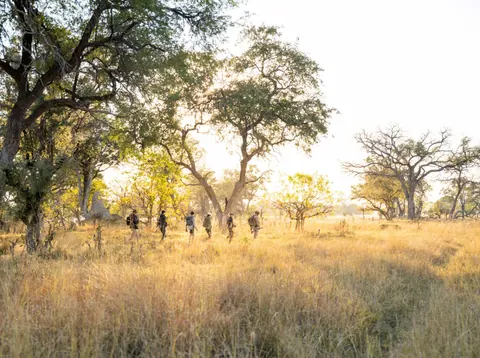
Activities are booked with the camp. The list covers a three-hour game drive, a two-hour or full-day mokoro trip, a full-day outing into Moremi with lunch, a helicopter flight, and bush lunches or dinners. Two are particular to Khwai: a walk led by Bukakhwe San from the village, and a village tour that takes in the basket weavers, the customary court and the pre-school.
Practical details
- Phone and WhatsApp: +267 75 198 119.
- Email: reservations@khwaihippopoolcampsite.com.
- Bookings go through a request form on the website, and the camp confirms by reply.
Good to know
Khwai Village is small, about 400 people, and camping here is self-catering, so bring what you need with you. Hippos use this stretch of river, which is where the name comes from. Stay close to your pitch after dark.
Last updated 12 October 2026. Sources: Khwai Hippo Pool Lodge & Campsite, Wikipedia, Khwai.
Xuku, the first Hippo Pool, and the families who left it
Amos Xako drew the map with a stick. The historian Maitseo Bolaane was interviewing the elders of Khwai in 1997 and 1998, and as he talked her through where his people used to live he scratched it into the ground: a string of settlements, each one tied to a pool. One of them was the Xuku floodplain, a particularly big pool. Tourist brochures call it Hippo Pool.
The camp does not say which pool it is named for. But around Khwai those two words meant one place long before this camp, and it lies inside Moremi. The open map puts the camp’s own reception about 3 km west of the village, beside a channel marked as the Mbudi River.
Baboons in the well
Three Bugakhwe families come into the story: Kwere Seriri’s, Amos’s and that of an older man called Sango. Tsetse fly and sleeping sickness drove the survivors south-east across what is now the reserve to Sankuyo, where Sango died. Amos remembered two or three hard years there, and he gave Bolaane the reason they left. Baboons fouled the well, and Bugakhwe do not drink dirty water. So, probably in the 1940s, they moved to the clear water at Xuku and lived there until 1963, when the reserve was created and the village was put out of it. Offered Mababe or Sankuyo, they refused both.
Kwere, born on Bodumatau island around 1926, guided the crocodile hunters Robert and June Kay from 1958, then helped cut the boundary lines of the reserve that displaced him. Pete Smith, one of the men who set the reserve up, called him a better compass than the surveyors’ own.
What the village tour is showing you
The camp’s walk is led by Bukakhwe guides (its spelling, same people) and its village tour stops at the basket weavers, the customary court and the pre-school. When subsistence hunting licences were suspended in 1996, baskets and thatching grass were what the village had left to sell. The court is the kgotla, which in Bolaane’s time named a day each winter for everyone to leave for the grass camps, babies and chickens included, for up to two months of sleeping by the fire on the old sites.
Nor is a pre-school a small thing. Joseph Mbaiwa, writing in 2002, found the state holding back water supply, clinics and schools to press Khwai into moving, while lodges complained that its donkeys and dogs spoiled the view. The village stayed. Its trust started in 2000 by auctioning its wildlife quota. By 2013 the Sunday Standard was reporting that it had gone from 10 jobs in the hunting season to 76 permanent ones under photographic safaris.
Hippos for certain, the rest on luck
Hippo is the one animal nobody misses. Every Expert Africa traveller who has reported back from Machaba, a lodge on the same river, logged one, and Mbaiwa lists hippos with elephants as the raiders of Khwai’s few crops. One couple camped on the community sites in September 2012 ate breakfast with a hippo wallowing a few metres off, and found nine lions resting a few hundred metres along the river. One couple, one good day.
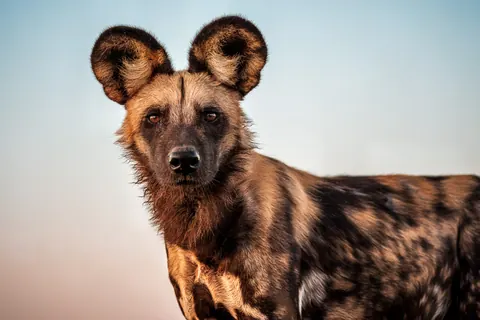
Leopard is the argument for going out with a guide instead of alone. At Machaba 95% of guests report one, but they are driven by guides and can stay out after dark, which Moremi forbids. A Letaka guide in the winter of 2012 found an old male, known as the old man of the fever berries, eating a catfish on the bank, and another saw a cheetah with her cub 400 metres from the Khwai airstrip. Cheetah is the long shot: about one Machaba guest in twenty reports one. Wild dogs were being seen around Khwai in July 2014, and both a Letaka report from 2012 and a Tracks4Africa writer in 2021 put a pack near Magotho, east of the village.
Several camps and every self-driver share these tracks, so expect company at a sighting.