Place to stay · Okavango Delta
Little Tubu Camp
Three tented suites on Hunda Island in the private Jao Reserve, joined by a walkway to the larger Tubu Tree Camp. Game drives all year, boats and fishing when the flood is in.
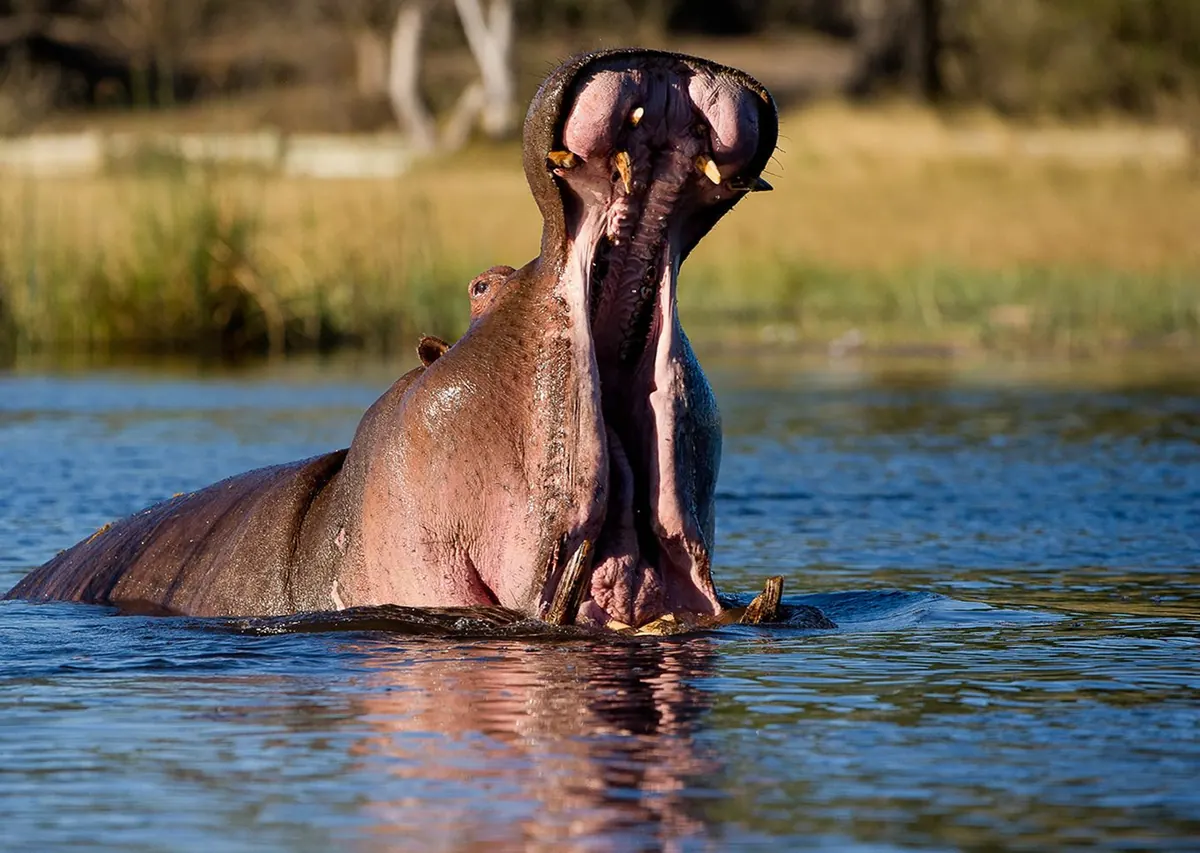
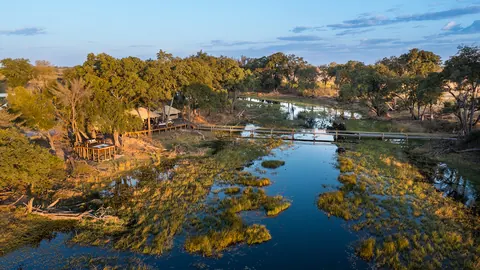
Little Tubu has three tents. That is the whole camp: six guests at most, on Hunda Island in the private Jao Reserve. It is the small sibling of Tubu Tree Camp next door, linked to it by a wooden walkway but run as a separate camp with its own main area and staff.
What to expect
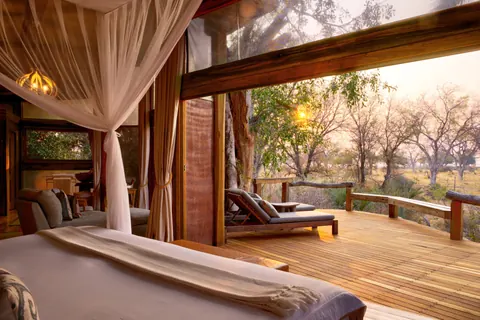
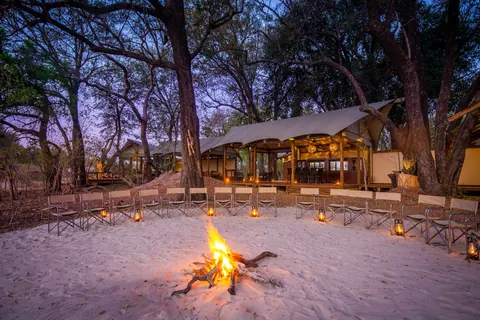
The tents stand on raised wooden decks under fig and jackalberry trees and look out over a floodplain. Each has an en-suite bathroom, an outdoor shower and a private veranda. The lounge and dining area sit up in the lower tree canopy, the bar is built into a large waterberry tree, and the only thing at ground level is the fire pit.
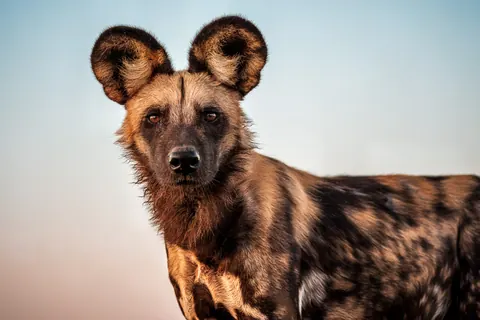
Game drives are the main activity. Expert Africa’s view is that big predators are less concentrated here than in the drier corners of the delta, though wild dog numbers are growing and the birding is strong, most of all in the rains from November to March. Jao Reserve says it holds one of the delta’s largest populations of wattled crane.
Boating and catch-and-release fishing need high water, which Expert Africa puts at roughly May to September. Mokoro trips go from camp or from somewhere nearby, depending on the level.
Practical details
- Access is by light aircraft to Hunda airstrip, about ten minutes’ drive from camp.
- The camp belongs to the Jao Reserve, the trading name of Ngamiland Adventure Safaris, a majority citizen-owned company set up in 1998 by the Kays family and Katimpa Mogalakwe. Its office is in Maun.
- Little Tubu was added in 2012. Expert Africa reports that it closed for a complete rebuild and reopened in June 2024.
Good to know
A party of six can have the whole camp, but Expert Africa notes that a tent does not take two adults and a child, so one adult would share with one child. If water activities matter most to you, check the flood before you commit. Jacana, another camp in the same reserve, is the more water-based choice.
Last updated 12 October 2026. Sources: Jao Reserve, Little Tubu Camp, Jao Reserve, About us, Expert Africa, Little Tubu.
The dry island the other Jao camps boat their guests to
When guests at Jao Camp want giraffe and big cats, they are put in a boat, taken across the floodplain and handed to a game vehicle on Hunda Island. Little Tubu’s three tents are already there, on the island’s western edge. Hunda is the biggest block of permanently dry ground in the 60,000 hectare Jao Reserve: Kalahari sand under mopane and acacia, with tsessebe, zebra, wildebeest and kudu that the wetter camps mostly go without. Expert Africa’s verdict is that dry-season game on this western side of the delta is quieter than elsewhere, and that Hunda is the best of it all year.
Leopard on every drive, then two male lions
For years this island meant leopard. Guest reports from Tubu Tree, the bigger sister camp next door, have one visitor in July 2012 seeing them on nearly every drive. In December 2013, with the bush at its thickest, a guest at Little Tubu sat 45 minutes with a leopard in a tree and then followed it through the bush.
By September 2014 a returning visitor got one fleeting sighting and one good one, and suspected that a pair of male lions new to the island had pushed the resident leopards into hiding. That is one traveller’s theory. Still, Expert Africa’s own team now writes that leopards, once regulars around camp, have become much harder to find. On recent visits they watched a small pack of wild dogs trot back to its den at sunset and the pups come tumbling out, and a lioness led two cubs across the plain in front of the main area during morning coffee.
Hyenas denned on Hunda in 2013 and two separate parties saw pups that year. Night drives produce civet and genet.
What the flood does to a dry island
Dry is relative. At the end of May 2010 a guest wrote that large parts of Hunda had gone under and the game viewing suffered for it. In April 2013 another was warned that some tracks were too deep to drive. Then in April 2016 the water came late and there were no boats at all. In October 2012 one visitor’s mokoro outing began with half an hour in the vehicle.
The camp says boating runs May to late September “when flood levels allow”. Take the last four words seriously.
The wet edges are where to look for wattled cranes. They stand about 1.7 metres tall and feed in the shallows on sedge tubers. Fewer than 9,600 are left anywhere and the Okavango holds the largest single gathering of them.
A fence next door, none here
Tubu Tree has a discreet fence to keep elephants out, which also protects some of the few baobabs in this part of the delta. Little Tubu is unfenced and leopards walk through it.
Ask about the sleep-out hide, a bare platform under a tall fig about 20 minutes’ drive away, with room for four.
The Dodge licensed BPJ1
The family behind the reserve first came to Ngamiland in 1887, when Martin Thomas Kays trekked up from South Africa with five wagons of trade goods. His son Tom took the district’s first market cattle to Livingstone by ox wagon in 1921. In 1928 he bought a Dodge in Livingstone and drove it back down the same route, the first motor vehicle in Maun, licensed BPJ1.
Cathy Kays grew up on Mosdene, the Springbok Flats farm of her great-grandfather Ernest Galpin, a banker who gave about 16,000 pressed plants to the National Herbarium and was called the “Prince of Collectors” by Smuts.
Tubu Tree came first, in 2002. Jao’s own history dates Little Tubu to both 2012 and 2013. A Tubu Tree guest at the end of April 2013 wrote that it had still to open, and the earliest guest reports from Little Tubu are from that December.