Sight · Keetmanshoop
Keetmanshoop Municipal Museum
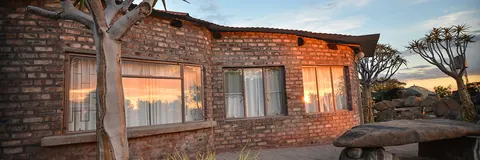
The town museum of Keetmanshoop, inside the stone Rhenish Mission Church of 1895, a national monument, with displays on the Nama, the missionaries and early settlers.
The Keetmanshoop Municipal Museum fills the old Rhenish Mission Church on Sam Nujoma Drive, the oldest building in town and a national monument since 1978. Keetmanshoop is the main town of the ǁKaras Region (Karas), and plenty of people pass through on the B1 without stopping. If you have an hour to spare between the Quiver Tree Forest and the road on, this is the best way to get a feel for the place.
What to expect
The building is the draw as much as the collection. Nama builders put up the church in 1895 under the Rhenish missionary Tobias Fenchel, after the first church was destroyed around 1890. It is a stone building in a Gothic style with a tall square tower. After about 1961 it fell into disrepair, until it was turned into a museum in 1979. The town restored it in 1985.
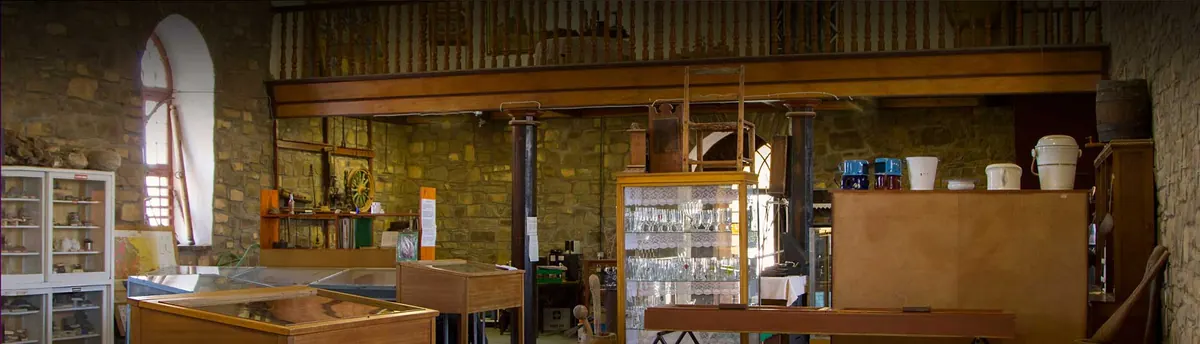
Inside, the displays cover the local Nama community, the missionaries who founded the church, and the early European settlers in the south of Namibia. It is a small town collection, not a big modern exhibition.
Practical details
- Address: 6th Avenue, Sam Nujoma Drive, in the town centre.
- Phone +264 63 221 256, email museum@khpmun.com.
- There is a small entry fee.
- The museum is run by the Keetmanshoop Municipality’s tourism section. The Museums Association listing gives no opening hours, so phone ahead, especially at weekends.
Good to know
The town’s Nama name is ǂNūǂgoaes (Swartmodder in Afrikaans), both meaning “black mud”, after an iron-rich spring. The name Keetmanshoop honours Johann Keetman, a German industrialist who funded the Rhenish Mission here. The museum also lists tours out to the Mesosaurus fossil site and the Giant’s Playground.
Last updated 7 October 2026. Sources: Museums Association of Namibia, Wikipedia (German), Wikivoyage, Wikipedia, Keetmanshoop Municipality.
The mission that built on a riverbed, then built again
On 26 October 1890 the Aub came down after heavy rain and took the Rhenish mission at Keetmanshoop with it. Not only the church. The whole station went, and the school where the mission trained its evangelists was left unusable. The church had stood on flat, shallow ground near the spring, and nobody had worked out that it was a dry riverbed. Tobias Fenchel, the missionary in charge, wrote to a lay preacher called Benade, who was teaching among a Baster community some distance away, asking him to come and help rebuild. According to the mission’s records the letter never reached him.
The man from Gambach
Fenchel was born on 30 May 1849 at Gambach, north of Frankfurt. He came out in 1876, married Anna the next year and had the town’s first school built in 1888. He died in Keetmanshoop on 8 December 1910, 34 years after he landed.
His second church went up on higher ground, in stone hauled from Lüderitz by ox wagon, and he took the church of his home village as the pattern. It was consecrated on 8 May 1895. The plaque the old National Monuments Council fixed to it says that Nama members of the mission congregation built it under his supervision. Other dates float about. The national broadcaster once put the building at 1849, the year Fenchel was born, and a well-known Namibian travel blog has 1892.
A pressure cooker, a harp and laslap dresses
The collection is what a town gives its museum. The photographs the Museums Association of Namibia shows of it include a steam iron, a hot-water urn, a pressure cooker, sewing machines, a harp, guns and a hunting trophy. The writer Ron Swilling, describing a walk through it in 2013, added rock specimens, fossils, photographs from the war of 1904 to 1908, and laslap dresses, the patchwork dresses Nama women wear. Another account mentions farm implements, old documents and a replica of a Nama hut. It is a jumble, and the settler half could be in any small-town museum in southern Africa. The Nama half could not.
Why the Nama display was redone
When the National Museum of Namibia published a guide to a Nama exhibition in 2007, with the linguist Wilfrid Haacke, it explained why such a thing was overdue: most old Nama objects had been carried off by overseas institutions in the nineteenth and twentieth centuries, so Namibian museums had little to show.
In March 2015 a team from the Museums Association, the historian Dr Jeremy Silvester among them, spent a day here measuring the building and photographing objects. They also sat down with the municipality over a dispute about who owns the church. The new Nama exhibition opened in May 2016. The education minister, Katrina Hanse-Himarwa, did the honours and the Embassy of Finland paid. It covers plants used as medicine, traditional dress and what the war against German rule did to Nama communities. A committee of townspeople set up by the municipality worked on it with the association.
Ten schools in three days
The stone keeps the inside cool in a Keetmanshoop summer, and the town uses the building for more than glass cases. From 17 to 19 November 2015 a travelling exhibition on the First World War in Namibia was set up here with German embassy money. Two members of the University of Namibia’s History Society built it and then guided groups from four primary and six secondary schools through it. For the rest of the town’s story, the outlaw at the spring and the karakul years, see our Keetmanshoop page.