Park · Limpopo, South Africa
Marakele National Park
Malaria-free Big Five park in the Waterberg, under three hours from Johannesburg, with one of the biggest Cape vulture colonies on earth and a hair-raising tar road to the Lenong viewpoint.
Short answer
At Marakele National Park, international visitors pay R358 (about US$20, €18.50 or £15.50) per adult and R179 per child per day. The rates apply from 1 November 2026 to 31 October 2027.
- Daily fee, international adult
- US$20 €19 · R358
- Malaria
- Marakele is in a malaria-free area of the Waterberg, so you do not need malaria tablets for this park.
- Places to stay
- 12
- Park fee nearby: Pilanesberg National Park
- US$43 €39 · R748about 111 km away
Marakele National Park fees 2026/27
Checked South African National Parks tariffValid 1 November 2026 to 31 October 2027, per person per day, in rand.
| Who | Adult | Child |
|---|---|---|
| International visitorsUS, Europe and everyone else | US$20 €19 · R358 | US$10 €9 · R179 |
| SADC nationals | R158 | R78 |
| South African residents | R76 | R38 |
- These rates apply from 1 November 2026.
- Adults are 12 and older. Child rate applies to ages 2 to 11; children under 2 enter free.
- Members of the SANParks WILD loyalty programme (Wild Card) do not pay daily conservation fees if they show ID and their card on arrival.
- Wild Card holders do not pay daily fees. Is the Wild Card worth it for you?
- Fees are set by South African National Parks. Official tariff · Seen a new rate? Tell us
US$1 = R17.47 · €1 = R19.20 · £1 = R22.93 (ECB rate, 20 Nov 2026). Converted amounts are approximate; you pay in rand.
How we got these figures
- Checked against the official SANParks tariff on 7 October 2026. Before that these figures came from published reports (places.co.za). They matched the official sheet.
- SANParks conservation fees 2026-11-01 to 2027-10-31 (official tariff) · official · checked 7 Oct 2026
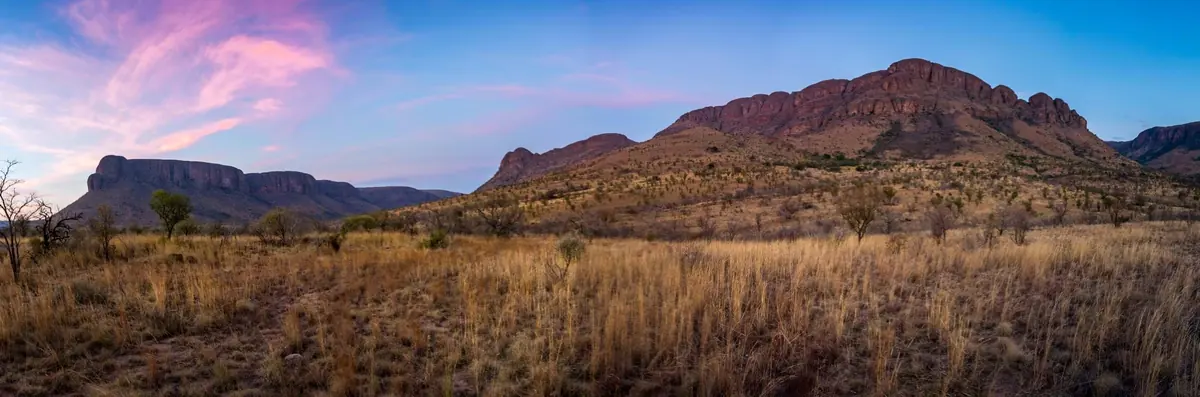
Marakele covers about 670 square kilometres of the Waterberg massif in Limpopo, where the dry west of South Africa meets the wetter east. It is Big Five country, malaria-free, and close enough to Gauteng for a long weekend: about 220 km north of Pretoria and 270 km from Johannesburg on tar. The park is really two parks. The western Kwaggasvlakte section is flat bushveld with giraffe, zebra and antelope and the Bontle camp. The eastern section is mountains and cliffs, home to the elephants, lions and the vultures, and you reach it through a tunnel under the public road.
Getting there
From Johannesburg or Pretoria take the N1 north to Bela-Bela, then the R516 west to Thabazimbi. The gate is about 12 km beyond the town. Thabazimbi has fuel, shops, a pharmacy and medical care, which matters because the park has none of them. Gates open 06:00 to 18:00 from September to April and 06:30 to 17:30 from May to August.
When to go
May to September is the dry season: mild sunny days, animals drawn to the waterholes and dams, and cold nights in midwinter, so pack warm layers for early drives. Summer (October to April) is hot with afternoon storms and thick bush, but the migrant birds arrive and the hills turn green. Altitude runs from about 983 m to 1,986 m, so even summer evenings can be cool on the heights.
What to do
The drive up to the Lenong viewpoint is the thing everyone talks about. It is a narrow tar road that climbs steeply to the top of the massif with sheer drops beside it. Two cars meeting can be awkward. People who struggle with heights should think twice. At the top, Cape vultures from the colony of around 800 breeding pairs, one of the biggest anywhere, ride the thermals at eye level, and you look out over the whole Waterberg.
About 80 km of gravel road is open to ordinary cars, with high clearance helpful. Beyond the Tlopi camp in the east you need a 4x4, and there is a three-day guided 4x4 eco trail from April to October. The park has 16 antelope species, around 300 bird species, white rhino, elephant, buffalo (reintroduced in 2013) and, more elusively, lion and leopard. The Bollonoto hide and the water at Bontle and Tlopi are the reliable places to sit. Guided sunrise and sunset drives and bush walks run from the camps.
Good to know
- No fuel, restaurant or ATM inside the park. A small independent shop near reception at the main gate sells firewood and ice, and that is it. Stock up in Thabazimbi.
- Bontle camp, under 2 km inside the gate, has campsites and safari tents around a waterhole and is unfenced. There are no elephant or lion on this side, but white rhino and ostrich wander through, so keep children close after dark. Tlopi Tented Camp, 18 km in on a dam in the eastern section, has about ten two-bed tents and is the one most people want. The Motswere cottage needs a 4x4.
- Speed limit is 40 km/h and the roads reward it.
Wildlife you might see
14- likelyCape vultureLenong viewpoint on top of the massif, the closest road to the colony of about 800 breeding pairs; they ride the thermals over the whole park. All yearsource
- likelyGiraffeThe flat western Kwaggasvlakte section around Bontle. All yearsource
- likelyPlains zebraThe western Kwaggasvlakte section. All yearsource
- likelyBlue wildebeestOpen plains in the western sectionsource
- likelyKuduBushveld throughout the parksource
- likelyChacma baboon and vervet monkeyAround the camps, Bontle includedsource
- possibleWhite rhinoWestern section, and they walk through the unfenced Bontle campsource
- possibleElephantEastern mountain section only, not the Kwaggasvlakte sidesource
- possibleSable antelopeBushveld, one of the park's special antelope along with tsessebe, eland and both reedbuckssource
- possibleHippoThe dam at Tlopi Tented Camp in the eastern sectionsource
- rareLionEastern section; early morning, late afternoon and guided drives give the best chancesource
- rareLeopardsource
- rareBuffaloReintroduced in October 2013, when 20 disease-free animals were releasedsource
- rareBrown hyenaMostly on night drives in the private Marataba sectionsource
Likelihood is for a normal visit of two or three days, from the sources linked. Nothing is guaranteed in the wild.
Hikes and walks
2- Guided morning bush walk (SANParks)
An early walk with a park guide, looking at tracks and signs, the history and the geology of the area. It is the only way to get out on foot in the SANParks section.
Permit: Paid activity, book at reception; you cannot walk on your own in the park
Roxanne Reid, Africa Addict - Marataba walking trails
Guided trails in the private Marataba concession inside the park, along riverine routes, up and down the mountains and through gorges. Meant for fit, experienced walkers.
Permit: Only for guests of the Marataba lodges in the private concession, and for walkers aged 16 and over
Travel Butlers
Staying safe in Marakele National Park
- Malaria
- Marakele is in a malaria-free area of the Waterberg, so you do not need malaria tablets for this park. source
- Lenong road
- The narrow tar road up to the Lenong viewpoint climbs steeply to about 1,200 m with sheer drops on the side. Cars meet head on, so take it slowly and pull over carefully. Not for anyone with a fear of heights. source
- Unfenced camp at Bontle
- Bontle camp has no fence. White rhino, ostrich and other animals walk through, so watch where you are going outside after dark and keep children close. source
- Baboons and monkeys
- Lock food away out of sight, in the car or a closed box, and never feed baboons or vervet monkeys. source
- Stay in the car
- This is Big Five country. Get out only at marked spots such as hides and viewpoints, stay on the roads and keep to the 40 km/h limit. source
Tips from travellers
- There is no fuel, ATM, restaurant or grocery shop in the park. Fill up and buy food in Thabazimbi, about 12 km away. The small shop near reception at the entrance gate only sells firewood, ice, cold drinks and sweets. several sources
- About 80 km of the gravel roads are fine in an ordinary car, including the way to Bontle and Tlopi. Most of the other roads, such as the Mbidi Loop in the eastern section, need a 4x4, so ask reception which ones are passable. several sources
- The dry winter months, May to September, are the best for game, as animals stay close to water and the bush is thin. several sources
- Gates open 06:00 to 18:00 from September to April and 06:30 to 17:30 from May to August, and day visitors must be out by closing time. one source
- The guided 4x4 eco trail is a 49 km circular route with two overnight camps, run only in the dry season from April to October with a park ranger. There are no proper ablutions on the way, so bring all your own water, food and medical kit. several sources
Checked 7 October 2026. Conditions change, so confirm with the park or venue before you go.
In and around Marakele National Park
17 places listedWhere to stay in Marakele National Park 12
- 24.30°S 27.50°EHotelMarataba Explorers Campmarataba.co.za
- 24.35°S 27.57°EHotelMarataba Safari Lodge
- 24.52°S 27.49°ECampsiteBontle Camping & Caravan Site
- 24.52°S 27.49°ECampsiteBontle Rest Camp
- 24.41°S 27.52°EChaletKareehoek private residence
- 24.43°S 27.70°ECampsiteMarakele 4x4 Eco Trail Trail Camp
- 24.30°S 27.51°EHotelMarataba Founders Camp
- 24.33°S 27.66°EHotelMarataba Trails Camp
- 24.42°S 27.53°EHotelMatimu Corporate Guest House
Show all 12 places to stay
- Modikela Bush Camp · Campsite
- Tlopi Tented Camp · Hotel
- Trail Camp Marakele 4x4 Eco Trail · Campsite
Sights 5
- Bollonoto Bird HideAttraction
- Lenong view pointViewpoint
- Matlabas Farm HouseRuins
- Old Farm HouseRuins
- Old Farm HouseRuins
Quick answers
How much is the entry fee for Marakele National Park?
International visitors pay R358 (about US$20, €18.50 or £15.50) per adult and R179 per child per day. These rates apply from 1 November 2026 to 31 October 2027 and are set by South African National Parks (SANParks).
Do South Africans and SADC citizens pay less at Marakele National Park?
South African residents pay R76 per adult and SADC nationals pay R158 per adult per day. You need ID or a passport to get the lower rate.
When were these Marakele National Park fees last checked?
We last checked them on 7 October 2026 against 1 published source. We re-check every two weeks, but always confirm with South African National Parks (SANParks) before you travel.
What animals can you see in Marakele National Park?
You have a good chance of seeing cape vulture, giraffe, plains zebra, blue wildebeest, kudu and chacma baboon. Lion, leopard, buffalo and brown hyena are there but rarely seen.
What are the best hikes in Marakele National Park?
Guided morning bush walk (SANParks) and Marataba walking trails. See the hikes section for times, difficulty and permits.
Marakele and the parks nearest it
| Park | International adult | Distance | Where |
|---|---|---|---|
| Marakele National Park | US$20 €19 · R358 | · | Limpopo |
| Pilanesberg National Park | US$43 €39 · R748 | 111 km | North West |
| Kgaswane Mountain Nature Reserve | US$16 €14 · R275 | 155 km | North West |
| Mapungubwe National Park | US$20 €19 · R358 | 301 km | Limpopo |
Guides for Marakele National Park
Where the Marakele fees come from
Open data: all park fees (CSV) · JSON (CC BY 4.0)
Cite as: Travel Africa Guide, "Marakele National Park fees 2026/27", checked 7 October 2026, https://travelafrica.guide/south-africa/marakele-national-park/
Map of Marakele National Park
See every place on this map as a list