Kgaswane Mountain Nature Reserve
A 5,300 hectare Magaliesberg reserve on the edge of Rustenburg, known for sable antelope, Cape vultures, a high Ramsar wetland and two overnight hiking trails.

What you'll pay to enter Kgaswane Mountain Nature Reserve
VALID 01 DEC 2025 TO 30 NOV 2026 · ZAR PER PERSON PER DAY
| Fee | International | SA residents |
|---|---|---|
| Daily conservation fee | R275one source | R105one source |
- A vehicle fee of R168 applies.
- No source opened gives SADC or child rates for this period.
- NWPTB published no end date for this tariff, which took effect on 1 December 2025; the end date here assumes a one-year tariff period.
- Figures marked "one source" were found in a single published source only.
- Set by North West Parks and Tourism Board (NWPTB). Adult rate shown first, child rate below.
CHECKED 06 OCT 2026 · 1 SOURCES
See every place on this map as a list
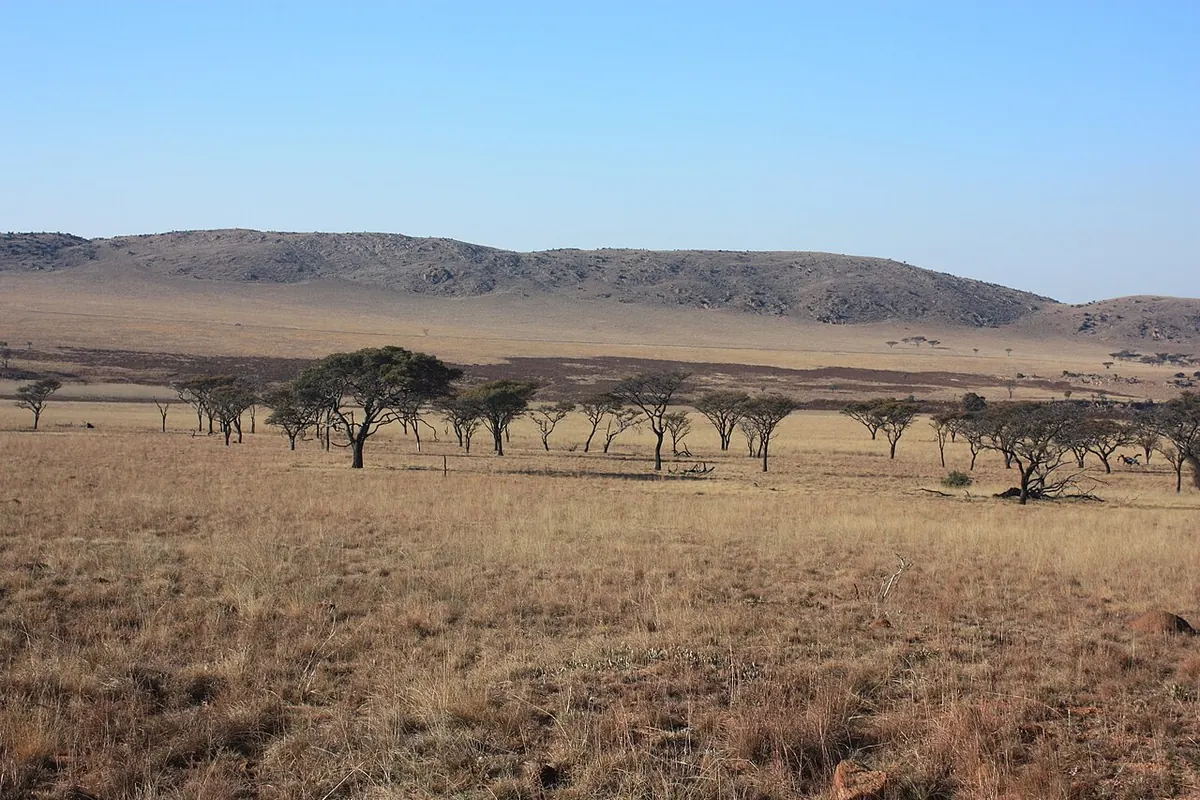
Kgaswane Mountain Reserve sits in the quartzite hills directly above Rustenburg, at the western end of the Magaliesberg. It was proclaimed in 1967 as the Rustenburg Nature Reserve on a farm that once belonged to Paul Kruger, renamed in 2017, and is run by North West Parks and Tourism Board. Its 5,300 hectares of ridges, kloofs and grassy plateau hold the largest vlei in the Magaliesberg, a Ramsar site since 2019. It is a hikers’ and birders’ reserve more than a game-drive one, though the sable are a real draw.
Getting there
Rustenburg is about 100 to 135 km from Pretoria and Johannesburg, roughly an hour and a half on the N4. Leave the N4 at the R24 off-ramp and the gate is around 3 km further, reached along Helen Joseph Drive heading west out of town through the Cashan suburb. Follow the signs to the main entrance. Gate times are published seasonally and your exit time is printed on the permit; sources quote different hours, so treat it as daylight only and ask at the gate. Day visitors do not need to book.
When to go
The dry months, April to September, are the comfortable ones for the long trails; nights are cold on the plateau and the overnight huts are basic, so pack a proper sleeping bag. Summer brings afternoon storms and lush grass but also heat on the exposed quartzite ridges, and the vlei is at its fullest then. The cliffs hold a breeding colony of Cape vultures, so look up whenever you are near the escarpment.
What to do
Two overnight trails leave from the camp area: the Summit Route (25.3 km) and the Baviaanskrans Route (19.5 km), each with hutted camps sleeping 12 and firewood and cooking gear provided. Baviaanskrans passes a waterfall and the Garden of Remembrance. For a day, the Peglerae Trail is a steep 5 km loop that samples the whole reserve, and the 2 km Vlei Ramble ends at a hide over the wetland. The road network is short and tarred; the Sable Loop is a self-drive through grassland and woodland that links picnic sites and viewpoints, and mountain bikes are welcome on it. More than 800 antelope live here, including klipspringer, mountain reedbuck, oribi, kudu, eland, zebra and the sable herd. Leopard, caracal and aardwolf are present but shy. Over 320 bird species are recorded, with Cape vulture, Verreaux’s eagle, martial eagle and Cape eagle-owl on the cliffs.
Good to know
The reserve has 22 campsites with braai stands and a communal freezer, a cottage, rondavels and a group camp for 50. Impala Rustenburg paid for upgrades between 2016 and 2021, including a new gate, a bird hide on the wetland and refurbished ablutions, so facilities are better than the age of the reserve suggests. Phone reception is patchy to nonexistent. There is nowhere to buy food inside; Rustenburg is five minutes away. Watch for baboons at the picnic sites and use the baboon-proof bins.
In and around Kgaswane Mountain Nature Reserve
5 PLACESPlaces to stay 5
- 25.75°S 27.24°EMountain hutAvon More Hut
- 25.71°S 27.21°EMountain hutExplorer Hut
- 25.72°S 27.19°ECampsiteKgaswane Mountain Nature Reserve Campsite
- 25.73°S 27.18°ECampsiteNaga Hikers Camp
- 25.73°S 27.18°EMountain hutNaga Hut