Pilanesberg National Park
A Big Five reserve inside the rings of an extinct volcano, two to three hours from Johannesburg and malaria-free, which makes it the obvious first safari for anyone short on time.

What you'll pay to enter Pilanesberg National Park
VALID 01 DEC 2025 TO 30 NOV 2026 · ZAR PER PERSON PER DAY
| Fee | International | SADC nationals | SA residents |
|---|---|---|---|
| Daily conservation fee | R748 | R385child R275 | R168child R84 |
- South African child rate applies to ages 5 to 12; South African pensioners also pay R84.
- A vehicle fee of R168 per day applies to a sedan, LDV or SUV, with higher rates for minibuses, buses and caravans.
- The rates include a community conservation levy of 5% for South Africans and 10% for international guests (Tourism Update gives the pre-levy rates of R160, R350 and R680).
- Sources differ on the international child rate (R748 or R275), so it is not shown.
- NWPTB published no end date for this tariff, which took effect on 1 December 2025; the end date here assumes a one-year tariff period.
- Set by North West Parks and Tourism Board (NWPTB). Adult rate shown first, child rate below.
CHECKED 06 OCT 2026 · 6 SOURCES
See every place on this map as a list
Pilanesberg sits in the eroded root of a volcano that went quiet about 1.25 billion years ago, and the rings of hills around the central Mankwe Dam are the giveaway from any high point. The park covers about 572 square kilometres of North West Province next to the Sun City resort. It is a made reserve: Operation Genesis, begun in 1979, fenced 110 km of farmland and moved in some 6,000 animals of 22 species. It opened in 1984 and now holds all of the Big Five.
Getting there
From Johannesburg or Pretoria it is roughly 170 km, two to three hours on tar via the N4. There are four public gates, Bakubung, Kwa Maritane, Bakgatla and Manyane; from Rustenburg the R565 leads to Bakubung and the R510 to Manyane.
When to go
May to September is dry, the bush thins out and animals bunch around the dams. Days are warm and clear, nights cold enough for a jacket on an early drive. October to April is hot with afternoon storms and long grass, which makes game harder to find but is excellent for birds, with more than 360 species recorded. The park is malaria-free all year, so there is no medication to think about.
What to do
Self-drive is straightforward. Around 200 km of roads loop through the hills, a few of them tarred (Kubu, Kgabo and Tshwene are the main ones) and the rest good gravel that a hire hatchback handles; after heavy rain some gravel loops close for a day or two. The speed limit is 40 km/h and you must stay in the car except at designated spots.
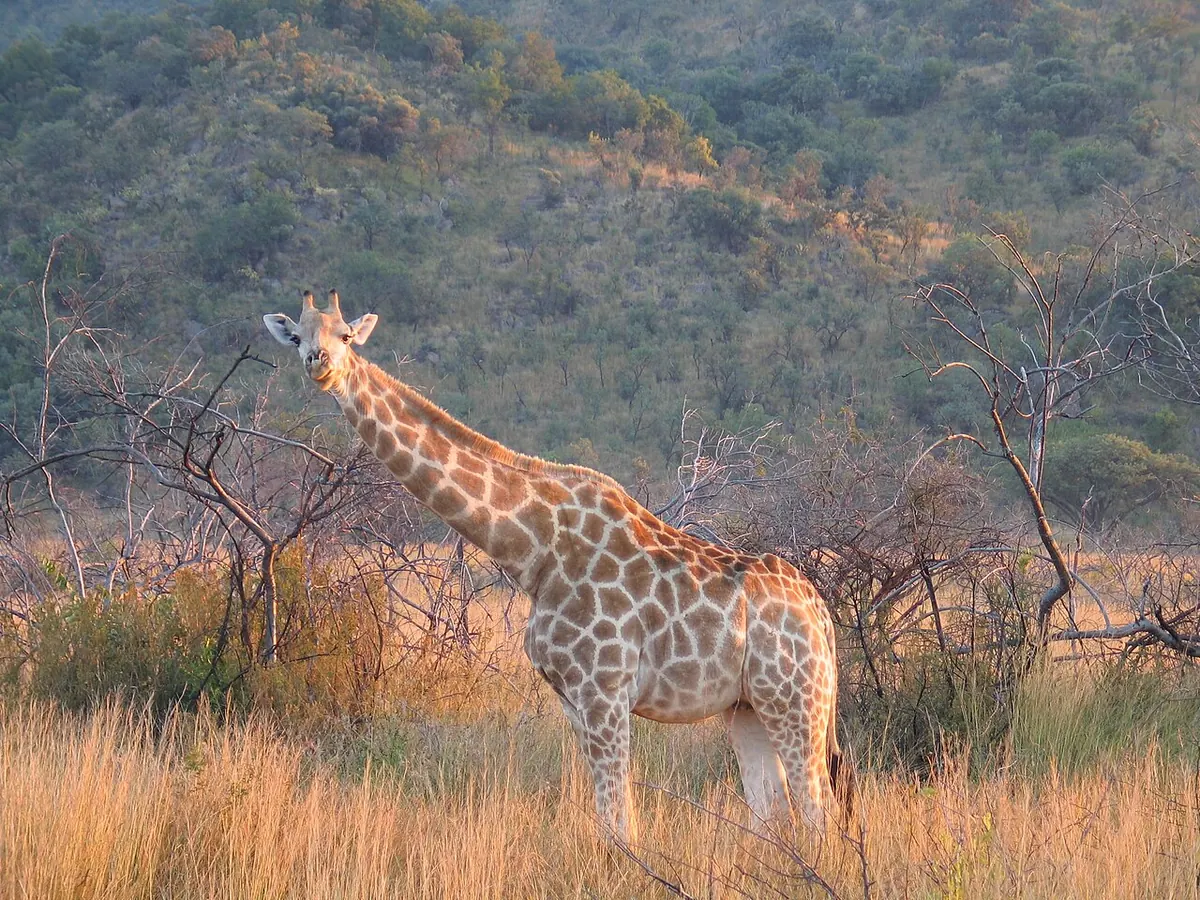
Pilanesberg is known for its fenced hides over the waterholes, where a slow hour pays off better than another loop in the car. Mankwe Dam in the centre is the biggest water and holds the park’s hippos and crocodiles. White rhino and elephant are the animals you will almost certainly see; lion, leopard and cheetah are present but hit and miss. The park sits where Kalahari thornveld meets lowveld bush, so springbok graze near impala and waterbuck.
Guided night drives are the only way to be out after dark, and hot-air balloons go up over the crater at sunrise.
Good to know
Gate times move with the season, opening between about 05:30 and 06:30 and closing between 18:00 and 19:00 depending on the month, with no entry in the final hour. Weekends and school holidays are busy, with crowds at good sightings, so a weekday visit is noticeably better. A day trip from Johannesburg is doable with an early start, but two or three nights in or beside the park is the sensible minimum if the safari matters to you. Accommodation runs from simple chalets and campsites at Manyane and Bakgatla to lodges such as Bakubung, Kwa Maritane and Tshukudu, with Sun City next door if you want a hotel.
In and around Pilanesberg National Park
40 PLACESPlaces to stay 24
- 25.17°S 26.98°E
- 25.16°S 26.98°EResortTsholo Safari LodgeR565 Black Rhino Game Reserve, Pilanesberg
- 25.34°S 27.06°EHotelBakubung Lodge
- 25.19°S 27.14°E
- 25.25°S 27.22°ECampsiteManyane CampsiteManyane
- 25.17°S 26.98°EResortLush Private LodgeSite 02, Mankwe
- 25.19°S 27.15°EHotelBakgatla
- 25.19°S 27.15°EResortBakgatla Resort
- 25.35°S 27.06°EResortBakubung
Sights 13
- Baile Loop HideAttraction
- Bathlhako DamViewpoint
- Iron Age SiteRuins
- Lenong ViewViewpoint
- LeopardAttraction
- Makorwane Dam HideViewpoint
- Malatze HideViewpoint
- Mankwe Dam HideViewpoint
- Phiri HideAttraction
- Rathlogo HideViewpoint
- Ruighoek DamViewpoint
- Vulture HideViewpoint
Restaurants and cafes 3
- Bakgatla RestaurantRestaurant
- Ivory Tree Game LodgeRestaurant
- Pilanesberg CentreRestaurant