Place to stay · Chobe District
Hideaways Camp Kuzuma
Seven-tent seasonal camp in the Kazuma Forest Reserve between Chobe and Hwange, open April to November, with a waterhole in front that elephants use all day.
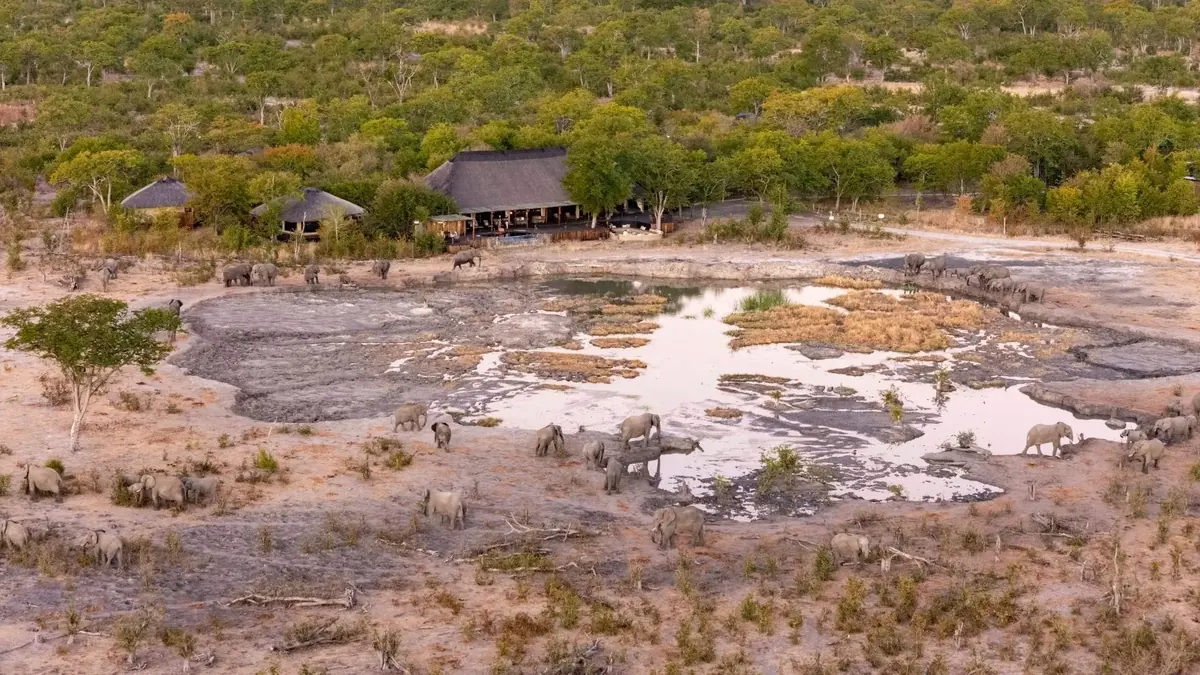
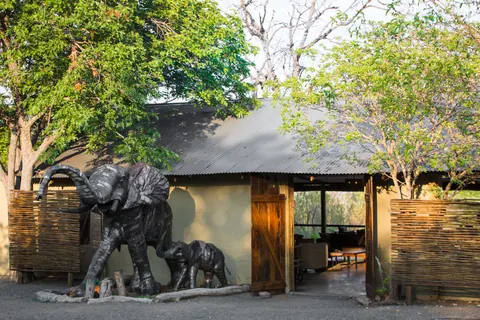
Camp Kuzuma sits in the Kazuma Forest Reserve, hard against the Zimbabwe border south of Kasane, on a route elephants use to move between Chobe National Park and Hwange. It is not a Chobe riverfront lodge and should not be booked as one. Expert Africa puts the riverfront about two hours’ drive away. What you get instead is a private concession and a waterhole right in front of camp.
What to expect
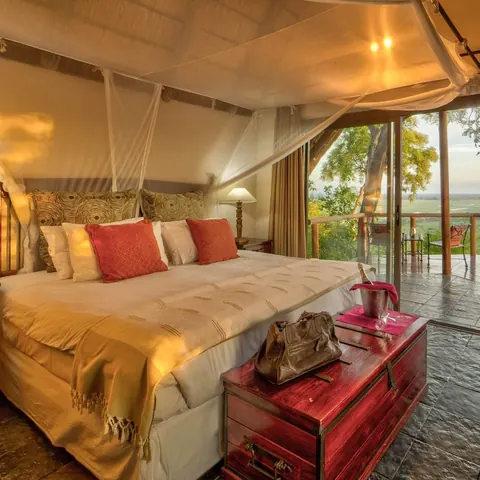
Seven tented suites stand under mopane trees, each with a king-size bed, a bath, indoor and outdoor showers and a private deck. Two of them are joined by a walkway for families. There is a fan and a mosquito net but no air-conditioning, according to Expert Africa, which matters in October. The camp runs on solar power.
The main area has a pool looking onto the waterhole, a sunken fire pit just off the deck and a spa room close by. Days are built around a morning and an afternoon game drive in the reserve. Expert Africa also describes guided walks with an armed guide. Elephants are the main draw, with buffalo, giraffe, zebra and antelope. Roan and sable are reported at the waterhole.
Practical details
- Open April to November only. Closed over the summer rains.
- Children from 7 years.
- Kasane International Airport is about 1 hour 20 minutes by road, the Pandamatenga border about 45 minutes, Victoria Falls town 2 hours 10 minutes to 2 hours 40 minutes.
- Self-drivers can reach it too. GPS: 18°20’24.6”S 25°29’12.7”E.
Good to know
The operator suggests two to three nights. It pairs well with Hwange, since guests leaving that park by the Nantwich gate cross at Pandamatenga, and the camp is about 45 minutes from that border. If boats on the Chobe River are the reason you are coming to northern Botswana, add nights in Kasane or along the riverfront as well.
Last updated 12 October 2026. Sources: Hideaways Africa, Camp Kuzuma, Expert Africa, Camp Kuzuma.
Gazuma vlei: an ivory hunter's post, now an elephant pool
Frederick Selous came through here in 1888 and was shown an ant-heap beside the wagon track. A San guide had been speared at its foot three years earlier. Ndebele soldiers limping home from a failed raid on the Batawana at Lake Ngami had taken him from one of Khama’s hunting wagons, made him lead them to the trading station at Pandamatenga and killed him once they struck the road. Selous wrote the name as Gazuma and put the spot about 14 miles north of Pandamatenga. Maps now spell it Kazuma. The camp spells it Kuzuma.
Jan Afrika’s hut
The road was George Westbeech’s, cut in 1872 to link his trading base at Pandamatenga with Tati and the south. Beyond Pandamatenga tsetse fly killed the oxen, so goods went on men’s backs. Westbeech is reckoned to have brought out 10 to 15 tons of ivory a year until 1877, and he kept one of his elephant hunters, Jan Afrika, living at Gazuma with several San families. When the Ndebele filed out onto the open plain most of the San ran for the trees. A few hid in Afrika’s hut. He had shot an eland the day before and the soldiers took the meat and a bag of corn, but they left him alone because he was Westbeech’s man. Selous later kept a cattle post of his own at Gazuma.
So the pans that now sell themselves on elephants were, 140 years ago, a place where a man was paid to shoot them. The camp’s operator calls this an old elephant route between Chobe and Hwange, and across the border Zimbabwe protects its half of the depression as Kazuma Pan National Park. That park was proclaimed in 1949, struck off in 1964 because nothing had been built, and proclaimed again in 1975. It has oribi, a small antelope seldom seen elsewhere in Zimbabwe. One family, writing in 2026, compared its grass flats to a small Serengeti.
What comes to the water, and what does not
The waterhole is floodlit and, by one couple’s estimate, 30 to 40 metres from the camp. Three parties reported back to Expert Africa after stays in August 2022, September 2023 and September 2025, and all three describe much the same thing: elephant herds at the water more or less constantly, and the two September parties say that carries on through the night. When Expert Africa’s own researcher dropped in there were no guests at all, only elephants down at the water in the early afternoon heat. A mother who came with her two teenage sons wrote in 2019 about swimming with a herd behind them.
Roan and sable are the surprise. All three of those parties recorded both. Two of the three saw hippo, and the 2023 couple called theirs a resident. Cats are another matter. Only the 2023 couple saw any, a leopard and a male lion, both at night. The 2025 guest found fresh lion and leopard tracks and nothing else. Nobody recorded wild dog, though Expert Africa was told they do come.
The drives are the weak part
The two September accounts both say there was little game away from camp, and the 2023 couple found the bush dull: very dry, with signs of a wildfire. They also found the nights hot. The 2022 party’s advice was to skip at least one evening drive and watch the sun go down behind the elephants. The 2025 guest thought two nights would have been enough. Three accounts is a small sample, but they point the same way.