Place to stay · Kazungula
Elephant Valley Lodge
Elephant Valley Lodge is a fenced camp of 20 tents in the Lesoma Valley south of Kazungula, set around a floodlit waterhole that elephants use day and night.
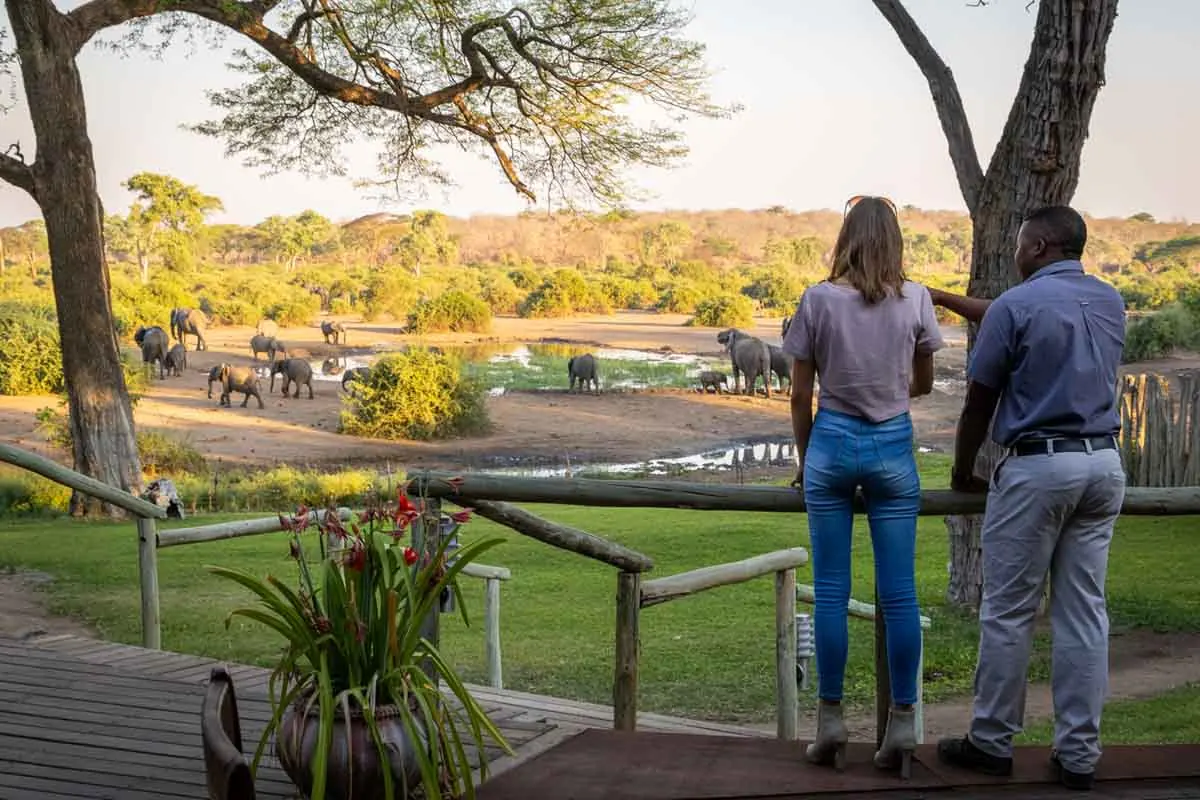
Elephant Valley Lodge is not on the river. It is a tented camp in the Lesoma Valley, inside the Kasane Forest Reserve between Chobe National Park and Zimbabwe’s parks, and it is built around a waterhole. Animals moving between the Botswana and Zimbabwe parks come through the valley to drink, elephants most of all, and you watch them from the deck, the pool or the boma. Reservations are handled by An African Anthology in South Africa.
What to expect
There are 20 tents. Eight valley tents look over the waterhole. Twelve forest tents stand under the trees round the lawns and second pool, and one of those is a family tent with an extra twin bedroom and a bath. All have an en-suite shower, a fan, charging points and a veranda.
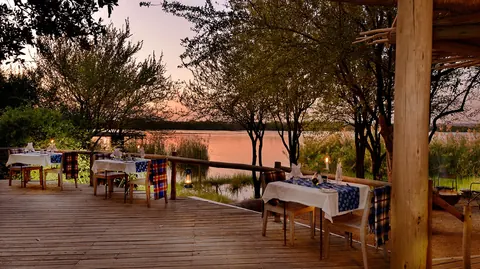
Meals are served within sight of the waterhole. Lunch is a buffet, often on the outside deck, and dinner is often in the boma by the fire, with the waterhole floodlit. A rim-flow pool faces the valley and the lodge says elephants sometimes drink from it. The lodge also runs a live webcam on the waterhole, so you can look before you book.
Boat cruises on the Chobe River and game drives in the park and forest reserve run daily. Victoria Falls day trips leave after breakfast, around 8am, and are back before 6pm.
Practical details
- About 20 minutes from Kasane Airport, according to the management company.
- Tribes Travel puts the drive to the Chobe National Park entrance at about 40 minutes, through the forest reserve.
- The lodge is fenced to keep elephants out of camp.
- Open all year.
Good to know
The tents are cooled by fans. Neither the lodge nor its management company lists air-conditioning. The lodge’s own advice is that summer days from November to March can pass 40°C and that winter nights get cold under canvas, so it supplies electric blankets and tells guests to bring warm clothes. The distance from the river is the trade-off: you give up time on the road to the park and get wildlife at camp in return.
Last updated 12 October 2026. Sources: Elephant Valley Lodge, Elephant Valley Lodge, About the lodge, Elephant Valley Lodge, Accommodation, Elephant Valley Lodge, Activities, Elephant Valley Lodge, Good To Know, An African Anthology, Elephant Valley Lodge, Tribes Travel, Elephant Valley Lodge.
Three new Land Rovers in the Lesoma Valley
Late in the morning of 27 February 1978 the headman of Lesoma, Jameson Kelesitswe, sent two boys off on bicycles to the army post at Kazungula. Rhodesian helicopters were over his village, hunting guerrillas who had crossed the border after a fight. The boys were about sixteen. One was his son. The Botswana Defence Force was not yet a year old, and the 35 men who drove out went in three Land Rover 109s so new, by Richard Moleofe’s account in the Sunday Standard, that they still had their green canvas on.
It took about two hours in the bush to find two armed guerrillas. Both warned that the Rhodesians were close, and Moleofe says some of the soldiers wanted a different track home. The platoon commander took the road they had come in on, with the boys and the prisoners aboard. Between five and six that evening, on the sand ridge near the village, the lead vehicle was hit, then the rear one, and all three burned. Fifteen soldiers died. So did Uwe Simon, the second of the two boys.
The ridge beyond the waterhole
Lesoma is about 6 km south of the lodge. The memorial stands at the ambush site, and the army keeps 27 February as its day for the dead. The historians John Makgala and Matshwenego Fisher, who worked from the army’s own report, record that the country stopped for a day of mourning on 2 March and that the people of Molepolole collected P90.92 and one goat for the families. One survivor, Major Hudson Mosweu, told Moleofe the men who lived through it should have had medals.
Who drinks here, and when
Elephants, and in the dry months you would be unlucky to miss them. The lodge gives April to October as the time animals crowd its waterhole. Camera traps set on the elephant paths through Kasane and Kazungula found the same shape: busiest in August, thinnest in the rains, when there is water all through the bush. From December to March the elephants come less, and the lodge’s own blog turns to the woodland kingfisher and its rolling trill.
The operator’s list for the waterhole goes on to buffalo, giraffe, kudu, waterbuck, warthog, jackal, honey badger and hyena, then lion, leopard and wild dog. Treat those last ones as possible, not promised. The camp 2 km down the valley, with a waterhole of its own, calls its lion and leopard “occasional” and says buffalo arrive hundreds strong in the wetter months. It also lists sable and roan. Those two are the animals to hope for in this forest. Botswana has only about 3,000 sable and 1,500 roan, and Elephants Without Borders, which has put satellite collars on both in Chobe, says they appear to be increasing there.
Not quite the biggest herd on earth
The lodge’s managers sell the area as home to the largest elephant population in the world. The researchers’ version is better: about 130,000 animals in Botswana, part of one population that runs on into western Zimbabwe, with home ranges of up to nearly 25,000 square km, the largest recorded for the species. The herd at the water tonight may be over the border in Matetsi next week.
Lesoma lives off the same animals another way. With Kazungula and Pandamatenga it makes up the KALEPA Trust, and in March 2020 the trust auctioned a hunting quota in Kasane that included ten elephants and two leopards.