Place to stay · Makgadikgadi Pans National Park
Kumaga Campground
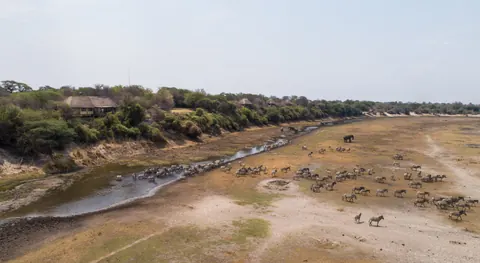
Campsite of 10 pitches on the Boteti River side of Makgadikgadi Pans National Park, by Khumaga village, run by SKL. People come for the zebra at the river.
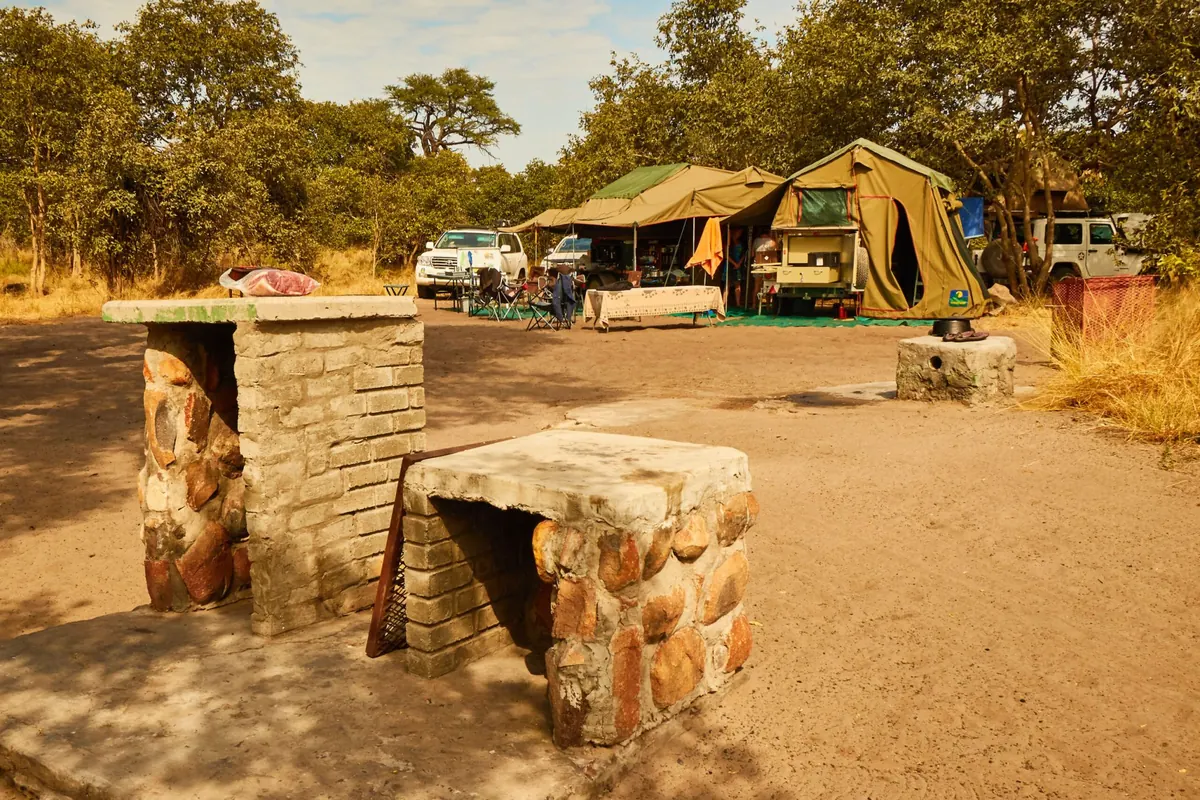
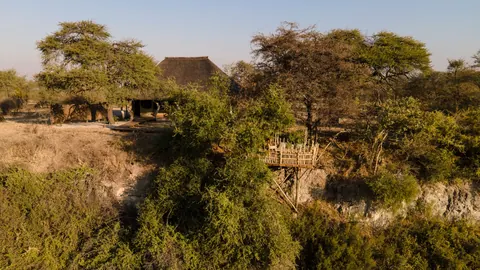
Kumaga (also spelt Khumaga) is the campsite on the western edge of Makgadikgadi Pans National Park, above the Boteti River and next to Khumaga village. It is run by SKL Group of Camps, the private operator that also holds the Savuti, Linyanti and Khwai campsites. People camp here for one reason: the river is where the park’s zebra and wildebeest come to drink.
What to expect
SKL lists 10 campsites and two ablution blocks with showers. That is the extent of what the operator publishes, so plan to be self-sufficient. One older guide to the park says the campsite water smells of sulphur and is not fit to drink, so carry your own.
The setting does the work. The Boteti is the main outflow of the Okavango Delta and the park’s western boundary. It dried up completely by the mid-1990s and only started flowing past this stretch again in 2009, and through the dry years the herds kept coming to the remaining pools. When the pans and grasslands to the east have no surface water, zebra and wildebeest gather along this bank, with lion following them.
Practical details
- Access is self-drive and SKL says you need a 4x4.
- Camping is booked with SKL through its website.
- The village and the campsite appear as both Khumaga and Kumaga. They are the same place.
Good to know
SKL’s own page describes Kumaga as being in the Central Kalahari Game Reserve. It is not. The campsite is in Makgadikgadi Pans National Park, a different reserve altogether, so check which park your booking and permits name.
The salt pans themselves are far off in the south of the park. Staying here is about the river frontage, not a walk out onto the salt.
Last updated 12 October 2026. Sources: SKL Group of Camps, Kumaga Campsites, Botswana Wildlife, Makgadikgadi Pans National Park, Desert and Delta Safaris, Leroo La Tau.
The big tree at site 10 and a ferry nobody believed
For most of its life this was not much of a campsite. The early-2000s edition of the Bradt guide, still online, gives Khumaga a few lines: there is usually water, the cold showers and flush toilets work sometimes, and one of the park’s two game scout camps is here. You came to the scouts to sign in. The river, the same book says, had not flooded properly in at least ten years, and the private campsite beside Leroo La Tau, about 4 km north, had lost the standpipes on its pitches to elephants.
What the river did to the camp
SKL says its park campgrounds were awarded in 2009, the same year the Boteti came back strongly. At the end of August 2010 an overlander posted photographs of the old drive-over crossing, shut because the river was too deep, and found the riverbed game tracks under water. He reached the hippo pool and saw one hippo.
Then came the ferry. A forum member reported that the Ngami Times of 1 to 8 April 2011 carried a photograph of a ferry now taking cars across at Khumaga. Two regulars looked at the date on the paper and suspected an April Fool. It was real, and within two years campers were writing about the crossing as routine.
A visitor in 2011 complained of building noise in camp. In April 2012 another found new ablution blocks with plenty of solar-heated water.
Ask for 10, and forget the view
Ask the people who have camped here which pitch to take and the same number keeps coming back. Site 10 is at the far edge, under one big tree, with nobody beside it. Site 9 is the usual second choice. Neither looks at the river.
Almost nothing does. Sites 2 and 3 sit on the bank, and one camper puts 5 to 7 above the river too, but others say they have never had more than a glimpse of the riverbed from any pitch. The bank sites also get the most of the village, meaning cow and donkey bells from across the water. One regular says the monkeys are busiest around 5 and 6, which are small and close together.
Who comes through after dark
Elephants, mainly. A couple who camped on site 10 in early February had them wandering through and around camp regularly, and one camper counted 41 drinking in the river about a hundred metres from his pitch. He says he counted three times. A couple here over New Year found them in large numbers along the river and very relaxed.
Hippos are the surprise. A small pod sat out the dry years in one deep pool near Leroo La Tau. The February couple found hippo tracks all through camp in the morning without ever seeing what made them, and guessed the visits happened while they slept. That is one account.
A camper on site 5 heard lions close by after dark. Someone else had a badger in his camp, which in Botswana means a honey badger, so pack the food away.
A river you cannot book
The Boteti has not kept its promise since. Hayley Blackwell of Elephants for Africa, whose research camp is at Khumaga, arrived in June 2016 to find it had stopped flowing. On 19 August it was back, and zebra and wildebeest came down the banks and into it.
In July 2023 forum members described the bed at Khumaga as bone dry, with hippos and crocodiles packed into the last pools and the zebra already there in numbers. Over New Year 2024 one couple drove straight across the sand, and the only zebra they saw at the river was a carcass.
Park fees
Kumaga Campground is inside Makgadikgadi Pans National Park. International visitors pay from US$14 €13 · P190 a day. See all Makgadikgadi Pans National Park fees