Place to stay · North-West District
Guma Lagoon Camp
Fishing and mokoro camp on Guma Lagoon in the Okavango Panhandle, reached by deep sand from Etsha 13, with canvas cabins on the water and seven campsites.
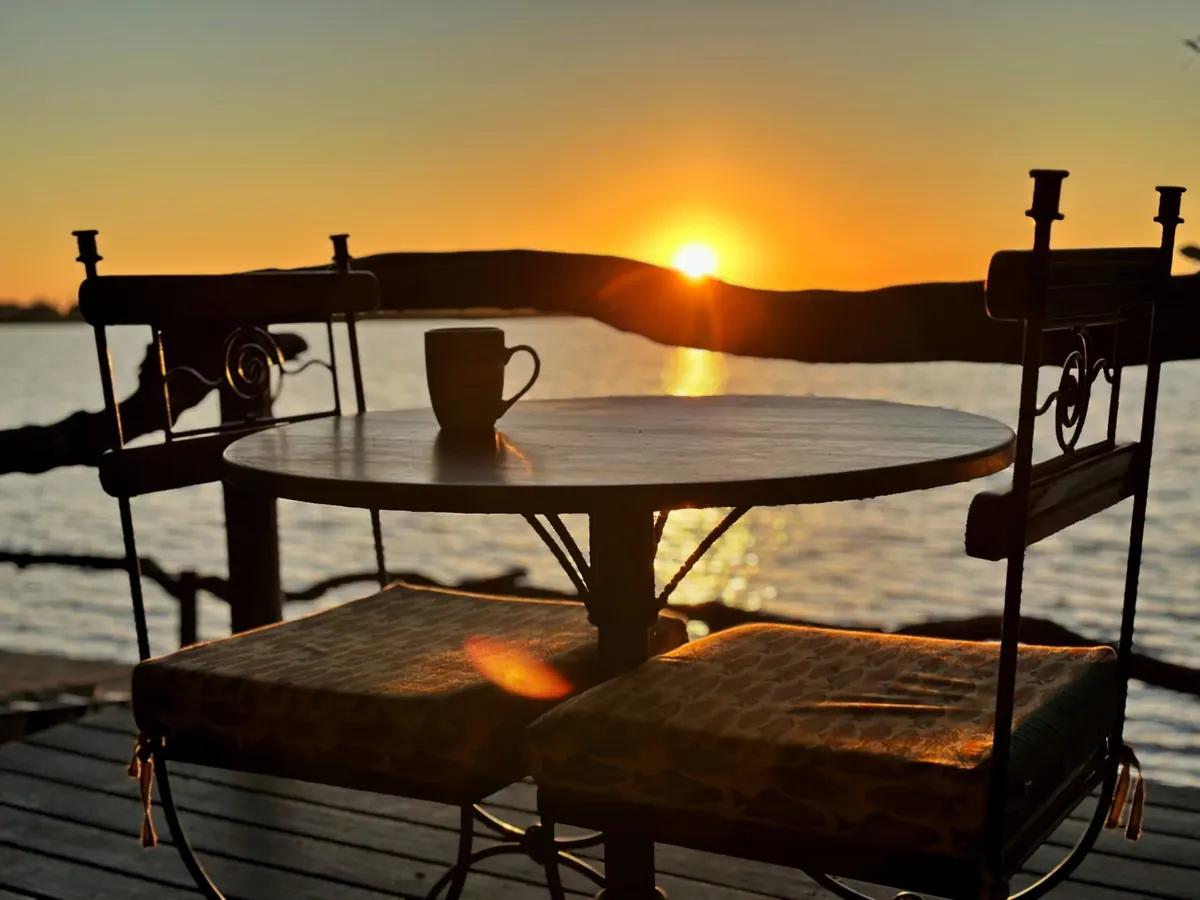
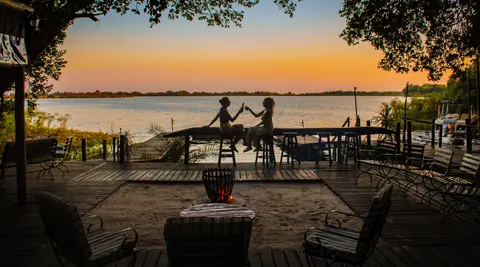
Guma Lagoon Camp is on the edge of Guma Lagoon in the north-western Okavango, the Panhandle side, 280 km from Maun by the Sehitwa to Shakawe road. Guy and Beverly Lobjoit started it in 2000. It is a fishing camp that most guests drive to, and you can cater for yourself or book full board.
What to expect
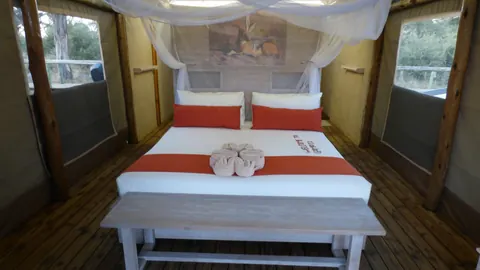
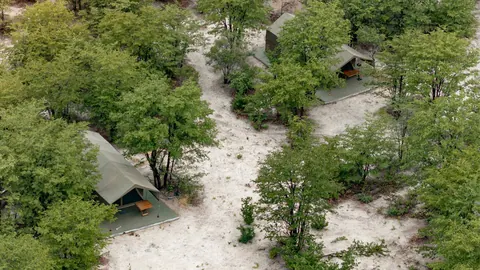
There are 16 canvas cabins at the water’s edge, each with two beds, linen and its own bathroom, and seven shaded campsites that each have a private ablution block with hot water and a flush toilet. Campsites have no power points. The one plug is in the shared kitchen. Meals from the camp kitchen are a set menu and must be booked ahead. The bar shuts at 9pm.
Fishing is spin or fly, catch and release, from the camp’s boats with a guide. Tigerfish are the draw (the camp record is 7.2 kg), along with bream, pike and catfish. Mokoro trips, by the day or with nights camped on an island, are run by the Jakotsha Community Trust from a station 20 minutes away by motorboat. Helicopter flights include a half-day to the rock paintings at Tsodilo, a World Heritage Site since 2001.
Practical details
- From Maun drive 101 km to Sehitwa, turn right for Shakawe, pass Etsha 6, turn in at Etsha 13 and follow the camp’s signs.
- The last stretch from Etsha 13 is thick sand and 4x4 only. Deflate your tyres and use low range. Without a 4x4, arrange a transfer from the village in advance.
- Fuel at Gumare (48 km south of camp) and Etsha 6.
Good to know
Fishing stops across the Okavango in January and February. From about April to July floodwater can cover the access road, and the camp is firm that you follow its signs and not your GPS. Bring firewood and small notes, and leave the hairdryer at home: the camp runs off batteries.
Last updated 12 October 2026. Sources: Guma Lagoon Camp, Guma Lagoon Camp, accommodation, Guma Lagoon Camp, find us, Guma Lagoon Camp, activities, Guma Lagoon Camp, about, Wikipedia, Tsodilo.
An hour through water: the track to Guma Lagoon
In September 2010 a member of the South African 4x4 Community forum pasted in another driver’s account of getting to Guma Lagoon Camp. The camp had sent a staff member to lead a convoy from the edge of Etsha 13, and it took a full hour through water. It never came over the wheels, the driver wrote, and there was “no route as such”. The camp was lovely all the same.
The years the track went under
The camp says there may be floodwater from April to July. The forum record shows how loosely the water keeps to that. In early February 2011 one member watched the level rise about 30 cm in three days. By mid-April a Cape Town regular had been told Guma could be reached only by boat or tractor, with guests’ vehicles left behind in Etsha.
At the start of May 2012 a Defender owner got 8 km in and was offered a boat for the rest. In July he passed on the management’s reply that everyone was driving in again, with a few shallow sections left, and a guest who had slept there the week before said the crossings were marked and he had not needed low range. In August 2025 a Tracks4Africa writer mentions only thick sand, and enjoyed it.
The management’s own figure in 2012 was about 45 minutes from the village. A driver in 2018 reckoned an hour and a half from the tar, and thought one night a bit rushed because you come out the same way.
The village itself is the highest-numbered of thirteen, Etsha 1 to 13, founded by Hambukushu refugees who fled the war in Angola at the end of the 1960s.
Stables first, then a fish farm
By the camp’s own account, the site was first thought of as a horse safari camp and stables by PJ and Barney Bestelink, the couple behind Okavango Horse Safaris. That company rides from an island on the Xudum, on the south-western side of the delta and a long way from here, and the Bestelinks sold it in 2025. Its head guide was born in Etsha 13.
Guy Lobjoit’s plan for Guma was fish farming. When demand for freshwater fish shifted he took in guests instead: three dome tents, open-air ablutions and a help-yourself bar lit by candles.
Something of the fish man lingers. The photograph at the top of Wikipedia’s article on the African pike, a predator that lies in wait along swampy margins, was taken in an aquarium at Guma Lagoon Camp.
How far away everything is
Hippos are what people actually report. The Tracks4Africa party heard hippos and fish eagles from camp and sat in their mokoros watching a group about 60 metres off. Elephants they saw only at a distance, as they landed for the island walk, where their guide, Royal, had them keep downwind.
The camp lists sitatunga and Pel’s fishing owl, and calls the owl elusive. None of the trip reports behind this piece mentions seeing a sitatunga. Nor does any put the owl at the camp itself. One writer, back by motorboat on water she had first poled from Etsha 13, saw two in jackalberry trees on an island, and it took a guide named Galle to spot them. Birders further up the Panhandle at Shakawe tell much the same story.
The camp fishes the lagoon and the channels round it for bream, pike and catfish. For the main river it quotes 40 minutes by boat, and the Tracks4Africa boats left at seven for a two-hour run to the channel where they caught tigerfish all day. September to November is the peak, when the catfish run. Late March is not: an angler back from Guma in 2011 said the fishing was poor, with the river coming down and carrying debris.