Town · Karas, Namibia
Lüderitz
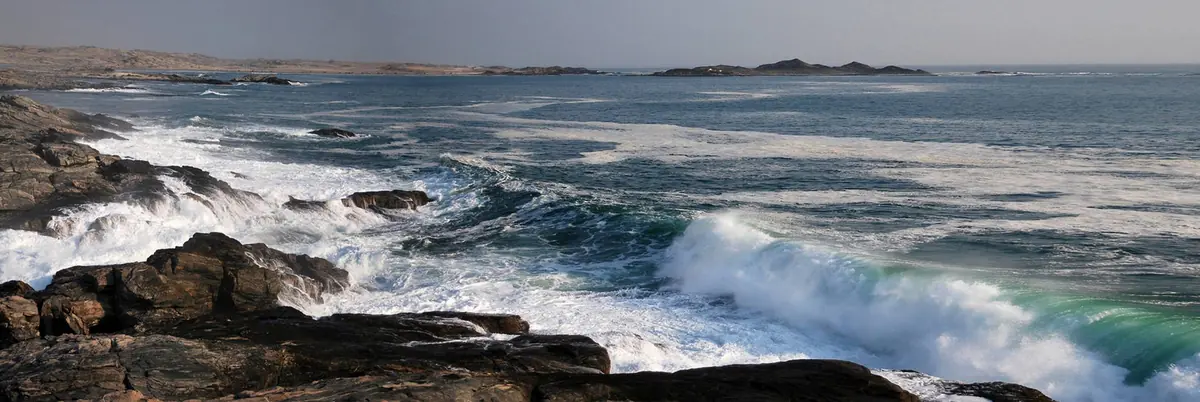
Old German harbour town on the cold Atlantic in the far south, with the Kolmanskop diamond ghost town next door, penguins off the peninsula and the Shark Island genocide memorial.
Short answer
Lüderitz is in Karas, Namibia. This page lists 21 places to stay, 11 places to eat and drink and 13 sights. The nearest park with an entry fee on this site is Tsau ǁKhaeb (Sperrgebiet) National Park, about 98 km away, where international adults pay from N$280.
- Malaria
- ǁKaras is not one of the regions where the CDC lists malaria transmission (those are in the north and east of Namibia).
- Places to stay
- 21
- Eat and drink
- 11
- Sights
- 13
In and around Lüderitz
45 places listedWhere to stay in Lüderitz 21
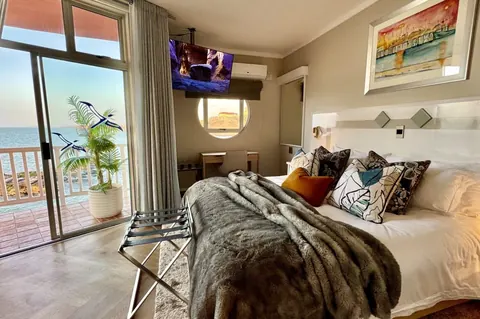 HotelLüderitz Nest HotelDiaz Street+264 63 204 000nesthotel.com
 Guest houseHansa Haus+264 63 203 699hansahausluderitz.co.za
- 26.65°S 15.16°EGuest houseAlte Loge / Alte Villa+264 81 636 7485historisches-ferienhaus-namibia.de
- Guest houseHaus sandroseBismarck St
 HostelLuderitz Backpackers+264 81 261 2174
- 26.65°S 15.16°EGuest houseVillelodgeWerft Street, Lüderitzvillelodgeaccommodation.com
- 26.65°S 15.16°EGuest houseWildhorsesRing Street
- 26.65°S 15.15°EHostelElement Riders Placeelement-riders.com
- 26.64°S 15.15°EHotelKairos CottageKreplin St
Show all 21 places to stay
- Kratzplatz Accommodation · Guest house · Nachtigal Street, Lüderitz+264 63 202 458
- Ocean Life · Guest house · Bismarck St
- Obelix Village · Guest house · Old Bai Weg
- Shark Island · Campsite · Lüderitz
- Shark Island Airbnb · Guest house
- Kapps Hotel · Hotel
- Krabbenhöft & Lampe · Hostel
- Seaview Hotel Zum Sperrgebiet · Hotel
- Shark Island Lighthouse · Guest house
- The Cormorant House · Hotel
- Timo's Lodge · Guest house
- Zur Waterkant · Guest house
Sights 13
 Haus GoerkeMuseum
 Lüderitz MuseumMuseum
- Namibia Maritime MuseumMuseum · Diaz Street, Lüderitz
- Lüderitz MemorialMemorialnhc-nam.org
- Adolf LüderitzMemorial
- Captain Cornelius FredericksMemorial
- Haus EberlanzAttraction
- Haus GrunewaldAttraction
- Haus HartmannAttraction
- LesehalleAttraction
- Lüderitz WaterfrontAttraction
- ShipwreckViewpoint
Show all 13 sights
- Turnhalle · Attraction
Restaurants and cafes 11
- EssenzeitRestaurant · Hafen Street, Lüderitz+264 81 401 4337essenzeit-luderitz.com
 Diaz Coffee ShopRestaurant+264 81 700 0475
- The Portuguese FishermanRestaurant · regional+264 81 227 9986
- Penguin RestaurantRestaurant+264 63 204 000
- The Desert DeliCafe · Bahnhof Street, Lüderitzdesert-deli-gift.com
- BarrelsRestaurant · Berg Street, Lüderitz
- Captain MacarenaRestaurant · fish and chips · Hafen Street, Lüderitz
- Ritzi’s RestaurantRestaurant
- Yacht ClubRestaurant
- Cosy Corner Coffee ShopCafe
- Garden CafeCafe
Lüderitz is a harbour town of about 16,000 people (2023 census) on the Atlantic in ǁKaras, at the end of a long road through the desert. It was the first place Germany claimed in what became Namibia, and the colonial houses on the hill still look it. People come for Kolmanskop, the diamond ghost town filling with sand just inland, the penguins off the peninsula and Shark Island, site of the German concentration camp of 1905 to 1907. Its constituency was renamed ǃNamiǂNûs in 2013; the town kept its name.
Getting there
Drive. The tarred B4 runs 334 km west from Keetmanshoop, and Aus, about 125 km out, has a garage and is the last village before the coast, so fill up there. West of Aus the road crosses the old diamond area, now Tsau ǁKhaeb (Sperrgebiet) National Park, and you may only leave it at marked places. Wind piles sand drifts across the tar and fog comes in at night, so slow down. Shared minibus taxis (combis) run from Keetmanshoop a few times a day. There is no scheduled passenger train. The airport is 9 km south east of town; check who is flying there before you plan around it.
When to go
Any time. This is a cold desert, with about 17 mm of rain a year and a sea that stays between 10 and 16°C. In July and August days can reach 25°C and drop close to freezing at night. The wind is the thing to plan for. It blows hardest from late December to mid February, and the same wind brings the speed sailors here for the Lüderitz Speed Challenge each spring.
What to do
Go to Kolmanskop first, 10 km inland. The permit is your ticket, sold at the gate, online or at the Desert Deli in town. Guided tours in English and German run at 09:30 and 11:00 from Monday to Saturday and at 10:00 on Sundays and public holidays. Photographers can buy a sunrise to sunset day pass. No drones.
In town, walk up to the Felsenkirche, the Lutheran church on Diamond Hill, and the Goerke Haus nearby. The Namibia Maritime Museum opened in the old power station in September 2024. Shark Island is joined to the town and has a memorial to the Nama leader Cornelius Fredericks, who died in the camp.
On the peninsula, district roads lead to Diaz Point and a replica of the cross Bartolomeu Dias put up. The footbridge to it has been broken since 2014, so you reach it over the rocks at low tide. With binoculars you can see penguins on Halifax Island, which nobody may land on. Morning catamarans from the waterfront sail past.
Good to know
ǁKaras is not on the CDC’s list of malaria regions, and for the rest of the country it advises bite precautions only, so mosquito repellent is enough. Many tracks on the peninsula need a 4x4. Bogenfels and the abandoned mining towns further south need a permit that takes four or five days. Pack a windproof jacket whatever the month.
History and culture
Lüderitz is where German rule in Namibia began, on a bay bought from a Nama leader in 1883, and where some of its worst crimes happened, in the Shark Island camp of 1905 to 1907. A few years later diamonds made it rich for about a decade. The Art Nouveau houses, the ghost town at Kolmanskop and the genocide memorial on Shark Island all make more sense once you know that story.
- 1487 to 1488
The Portuguese navigator Bartolomeu Dias reached the bay in 1487, named it Angra Pequena (small bay) and set up a stone cross (padrão) on the peninsula. Dutch prospectors came looking for minerals in the 1700s without much luck, and from the early 1800s whalers, sealers and guano diggers turned it into a trading post. source
- 1883 to 1884
Heinrich Vogelsang, agent of the Bremen merchant Adolf Lüderitz, bought the bay from Josef Frederiks II, leader of the ǃAman Nama at Bethanie, for 100 pounds and 200 rifles. A second deal that August was written in miles; Frederiks understood English miles of about 1.6 km, the buyers then insisted on Prussian miles of 7.5 km, and he had signed away most of his people's land. It went down in history as the Meilenschwindel (mile swindle). The German flag went up on 7 August 1884. source
- 1905 to 1907
During the German war against the Herero and Nama of 1904 to 1908, now recognised as genocide, the colonial army held prisoners in a concentration camp on Shark Island. Between about 1,000 and 3,000 Herero and Nama men, women and children died there of hunger, cold, disease and forced labour on the harbour and the railway inland before it closed in April 1907. source
- 1908 to 1914
Zacharias Lewala, a railway worker, picked up a diamond near Kolmanskop in 1908 and showed it to his supervisor August Stauch. The rush that followed made Lüderitz rich, Germany closed off the coast as the Sperrgebiet (forbidden area), and the mining town at Kolmanskop was built in the style of a German town. source
- 1914 to 1915
South African troops took Lüderitzbucht without a fight on 19 September 1914, and German civilians were interned in South Africa. After the war the town became part of South West Africa, a League of Nations mandate run by South Africa. source
- 1920s to 1956
Diamond mining moved further south, and after the huge finds near the Orange River in 1928 most people left Kolmanskop. The last residents went in 1956 and Lüderitz shrank to a fishing port. source
- 1966 to 1994
South Africa ran the territory under its apartheid laws and held on after the United Nations ended its mandate in 1966. Namibia became independent on 21 March 1990, but Walvis Bay and the Penguin Islands off Lüderitz stayed under South African control until 1994. source
- 1972 to 1980
Ida Jimmy, born in Lüderitz in 1945 and working for a fishing company, joined SWAPO (the liberation movement that fought South African rule) in 1972. She lost her job, was jailed in 1978 and again from 1980 under the Terrorism Act, and is now honoured as a national heroine. source
- Language
- In the 2023 census about half the people in ǃNamiǂNûs constituency (Lüderitz and its surroundings) spoke one of the Oshiwambo languages at home and about a third spoke Afrikaans. English came next, and only 37 people gave German as their home language. source
- Buchter
- Whatever language they speak, people here call themselves Buchter, from the old German name Lüderitzbucht, which is still used in everyday speech. In 2013 more than 600 residents met in the Turnhalle to oppose renaming the town itself. source
- Food
- Seafood is the local thing, above all rock lobster (crayfish) and oysters, and the town holds an annual crayfish festival. source
- Architecture
- Much of the old town dates from the diamond years before the First World War and is built in German imperial style with Art Nouveau (Jugendstil) touches. Eleven of Namibia's national monuments are in Lüderitz, among them the railway station, the Deutsche Afrika Bank and the Krabbenhöft und Lampe building. source
For German visitors: Lüderitz is named after the Bremen merchant Adolf Lüderitz, whose agent bought the bay for him in 1883 and who went missing on an expedition to the Orange River in 1886. Lüderitz in Saxony-Anhalt, now part of Tangerhütte, is its twin town. source
For German visitors: Germany acknowledged in 2015 that what its colonial forces did to the Herero and Nama was genocide, and in 2021 agreed a deal with Namibia to pay 1.1 billion euros as development aid, while denying legal liability. The deal remains controversial. source
For German visitors: Parts of the carved woodwork in the Felsenkirche were brought by the first Lutheran pastor, Metzner, from his home town of Kaltennordheim in the Rhön. source
For German visitors: Kolmanskop's guided tours run in German as well as English. The Ilford Galerie, which opened in the town's old soda factory in July 2024, had work by the German photographers Michael Poliza and Alexander Heinrichs in its first show. source
For American visitors: In 2017 David Frederick, grandson of Cornelius Fredericks and chief of the ǃAman, joined Herero and Nama leaders in suing Germany over the genocide in a federal court in New York. The court dismissed the case in 2020 for lack of jurisdiction. source
For American visitors: The Turkish-born American rower Erden Eruç set out from Lüderitz Bay in October 2011 on the last ocean crossing of his solo human-powered trip around the world, reaching Venezuela five months later. source
Main sights in Lüderitz
7- Shark Island memorial
The site of the 1905 to 1907 concentration camp, now a national heritage site, with a memorial to Cornelius Fredericks and the Nama and Herero who died there. A campsite also operates on the island, which many descendants consider a graveyard.
Namibian Sun: Shark Island uproar over concentration camp campsite (4 November 2021) - Kolmanskop
The old diamond town just inland, slowly filling with sand. Only Ghost Town Tours guides may lead tours inside, in English or German, and the permit covers the town only.
Kolmanskuppe Ghost Town Tours: Tours and prices - Felsenkirche
The Lutheran church on the rocks of Diamond Hill, consecrated on 4 August 1912 and paid for with donations from Germany. Kaiser Wilhelm II gave the altar window. It opens for a few hours each afternoon.
Wikipedia (German): Felsenkirche (Lüderitz) - Goerke Haus
A diamond palace built in 1909 and 1910 for Hans Goerke, a former Schutztruppe officer who ran a diamond company. It later housed the magistrate, and Namdeb, the diamond company, restored it and uses it as a guest house; ask before you go whether it is open for visits.
Wikipedia (German): Goerke-Haus - Namibia Maritime Museum
Opened in September 2024 in the old power station on the waterfront, with five floors on the country's shipping and sea history. It grew out of a private collection and is said to be the largest museum of its kind in Africa.
Wikipedia (German): Namibia Maritime Museum - Diaz Point
The rocky point on the peninsula with a replica of Dias's cross and a lighthouse of 1910, no longer working. The bridge to the cross is broken, so you can only climb up at low tide.
Wikipedia (German): Diaz-Spitze - Lüderitz Museum
The small town museum on Diaz Street, with exhibits on the town's history. Travellers report short afternoon opening hours on weekdays.
Wikivoyage: Lüderitz
Did you know?
- Kolmanskop had the first X-ray station in the southern hemisphere and the first tram in Africa, along with a hospital, ballroom, theatre, casino and ice factory. source
- The electric railways that served the diamond fields south of town ran on a 1.5 megawatt power station in Lüderitz, thought at the time to be the largest in Africa. source
- Speed sailors come every spring for the Lüderitz Speed Challenge, sailed on a straight channel dug along the shore of a lagoon west of town. In 2008 Sébastien Cattelan set the first outright speed sailing record over 50 knots there, at 50.26 knots. source
- Penguin guano on Halifax Island was once about 37 m deep and was dug out until 1949. The penguins now nest in the guano miners' abandoned houses. source
- The proposed name ǃNamiǂNûs comes from the ǃAman Nama and is usually translated as embrace. source
- Cornelius Fredericks, the ǃAman captain who fought a guerrilla war against the Germans, was sent to Shark Island in September 1906 with 1,795 Nama prisoners, most of whom died there. He died on the island on 16 February 1907. source
Checked 7 October 2026.
Wildlife you might see
9- likelyAfrican penguinHalifax Island, about 100 m off the Lüderitz Peninsula. The catamaran trips sail past for a view, but nobody may land on the islandsource
- likelyCape fur sealOn the catamaran trips out of Lüderitz Baysource
- likelyHeaviside's dolphinClose inshore in and around Lüderitz Bay, one of the main places to watch them. They are drawn to boats and often ride the bow wave. Most active close to shore in the morningssource
- likelyGreater flamingoThe bays on the Lüderitz Peninsula, and on the catamaran tripssource
- likelyCrowned cormorant and kelp gullBreeding on Halifax Islandsource
- possibleDamara ternIts breeding ground on the Lüderitz Peninsulasource
- possibleOryx (gemsbok) and springbokTsau ǁKhaeb (Sperrgebiet) National Park, the desert the B4 crosses on the way in from Aussource
- rareBrown hyenaKolmanskop, where a few shelter in the ruined buildingssource
- rareSouthern right, humpback and other large whalesIn the open sea further from the mainland, not close inshoresource
Likelihood is for a normal visit of two or three days, from the sources linked. Nothing is guaranteed in the wild.
Staying safe in Lüderitz
- Malaria
- ǁKaras is not one of the regions where the CDC lists malaria transmission (those are in the north and east of Namibia). It calls malaria rare in the rest of the country and advises mosquito bite precautions there, no tablets. source
- The diamond area
- Between Aus and Lüderitz the B4 crosses the old Sperrgebiet (forbidden area), now Tsau ǁKhaeb National Park, and you may only leave the road at marked places. source
- Sand and fog on the B4
- The wind piles small sand drifts across the tar on the B4, and hitting one at speed is a real jolt to the car. Fog often comes in from dusk to dawn and sandstorms blow up during the day, so drive at a speed that suits what you can see. source
- Cold sea
- The Benguela Current keeps the Atlantic here icy all year. Agate Beach just north of town is the main swimming beach, so keep swims short and stay close to shore. source
- Inside the ruins
- You enter Kolmanskop at your own risk, and the permit covers the ghost town only: anyone who goes past its boundary into the mining area is prosecuted. Nobody is allowed in between sunset and sunrise, even with a day pass. source
- Peninsula tracks
- Diaz Point is on the district roads, but most tracks to the smaller bays and to the Kleine Bogenfels rock arch cannot be driven without a 4x4. source
Tips from travellers
- Get to Kolmanskop in the morning. A normal permit lets you in only until 13:00, and the guided tours (English and German) leave at 09:30 and 11:00 from Monday to Saturday and at 10:00 on Sundays and public holidays. If you want sunrise or sunset light, buy the day pass instead. official
- Kolmanskop permits are also sold at the Desert Deli in town, on the corner of Bahnhof and Moltke Streets, so you can buy yours before you drive out. official
- The catamaran to Halifax Island leaves the waterfront jetty at 08:00, and it is cold out on the water in the morning, so bring a windproof layer even in summer. Travellers say there is usually space if you turn up on the day without a booking. one source
- Go to Diaz Point at low tide. The wooden bridge out to the cross was wrecked in November 2014 and has not been rebuilt, so the only way up is over the rocks when the water is low. one source
- Plan a Bogenfels trip well ahead. Permits for the restricted diamond area take four or five days to come through, and private cars are not allowed on that track, so you go in the tour operator's 4x4. one source
- Treat Shark Island as the memorial it is. Descendants of the Nama and Ovaherero who died in the camp regard it as a graveyard, and its use as a campsite has drawn angry protest in Namibia. one source
Checked 7 October 2026. Conditions change, so confirm with the park or venue before you go.
Four hundred guano ships and a town that boiled the sea
Benjamin Morrell was an American sealing captain with a reputation. To some of the men who sailed the same waters he was the biggest liar in the Pacific. So when he wrote that in 1828 he had landed from the schooner Antarctic on a rock off the Namib coast and found bird droppings lying 25 feet thick, nobody hurried. The rock was Ichaboe, about 48 km north of the bay that would become Lüderitz. This time Morrell was telling the truth.
Four hundred ships at one rock
The digging only began in 1843. Then everyone came at once. At the height of it more than 400 ships lay at anchor off the island, with thousands of men camped ashore in shanties. They fought over digging rights, there was murder done, and two British warships had to be sent to keep order in what became known as the Great Guano War. By 1846 some 460,000 tonnes had gone to Britain from Ichaboe and the rocks around it. The rush lasted about three years, and then the bay was left to itself again.
That scramble explains an oddity on the map. Britain took Ichaboe in 1861, and on 5 May 1866 Captain Charles Forsyth proclaimed British sovereignty over more of the bird islands, landing on Halifax from HMS Valorous two days later. When Germany took the mainland in 1884 the islands stayed with the Cape, and Germany recognised that in 1886. So a German harbour town looked out at British rocks.
A town that boiled the sea
Lüderitz has no fresh water of its own and almost no rain. The early town drank water brought up by ship from the Cape, or sea water boiled and condensed on the shore. German railway records put numbers on it: water from the two condensing plants cost 5 marks a cubic metre, and the shipped kind 40. When the line inland reached Aus on 1 November 1906, the worst problem in running it was still water. Only later was a well drilled at Garub, out in the desert.
Where the dolphins are, and at what hour
In 2014 Sara Golaski, a master’s student at the University of Pretoria, moored five underwater click recorders in the small bays between the harbour mouth and the open sea and left them for two months. Heaviside’s dolphins turned up on all of them, much less at night, when they seem to move offshore. Most of the clicking came around midday. The exception was Guano Bay, the site furthest west, where early morning was busiest. Years of small boat surveys by the Namibian Dolphin Project agree on the place to look: Diaz Point, where the animals are there nearly all the time, and much closer to the rocks than the same species keeps at Walvis Bay.
Research cruises out of Lüderitz between 2012 and 2014 put about 1,600 of them in the whole marine protected area along this coast, and the scientists allow that the true figure could be half or double that. It is a small animal, 1.7 m long at most, and usually goes about in twos and threes. Two magazine writers who did the boat trip nearly 20 years apart describe the same thing, dolphins coming in to the boat and diving under the hull. The name is a mistake. A Captain Haviside brought the first specimen to England, and the zoologist John Edward Gray credited a surgeon called Heaviside instead.
The boats also pass Sturmvogelbucht (Shearwater Bay), where the rusted remains of a whaling station built in 1912 sit on the shore. The First World War and the South African occupation finished it. Whales are normally seen between June and October, but treat one as luck. One sighting on record was well out of season: 4 January 2015, when a catamaran skipper counted at least six fin whales in that same bay.
The penguins on Halifax are a sad story. Namibia had almost 9,000 breeding pairs in 1979 and fewer than 1,500 by 2023. Mercury Island, further up the coast, had more than 3,500 pairs in 2010 and none at all in the 2025 count. Halifax held 852 pairs in 2011, and 184 birds were found dead there in a single visit in January 2019. In May 2026 one rehabilitated female, known only as AP002, went back onto the island after 49 days of care, and that counted as good news.
Brown hyenas belong mostly to the closed diamond coast south of town, but in May 2022 one turned up near the railway station. The parks warden, Martha Kambinda, said it had probably come for the dead sea animals washing up along the shore, and was no danger to anybody. Marie Lamerle of the Brown Hyena Research Project added the useful bit: they come into town after dark quite regularly, so watch the road at night.
The flamingo bay with graves under it
Shark Island stopped being an island in the camp years. From 1906 a wide strip of made ground doubled its size and tied it to the town. The missionary August Kuhlmann saw the place in September 1905 and wrote of an overseer firing five shots at a sick woman who was crawling to beg for water. That same month a transport rider told the Cape Argus the women were starved to skin and bone. Major Ludwig von Estorff had the camp shut in April 1907, and the survivors were moved to open ground near Radford Bay. The dead had been carried there before them.
Radford Bay is where visitors now stop for flamingos on the lagoon. Near the memorial there are low mounds of sand. Archaeologists from the University of Huddersfield worked on them in 2023 and 2025 and found disturbances below the surface that look like graves, one of them very probably a mass grave. Descendants had always said the burials were there, and now there is science to back them. In 2024 the research group Forensic Architecture mapped the camp from old photographs, satellite images and ground radar and warned that enlarging the harbour could disturb remains, some of them possibly in the water around the island. The port authority says it has commissioned its own archaeological studies. Wind and sand are wearing the mounds down in the meantime.
Quick answers
What animals can you see in Lüderitz?
You have a good chance of seeing african penguin, cape fur seal, heaviside's dolphin, greater flamingo, crowned cormorant and kelp gull. Brown hyena, southern right, humpback and other large whales are there but rarely seen.
Guides for Lüderitz
Map of Lüderitz
See every place on this map as a list