Springbok
Copper town in the granite hills of Namaqualand, 550 km up the N7 from Cape Town. The base for the August and September wildflower season and the last stop before Namibia.

See every place on this map as a list
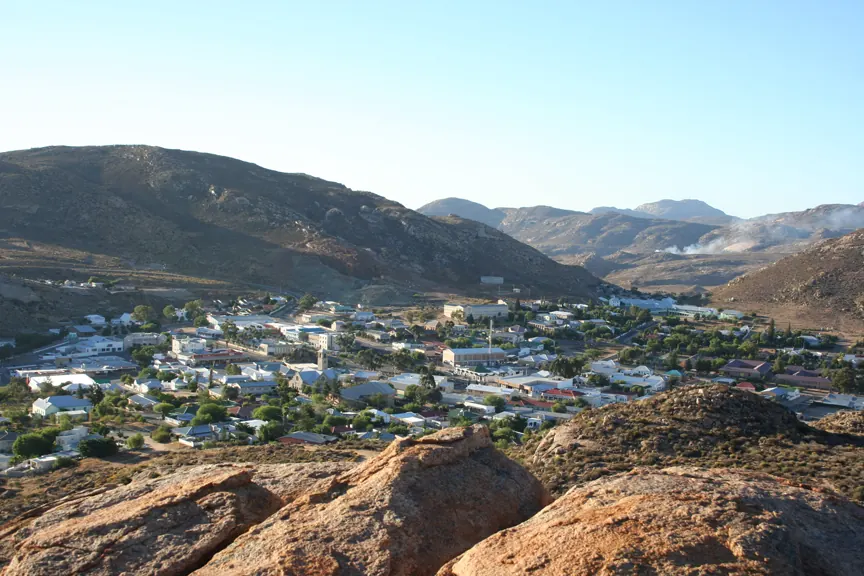
Springbok is the main town of Namaqualand, a semi-desert of granite domes and succulents in the far north-west of the Northern Cape. Simon van der Stel found copper here in 1685, the Blue Mine opened in 1852 as the first commercial copper mine in South Africa, and the town was laid out as Springbokfontein in 1862. For a few weeks in late winter it is the centre of one of the great natural spectacles in Africa, when the rain-fed wildflowers open across the plains.
Getting there
Springbok is about 550 km north of Cape Town on the N7, around seven hours’ driving, and 1,000 km from Johannesburg. The Namibian border at Vioolsdrif is another 100 km up the N7. The N14 runs east to Upington. Intercape buses stop at the Springbok Lodge four times a week each way between Cape Town and Pretoria, and there is a small airport 5 km out of town with flights to Cape Town. For the flowers you need your own car.
When to go
Flower season depends on the winter rain, which falls mainly from May to August, and no two years are alike. The display usually begins in the north around Springbok and Steinkopf and moves south as spring warms, with August and September the peak. Flowers open only in bright sun and most face the sun, so drive between about 11:00 and 16:00 with the sun behind you, and expect nothing on a cold grey day. Accommodation books out during flower season, so plan months ahead and check the tourist office for where the bloom is best that week.
What to do
Goegap Nature Reserve, just outside town, covers 15,000 ha of granite hills and includes the Hester Malan Wild Flower Garden; around 600 plant species grow here, with springbok, gemsbok and mountain zebra on the plains, and a 17 km circular drive plus hiking and mountain-bike trails. Namaqua National Park, 22 km north-west of Kamieskroon and 67 km south of Springbok, protects 1,368 km² of succulent Karoo built around the old Skilpad flower reserve; about 4,000 plant species occur in the region and more than 1,000 grow nowhere else.
In town, climb the Klipkoppie, the rocky hill in the centre with the ruins of an English fort, and visit the museum in the old synagogue. The old Blue Mine can also be visited. Quiver trees stand on the hillsides all around.
Good to know
Fill the tank in Springbok; the gaps between fuel stations are long in every direction. Almost half the plant species here are found nowhere else on earth, so stay on the roads and tracks and do not pick anything. Days in flower season are mild but nights are cold, and the wind on the plains is sharp. Carry water and a hat in summer, when temperatures can reach the high 40s. Afrikaans is the first language of nearly everyone in town, though English is understood everywhere that deals with visitors.
In and around Springbok
31 PLACESPlaces to stay 19
- 29.66°S 17.90°E
- 29.70°S 17.67°E
- 29.66°S 17.88°E
- 29.69°S 17.88°E
- 29.66°S 17.88°E
- 29.67°S 17.88°E
- 29.71°S 17.89°E
- 29.70°S 17.91°EHotelKoperberg Guest House
- 29.67°S 17.88°EGuest houseSpringbok ApartmentsVoortrekker Street
Sights 8
- Springbok GedenkmuurMemorial · Springbok
- Namakwaland MuseumMuseum · Sinagoge Street, Springbok
- Die KlipkoppieMonument
- Monument KoppieAttraction
- Ou KruithuisRuins
- Ou TronkRuins
- Simon van der Stel Copper MineAttraction
Restaurants and cafes 4
- Herb GardenRestaurant · Regional, Steak, Pizza, Salad · Kruis Street, Springbok
- Nando'sRestaurant · chicken, portuguese
- Tauren Steak RanchRestaurant