City · Otjozondjupa, Namibia
Otjiwarongo
Capital of Otjozondjupa on the B1, 250 km north of Windhoek, with the Cheetah Conservation Fund 44 km east, a crocodile farm and a 1912 German steam engine at the station.
Short answer
Otjiwarongo is in Otjozondjupa, Namibia. This page lists 23 places to stay, 27 places to eat and drink and 3 sights. The nearest park with an entry fee on this site is Okonjima Nature Reserve, about 45 km away, where international adults pay from N$250.
- Malaria
- The CDC counts Otjozondjupa, the region Otjiwarongo is capital of, among the Namibian regions with malaria transmission and recommends preventive tablets there.
- Places to stay
- 23
- Eat and drink
- 27
- Sights
- 3
In and around Otjiwarongo
53 places listedWhere to stay in Otjiwarongo 23
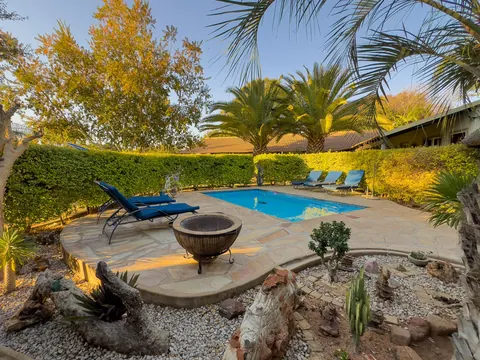
- 20.47°S 16.64°EGuest houseBush Pillow Guest HouseSon Road, Otjiwarongo+264 67 303 885bushpillow.co.za
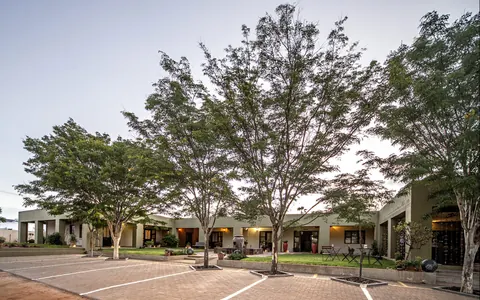
- 20.47°S 16.66°EGuest houseUpi Guest HouseGrens Street, Otjiwarongo+264 81 427 6276
- 20.46°S 16.66°EGuest houseKuhanga VillaJohannes Wohler Avenue, Otjiwarongo+264 81 251 4604kuhanga-villa.business.site
- 20.48°S 16.65°EHotelOut of Africa HotelLong Street, Otjiwarongoooafrica.com
- 20.46°S 16.64°EHotelC'est Si Bon Hotel & LodgeOtjiwarongo
- 20.48°S 16.65°EGuest houseMo-nize Villa GuesthouseTheo Borstlap Street, Otjiwarongo
Show all 23 places to stay
- MSC Hotel Otjiwarongo · Hotel+264 67 304 320mschotel.com
- Acacia Park Camping · Campsite · Otjiwarongo
- Otjiwarongo Continental Hotel · Hotel · Werft Street, Otjiwarongo
- Sunset B&B · Guest house · Hage Geingob Street, Otjiwarongo
- Village Boutique Hotel · Hotel · Otjiwarongo
- Bonno Guesthouse · Guest house
- Evergreen · Guest house
- Freedom Guesthouse · Guest house
- Kudubos Camping · Campsite
- Lions Den Guesthouse and Camping · Campsite
- Northern Rock Campsite · Campsite
- Otjibamba Lodge · Hotel
- Out of Africa B&B · Guest house
- Wesrand · Campsite
Sights 3

- Otjiwarongo Crocodile FarmZoo
- Historical TrainAttraction
Restaurants and cafes 12
 Casa Forno RestaurantRestaurant · Ramblers Road, Otjiwarongo+264 67 304 504casaforno.com
- Kameldorn GartenRestaurant · Bahnhof St+264 81 244 5967
- Rustic Spoon Urban EateryRestaurant · Hage Geingob Street, Otjiwarongo+264 81 339 6572
- PodjoRestaurant · regional · Otjiwarongo
- The Tea PotCafe · Dr. Libertina Amathila Avenue
- CabritoRestaurant · Otjiwarongo
- German Horseriding ClubCafe · Otjiwarongo
- Village BoutiqueRestaurant · Hage Geingob Street, Otjiwarongo
- Central CaféCafe
- Kari's RestaurantCafe
- Olli'sCafe
- Waters HouseCafe
Bars and pubs 15
- Erindi BarBar · Otjiwarongo
- Omes TavernBar · Otjiwarongo
- Onguluwe Okathitu Kashau 747Bar
- Botenza MallBar
- Hafeni's Bar and CarwashBar
- Hollywood BarBar
- Rukumbi Kandanga BarBar
- Terron BarBar
- Virmos BarBar · Otjiwarongo
- Acacia Park Pub & GrillBar
- Carlitos BarBar
- EtambiBar
Show all 15 bars and pubs
- Mohrcki's Pub · Bar
- Peoples Bashu · Bar
- Tiranus Bar · Bar
Otjiwarongo is the capital of Otjozondjupa and the biggest town in the region, with 49,022 people at the 2023 census. It is easy to treat it as a fuel, cash and supermarket stop on the way to Etosha. That undersells it. Otjiwarongo is known as the cheetah capital of the world: the Cheetah Conservation Fund has its research centre 44 km to the east, and the Waterberg Plateau and Okonjima are both within reach.
Getting there
The tarred B1 brings you up from Windhoek, about 250 km to the south. Two tar roads start here. The C38 runs north-west through Outjo and stays tarred all the way to Okaukuejo in Etosha, and the C33 heads south-west through Kalkfeld and Omaruru to Karibib, which is your road to the coast. Intercape and Sunshine Tours coaches stop in the centre, and minibus taxis to Windhoek and the north leave from the Engen garage on the B1 where it meets the C38.
When to go
Most rain falls from December to March, February being the wettest month, and December afternoons average around 34°C. The winter months of June and July are dry with days near 24°C, but the nights drop to about 6°C, so pack something warm.
What to do
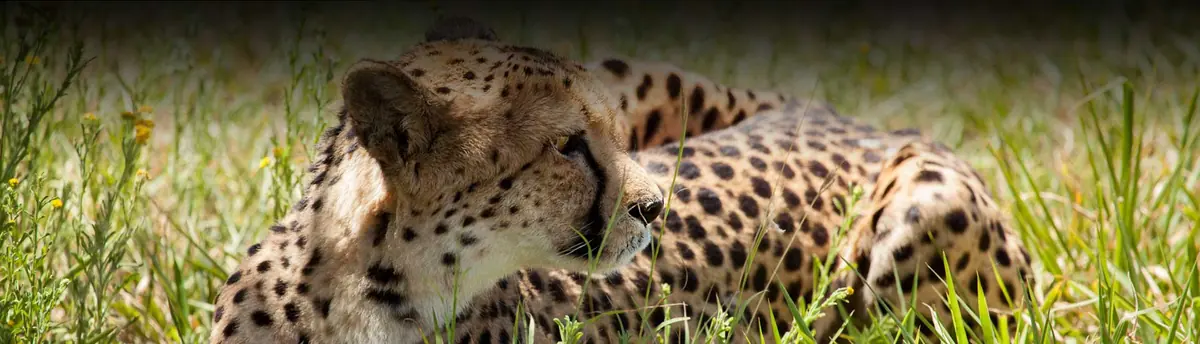
The Cheetah Conservation Fund is the main draw. Its centre is on the D2440 east of town, among the farms of the Waterberg Conservancy, and it is open every day with a cheetah museum, a café and a gift shop. The Cheetah Run, where the resident cheetahs sprint after a lure, happens only at 8 am and has to be booked ahead, so leave town early. Feeding is at 2 pm on weekdays and noon at weekends.
In town, the crocodile farm, just east of the centre, is one of the few Nile crocodile breeding programmes registered with CITES. It exports the skins and sells the meat in town. Guided tours run, and a family there in August 2026 were allowed to hold a young croc. In front of the railway station stands steam engine No. 41, built by Henschel in Kassel in 1912, which once ran on the line between Swakopmund and Otavi. The Museum of Namibian Fashion, here since June 2022, is meant to show historical clothing and accessories next to new designs they have inspired. Its website gives no opening hours, so phone the Museums Association of Namibia.
Good to know
Otjozondjupa is one of the regions where the CDC lists malaria and recommends preventive tablets, so speak to your doctor before you travel. There is a private hospital, Mediclinic Otjiwarongo, which treats tourists. The UK government warns that theft from cars at service stations is common in Namibia, so stay with the car while you fill up. For the gravel roads, which get worse in the January to April rains, it suggests two spare tyres and checking conditions before you set off, and it advises against driving outside towns at night, when livestock and wild animals are on the road.
History and culture
Otjiwarongo began as a stop on a German railway built to carry copper ore to the coast, on land the Damara and Herero lived on long before. It lies close to the Waterberg, where German forces defeated the Herero in 1904 before the genocide that followed, and it later became the base for a conservation effort, started by an American scientist in the year of independence, that gave the town its nickname: cheetah capital of the world.
- Before 1900
Long before colonial rule this was the home of the ǀGeiodaman clan, who called the place ǂKhanubes. source
- 1884
Germany declared the territory a protectorate, German South West Africa, by decree of Otto von Bismarck. source
- 1900
The first German settlers moved in, to a place lived in until then by Herero and a few Damara families. source
- 1904 to 1908
On 11 August 1904 German forces defeated the Herero at the Waterberg. Most survivors fled into the Omaheke desert, where a majority died of thirst and hunger, and in the genocide of 1904 to 1908 around 80 percent of the Herero and half of the Nama died. The German government acknowledged in 2015 that it had been genocide. source
- 1906
The narrow gauge railway built to take copper ore from the Otavi and Tsumeb area to the coast at Swakopmund was finished in 1906, and the first train arrived on 2 April 1906. A post office and police station opened the same year, and the first residents included Hans Beurger, Julius Doll, August Laszig and Paul Witt. The narrow gauge served the town until about 1960, when a new wider gauge line replaced it. source
- First World War
South African troops occupied German South West Africa in the First World War, and when South Africa took over the territory under a mandate the Otavi line became part of South African Railways. source
- South African rule
Like many Namibian towns, Otjiwarongo was segregated, with Ovambo, Damara and Herero residents each made to live in a separate location (a township set aside for one group). Together those three locations make up today's suburb of Orwetoveni. source
- 1966 to 1990
The liberation war between South African forces and PLAN, the armed wing of SWAPO, began in August 1966 and ended when Namibia became independent on 21 March 1990. source
- Languages
- In the 2023 census the main home languages of households in Otjiwarongo constituency were Khoekhoegowab, the Damara and Nama language (27.1%), Otjiherero (17.3%), Oshikwanyama (15.9%), Afrikaans (9.2%), Oshindonga (7.8%) and English (5.9%). Only 72 households, about half a percent, spoke German at home. source
- Fashion and heritage
- The Museums Association of Namibia set up the Museum of Namibian Fashion to show historical clothing and accessories alongside contemporary designs inspired by them, and held workshops with Namibian fashion designers, seamstresses and tailors while developing it. source
- The show ground
- Paresis Park, the big sports and show ground in the upper part of town, hosts the Otjiwarongo Trade Show, and in 2011 it held the main celebration of Namibia's 21st Independence Day. source
- Football
- The town's main football clubs are Mighty Gunners and Life Fighters, whose home ground is Mokati Stadium. source
For German visitors: The steam engine outside the station is often called the old Henschel locomotive, because it was built by Henschel in Kassel in 1912. It once ran on the line between Swakopmund and Otavi. source
For German visitors: The Museum of Namibian Fashion grew out of a project funded by the Gerda Henkel Foundation that brings Namibian objects from the colonial collections of the Ethnologisches Museum in Berlin into dialogue with those of the National Museum of Namibia. The Stiftung Preußischer Kulturbesitz is a partner. source
For German visitors: German schooling has a long history here. Today's Donatus School was the Deutsche Schule Otjiwarongo from 1966 to 1995, and a German private school, the Privatschule Otjiwarongo, has taught since 2000. source
For American visitors: The Cheetah Conservation Fund was founded in 1990 by Laurie Marker, born in Detroit, who spent 16 years at Wildlife Safari in Oregon, where her work with cheetahs began, and ran a Smithsonian centre in Washington DC before moving to Namibia. She won the Tyler Prize for Environmental Achievement in 2010. source
Main sights in Otjiwarongo
5- Steam engine No. 41
The narrow gauge locomotive in front of the station was built by Henschel in Kassel in 1912 and worked the line between Swakopmund and Otavi. It is the town's reminder that Otjiwarongo exists because of the railway.
Municipality of Otjiwarongo: Explore the town - Cheetah Conservation Fund
The fund's Field Research and Education Centre east of town has a cheetah museum and visitor centre, open daily, with guided walking tours that take in the orphan cheetahs, the livestock guarding dog programme and the model farm.
Cheetah Conservation Fund: Day visitors - Museum of Namibian Fashion
A museum set up by the Museums Association of Namibia on what Namibians have worn and how designers use that past today. Its website gives no opening hours, so phone the association before you go.
Museum of Namibian Fashion: Contact - Crocodile farm
Close to the town centre, on its eastern side. The farm breeds crocodiles, exports the skins and sells the meat in town, and you can get close enough for good photographs. There is a gift shop too.
Municipality of Otjiwarongo: Explore the town - Waterberg Plateau
The plateau east of town has been a national monument since 1956. The San lived there first, a Rhenish mission station was founded in 1873, and German forces defeated the Herero at its foot on 11 August 1904, after which they set up a military station there.
National Heritage Council of Namibia: Heritage objects
Did you know?
- The first railway accident on record here happened in 1906. According to the town's own history, investigators found that a passenger named Suessmann had handed the driver a case of beer for the long run from Usakos. source
- International Cheetah Day, 4 December, marks the birthday of Khayam, a cheetah born at Wildlife Safari in 1976. Laurie Marker raised her from a newborn cub and took her to South West Africa (now Namibia) in 1977 for a research project. source
- Laurie Marker set up the Cheetah Conservation Fund in Namibia in 1990, the year of independence. Research had shown that farmers killed more than 7,000 cheetahs in the 1980s, halving the country's population. source
- The Cheetah Conservation Fund runs a Livestock Guarding Dog Programme and trains farmers in predator friendly methods, so that they lose fewer animals to cheetahs and other predators. source
- Vekuii Rukoro, born in Otjiwarongo in 1954, helped draft Namibia's constitution, served as Attorney General and was Paramount Chief of the Ovaherero from 2014 until his death in 2021. source
- The 2023 census counted 49,022 people in the town, more than in any other town in Otjozondjupa. source
Checked 10 October 2026.
Wildlife you might see
5- very likelyCheetahCheetah Conservation Fund centre east of town. These are resident cheetahs that cannot be released, seen at feeding, on the Cheetah Run and on the Cheetah Drive through their enclosures. Daily. Feeding at 2 pm on weekdays and noon at weekends, the Cheetah Run at 8 amsource
- very likelyNile crocodileThe crocodile ranch in town, one of the few captive breeding programmes for Nile crocodiles registered with CITES. All yearsource
- possibleGiraffeOn game drives through the Cheetah Conservation Fund's reservesource
- possibleOryx (gemsbok)On game drives through the Cheetah Conservation Fund's reservesource
- possibleElandOn game drives through the Cheetah Conservation Fund's reservesource
Likelihood is for a normal visit of two or three days, from the sources linked. Nothing is guaranteed in the wild.
Staying safe in Otjiwarongo
- Malaria
- The CDC counts Otjozondjupa, the region Otjiwarongo is capital of, among the Namibian regions with malaria transmission and recommends preventive tablets there. Windhoek has none. Ask your doctor which tablets suit you, and use repellent and long sleeves in the evenings, above all in the warmer, wetter months. source
- Theft at filling stations
- The UK government says theft from vehicles, particularly at service stations, is common in Namibia. Don't leave the car unattended while you refuel on the B1, and keep bags out of sight. source
- Gravel roads and night driving
- Many gravel roads get worse in the January to April rains. The UK government advises carrying two spare tyres and checking conditions before you set off, and says not to drive outside towns after dark, when livestock and wild animals are on the road. source
- Summer heat
- Average highs reach about 34°C in December and stay above 30°C from October to January. Plan outdoor visits for the morning, wear a hat and carry water in the car. source
Tips from travellers
- Book the Cheetah Run ahead. It runs once a day, at 8 am, to match the cheetahs' natural hunting time, so leave town early to be at the centre in time. official
- Time a Cheetah Conservation Fund visit for feeding, at 2 pm on weekdays or noon at weekends, which is included in the tour. The Cheetah Café is open 08:00 to 17:00 and makes goats' milk cheese, ice cream and fudge from its own model farm. official
- Carry a Visa or Mastercard rather than American Express, which most camps cannot take. The Cheetah Conservation Fund also warns that some filling stations in Namibia do not take cards at all, so keep some Namibian dollars or rand for fuel. official
- Without a car, minibus taxis to Windhoek and north to Ondangwa leave from the Engen garage on the B1 at the corner of the C38, and Intercape and Sunshine Tours coaches stop in the centre. one source
- Allow more than a quick look at the crocodile farm. A family there in August 2026 had lunch at the farm, then took a guided tour on how the crocodiles are bred and kept, and those who wanted to could hold a young crocodile. one source
Checked 7 October 2026. Conditions change, so confirm with the park or venue before you go.
Two Otjiwarongo brothers on a jumbo jet to India
On the night of 16 September 2022 a Boeing 747 with a tiger’s face painted on its nose took off from Windhoek carrying eight cheetahs and no paying passengers. The main cabin had been altered so the crates could be strapped down where the vets could reach them. Two of the crates held brothers, five and a half years old, from the thornveld east of Otjiwarongo.
Elton, Freddie and the tiger jet
India declared its own cheetahs extinct in 1952. Seventy years later Namibia gave it eight, and the Cheetah Conservation Fund, which works from a 58,000 hectare reserve outside town, prepared them. The brothers came off that reserve. One of the five females had walked into a trap cage on the farm next door in mid 2022, been let go, and was caught there again a couple of months later. The rest came from Erindi, Gobabis and Kamanjab. All eight sat out a month of quarantine and were fitted with satellite collars before the crates were loaded at the centre.
The plane came through Hamish Harding, who ran an aircraft brokerage and was a friend of Laurie Marker’s. He managed the flight himself and went along. The paint job was a coincidence. Nine months later he died on the Titan submersible on its dive to the Titanic.
Marker wrote afterwards that the cheetahs chirped to one another in the night and then mostly slept. The plan had been to land at Jaipur. They came down instead at the air force base at Gwalior, where the crates went into two helicopters, four cats in each, for the half hour to Kuno National Park. The brothers, Elton and Freddie, were let into a hunting enclosure on 5 November. Three days later their first kill was found, a chital, which is a spotted deer that does not live in Africa. They took four in ten days.
Newspaper trees
The cheetah capital of the world is a fair claim, but be clear about what it means. Most of Namibia’s cheetahs live outside the parks, on private cattle and game farms, and the farms around this town have been studied since the early 1990s. For ten years from 1993 researchers radio tracked about fifteen groups here and came out with a minimum of 2.5 cheetahs per 1,000 square kilometres. A three month camera trap survey on the farms below the Waterberg, finished in 2006, took more than 6,800 pictures and put it at twelve. The average home range is about 1,600 square kilometres, much of it bush you cannot see into. Your chance of spotting a wild one from the B1 is close to nil. The cheetahs visitors see are the resident ones at the centre.
Researchers find the wild ones by other means. Cheetahs leave scent on particular trees, usually one with a thick trunk, a wide crown and a view, and keep coming back to the same ones. In Namibia they are called playtrees or newspaper trees. Hang a camera on one and the spots tell each visitor apart, as a fingerprint would. Eli Walker, who later rode in that 747, led the study on why they pick the trees they do. The other method is a dog. Finn, a border collie with a cleft nose from a rescue shelter in Maryland, started work here in 2009 sniffing out cheetah droppings for the researchers. In 2023 he turned sixteen, retired from fieldwork and living at the centre with Marker.
The best known cheetah here was an orphan. Chewbaaka arrived in 1995 at ten days old and lived sixteen years, about twice what a wild cheetah manages. At fourteen he stalked and caught a hare in his enclosure. His DNA went into the cheetah genome study published in 2015, and his portrait hangs at National Geographic’s headquarters in Washington.
Expert Africa, which sends people to the lodge on the reserve, says the verandas look across the bush towards the Waterberg and that the morning run is what most guests remember. The travellers’ reports it publishes are mixed on the rest. One family in 2023 called the run spectacular. A couple in 2025 thought the food and rooms average, and one guest in 2024 was put out to find that check-in is at the gift shop.
Termite colonies that breathe like a cow
The termite mounds on the farmland here have had their own scientists. In the mid 2000s a team of engineers and biologists from Britain, the United States and Namibia, with Loughborough University among them, ran a three year project at Omatjenne, the research station outside town. They mixed gypsum with borehole water to take casts and capture the shape of a whole mound, tunnels and all. They were after ideas for buildings that need less power. Their finding was that a mound, which can stand five metres high, is a wind driven machine for airing the nest deep underneath, and that a colony breathes at about the rate of one cow.
The same mounds feed people. After the February rains omajowa mushrooms push out at the base, some as wide as a frying pan and weighing a kilogram. Pickers are told to leave one or two behind so that they come up again the next year.
Crocodiles for Korea, and a banned rocket
The crocodile ranch in town dates from 1980 and was started to hatch young crocodiles for farmers in South Africa. Dieter and Annè Noelle took it over when it was struggling. New Era reported about 6,000 animals there in 2015. By 2022 it was nearer 2,000, because during Covid the owners destroyed eggs instead of raising hatchlings they could not afford to feed or be sure of selling. Skins that once flew from Windhoek straight to South Korea now go through Durban.
Nobody agrees on what the town’s name means. “Beautiful place”, “the nice place where the fat cattle graze” and “the beautiful place with water and green grass for cattle” are all in print. Oom Blok de Wet, whose collection a Travel News Namibia writer was shown around in 2008, kept the toys of his farm childhood: wagons made from warthog, cow and giraffe jawbones, pulled by horses that were cow hooves and knuckle bones. He also had the radio his father got in 1939 for twenty karakul pelts, and a rain rocket of the kind farmers once fired into clouds. His story was that the authorities banned them after one brought the rain down on a neighbour’s land.
Quick answers
What animals can you see in Otjiwarongo?
Most visitors see cheetah and nile crocodile.
Map of Otjiwarongo
See every place on this map as a list