City · South-East District, Botswana
Gaborone
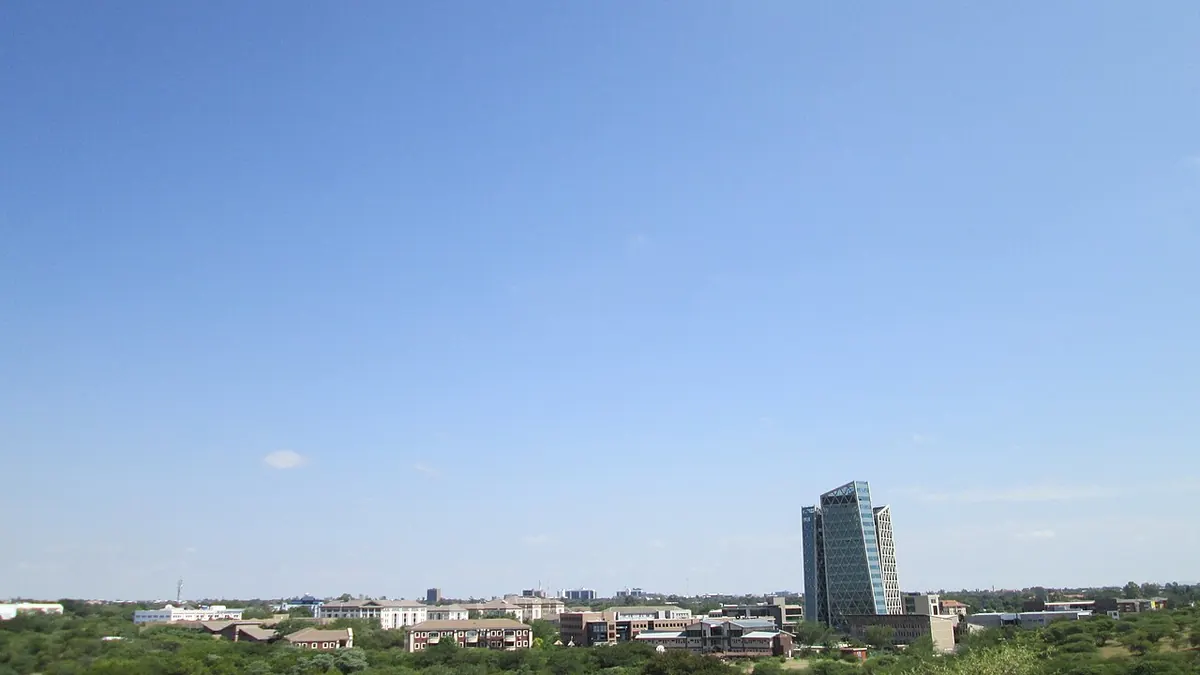
Botswana's capital, a planned city built from 1964 beside the Notwane River, 15 km from the South African border. Kgale Hill, the Three Dikgosi Monument and a game reserve inside the city fill a day or two.
Short answer
Gaborone is in South-East District, Botswana. This page lists 37 places to stay, 65 places to eat and drink and 11 sights.

- Malaria
- The US CDC says there is no malaria transmission in Gaborone, and the UK's NaTHNaC rates the southern half of Botswana as very low risk, advising bite avoidance and no tablets.
- Places to stay
- 37
- Eat and drink
- 65
- Sights
- 11
In and around Gaborone
114 places listedWhere to stay in Gaborone 37
- 24.65°S 25.90°EHotelHilton Garden Inn GaboronePlot 54366, Western Commercial Rd, Gaborone+267 370 4200hilton.com
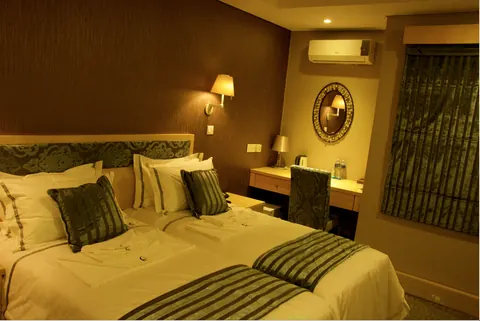
- 24.65°S 25.93°EHotelAvani Hotel & CasinoChuma Drive, Gaborone+267 361 6000avanihotels.com
- 24.65°S 25.90°EHotelHotel 430New Lobatse Road, Gaborone+267 316 3004hotel430.com
- 24.64°S 25.92°EHotelAfrican HomeNyerere Drive, Extension 11, Gaborone+267 77 657 388
- 24.66°S 25.92°EHotelB&b HôtelTati Road, Gaborone
- 24.66°S 25.92°EHotelPresident HotelBotswana Road, Gaborone+27 11 881 1200crestahotels.com
- 24.64°S 25.91°EHotelCrystal Palace Hotel
Show all 37 places to stay
- IDM Hostels · Hostel · Giraffe Crescent, Gaborone
- Lansmore Masa Square · Hotel · Western Commercial Road, Gaborone
- Aunt Ziza's place · Hostel · Machipinda Road
- Hana Guest House Lodge · Motel · Oodi Crescent, Gaborone
- hostel plot 2766 · Hotel · Tshepe Street, Gaborone
- Setlhare Guest House · Guest house
- Setlhare Guest House · Guest house
- 402 Boys Hostel · Hostel
- Balareddy Uncle house · Guest house
- Ben And Breakfast · Guest house
- Boutique Guest House · Guest house
- Broadhurst Inn · Guest house
- Chini Chinana house · Guest house
- Falcon Crest Suite · Hotel
- IHS Surfo's Hostel · Hostel
- Innisfree Apartments · Guest house
- Kgale Manor · Guest house
- Leo's Inn Guest house · Guest house
- Masters Dormitory · Hostel
- Matron Residence · Guest house
- Nyumba ya Mashariki · Guest house
- Saru atha house · Guest house
- Shiva mama house · Guest house
- Srellu atha house · Guest house
- Town Lodge · Hotel
- Travelodge · Hotel
- Tsa Lodge · Hotel
- UB, Hostel 417 block B · Hostel
Sights 11
 Three Dikgosi MonumentMonument
- Botswana National MuseumMuseum · Tsheko Road, Gaborone
- Dave'sAttraction · block 8
- Philatelic MuseumMuseum
- DecoonAttraction
- Exec closet hotelAttraction
- FikileAttraction
- Godfrey Videographer.Attraction
- Ian's presentationAttraction
- Stone MonumentMonument
- Subaru BotswanaAttraction
Restaurants and cafes 48
- BasilicoRestaurant · italian pizza, italian · Kgalagadi Way+267 311 1202basilico.club
- Rhapsody'sRestaurant · pasta, sushi, seafood, dessert, steak house+267 399 4082rhapsodys.co.bw
- SpursRestaurant · steak house+267 390 9912spursteakranches.com
- Cappuccinos Café & PizzeriaRestaurant · african, asian, barbecue, beef bowl, breakfast, burger, cake, chicken, coffee shop, curry, fine dining, fish and chips, fish, french+267 390 9945cappuccinos.co.za
- Bar and ResturantRestaurant · regional · Giraffe Crescent, Gaborone
- Two Six SevenRestaurant · burger, pizza, fish, chicken, pasta, dessert, steak house, tapas+267 391 0085
- Adega RestaurantsRestaurant · portuguese, seafood, steak house
- Pizza DenRestaurant · indian, italian pizza, deli, oriental
- The Daily GrindCafe · Independence Avenue
- The K’reo CafeRestaurant
- 121 - Executive CateringRestaurant · regional
- 130 - Moghul CateringRestaurant · regional
Show all 48 restaurants and cafes
- Delis · Cafe · italian
- Doppio Zero · Cafe
- Europa · Cafe
- Liban · Restaurant · 4th Commercial
- News Cafe · Cafe · Mobuto Drive, Gaborone
- Pat Thai · Restaurant · Unit 27, Mowana Park Mall, Phakalane
- Redd Cafe & Butchery · Cafe
- Rhapsody's · Cafe
- Times Square Pizza · Restaurant · pizza, burger
- Barcelos · Restaurant
- Beijing Red Lantern Restaurant · Restaurant
- Cafe Dijo · Cafe
- Cafe Portugalia · Cafe
- Cappello · Restaurant
- Chillies · Restaurant
- China Restaurant · Restaurant
- Courtyard · Restaurant
- Don Carlos · Restaurant
- Fego · Cafe
- Jimmy's Killer Express · Restaurant
- Lopkei · Restaurant
- Malaki's Restaurant · Restaurant
- Mochachos · Restaurant
- Nandos · Restaurant
- Red Lantern · Restaurant
- Sanitas Tea Garden · Cafe
- Table50two · Restaurant
- Tempo · Restaurant
- The Braai Place · Restaurant
- Mugg & Bean · Cafe · coffee shop · Francistown Road, Gaboronebotswanalocations.muggandbean.africa
- Nando's · Restaurant · chicken, portuguese · Airport Road, Gaborone+267 360 0300store.nandos.co.bw
- Ocean Basket · Restaurant · seafood · Airport Road, Gaborone+267 390 9933botswana.oceanbasket.com
- Steers · Restaurantbotswanalocations.steers.africa
- Nando's · Restaurant · chicken, portuguese
- Nando's · Restaurant · chicken, portuguese
- Nando's · Restaurant · chicken, portuguese
Bars and pubs 17
- Main DeckBarmaindeckbotswana.com
- Bull & BushPub
- BoulevardBar
- GeorgesPub
- Ginger BarBar
- Harry's BarBar
- Horse Shoe Bar 2Bar
- La Casa Del HavanoBar
- Linga LongaBar
- Ohagan'sPub
- Pure DropBar
- Rasmataz RestaurantBar
Show all 17 bars and pubs
- Razzmatazz · Bar
- Rulas Bar · Bar
- Staff Lounge · Pub
- Taverne Bar · Bar
- United Cafe · Bar
Wineries, breweries and distilleries 1
- Kgalagadi Breweries LimitedBrewery
Gaborone is Botswana’s capital and biggest city, home to 246,325 people at the 2022 census. Building started in 1964 beside the Notwane River, two years before independence, and the plan was for 20,000 residents. A day here gets you a hill to climb, a game reserve inside the city and the story of how Botswana came to exist. Locals say Gabs.
Getting there
Sir Seretse Khama International Airport is about 10 km north of the city. Flights come in from Johannesburg, Cape Town and Addis Ababa, and Air Botswana flies on to Maun, Kasane and Francistown.
By road from Johannesburg or Pretoria you cross at Tlokweng, just east of the city. The border post is open from 06:00 to midnight. Intercape runs a daily coach from Pretoria by way of Johannesburg that takes about eight hours. Forget the train. Botswana Railways stopped carrying passengers in 2020 and had not started again by 2026.
When to go
The rain falls between October and April. Summer afternoons sit around 32°C, and October, just before the rains break, is often the hottest month. Winter is dry and sunny with days in the low twenties, but June and July nights drop to 4 or 5°C. The Maitisong Festival fills a week in late March or early April with theatre and music.
What to do
Start at the Three Dikgosi Monument in the new business district. The three bronze chiefs, each 5.4 metres tall, are Khama III, Sebele I and Bathoen I, who travelled to Britain in 1895 and talked the government out of handing their country to Cecil Rhodes’s company. Then go to the Main Mall for Sir Seretse Khama’s statue outside Parliament.
The National Museum and Art Gallery is close by. Its permanent exhibition has been under reconstruction since 2020 and we could not confirm that it has reopened, so ask first. Thapong Visual Arts Centre shows younger artists in a magistrate’s house from 1902.
Kgale Hill (1,287 metres) is the city’s climb. Three paths go up and the top takes an hour or two, depending on who you ask. Gaborone Game Reserve, on the eastern edge of town, is small enough to drive round in a hire car in under an hour and has zebra, kudu, impala, warthog and ostrich. For rhino, go 12 km south to Mokolodi Nature Reserve.
Good to know
There is no malaria in Gaborone, according to the US CDC. The north is different, so sort out tablets here if you are going on to the Okavango or Chobe.
Combis (white minibuses on fixed routes) and taxis with blue number plates get you around, and drivers work by plot number or landmark, not street name. Britain’s travel advice says violent crime is rising in Gaborone and that thieves target cars waiting at traffic lights, so lock the doors, keep phones off the seat and take a cab after dark. On Kgale Hill, climb when other people are about.
Don’t swim in Gaborone Dam. It has crocodiles and bilharzia. It is illegal to take photographs near government and military buildings.
History and culture
Gaborone is a capital built from scratch for independence. Until 1965 Bechuanaland was governed from Mafeking, a town outside its own borders, so a new city was laid out beside a small colonial camp and a Batlokwa village on the Notwane River. Its best-known monument tells how three Tswana chiefs kept their country out of Cecil Rhodes's hands. In 1985 apartheid South Africa sent soldiers across the border 15 km away.
- 1847 to 1852
David Livingstone of the London Missionary Society built his third and last mission at Kolobeng, 25 km west of where Gaborone now stands, among the Bakwena of Kgosi Sechele I (kgosi is the Setswana word for a chief or king). Drought and a Boer attack on the Bakwena at Dimawe in 1852 ended it. source
- 1881
Kgosi Gaborone led the Batlokwa from their old home in the Magaliesberg, in what is now South Africa, and settled at Tlokweng. The tourism board gives the year as 1881. The city carries his name. source
- 1885
Britain declared the Bechuanaland Protectorate on 31 March 1885. Cecil Rhodes built a fort for the colonial administration across the river from the chief's settlement, which the first European settlers called Gaborone's Village and later shortened to Gaberones. source
- 1895
Three dikgosi (chiefs), Khama III of the Bangwato, Sebele I of the Bakwena and Bathoen I of the Bangwaketse, travelled to Britain and persuaded the government not to hand the protectorate to Rhodes's British South Africa Company. The Three Dikgosi Monument honours them. source
- 1964 to 1966
With independence coming, a capital had to be built, because the protectorate had been run from Mafeking in South Africa. Lobatse was judged too limited. Gaberones had fresh water and the railway, and it was not tied to any one of the surrounding tribes. Building began in mid-1964, the capital moved from Mafeking in 1965, and Botswana became independent on 30 September 1966. source
- 1969
The colonial spelling Gaberones was dropped for Gaborone. The old settlement survives as the suburb called the Village, and the nickname GC comes from Government Camp, the name of the colonial headquarters. source
- 14 June 1985
At about 01:40 South African Defence Force soldiers crossed near Tlokweng and attacked houses in Gaborone where South African exiles lived. Twelve people died, among them two Batswana women and a six-year-old boy. The African National Congress said only five of the dead were its members. source
- 1986
Gaborone was given the title of city. A place planned for 20,000 people had 133,468 by the 1991 census, and the settlement of Old Naledi, put up by the labourers who built the town, had long since become a permanent part of it. source
- Language
- Setswana is the national language and English the language of government and business. In the 2022 census 77.5% of people in Botswana spoke Setswana most often at home and 3.7% English. Statistics Botswana found English spoken at home more in Gaborone than in any other district, and picks out the city for its Ndebele speakers too. source
- Chiefs in government
- Chiefs still have a place in government. The Ntlo ya Dikgosi (House of Chiefs) advises Parliament, and bills that touch customary law, customary courts or tribal property go to it first. Eight of its members are the hereditary chiefs of the country's principal tribes, the Batlokwa of neighbouring Tlokweng among them. A chief may not belong to a political party. source
- Food
- The dish to try is seswaa (called loswao in the south): beef or goat boiled until tender with just enough salt, then pounded, and served with maize meal, samp or sorghum. It is the food of weddings, funerals and independence celebrations. source
- Maitisong Festival
- Maitisong, Setswana for place of entertainment, is the theatre at Maru-a-Pula School, founded in 1987 as both the school hall and a stage for the city. Its festival was started to show off local music, dance and drama. source
- Mma Ramotswe's city
- Alexander McCall Smith's novels about Mma Precious Ramotswe, a Motswana private detective, began in 1998 with The No. 1 Ladies' Detective Agency. Mma is the Setswana term of respect for a woman. The word for a man is Rra. source
For American visitors: After the South African raid on Gaborone on 14 June 1985 the United States withdrew its ambassador from South Africa for consultations. source
For American visitors: Maitisong, the theatre at Maru-a-Pula School that has anchored the city's performing arts since 1987, was paid for in part by fundraising in the United States. source
For American visitors: The television version of The No. 1 Ladies' Detective Agency was made by the BBC with HBO and filmed on location in Botswana, one of the first big television productions shot in the country. HBO began showing it on 29 March 2009. source
For American visitors: Gaborone is twinned with Burbank, California. source
For German visitors: Fear of Germany helped create the protectorate that became Botswana. Britain set up the Bechuanaland Protectorate in 1885 because it was worried about growing German influence in the region, and several Tswana chiefs preferred British protection to being absorbed by settler colonies run from Germany or by Rhodes's company. source
Main sights in Gaborone
8- Three Dikgosi Monument
Three bronze statues, each 5.4 metres tall, of Khama III, Sebele I and Bathoen I, in the Central Business District. It was cast by North Korea's Mansudae Overseas Projects, which annoyed local sculptors, and opened on 29 September 2005. Six plinths at the chiefs' feet summarise Botswana's history from the 1820s to independence.
Wikipedia, Three Dikgosi Monument - Botswana National Museum
The National Museum and Art Gallery opened in 1968, two years after independence, with fewer than five staff. At its 50th anniversary the government promised to refurbish the old building. Work on a new permanent exhibition began in August 2020 and we could not confirm that it has reopened, so check before visiting.
Botswana Daily News, Millions set aside for museum projects (National Museum 50th anniversary) - Sir Seretse Khama statue and Parliament
A bronze of Botswana's founding president stands in the Government Enclave at the end of the Main Mall, facing the National Assembly. The British sculptor Norman Pearce made it, and it was unveiled in 1986 for the 20th anniversary of independence.
YourBotswana, 10 places to visit in Gaborone - Main Mall
The strip of shops and offices the 1960s city was planned around. The Government Enclave, with the National Assembly and the Ntlo ya Dikgosi, lies at its western end, and the Civic Centre and the Pula Arch, which commemorates independence, at the eastern end. Near Parliament is a memorial to the three hundred Batswana killed between 1939 and 1945.
Wikipedia, Gaborone - Thapong Visual Arts Centre
The old magistrate's house of 1902 is now where Botswana's young artists show their work, and not all of it plays safe. Exhibitions change regularly and there are children's art courses from time to time. The coffee house on the site is named after The No. 1 Ladies' Detective Agency.
Botswana Tourism Organisation, Gaborone (archived copy of 3 October 2026) - National Botanical Garden
Seven hectares beside the Notwane River, 3 km south-east of the centre, opened on 2 November 2007 and run by the National Museum. It grows indigenous plants from across Botswana. Open on weekdays only.
Wikipedia, National Botanical Garden (Botswana) - Tsholofelo Park
The grave of the man known as El Negro. French taxidermists preserved the body of a southern African man in the 1830s, and it stood on show in a museum in Banyoles, Spain, for more than 80 years until 1997. The remains reached Botswana on 4 October 2000 and were buried here the next day. The grave is a national monument.
Wikipedia, Negro of Banyoles - Kolobeng Mission (Livingstone Memorial)
The site of David Livingstone's third and last mission, built in 1847, 25 km west of the city near Kumakwane. He converted Kgosi Sechele I of the Bakwena here, and his infant daughter Elizabeth is buried on the site. The Department of National Museum and Monuments looks after it.
Wikipedia, Kolobeng Mission
Did you know?
- Gaborone means 'it does not fit badly' or 'it is not unbecoming' in Setswana. It was the name of the Batlokwa chief, not a description of the place. source
- The 2022 census counted 246,325 people in the city, a little over a tenth of Botswana's 2,359,609. source
- The man who chaired the township authority during construction said the plan looked like a brandy glass: government offices in the base, and the shops of the Main Mall running up the stem. source
- Debswana's diamonds are sorted and valued at Orapa House, where Khama Crescent meets Nelson Mandela Drive. The building was designed to let in as much indirect sunlight as possible, because that is the light sorters need. source
- The film set for The No. 1 Ladies' Detective Agency was built at the foot of Kgale Hill, and the spot was nicknamed Kgalewood. source
- The Southern African Development Community, the regional bloc of southern African states, has its headquarters here. It was formed in 1980 so that its members could work together economically and depend less on South Africa. source
Checked 12 October 2026.
Wildlife you might see
13- likelyImpalaGaborone Game Reserve, on the eastern edge of the city. All year, most active early and late in the daysource
- likelyWarthogGaborone Game Reserve, on the eastern edge of the citysource
- likelyGreater kuduGaborone Game Reserve, on the eastern edge of the citysource
- likelyBurchell's zebraGaborone Game Reserve. The zebra is Botswana's national animalsource
- likelyVervet monkeyGaborone Game Reserve, where it is the only primatesource
- likelyBaboonKgale Hill, where walkers usually see troops on the way upsource
- likelyRock hyrax (rock dassie)On the big boulders in Gaborone Game Reservesource
- likelyWaterbirds (herons, egrets, ibises, African jacana, whistling ducks)The permanent waterhole in Gaborone Game Reserve, and the seasonal ponds that fill in the rains. All year at the waterhole, with more water about in the rainy seasonsource
- possibleOstrichGaborone Game Reserve, on the eastern edge of the citysource
- possibleGemsbok, red hartebeest and blue wildebeestGaborone Game Reserve, on the eastern edge of the citysource
- possibleAfrican fish eagleBy the water in Gaborone Game Reserve, heard more often than seensource
- rareElandGaborone Game Reserve, where they are rarely seensource
- rareGreater flamingoAbout 37 turned up at the main waterhole in Gaborone Game Reserve in March 2024, the first record theresource
Likelihood is for a normal visit of two or three days, from the sources linked. Nothing is guaranteed in the wild.
Hikes and walks
1- Kgale Hill
The summit is 1,287 metres above sea level, and Kgale is nicknamed the Sleeping Giant. Three trails lead to the top and walkers usually meet baboons on the way. Read the safety note on Kgale Hill before you set out.
Wikipedia, Kgale Hill
Staying safe in Gaborone
- Malaria
- The US CDC says there is no malaria transmission in Gaborone, and the UK's NaTHNaC rates the southern half of Botswana as very low risk, advising bite avoidance and no tablets. The north (Okavango, Chobe) is high risk from October to May, so take advice before you drive or fly on. source
- Street and car crime
- The UK government says attacks on tourists are rare but violent crime is rising in Gaborone, Francistown and Maun. Thieves target cars waiting at traffic lights, so keep doors locked, windows up and bags, phones and laptops out of sight. Women are advised not to walk alone at night. source
- Kgale Hill
- Wikivoyage warns of knife robberies on the hill when it is quiet. Its advice is to go only when other cars are in the car park by the quarry, and to keep to the path. There are no guides. Baboons live on the hill, so give them room. source
- Gaborone Dam
- No swimming. The dam has crocodiles and bilharzia, a parasite caught from fresh water. The UK government gives the same advice for every river and lake in Botswana. source
- Roads
- The UK government calls Botswana's tar roads good but warns that stray livestock and wildlife make driving outside the towns dangerous, most of all at night. Speeding and drink-driving cause frequent and often fatal accidents. Plan to arrive before dark. source
- Heat
- Gaborone averages 74 days a year above 32°C, and October, just before the rains, is often the hottest month. Start Kgale Hill early or late and carry more water than you think you need. source
Tips from travellers
- Licensed taxis carry blue number plates. A shared taxi runs a fixed route like a combi. If you want to go door to door, ask for a 'special', and do not be shy about discussing the fare. several sources
- Street names are little used. Give a driver the plot number or a landmark such as a mall, and learn which block, phase or extension your hotel is in. one source
- Do not plan on the train. Passenger services on the Lobatse, Gaborone, Francistown line were suspended in 2020 and were still suspended in 2026. one source
- Long-distance buses leave when they are full and standing is common at weekends, so get to the bus station early and take water. one source
- The National Museum's permanent exhibition has been under reconstruction since August 2020, with completion first promised for mid-2021. We could not confirm that it has reopened, so phone before you go. official
- Gaborone Game Reserve is a self-drive park with no guided drives. The loop is gravel but fine for an ordinary car and takes under an hour. Early morning and the hour before dusk are when the animals show. Facilities are basic, so take water. one source
Checked 12 October 2026. Conditions change, so confirm with the park or venue before you go.
The capital that eleven councillors voted against
“Are we going to make another move 50 years from now?” The man asking was a councillor called Shaw, the room was the Legislative Council of the Bechuanaland Protectorate in 1961, and the subject was the site beside the Notwane River that a government committee had picked for a new capital. Shaw thought Gaberones was too far south. He wanted the choice argued out properly so the council did not make “a very grave and expensive error”.
“How can they be so sure of their water?”
That one came from another doubter, L.J. Mynhardt, who wanted the capital at Francistown. The committee had looked at nine places and thrown out most for lack of water, Lobatse and Mahalapye among them. Its hydrologist, Professor D.C. Midgley, had found a dam site on the Notwane five miles from the proposed town. George Sim, a councillor who had lived around Gaberones since 1913, backed him with a story about Crocodile Pools nearby. In the drought of 1933, he said, one farmer had watered 600 cattle from the pools and the level hardly dropped.
The historian Part Themba Mgadla, who wrote up the debate in 2016, points out the joke in all this. Gaberones had been turned down as a headquarters in 1895 for having too little water. Seretse Khama spoke for the site anyway, and the vote went 22 to 11.
The new reservoir filled and spilled in the rains of 1965 to 1966, and the wall was raised by seven metres in the 1980s. Then came April 2014, when the dam stood at 14.7 per cent and Mmegi reported that it would be empty by September. By then the city was also drawing on the North-South Carrier, the pipeline that brings water down from the north of the country, where the doubters of 1961 had said the water was. The rescue was a cyclone. Dineo’s rain in February 2017 took the dam from under half to full in about a week, the first time in 16 years, and the president declared 5 March a national day of thanksgiving.
The summer the Boers held the camp
The Village, the old colonial quarter, had an earthen police fort in 1899 and not enough men to hold it. On 24 October, two weeks into the South African War, the garrison climbed onto an armoured train and steamed north. The Boers moved in behind them. The first British casualty at the camp was Trooper Chere, a Mosotho mounted policeman, ambushed on patrol under Kgale Hill.
The Rhodesians were back by 12 December to mend the line, then fell back on Mochudi. Colonel Herbert Plumer arrived on 14 January 1900, bound for besieged Mafeking, and for six weeks got no further than Crocodile Pools. The fight was over one railway bridge close to the Transvaal border: his men kept mending it and Boer shells kept knocking it down. A night attack on Sepitsi Hill on 11 February cost him five dead, 21 wounded and five captured. Two weeks later the Boers gave up the hill and pulled back to Lobatse.
The colonial graveyard in the Village, where the oldest graves go back to 1890, is the place to start looking.
A portfolio that never came back
From 1979 a group of South African exiles ran an arts collective in Gaborone called Medu, a Sepedi word for roots. The poets Mongane Wally Serote and Keorapetse Kgositsile belonged to it, so did the trombonist Jonas Gwangwa, and its posters carried lines like “You have touched a rock”. In July 1982 Medu and the National Museum put on five days of talks, exhibitions and music called Culture and Resistance. Abdullah Ibrahim came from New York for it. Hugh Masekela was part of it too, and two years later he recorded the album Techno-Bush in a mobile studio in Gaborone.
The keynote speaker was a graphic artist from Alexandra, Thami Mnyele. He was shot dead outside his house in the South African raid of 14 June 1985, the night before he was due to move to Lusaka, and the soldiers took the portfolio he had packed. A week later a security police major, Craig Williamson, held the drawings up on South African television as proof of terrorism. They have never been returned. Medu ended that night. Its posters survived because a member, Marius Schoon, kept his own copies, and the Art Institute of Chicago showed them in 2019. Masekela left something too: the music school he started in 1985 still runs as the yearly Botswana Music Camp.
Fifty thousand swallows over the dam
Andrew Hester, who wrote up the local sites in 1998, reckoned a full midsummer day around the city could reach 230 species. Verreaux’s eagles had bred on Kgale Hill, he wrote, lanner falcons circled it, and the slopes had mocking cliff chat and short-toed rock thrush. At Notwane Siding, 11 km down the Lobatse road, he had giant eagle owls hunting on winter evenings and woodland kingfishers and carmine bee-eaters arriving with the summer. In the game reserve, which the Kalahari Conservation Society set up in 1988, he called the red-crested korhaan a certain tick and said the place was at its best after heavy rain.
BirdLife’s factsheet on the Phakalane sewage lagoons, north of the city, counted more than 3,000 waterbirds of 36 species in January 1995, and 440 Maccoa ducks in July 1993. Both flamingos drop in. The same factsheet records a roost of more than 50,000 barn swallows at Gaborone Dam.
A city that kept its head down
The planned town of the 1960s now sprawls about 15 km from east to west. When Mmegi’s Thalefang Charles walked the centre for the city’s sixtieth year in 2020 his piece ran under the headline “a city built in modesty”: the Office of the President is a plain three-storey block, and the balcony of Parliament is modelled on a village kgotla.
It had one loud weekend. On 2 and 3 May 2026 the National Stadium hosted the World Athletics Relays, the first time the event had come to Africa, and Botswana’s men won the 4 x 400 metres in 2:54.47, a championship record, with Letsile Tebogo in the squad.
Quick answers
What animals can you see in Gaborone?
You have a good chance of seeing impala, warthog, greater kudu, burchell's zebra, vervet monkey and baboon. Eland and greater flamingo are there but rarely seen.
Guides for Gaborone
Map of Gaborone
See every place on this map as a list