Park · North-West District, Botswana
Linyanti, Selinda and Kwando
Three private reserves on the Kwando and Linyanti rivers in Botswana's far north. Fly-in camps, huge dry-season elephant herds and an even chance of wild dog.
Short answer
Linyanti, Selinda and Kwando is in North-West District, Botswana. This page lists 9 places to stay and 1 sight. The nearest park with an entry fee on this site is Moremi Game Reserve, about 95 km away, where international adults pay from P270.
- Malaria
- All three reserves are in a malaria area.
- Places to stay
- 9
- Park fee nearby: Moremi Game Reserve
- US$20 €18 · P270about 95 km away
- Where
- North-West District, Botswana18.44°S 23.30°E
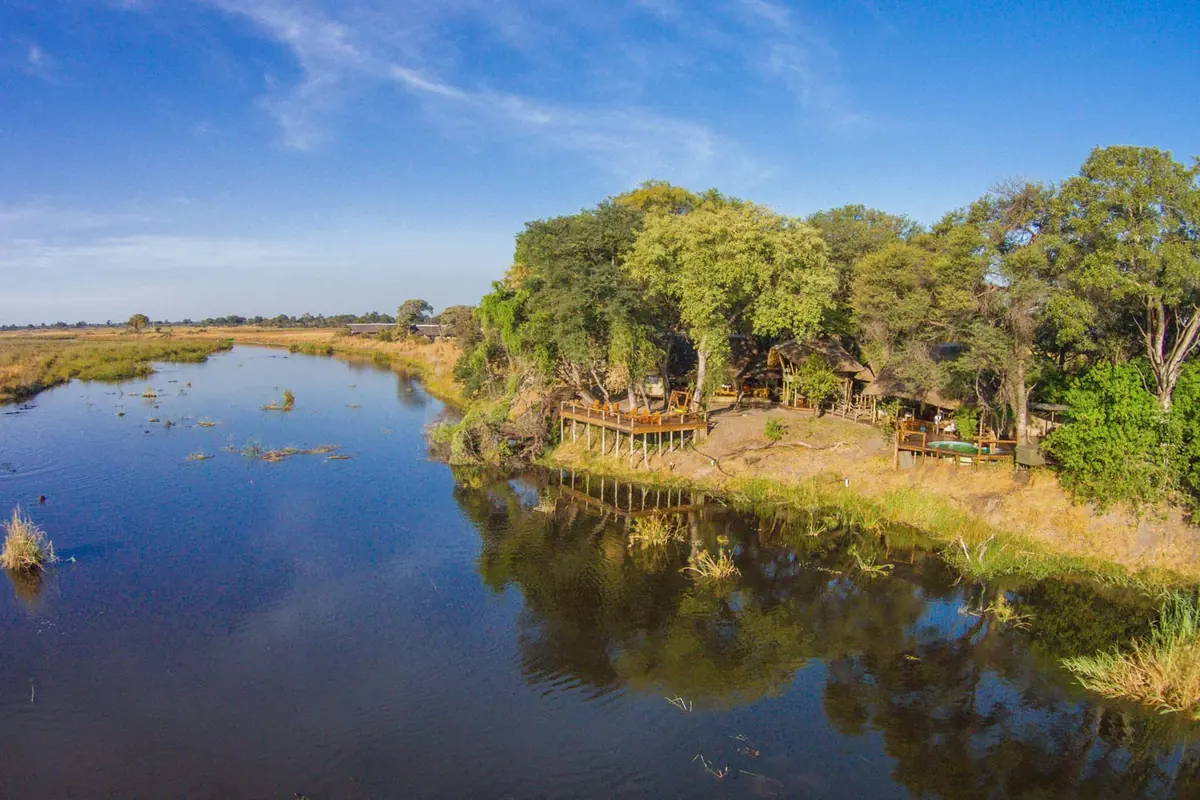
The Kwando River comes down from Angola, runs along the Namibian border and then breaks up into the Linyanti Swamp. Below it the same river is called the Linyanti, then the Chobe. Three private reserves line the Botswana bank. Kwando is furthest upstream, Selinda sits where a spillway arrives from the Okavango, and Linyanti lies downstream towards Chobe National Park. Each has only a few small camps. People come for the dry-season elephant herds and a fair chance of wild dog.
Getting there
Almost everyone flies. The camps here quote 45 to 50 minutes by light aircraft from Maun or Kasane, and Mack Air says it may land at up to three other strips before yours. Pack a soft bag: 20 kg a person, hand luggage counted. From the strip it is a 15 to 40 minute drive to camp.
Expert Africa calls the overland route possible but hard going and several days long. If you want this river in your own 4x4, aim for the Linyanti campsite inside Chobe National Park next door: five sites run by SKL, no fence and no fuel.
When to go
June to October. Wilderness, which runs camps in the Linyanti reserve, counts more than 2,000 elephants gathering on the Linyanti River between July and October. Wild dogs den mostly in June and July. Midwinter nights are cold. October is the hottest month, averaging in the mid 30s and pushing towards 40°C.
Most rain falls from December to March, when the game scatters and the birding improves.
What to do
The point of a private reserve is freedom. Guides here leave the tracks, drive after dark and, at some camps, take guests on foot.
Kwando is 232,000 hectares with only two camps, Lagoon and Lebala, three hours’ drive apart, and its vehicles carry a tracker as well as a guide. Lagoon has a boat on the river, Lebala does not. In the 125,000 hectare Linyanti reserve, DumaTau sits on Zibadianja Lagoon, where the Savuti Channel starts, and takes boats out on the Linyanti’s channels. In January 2010 the Savuti Channel reached the Savuti Marsh for the first time since 1982. Selinda is for walking along the spillway, and for canoeing if the winter flood gets that far.
In Expert Africa’s survey of its own travellers here, every one reported elephant and giraffe, 94% lion, 69% leopard, half wild dog and 44% cheetah. Sable and roan come in at about four in ten.
Good to know
This is a malaria area. UK guidance rates the northern half of Botswana high risk from October to May and low for the rest of the year. The US CDC recommends tablets for Chobe and Ngamiland without naming a season.
Lebala has no fence and lion and leopard walk through, so staff escort you to your tent after dark. Lebala has wifi in the rooms but no phone signal, and a medical evacuation goes by air in daylight only. Do not swim in the river: the UK Foreign Office warns against it throughout Botswana.
Wildlife you might see
15- very likelyElephantAlong the Kwando and Linyanti rivers and at the lagoons. Wilderness counts more than 2,000 gathering on the Linyanti River in the dry season. All year, in the biggest herds from July to Octobersource
- very likelyGiraffeEvery traveller in Expert Africa's survey of its own travellers in these reserves reported giraffe. All yearsource
- very likelyHippoLagoons and river channels. Seen by 99% of surveyed travellers. All yearsource
- very likelyZebra and blue wildebeestFloodplains and open grassland. Zebra was seen by 96% of surveyed travellers and wildebeest by 93%source
- very likelyLionAcross all three reserves. 94% of surveyed travellers saw lion, on guided drives over stays of several nightssource
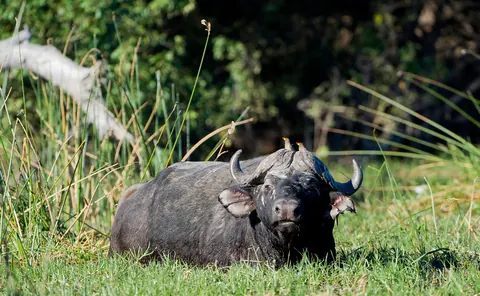
- likelyBuffaloNear the rivers, in large herds once the inland water dries up. Seen by 79% of surveyed travellers. Best from May to Octobersource
- likelyLeopard69% of surveyed travellers saw one, helped by night drives and guides who can leave the trackssource
- likelySpotted hyena63% of surveyed travellers saw onesource
- likelyBirds: over 450 species recorded, with wattled crane, Pel's fishing owl and carmine bee-eater among themRivers, lagoons and riverine forest. All year, with the migrants (woodland kingfisher, Abdim's stork) present in the rainssource
- possibleAfrican wild dogPacks range widely across the reserves, so the odds are best when one is tied to a den. Each Kwando vehicle carries a tracker as well as a guide, which helps in following them. Denning peaks in June and July, and sightings stay good for two to three months around itsource
- possibleCheetahOpen floodplains. Seen by 44% of surveyed travellerssource
- possibleSable and roan antelopeMopane woodland back from the rivers. Sable was seen by 41% of surveyed travellers and roan by 40%source
- possibleNile crocodileThe Linyanti Marsh, its river and lagoonssource
- rareRed lechwe and sitatungaThe Linyanti Marsh and the floodplains around it. Both are scarcer here than the other antelopesource
- rareBrown hyena, aardvark and pangolinBrown hyena was reported by 16% of surveyed travellers, aardvark and pangolin by 2% eachsource
Likelihood is for a normal visit of two or three days, from the sources linked. Nothing is guaranteed in the wild.
Staying safe in Linyanti, Selinda and Kwando
- Malaria
- All three reserves are in a malaria area. The UK Health Security Agency's 2026 guidelines rate the northern half of Botswana as high risk from October to May and advise antimalarial tablets for those months. For the rest of the year they rate the risk low and advise bite avoidance only. source
- Malaria tablets, the US advice
- The US CDC lists Chobe, Ngamiland and Okavango among the districts with malaria transmission and recommends prescription tablets there (atovaquone-proguanil, doxycycline, mefloquine or tafenoquine) without naming a season. The two bodies differ for the winter months, so ask a travel clinic which advice applies to you. source
- Unfenced camps
- Do not count on a fence. Lebala has none: lion and leopard can walk through at any time, guests are escorted to their rooms after dark and each room has a horn for emergencies. Do not walk about alone at night anywhere here, and keep children with you. source
- The river and lagoons
- The UK Foreign Office says not to bathe in rivers and lakes in Botswana because of wild animals and water-borne disease. The Kwando and Linyanti hold hippos and crocodiles, so keep to the camp pool. source
- Medical help and phone signal
- Help is a flight away. The bush airstrips have no lights, so a patient can be flown out in daylight only. Lebala has no mobile reception and relies on radio contact with Maun. source
- Camping at Linyanti in Chobe National Park
- The public campsite on this river is Linyanti, inside Chobe National Park next to the private reserves. SKL, which runs it, says the sites have no fence, walking in the park is not allowed, children must be with a parent at all times and no fuel is sold inside the park. Arrive with full tanks and stay within the campsite. source
Tips from travellers
- Pack for the light aircraft. Mack Air allows 20 kg a person including hand luggage, in a bag no bigger than 30 by 35 by 70 cm, and prefers soft bags. official
- Your flight may land at up to three other airstrips before yours, and Mack Air warns that the flights are generally bumpy. Take motion sickness tablets if you are prone to it. official
- For wild dog, go in or just after the denning season. Denning peaks in June and July and the pack stays close to the den, which makes it far easier for guides to find. one source
- Water activities depend on the flood. At Selinda Explorers the canoes only go out if the winter flood reaches the spillway. Ask the camp what ran last year in your month. official
- Not every camp does everything. Lagoon has a boat and Lebala does not, and the two are a three hour drive apart inside the same reserve. Kwando moves guests between them by vehicle, so a split stay adds the river to Lebala's drives and walks. official
- Dress for both ends of the day in winter. Nights from June to August can drop close to freezing in the drier parts of Botswana, and the days heat up quickly. October averages in the mid 30s. one source
Checked 12 October 2026. Conditions change, so confirm with the park or venue before you go.
Rivers that switch off, and an argument over two lionesses
One evening in 1853, as the light went, the people of a Makololo village on an island in the Chobe saw two men paddle out of the reeds on a pontoon. One was David Livingstone. His Bushmen guides had slipped away in the night, so he and a single companion had taken the little float, a present from two army captains called Codrington and Webb, and gone looking for the river. They forced their way through reeds in water to the knee. He wrote of a saw-edged grass that cut the hands like a razor and of papyrus laced so tight with creeper that the weight of both men could not break it. The only gap had been made by a hippo, and when he stepped into it he went in to the neck. At Moremi’s village they said he had dropped from the clouds and yet arrived riding on a hippopotamus.
The Linyanti he was aiming for was a town, the Makololo capital, and it stood on the far bank where the Namibian village of Sangwali is now (just outside Nkasa Rupara). He reached it on 23 May. The Makololo king Sebetwane had died on 7 July 1851, within weeks of first meeting Livingstone. In 1860 a mission party under Holloway Helmore and Roger Price arrived to set up a station. Between 7 March and 21 April eight of them died, Helmore, his wife Anne, two of their children and the Prices’ baby among them. It was probably malaria, though poison was suspected at the time. Isabella Price died on the journey out that July.
Two channels that run when the ground lets them
The Kwando comes south out of Angola, hits the Linyanti Fault and turns east at close to a right angle. The land is so flat that a small shift along a fault can decide where water goes.
The Savuti Channel leaves the system at Zibadianja Lagoon and falls only 18 metres over roughly 100 km on its way to the Mababe Depression. Livingstone found a “dismal swamp” at its far end in 1851. The channel dried out in the late 1880s, came back in 1957 and drowned the trees that had grown up in the meantime, stopped again in 1982 and returned in 2008. It began to dry once more in 2016. In June 2026 Wilderness reported water pushing into it again.
The Selinda Spillway (also called the Magwegqana) does something stranger: it can fill from both ends. Okavango floodwater creeps up from the south-west and Linyanti water pushes in from the other side. In August 2009 the two met for the first time in 30 years. Then they met earlier each year, in May 2010, March 2011 and by the middle of February in 2012. A long drought in 2016 knocked the levels back. The spillway has filled in floods since, but Zibadianja Lagoon has not recovered so well. Zarafa camp sits beside it on the high side of a fault line, and Expert Africa found its pontoon boat, the HMS Zibadianja, in storage because the water was too low.
Two lionesses, or two healthy prides?
Dereck and Beverly Joubert knew this river long before they ran any of it. Their 1990 film Journey to the Forgotten River followed the animals that walked out of Savuti when the channel died, among them a female hippo that trekked 120 km to reach the Linyanti. In 2006 they took over the Selinda lease, and their telling of what they found has been repeated ever since: one lioness and her cub were all that was left, then two males swam the Kwando from Namibia, and by 2018 there were about a hundred lions. That is the story of their film Birth of a Pride.
The men who held the lease before them do not accept it. Brian Graham, Bryan Kent and Grant Nel of Linyanti Explorations ran Selinda from 1994 to 2005 and answered in Africa Geographic in April 2019. They say they allowed no hunting at all in the zone around their camps, and that two prides, Selinda and Spillway, were raising cubs to independence through those years. I can’t settle it from here.
Where the dogs den and who the lions are
Wild dogs have denned in the Kwando reserve since 1997. In June 2025 the alpha female of Lebala’s pack of eleven had eleven pups, though one adult vanished after lions came through. Up at Lagoon that month a pack of six was seen digging at an aardvark burrow. They denned at the end of June and six pups were out by late July. Lagoon’s lions that winter were the Holi and Mma Mosetlha prides and three males known as the Golden Boys. After bush fires the guides found a brown hyena den near Second Lagoon with signs of cubs.
Where you stay matters. Since mid 2018, 58% of Expert Africa’s travellers at Lagoon have reported wild dog. At DumaTau, down in the Linyanti reserve, it is 14%, on far fewer reports. Everyone there saw lion, and the highlight guests mention is elephants swimming the channel on the evening boat trip. Carmine bee-eaters nest in colonies in the Kwando reserve from the middle of September into early December.
The price of those Kwando dog sightings is the driving. Expert Africa’s own team describe bumping off-road at speed with a mission, and warn that people who want unhurried general game viewing can come away disappointed. Most of its travellers credit the long spells off the road for what they saw. One guest in 2007 complained that the guides worked to their own programme and chased the big stuff.
Campers at the public Linyanti site in Chobe tell it differently. One Tracks4Africa writer spent three hours in low range through beach sand on what he had taken for an hour’s drive. On the 4x4 Community forum two regulars agree there is very litle track once you arrive, so you sit and let things come to you. Lion in the campsite, a leopard walking through and hippos at washing-up time are all on record.
In and around Linyanti, Selinda and Kwando
10 places listedWhere to stay in Linyanti, Selinda and Kwando 9
- 18.41°S 23.54°EHotelLebala Camp+267 686 1449kwando.co.bw
- 18.62°S 23.50°ECampsiteCentral Support Unit (CSU) Camp
- 18.22°S 23.41°ECampsiteLagoon Camp
- 18.35°S 23.84°ECampsiteLinyanti Tented Camp
- 18.60°S 23.67°ECampsiteSavuti Bush Camp
- 18.53°S 23.52°ECampsiteSelinda Camp
- 18.53°S 23.58°ECampsiteDumaTau Camp
- 18.59°S 23.53°ECampsiteZarafa Camp
Sights 1
- Linyanti Discoverer CampAttraction
Quick answers
What animals can you see in Linyanti, Selinda and Kwando?
Most visitors see elephant, giraffe, hippo, zebra, blue wildebeest and lion. You have a good chance of seeing buffalo, leopard, spotted hyena, birds: over 450 species recorded, with wattled crane and pel's fishing owl. Red lechwe, sitatunga, brown hyena and aardvark are there but rarely seen.
Guides for Linyanti, Selinda and Kwando
Map of Linyanti, Selinda and Kwando
See every place on this map as a list