Park · Kweneng District, Botswana
Khutse Game Reserve
The Kalahari reserve nearest Gaborone, about 240 km away: pans, pumped waterholes and unfenced campsites. Quiet, sandy and 4x4 only, with no fuel inside and water at the gate alone.
Short answer
At Khutse Game Reserve, international visitors pay P190 (about US$14, €12.50 or £10.50) per adult and P95 per child per day. The rates apply from 1 April 2022 to 31 March 2027.
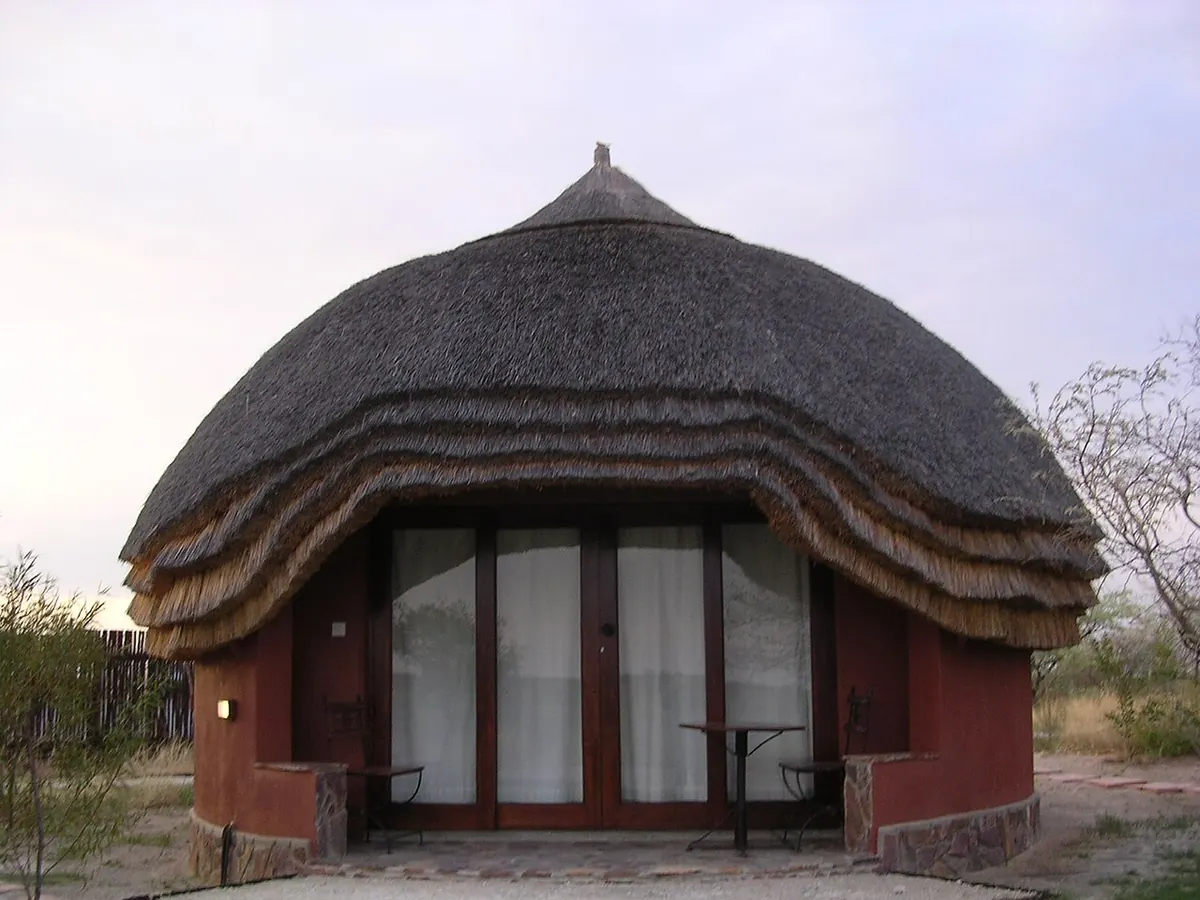

- Daily fee, international adult
- US$14 €13 · P190
- Malaria
- Khutse is in Kweneng District, one of the districts where the CDC reports only rare cases or sporadic pockets of malaria.
- Places to stay
- 12
- Where
- Kweneng District, Botswana23.56°S 24.17°E
Khutse Game Reserve fees 2026
Checked Department of Wildlife and National Parks (DWNP), Ministry of Environment and Tourism tariffValid 1 April 2022 to 31 March 2027, per person per day, in pula.
| Who | Adult | Child |
|---|---|---|
| International visitorsUS, Europe and everyone else | US$14 €13 · P190 | US$7 €6 · P95 |
| SADC nationals | P145 | P72.5 |
| Botswana citizens | P20 | P10 |
- Khutse is priced in the cheaper band, the same as the Central Kalahari it borders.
- Children under 8 enter free. From 8 they pay half the adult rate, which is the child figure shown. Where the half rate stops is not settled: one guide says it runs to 17, three others say 15, so a 16 or 17 year old may be charged as an adult.
- Vehicle fee per day, on top of the per person fee: P75 for a foreign-registered private vehicle under 3,500 kg and P20 for a Botswana-registered one. A trailer or caravan is P40 foreign, P10 local. From 3,500 to 7,000 kg it is P1,000 foreign and P500 local.
- The SADC rate is also what foreigners living in Botswana pay. The resident row here is the rate for Botswana citizens.
- On a trip run by a licensed Botswana tour operator the entry fee is lower: P135 for non-residents, P100 for residents and SADC nationals, P15 for citizens.
- Khutse's campsites (Khutse Pan, Mahurushele, Molose, Moreswe, Khankhe) are run by Bigfoot Tours, who charge their own nightly rate. Entry is still paid to DWNP.
- A rise was due on 1 April 2026 and the ministry put it off the day before. Gabz FM reported in May that it had been pushed out by two years, and a July report had the existing fees still in place. No new date had been published when I checked on 12 October 2026.
- The fees started on 1 April 2022 and have no end date. I show them as valid to 31 March 2027, the end of Botswana's financial year, and will re-check then.
- Fees are set by Department of Wildlife and National Parks (DWNP), Ministry of Environment and Tourism. Official tariff · Seen a new rate? Tell us
US$1 = P13.47 · €1 = P15.06 · £1 = P18.07 (ECB rate and the Bank of Botswana rand rate, 3 Nov 2026). Converted amounts are approximate; you pay in pula.
How we got these figures
- The child ages are not in the ministry's 2022 schedule. ChobeNationalPark.co.za gives half price for 8 to 17. Tawana Self Drive says under 16, and Cheetah Safaris and Ostrich Trails say 8 to 15. The FAOLEX copy of the 2000 regulations leaves out the footnotes to the fee schedule, so I could not settle it from the law. The child figures are half the adult rate.
- This falls in Category B of the 2022 schedule, the band for every DWNP park and reserve except Chobe and Moremi.
- SafariFind lists P500, P300 and P50 for parks in this band. Those are the proposed fees that were postponed on 31 March 2026, not what the gate charges.
- The minister described the proposal as moving the non-resident fee from P380 to P500 and the citizen fee from P30 to P50. P380 matches no entry fee in the 2022 schedule, so I have not tied the proposal to a particular park.
- Ministry of Environment, Natural Resources Conservation and Tourism, Revised User Fees and Services (the 2022 schedule, copy linked from Tourism Update) · official · checked 12 Oct 2026
- Tourism Update (23 February 2022) · one source · checked 12 Oct 2026
- travelnews.africa (2022 report of the DWNP announcement) · one source · checked 12 Oct 2026
- Tawana Self Drive, Maun (page updated 16 April 2026) · one source · checked 12 Oct 2026
- Africa Travel Essentials (24 March 2026) · one source · checked 12 Oct 2026
- ChobeNationalPark.co.za (independent park guide, updated 13 May 2026, child ages only) · one source · checked 12 Oct 2026
- Cheetah Safaris (page updated 15 January 2026, child ages only) · one source · checked 12 Oct 2026
- Ostrich Trails, Mabuasehube guide (updated 27 June 2025, child ages only) · one source · checked 12 Oct 2026
- National Parks and Game Reserves Regulations, 1 April 2000 (the fee schedule before 2022), copy hosted by FAOLEX · official · checked 12 Oct 2026
- Botswana Daily News, government news agency (24 February 2026, the proposed increase) · official · checked 12 Oct 2026
- TravelComments.com (1 April 2026, increase postponed) · one source · checked 12 Oct 2026
- Gabz FM News (5 May 2026, increase put off by two years) · one source · checked 12 Oct 2026
- Travel and Tour World (29 July 2026, existing fees stay) · one source · checked 12 Oct 2026
Khutse is the Kalahari reserve within half a day of Gaborone. Declared in 1971, it covers about 2,500 square kilometres of grassland, fossil dunes and pans in Kweneng District, and its northern edge runs straight into the Central Kalahari Game Reserve with no fence between them. The name is Sekwena for “where one kneels to drink”.
Getting there
It is about 240 km from Gaborone, under four hours. The road goes through Molepolole to Letlhakeng, 75 km further north-west, where you find the last fuel. Salajwe is another 70 km on, and people who drive the gravel before it complain about the corrugations. One convoy, written up in 2024, went round by Maboane on better gravel. The gate is roughly 40 minutes past the village. Inside it is all sand, so come in a 4x4.
You can also arrive from the north, down through the Central Kalahari from Xade. People who have driven it call it the deepest sand in the reserve and say to take two vehicles.
When to go
In the rains the pans hold water and green up, the grazers move onto them and the cats follow. In the dry months the game gathers at the pumped waterholes instead. The rains have a cost. In 2025 the ministry shut Khutse from 21 February to 11 March after heavy rain made it inaccessible. In December the sand gets hot and soft, so drop your tyre pressures.
What to do
Drive the pans. Molose and Moreswe have waterholes where water is pumped at times, and both have campsites. Moreswe is the far one. Sources put it between 64 and 80 km from the gate, and people who drive it allow three to four hours, so sleep there.
Springbok and gemsbok are the staples, giraffe are common, and lions are heard at night far more often than they are seen. One forum regular had camped here ten times without laying eyes on one. Brown hyena, leopard and cheetah live here too. A club trip written up in June 2024 watched elephants drink at Molose.
Camping is at Khutse Pan, Mahurushele, Molose, Moreswe and Khankhe, all run by Bigfoot Tours. A site is a clearing with a fireplace, a pit latrine and a bucket shower.
Good to know
Book the campsite with Bigfoot and pay the entry fee to the Department of Wildlife and National Parks (DWNP) separately. Fees are in the table on this page.
There is no fuel in the reserve and the only water is at the gate, so fill up there and bring drinking water from town. No campsite has a fence. Animals do walk through, and the operator asks for quiet between 20:00 and 06:00.
The speed limit is 40 km/h and you may not drive after the gates close. They open from 06:00 to 18:30 from April to September and from 05:30 to 19:00 from October to March.
Khutse sits in Kweneng District, where the CDC reports only rare malaria cases. It advises avoiding mosquito bites there and does not recommend tablets.
Wildlife you might see
13- likelySpringbok and gemsbok (oryx)On and around the pans. These are the two antelope the reserve holds in good numbers. All year, on the pans in and after the rainssource
- likelyGiraffeAround Khutse and Moreswe pans, where one party saw them in numbers in March 2022source
- possibleKudu, red hartebeest, blue wildebeest, steenbok and duikerAll are listed among the animals commonly seen in the reservesource
- possibleBlack-backed jackalsource
- possibleGround squirrel and meerkatPresent, in smaller numbers than in the Central Kalaharisource
- possibleLionMolose Pan has the best name for them. Most people hear them from camp at night and find tracks in the morning. One regular had camped here ten times without seeing one, while another party saw two prides on one tripsource
- possibleElephantA herd came to drink at Molose Pan during a club trip written up in June 2024source
- possibleOstrich and kori bustardOpen grassland. Both are resident. All yearsource
- possibleVisiting raptors: lesser kestrel, pallid harrier and Montagu's harrierHunting over the grassland. The two reserves together hold good numbers of these visitorssource
- rareBrown hyenaPresent and reported now and then, but shy and active at nightsource
- rareLeopardOne party watched a leopard make a kill and had a young one around camp for two nights. Another saw theirs at Moreswe, the most isolated of the panssource
- rareCheetahListed among the predators of the reservesource
- rareAfrican wild dogOne party had a good sighting in March 2022. Count it as lucksource
Likelihood is for a normal visit of two or three days, from the sources linked. Nothing is guaranteed in the wild.
Staying safe in Khutse Game Reserve
- Malaria
- Khutse is in Kweneng District, one of the districts where the CDC reports only rare cases or sporadic pockets of malaria. For those districts it advises avoiding mosquito bites and does not recommend antimalarial tablets. The Central Kalahari next door falls under Ghanzi District, where it does recommend them, so if your trip carries on north ask a travel clinic. source
- Animals in camp
- No campsite has a fence, and the operator says plainly that wild animals can walk in. Stay in your site after dark and keep quiet between 20:00 and 06:00, as the camp rules ask. source
- Park rules
- The speed limit is 40 km/h. You may not drive after the gates close: they open from 06:00 to 18:30 from 1 April to 30 September and from 05:30 to 19:00 from 1 October to 31 March. Riding on the roof or roof rack is banned. You may not walk away from the vehicle on the tracks except in an emergency such as a breakdown or getting stuck, so there are no walking trails here. source
- Rain and closed tracks
- Heavy rain can shut the whole reserve. The Ministry of Environment and Tourism closed Khutse, along with the Central Kalahari, on 21 February 2025 after heavy rain made them inaccessible, and opened them again on 11 March. If you are coming between January and March, check before you leave Gaborone. source
- Dry grass and fire
- Grass grows on the hump between the wheel ruts and packs in under the vehicle. A hot exhaust can set it alight. Stop and clear it out when the grass is tall. source
- Sand and the track north
- The track from Khutse up into the Central Kalahari towards Xade has the deepest sand in the reserve. People who have driven it say to go with at least two vehicles. In December the sand is hot and soft everywhere, so run lower tyre pressures. source
Tips from travellers
- Fill up at Letlhakeng. It is the last fuel before the reserve and there is none inside. one source
- Water comes from a borehole at the entrance gate and nowhere else. Fill your containers for washing there and bring your drinking water from town. Campsites have a pit latrine and a bucket shower but no tap. official
- Bigfoot Tours runs every campsite in Khutse, and the entry fee is paid to DWNP separately. Have both the campsite booking and the entry permit sorted before you drive out. one source
- For game, book at Molose or Moreswe. Those are the pans where water is pumped at times, so animals have a reason to come in the dry months. several sources
- Moreswe is a long way in. One regular puts it 80 km from the gate and three to four hours at 20 to 25 km/h. Do not plan it as a day trip from the campsites near the gate. one source
- The gravel before Salajwe is known for corrugations. A club convoy written up in 2024 turned off at Maboane instead and ran about 100 km of better gravel to rejoin the main route at Salajwe. several sources
Checked 12 October 2026. Conditions change, so confirm with the park or venue before you go.
Three lion prides and not enough Khutse to hold them
Sandra Ramsauer, a zoologist from the University of Zurich, collared every female in two of Khutse’s lion prides and then watched where they went. In the pride she had finished analysing, a lioness spent about a fifth of her time with no pride sister for company, even when all of them had cubs. On average they were 3.4 km apart, further than the 2.5 km at which other studies had found lions could hear one another. So she played recorded calls to them, and in those first trials they still reacted from as far as 7 km.
Regulars on the overlanding forums say you hear Khutse’s lions and do not see them. Her numbers show why. She told the resident lions apart by their whisker spots and counted three prides, averaging close to six females and two or three males, much the size of a pride in East Africa. The difference was the ground they needed. A territory came to about 1,000 square kilometres and the territories did not overlap. The reserve is 2,600. Three prides do not fit, which Ramsauer gave as one reason resident lions keep walking out of it.
A reserve made for the Bakwena’s benefit
Khutse exists because the Central Kalahari was shut. Alec Campbell, writing in 2004 on how Botswana’s parks came about, says the big reserve to the north was closed to tourists at the time and wildlife looked like a way for rural Bakwena to earn something. So in 1971 a block of Bakwena land became the second game reserve in the country set up on tribal ground. The first was Moremi. Campbell also notes that it protected the most southerly country where giraffe were still to be found.
Nobody lives inside it. People do live outside its boundary, and not all by choice: Kaudwane took about 500 of the residents the government moved out of the Central Kalahari in the 1990s. The pans are older than any of this. They are what is left of a river system that once ran north-east into the ancient Lake Makgadikgadi.
The three-year leopard study that never ended
Monika Schiess-Meier, a Swiss researcher, came in 1998 meaning to study leopards for three years and stayed. Her project, Leopard Ecology and Conservation, dates from 2000 and took on lions in 2004, once they had started killing livestock and farmers had started killing them. Its head of trackers, Pogiso Africa, was himself moved from the Central Kalahari to Kaudwane. In October 2024 he told Botswana’s Daily News they had lost four lions that year. Seven were then wearing collars.
Ramsauer and Schiess-Meier went through the wildlife department’s records of stock losses and the figures are blunt. Between 2000 and 2003 predators killed 2,272 head of livestock in Kweneng District. Leopards took the most (38%), all over the district and at any time of year. Lions took 26%, close to the reserve and in the dry months, mainly full-grown cattle. Most of the sixty farmers interviewed still said predators should be protected. Cattle left out of the kraal at night and hobbled donkeys made easy prey, so the local schoolchildren put on a play about it, a comedy, and the village turned out to watch.
Moving problem leopards into the reserve did not work. Four stock raiders were released there and none stayed put. Three are reported to have gone back to raiding and were shot outside it, and one covered 1,249 km. When the study came out in 2010 that was the longest movement on record for a leopard. So were the ranges of the three resident females it followed, which averaged 513 square kilometres.
A fence went up along the south-eastern boundary at the end of the 2000s. In 2018 Genevieve Finerty and the project’s San trackers walked stretches of it for spoor and set camera traps along it. Each camera was tested by somebody walking past pretending to be a lion. They photographed lions and leopards on the boundary, an aardvark and an African wildcat. The team also recorded a serval, nearly 200 km outside its known range.
Who broke the fence
Elephants. In July 2014 the wildlife minister told parliament that they had been coming into Kweneng since January 2013 and that the department had driven them back into Khutse and the Central Kalahari. In August 2017 another minister said elephants looking for water had been damaging the Khutse fence for two years, and that lions and hyenas were getting out through the gaps.
Campers picked up the same trail. Two July parties writing on the 4x4 Community forum in 2018 found fresh elephant spoor and dung and no elephants. A Tracks4Africa writer noted signs of them again in March 2022.
Molose in July, Moreswe in August
Read enough trip reports and cheetah come out better than the reserve’s reputation suggests. One party that spent five July nights at Molose saw them almost every day, plus a lion at the waterhole and a leopard in camp on the last night. Twice they found fresh lion tracks 30 metres from the tents, having heard nothing. In the same thread, someone who went in August called the game “almost non existent”, though a couple in that group did see a cheetah at sunrise.
Moreswe is the gamble. Jacques le Roux, who camped there in August 2013, passed two giraffe bulls and a herd of eland on the way in, then found the waterhole ringed with tracks and empty. He heard jackal and an eagle owl that night and no lions. His other surprise was a tick that came at him across the floor of the long drop. A forum member writing in 2011 had a leopard walk through camp one evening, stalk springbok grazing 70 metres off and catch one. In March 2022 the Tracks4Africa writer watched wild dogs and gemsbok square up to each other at Khutse Pan.
That writer also explains where to look: the bush is mostly thicket, so the pans are where the viewing is. A 2014 forum poster wrote of a famous Molose lion called Mexico and his pride. Nobody else in these threads mentions him, so take it as campfire talk.
In and around Khutse Game Reserve
12 places listedWhere to stay in Khutse Game Reserve 12
- 23.34°S 24.50°ECampsiteKhutse Campsite KHKHU 04
- 23.34°S 24.50°ECampsiteKhutse Campsite KHKHU 01
- 23.34°S 24.50°ECampsiteKhutse campsite KHKHU 02
- 23.34°S 24.50°ECampsiteKhutse Campsite KHKHU 09
- 23.37°S 24.62°ECampsiteKhutse South Gate Campsite
- 23.56°S 24.10°ECampsiteMareswe Campsite KH MOR 02
- 23.56°S 24.10°ECampsiteMareswe Campsite KHMOR 01
- 23.57°S 24.11°ECampsiteMareswe Campsite KHMOR 03
- 23.57°S 24.11°ECampsiteMareswe Campsite KHMOR 04
Show all 12 places to stay
- Molose Campsite KHMOS 02 · Campsite
- Molose Campsite KHMOS 03 · Campsite
- Molose Campsite KHMOS 04 · Campsite
Quick answers
How much is the entry fee for Khutse Game Reserve?
International visitors pay P190 (about US$14, €12.50 or £10.50) per adult and P95 per child per day. These rates apply from 1 April 2022 to 31 March 2027 and are set by Department of Wildlife and National Parks (DWNP), Ministry of Environment and Tourism.
Do Botswanans and SADC citizens pay less at Khutse Game Reserve?
Botswana citizens pay P20 per adult and SADC nationals pay P145 per adult per day. You need ID or a passport to get the lower rate.
When were these Khutse Game Reserve fees last checked?
We last checked them on 12 October 2026 against 13 published sources. We re-check every two weeks, but always confirm with Department of Wildlife and National Parks (DWNP), Ministry of Environment and Tourism before you travel.
What animals can you see in Khutse Game Reserve?
You have a good chance of seeing springbok and gemsbok (oryx) and giraffe. Brown hyena, leopard, cheetah and african wild dog are there but rarely seen.
Khutse and the parks nearest it
| Park | International adult | Distance | Where |
|---|---|---|---|
| Khutse Game Reserve | US$14 €13 · P190 | · | Kweneng District |
| Central Kalahari Game Reserve | US$14 €13 · P190 | 157 km | Ghanzi District |
| Kgalagadi Transfrontier Park | US$1 €1 · P20 | 277 km | Kgalagadi District |
| Khama Rhino Sanctuary | US$9 €8 · P117 | 298 km | Central District |
Guides for Khutse Game Reserve
Where the Khutse fees come from
- Ministry of Environment, Natural Resources Conservation and Tourism, Revised User Fees and Services (the 2022 schedule, copy linked from Tourism Update)
- Tourism Update (23 February 2022)
- travelnews.africa (2022 report of the DWNP announcement)
- Tawana Self Drive, Maun (page updated 16 April 2026)
- Africa Travel Essentials (24 March 2026)
- ChobeNationalPark.co.za (independent park guide, updated 13 May 2026, child ages only)
- Cheetah Safaris (page updated 15 January 2026, child ages only)
- Ostrich Trails, Mabuasehube guide (updated 27 June 2025, child ages only)
- National Parks and Game Reserves Regulations, 1 April 2000 (the fee schedule before 2022), copy hosted by FAOLEX
- Botswana Daily News, government news agency (24 February 2026, the proposed increase)
- TravelComments.com (1 April 2026, increase postponed)
- Gabz FM News (5 May 2026, increase put off by two years)
- Travel and Tour World (29 July 2026, existing fees stay)
Open data: all park fees (CSV) · JSON (CC BY 4.0)
Cite as: Travel Africa Guide, "Khutse Game Reserve fees 2026", checked 12 October 2026, https://travelafrica.guide/botswana/khutse-game-reserve/
Map of Khutse Game Reserve
See every place on this map as a list