Park · Kavango East, Namibia
Popa Falls Game Park
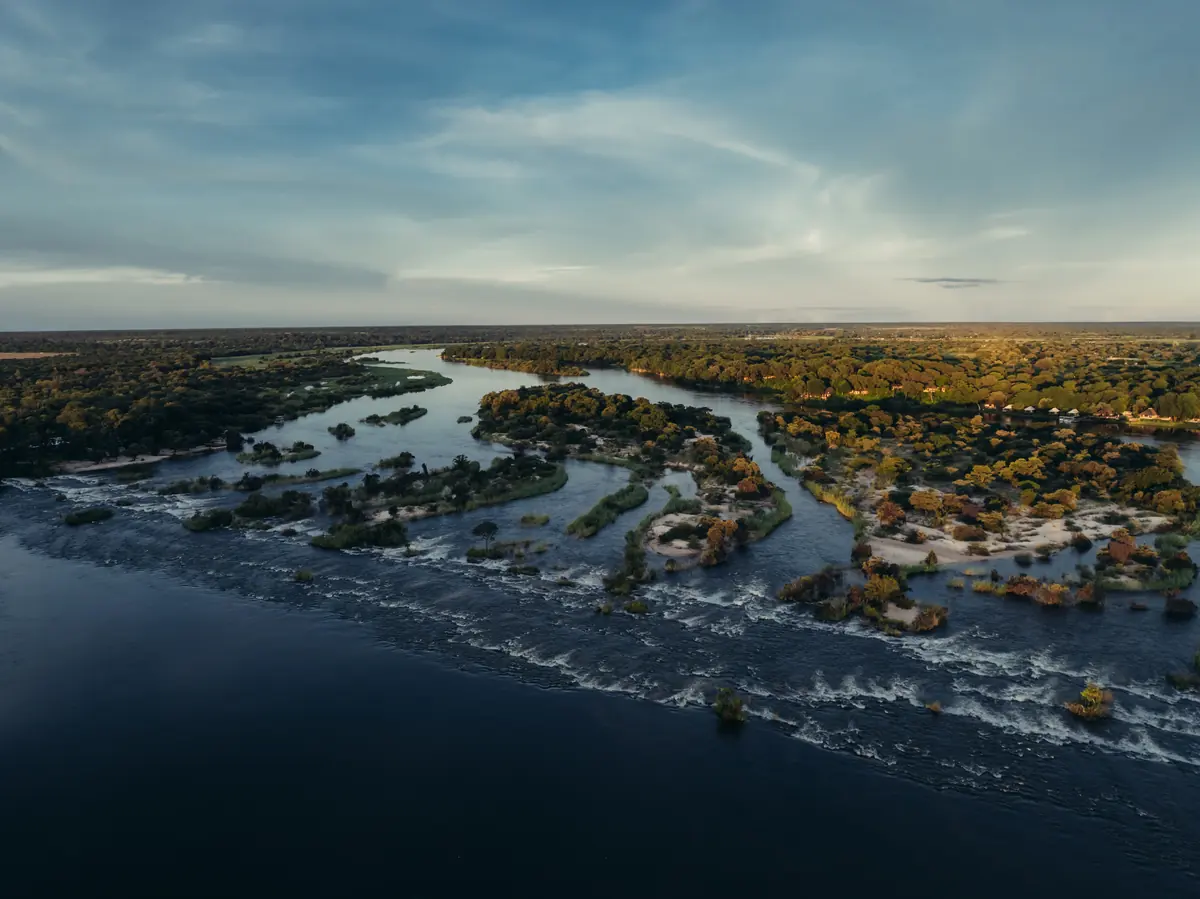
Namibia's smallest game park, a patch of riverine forest around the Popa Falls rapids on the Okavango near Divundu, with an NWR rest camp and 417 bird species.
Short answer
At Popa Falls Game Park, international visitors pay N$200 (about US$12, €11 or £9) per adult and N$150 per child per day. The rates apply from 1 April 2026 to 31 March 2027.
- Daily fee, international adult
- US$12 €11 · N$200
- Malaria
- UK travel health advice rates Kavango East, where Popa Falls lies, as high risk for malaria all year, and the CDC recommends antimalarial tablets for the region.
- Places to stay
- 1
- Park fee nearby: Bwabwata National Park
- US$12 €11 · N$200about 105 km away
Popa Falls Game Park fees 2026/27
Checked Ministry of Environment, Forestry and Tourism tariffValid 1 April 2026 to 31 March 2027, per person per day, in Namibian dollars.
| Who | Adult | Child |
|---|---|---|
| International visitorsUS, Europe and everyone else | US$12 €11 · N$200 | US$9 €8 · N$150 |
| SADC nationals | N$130 | N$80 |
| Namibian citizens | N$40 | Free |
- Children aged 8 and under enter free. The child rate is for ages 9 to 15; Namibian children in that age group pay nothing. From 16 the adult rate applies.
- Vehicle fee per day, on top of the per person fee: N$60 for 10 seats or less, N$150 for 11 to 25 seats, N$600 for 26 to 50 seats and N$1,000 for 51 seats or more.
- The Namibian rate is for Namibian citizens. The gazette sets fees by nationality, so a foreigner living in Namibia pays the rate for their nationality.
- Each fee is half park entrance fee and half conservation fee; the figures shown are the two added together.
- These fees were gazetted with effect from 1 April 2026 and have no end date. I show them as valid to 31 March 2027, the end of Namibia’s financial year, and will re-check then.
- If you stop only to walk to the rapids, Namibia Wildlife Resorts, which runs the rest camp, also charges its own day visitor fee at the resort: N$20 per person for Namibians and N$30 for everyone else (NWR's published rates for July 2026 to June 2027). That is on top of the park fee above.
- Fees are set by Ministry of Environment, Forestry and Tourism. Official tariff · Seen a new rate? Tell us
US$1 = N$16.64 · €1 = N$18.60 · £1 = N$22.31 (ECB rate, 3 Nov 2026, N$1 = R1). Converted amounts are approximate; you pay in Namibian dollars.
How we got these figures
- SafariFind prints N$60, N$40 and N$20 for these parks and lower child rates, which match neither the gazette nor the other reports; I went with the gazette.
- Government Gazette No. 8877 of 1 April 2026, Government Notice No. 115 (MEFT fee schedule), copy hosted by the Legal Assistance Centre · official · checked 7 Oct 2026
- Namibia Wildlife Resorts, Popa Falls Resort (rates, day visitor fee) · official · checked 10 Oct 2026
- Namibian.org (19 January 2026) · one source · checked 7 Oct 2026
- TravelComments.com (29 January 2026) · one source · checked 7 Oct 2026
- SafariFind · one source · checked 7 Oct 2026
Popa Falls Game Park is a scrap of riverine forest and small islands on the Okavango River (called the Kavango in Namibia), a few kilometres south of Divundu in the Kavango East Region. At 0.25 km² it is the smallest game park in Namibia, proclaimed in 1989. The falls are really rapids. A quartzite ledge runs right across the river and the water drops about four metres through a maze of channels. People stop here to break the long Caprivi drive, to watch birds and to use it as a base for Mahango.
Getting there
Divundu is about 200 km east of Rundu on the tarred B8. From Divundu the C48 runs 32 km south through Bagani to the Botswana border at Mohembo, and the turn to Popa Falls is off this road. Namibia Wildlife Resorts gives the distance from Windhoek as 922 km and from Etosha as 556 km, so break the drive. The government has announced that this border road is to be upgraded to full bitumen in phases, and when that was announced about 19 km of it was still gravel, so you may meet gravel and roadworks. Fill up in Divundu.
When to go
Between February and April the Okavango is high and the rapids are almost drowned. In the dry season the rock ledge comes out of the water, and the lowest level usually comes in the second half of October. June to October is also the best time for game in nearby Mahango, while the Namibia Tourism Board says birding there is better in the wetter months, November to March.
What to do
Walk to the rapids from the rest camp. The Rough Guide reckons you can see the whole reserve on foot in under half an hour, on raised wooden walkways and viewpoints, and warns that it will look tame if you have just come from Victoria Falls or Epupa. I would still stop. The forest is full of birds: 417 species are on the park list, including slaty egret, bat hawk, western banded snake eagle and Heuglin’s robin. The rapids are also home to two rare fish, the broadhead catfish and the ocellated spiny eel.
NWR runs morning and afternoon boat cruises and guided game drives. Angling is allowed, and tigerfish and tilapia are the fish people go for. Mahango, the western core area of Bwabwata, is about 14 km south and open to day visitors only, so most people sleep here and drive in.
Good to know
The NWR camp has river cabins, bush chalets, a family house, luxury units on the island facing the rapids and ten campsites, with a restaurant, a pool and a bar on the river. UK travel health advice rates Kavango East as high risk for malaria all year and the CDC recommends tablets, so see a travel clinic before you leave. Hippos wander through riverside camps at night and the river has crocodiles. Do not swim, and never get between a hippo and the water. Park entry is in the fee table on this page.
Wildlife you might see
10- very likelyBirds: 417 species recorded, including slaty egret, saddle-billed stork, bat hawk, western banded snake eagle, collared pratincole and Heuglin's robinThe riverine forest, islands and rapids. All yearsource
- very likelyVervet monkeyIn the rest camp and the forest around it. All yearsource
- likelyHippoIn the river above and below the rapids, and grazing on the island at night. All yearsource
- likelyNile crocodileThe river and its banks. All yearsource
- likelyGiant and malachite kingfishersAround the rest camp and on the riversource
- likelyElephant, buffalo, sable and roanNot in this small park but in the Mahango core area of Bwabwata, about 14 km south, where elephant and buffalo come to the river and sable and roan graze on the floodplain. Best in the dry seasonsource
- possibleWater monitorRiverbanks and channelssource
- possibleTigerfish, three-spot and green-headed tilapiaThe Okavango, for anglerssource
- rareBroadhead catfish and ocellated spiny eelThe rapids, an important habitat for both rare fishsource
- rareSitatungaIn Mahango, about 14 km south, not in this parksource
Likelihood is for a normal visit of two or three days, from the sources linked. Nothing is guaranteed in the wild.
Hikes and walks
1- Popa Falls rapids walk
A short walk from the NWR rest camp on raised wooden walkways and viewpoints to the rapids. Crocodiles live in the river, so keep to the walkways and stay back from the water's edge.
Permit: Inside Popa Falls Game Park; see the fee table on this page
Rough Guides, Namibia's northeast
Staying safe in Popa Falls Game Park
- Malaria
- UK travel health advice rates Kavango East, where Popa Falls lies, as high risk for malaria all year, and the CDC recommends antimalarial tablets for the region. See a travel clinic before you go, use repellent and cover up from dusk, and get any fever checked straight away, even after you are home. source
- Hippos and crocodiles
- Hippos wander through riverside camps at night and can be aggressive on land, so never get between one and the water. Crocodiles live in the river; do not swim, and give long grass on the bank a wide berth. source
- Elephants on the B8
- Fences have come down across the Kavango Zambezi transfrontier area and elephants move freely, so take care at dawn and dusk on the B8 through the Caprivi Strip. source
- The C48 to Mohembo
- The government has announced that the road from Divundu past Popa Falls to the Botswana border at Mohembo (Muhembo) is to be upgraded to full bitumen in phases. When it was announced only part of the 32 km was sealed and about 19 km was gravel, so you may meet gravel and roadworks. source
- Mahango day trips
- The Namibia Tourism Board says only a 4x4 should be used in Mahango and that at least two vehicles should travel together. Guided drives can be booked if you would rather not take your own car. source
Tips from travellers
- Come when the river is low. From February to April the rapids are almost under water; the lowest level usually comes in the second half of October, when the rock ledge stands clear. one source
- Take the NWR boat cruise, morning or afternoon. It is the best way to see the hippos, crocodiles and river birds, and the launch point moves with the river level, so ask at reception where to meet. one source
- Use Popa Falls as the base for a day visit to Mahango, about 14 km south. official
- Fill up at Divundu, the fuel stop for this stretch. Travellers on a 4x4 forum found it reliable on the whole, but one met long queues after a long weekend and another found no fuel there in 2012, so top up in Rundu as well. several sources
- If you are only stopping to see the rapids, NWR charges its own day visitor fee at the resort, N$20 a person for Namibians and N$30 for everyone else. The park's own entry fees are in the table on this page. official
Checked 10 October 2026. Conditions change, so confirm with the park or venue before you go.
A river wizard, an 1884 march and the dam that never came
On 31 August 1884 two men came out of seventeen days of dry sand ridges, reached a big baobab on a rise and saw the Okavango running about a mile below them. Aurel Schulz was a doctor, August Hammar a civil engineer, and they had walked from the Chobe. Schulz wrote that they believed they were the first white men to look at the river. Before their camp was up, a trader of part Portuguese descent called Gonsalvus hurried in with pistachio nuts and a little corn, wanting all their news.
Their book, The New Africa (1897), is full of the contempt of its time for the people it meets, and it is still the closest early picture of this stretch of river.
The chief who taxed the river
The man they had come to see lived on an island a mile long in midstream, with the river breaking over rocks on both sides of it. Schulz calls him Debabe, or Indala, and puts him at about thirty and six feet tall. The name and the place both point to Andara, some 19 km upstream of Popa. The Mbukushu king of those years is remembered as Ndara, and he lived on an island there. Catholic fathers tried to start a mission at Andara in January 1908. All three men died, two of them of blackwater fever at the station, and the mission was only made to stick in 1913.
Indala’s power was the river. He and his forefathers claimed they could make it dry up or turn poisonous whenever they liked, so the people downstream, as far as Lake Ngami, sent him corn, ivory, feathers and young women every year. The Hambukushu are still called the rainmakers of the Okavango. Schulz says he argued with the lake king against paying, and heard years later that the tribute had been held back, that the river “behaved phenomenally well” that season, and that Indala was sent a message to deflate him.
What he could not sneer at was the boating. Mbukushu men worked dugouts less than a foot wide up the slack water along the bank, then swung out and shot the rapids standing bolt upright.
When the expedition left, its first day’s march was thirteen and a half miles down the right bank, which would have taken it past Popa. All Schulz recorded was a few small cataracts, “mere unevennesses in the water”, with hippos lying in the still pools below them. People who turn off at Divundu expecting a waterfall tend to agree.
Twenty megawatts, five sites and a lot of sand
Schulz did see one thing in the low banks and the steady fall: “a mighty water power”. In 1969 a Water Affairs study named the lip of the falls as the best place for a power station. NamPower brought the idea back in December 2002 as a 20 megawatt plant, a weir right across the Okavango with the turbines built into it, at one of five sites between the falls and Andara. The lip itself was ruled out because of the rapids and the tourist trade, and by June 2004 the favoured spot was 7.3 km upstream.
Five public meetings were held in ten days in February 2003, in Windhoek, Divundu, Rundu and twice in Maun. One of the Maun meetings drew more than a hundred people, and the worry there was sand. The Okavango carries its sediment down into the delta, a weir would hold it back, and Botswana said so. Upstream, the backed-up water would have drowned islands and riverbank fields.
NamPower’s chief technical adviser, Reiner Jagau, said the company would not go on if the damage could not be reduced. The assessment went out for comment in June 2004, with a copy left at Popa Falls itself. By 2012 it was off NamPower’s list of planned stations, and in 2014 Botswana’s chief water engineer told the Daily News that the study had found it not feasible and that it had been abandoned. There is no weir.
Mesh walls, and a boy taken by a crocodile
The rest camp is older than the park. Annabelle Venter, writing in Travel News Namibia in 2014, says hunters were using it in the 1970s. She first stayed in the 1980s, when the road between Rundu and Katima Mulilo was still gravel. She remembers windowless bungalows with open mesh for walls, no electricity, mice and bats. The 2013 rebuild did away with all of it.
Her best story is about an old hunter who turned up asking after a boy from the 1970s. Two brothers were walking by the river when a crocodile took the younger one by the leg. The hunter went into the water after it, shot it and pulled the child out, and decades on he wanted to know what had become of him. The manager later confirmed the man was alive and living nearby. The story rests on her telling alone.
Hippos by ear
What Venter heard through the mesh in the 1980s was hippos and owls. A family who stayed 2 km downstream in August 2022 told a British tour operator the noise of the hippos overnight was amazing. More than thirty years apart, same report.
Seeing them is nearly as sure. Of the travellers at that lodge who have sent in sightings since 2018, almost nine in ten ticked hippo. Venter’s cruise ran two hours, down to Divava village and back to the rapids for sunset, with a boatman, Claus Kapinga, who had worked 25 years at the lodge next door.
The same travellers’ lists show sable for four in five and elephant for three in five. None of that is at the falls. It comes from drives into Bwabwata.
The oddest resident is one you will not see. Of the five animals the ministry names for the park, two are fish. One is the broadhead catfish, which science only described in 1965. It grows to just under 30 cm, hunts other fish and lives in rocky rapids on big rivers. The 1969 plan would have put a power station on the lip of its rapids.
In and around Popa Falls Game Park
2 places listedWhere to stay in Popa Falls Game Park 1
- 18.12°S 21.58°EHotelPopa Falls Resort+264 66 259 023nwr.com.na
Restaurants and cafes 1
- Bar CafeCafe
Quick answers
How much is the entry fee for Popa Falls Game Park?
International visitors pay N$200 (about US$12, €11 or £9) per adult and N$150 per child per day. These rates apply from 1 April 2026 to 31 March 2027 and are set by Ministry of Environment, Forestry and Tourism (MEFT).
Do Namibians and SADC citizens pay less at Popa Falls Game Park?
Namibian citizens pay N$40 per adult and SADC nationals pay N$130 per adult per day. You need ID or a passport to get the lower rate.
When were these Popa Falls Game Park fees last checked?
We last checked them on 10 October 2026 against 5 published sources. We re-check every two weeks, but always confirm with Ministry of Environment, Forestry and Tourism (MEFT) before you travel.
What animals can you see in Popa Falls Game Park?
Most visitors see birds: 417 species recorded, including slaty egret, saddle-billed stork, bat hawk, western banded snake eagle, collared pratincole, heuglin's robin and vervet monkey. You have a good chance of seeing hippo, nile crocodile, giant, malachite kingfishers, elephant and buffalo. Broadhead catfish, ocellated spiny eel and sitatunga are there but rarely seen.
Popa Falls Game Park and the parks nearest it
| Park | International adult | Distance | Where |
|---|---|---|---|
| Popa Falls Game Park | US$12 €11 · N$200 | · | Kavango East |
| Bwabwata National Park | US$12 €11 · N$200 | 105 km | Zambezi |
| Khaudum National Park | US$12 €11 · N$200 | 113 km | Kavango East |
| Mudumu National Park | US$12 €11 · N$200 | 210 km | Zambezi |
Where the Popa Falls Game Park fees come from
- Government Gazette No. 8877 of 1 April 2026, Government Notice No. 115 (MEFT fee schedule), copy hosted by the Legal Assistance Centre
- Namibia Wildlife Resorts, Popa Falls Resort (rates, day visitor fee)
- Namibian.org (19 January 2026)
- TravelComments.com (29 January 2026)
- SafariFind
Open data: all park fees (CSV) · JSON (CC BY 4.0)
Cite as: Travel Africa Guide, "Popa Falls Game Park fees 2026/27", checked 10 October 2026, https://travelafrica.guide/namibia/popa-falls-game-park/
Map of Popa Falls Game Park
See every place on this map as a list