Town · Kunene, Namibia
Opuwo
The capital of Kunene and the only real town in Kaokoland, where Himba, Herero and Dhimba people share the main street and travellers fill up before Epupa and the far north-west.
Short answer
Opuwo is in Kunene, Namibia. This page lists 10 places to stay, 3 places to eat and drink and 1 sight.
- Malaria
- Kunene is one of the Namibian regions where the CDC says malaria is present, and it recommends preventive tablets for travellers going there.
- Places to stay
- 10
- Eat and drink
- 3
- Sights
- 1
In and around Opuwo
14 places listedWhere to stay in Opuwo 10
- 18.05°S 13.84°EHotelABBA GuesthouseMbumbijazo Muharukua Avenue, Opuwo+264 65 273 155abbaguesthouse.com
 CampsiteOpuwo Country Lodge CampsiteOpuwo
- 18.06°S 13.84°EHostelAameny Lodge+264 65 273 572
- 18.06°S 13.84°EHostelANNA FLATEpupa Street
- 18.06°S 13.84°ECampsiteAameny Campsite
- 18.08°S 13.88°EGuest houseKaoko Mopane Lodge and Campsite
- 18.06°S 13.84°EHotelOhakane Lodge
- 18.06°S 13.84°EGuest houseProsperous Guesthouse
Show all 10 places to stay
- Riconjera · Guest house
Sights 1
- Opuwo Cultural CentreMuseum
Restaurants and cafes 1
- KAOKOLAND RESTAURANTRestaurant · regional, pizza, chicken, steak house, fish and chips, pasta · Doctor Sam Nujoma Avenue, Opuwo
Bars and pubs 2
- ArsenalBar
- OkitiBar
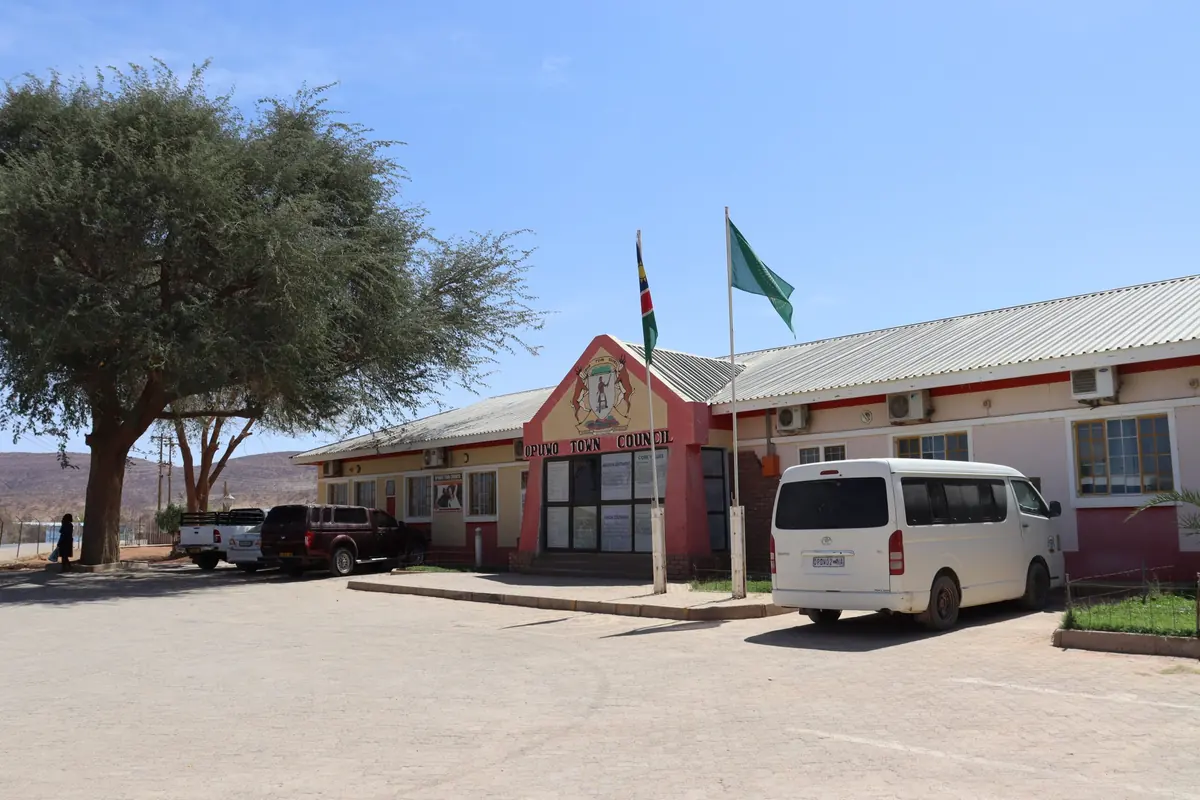
Opuwo is the capital of the Kunene Region and the only proper town in Kaokoland, Namibia’s remote north-west. Nobody drives this far for the town itself. People come because it has the last fuel, banks and big supermarket before Epupa and the tracks to the Marienfluss and Hartmann valleys, and because Himba, Herero and Dhimba people all do their shopping in the same few streets. The 2023 census counted 12,331 people here, and the town is growing fast.
Getting there
Opuwo is about 720 km north-north-west of Windhoek and the road is tarred the whole way, so an ordinary car will get you here without trouble. The C41 is also tar, running 224 km east to Oshakati. North of town the C43 to Okangwati and Epupa, roughly 180 km, is gravel. Work to tar it started in November 2025 with the first 75 km to Otjivize, a 28 month contract, so expect roadworks. The road south to Sesfontein is the one route in Kaokoland usually passable without a 4x4. Most others need one. There is a small airfield, but public transport in Kaokoland is next to non-existent, so nearly everyone comes by car.
When to go
The dry months are the easy ones. When the rains come, rivers across Kaokoland flood and the tracks turn to mud that can stop a strong 4x4, so leave slack in any plan that goes north or west of town. If you are here in May you may catch the Opuwo Trade Fair, which the town council has run since 2012, a business show with cultural performances and live shows.
What to do
Most visitors come for one thing, a visit to a Himba homestead with a local guide. The Opuwo Cultural Centre on the C41, just before the town centre, sells tours, and guesthouses and lodges can put you in touch with independent guides. Few Himba in traditional dress speak English, and a local guide is what turns a photo stop into a conversation. Food from town is a more useful gift to a village than money, so buy some groceries before you set off. Back in town, Himba women sell jewellery and dolls in the street, mostly outside the OK supermarket. Opuwo is also the base for the drive to Epupa Falls and for 4x4 trips into the Marienfluss and Hartmann valleys.
Good to know
Fill the tank and every jerry can here. There is no filling station north or west of Opuwo, and village shops further on sell only basics, so stock up on food and water too. Draw cash, and use the internet while you can, since this is the last decent connection before Kaokoland proper. Kunene is a region where the CDC recommends malaria tablets, and the CDC also lists it as an area with recent cholera cases, so stick to bottled or treated water. The district hospital and a private pharmacy can deal with most problems. Always ask before you photograph anyone, never photograph people in front of their huts, and do not hand sweets or money to children who ask for them.
History and culture
Opuwo began as a colonial government office, named in the 1920s, and grew into the capital of Kunene and the only town in Kaokoland. It was the capital of the apartheid-era Kaokoland homeland and a base for South African forces in the liberation war, and today Himba families from the homesteads around it come in to shop, see a doctor and sell their crafts.
- 1800s
Before colonial rule Kaokoland was home to Herero, Ovambo and Nama people. In the second half of the 1800s a group of Herero crossed the Kunene into what is now Angola, and the Himba (Ovahimba) of today are descended from them. source
- 1884
Kaokoland became part of German South West Africa. Herero people further south changed much of their way of life and dress under German rule, while the Himba in the remote north kept their herding traditions. source
- 1904 to 1908
German forces carried out the genocide of the Herero and Nama. Between 40,000 and 80,000 Herero, about 80 percent of them, and some 10,000 Nama died. Around 1,000 Herero escaped north to the Ovambo kingdoms. source
- 1925 to 1939
After the First World War South Africa ran the territory under a League of Nations mandate. Kaokoland was first governed from a police post at Swartbooisdrift on the Kunene from 1925 to 1939, after which the administration moved to Ohopoho, the place that became Opuwo. source
- 1974
Ohopoho was respelt Opuwo after a reform of Otjiherero spelling. Some residents still call the town by its other name, Otjihinamaparero. source
- 1980 to 1989
Under apartheid, Kaokoland was made a Bantustan, a homeland meant to govern itself, for the Himba, with Opuwo as its capital. No government was ever set up there and the leaders of Hereroland ran it instead. Like the other homelands it was abolished in May 1989. source
- 1980s
During the liberation war Koevoet, the South African police counter-insurgency unit, had one of its two regional headquarters in Opuwo, the other being at Rundu. source
- 1980s
A severe drought killed about 90 percent of Himba livestock. Many Himba gave up herding and became refugees in Opuwo, living on humanitarian aid, while others joined Koevoet. source
- 1989 to 1990
After years as a South African military base, the town was built up by UNTAG, the United Nations force that oversaw Namibia's move to independence in 1990. source
- 2013
On 25 March 2013 more than a thousand Himba and Zemba people marched through Opuwo to protest against a planned dam on the Kunene in the Baynes Mountains and the lack of recognition for their traditional chiefs. source
- Language
- Across Kunene, the 2023 census found Otjiherero was the main home language in 37.7% of households and Khoekhoegowab, the Damara and Nama language, in 27.3%. Otjihimba came next at 8.1%, then Oshikwanyama at 5.3% and Oludhimba at 4.8%. English was the home language in only 1.7%. source
- People
- Himba families from the homesteads round Opuwo come into town to shop, and you will see them in the supermarket alongside everyone else who lives here. source
- Otjize
- Himba women cover their skin and hair in otjize, a paste of butterfat and red ochre. It keeps the skin clean where water is scarce and protects it from the hot, dry climate and from insect bites. source
- Opuwo Trade Fair
- Every May since 2012 the Opuwo Town Council has run the Opuwo Trade Fair, a business show mixed with cultural performances and live shows. source
For German visitors: The man who named Opuwo, Carl Hugo Linsingen (Cocky) Hahn, was the grandson of Carl Hugo Hahn, a Baltic German missionary who trained with the Rhenish Missionary Society in what is now Wuppertal. The elder Hahn helped set up the first Rhenish mission to the Herero and is known for his work on the Otjiherero language. source
For German visitors: The long dresses Herero women wear, called ohorokova, are based on the floor-length gowns German missionaries wore in the late 1800s. Today they are made in bright colours and prints, and married and older women wear them every day. source
For German visitors: In 2021 Germany and Namibia reached a deal over the genocide of the Herero and Nama, under which Germany would pay 1.1 billion euros as development aid while rejecting any legal responsibility. The deal is controversial. source
Main sights in Opuwo
4- Opuwo Cultural Centre
On the C41 just before the town centre, where you can book a guided visit to a Himba homestead. It is the simplest way to arrange one, though travellers say independent local guides cost less.
Wandering Wheatleys - Himba homesteads
Go with a local guide, since few Himba in traditional dress speak English. Speak to the head of the homestead first, and ask before taking any photograph.
Wikivoyage: Kaokoland - Dorsland trekker ruins at Kaoko Otavi
Afrikaans-speaking trekkers from the Transvaal on their way to Angola camped at Kaoko Otavi, Rusplaas (Otjitundua) and other springs from May 1879 to October 1880. Ruins of their camps, among them a church near Kaoko Otavi, were still standing in 2010.
Wikipedia: Dorsland Trek - Swartbooisdrift
The river crossing on the Kunene that was Kaokoland's first administrative centre, from 1925 to 1939, before the office moved to Opuwo. The Dorsland trekkers crossed into Angola here in 1881, and a monument to them stands on a hill just outside the settlement.
Wikipedia: Swartbooisdrift
Did you know?
- Opuwo's old name, Ohopoho, means it is enough. In the 1920s the colonial commissioner Cocky Hahn asked the local headman for a plot to build an office on, and when the headman offered more land Hahn said it was enough. source
- Opuwo Urban, the constituency around the town, grew by 85.4% between the 2011 and 2023 censuses, the fastest of any constituency in Kunene. Opuwo Rural next door grew by only 3.7%. source
- The town grew from 5,101 people in 2001 to 7,657 in 2011 and 12,331 in 2023. source
- Kaokoland has about one person for every 2 km², a quarter of Namibia's average, and Opuwo is its main settlement. source
- After the 2020 local elections Rosa Kamutuua Tjeundo of the Popular Democratic Movement became the first woman to be mayor in Opuwo's history. source
Checked 7 October 2026.
Staying safe in Opuwo
- Malaria
- Kunene is one of the Namibian regions where the CDC says malaria is present, and it recommends preventive tablets for travellers going there. Windhoek has no malaria. See a travel clinic before you leave home and take care to avoid mosquito bites. source
- Cholera and drinking water
- The CDC lists Kunene as one of two Namibian regions with recent cholera transmission, with the last case reported six to nine months before its latest update. It is rare in travellers, but drink bottled or treated water and wash your hands before eating. source
- Roads north of town
- The C43 north to Okangwati and Epupa is gravel. Work to tar it began in November 2025 with the first 75 km to Otjivize, a 28 month job, so expect detours and construction traffic on that stretch. source
- Rainy season driving
- In the rains, rivers in Kaokoland can flood and the mud can trap even a strong 4x4. If a river is running, wait for it to drop rather than drive in, and carry a tow rope, a shovel, extra water and food. source
- Remoteness
- Beyond Opuwo help is a long way off. Leave your route with someone, ideally your guesthouse, and take a satellite phone if you are heading into the far north-west. source
Tips from travellers
- Fill up in Opuwo. There is no filling station north or west of town, and it is also where you draw cash and stock up, because village shops further on sell only basics. several sources
- Use the internet in Opuwo. Phone signal covers the town, but heading on into Kaokoland this is the last place with a usable connection. one source
- Visit a Himba homestead with a local guide rather than on your own. The Opuwo Cultural Centre on the C41 sells tours and is the easy option, independent guides cost less, and you may be asked to buy groceries in town to take to the village as a gift. one source
- Ask before every photograph, through your guide, and never photograph people in front of their huts. The homestead is private space, and people may want to dress properly first. several sources
- For Himba jewellery and dolls, look for the sellers on the street in town, most of them outside the OK supermarket. several sources
- Do not hand out sweets or money to children who ask. Give something only when a child has actually helped you, for example by opening a gate. several sources
Checked 7 October 2026. Conditions change, so confirm with the park or venue before you go.
The office town that sat inside a game reserve
In 1956 the Sunday Times in Johannesburg ran a story under the headline “Slaughter of game in Africa’s Largest Reserve Alleged”. The reserve was Game Reserve No. 2, and the awkward part was that, by the article’s count, 6,000 people and their cattle lived in the northern part where most of the game was. They were governed from the commissioner’s office at Ohopoho, now Opuwo. For some twenty years this town was the head office of a native reserve that was also, on paper, a game reserve.
Lions were the commissioner’s problem
The Kaokoveld had been inside Game Reserve No. 2 since the Germans drew it in 1907. In 1947 South Africa proclaimed the Kaokoland Reserve on top of it without taking the game status away, and ran the lot from Ohopoho. A Cape wildlife man, Dennis Woods, came back from a museum expedition saying prospectors were shooting what they liked and that the Kaokoveld was the best part of the only game reserve worth having in South West Africa. The answer he got was that it was a native reserve first, and that officials had a duty to protect the people in it from lions.
The idea of making a park of it was not new. In 1928 Cocky Hahn travelled to the Kunene near Ruacana and named an old Himba hunter, the headman Ikandwa, as an unofficial warden. He told his superiors the river country could outdo Kruger. The Odendaal Commission, which reported in 1963, wanted the game status gone, and by the early 1970s Kaokoland was a homeland with no conservation law of any kind. Headmen had been issued strychnine and rifles against predators. The administration handed out thousands more rifles once the war reached the north-west, and the poaching that followed was not only local. Officials and soldiers were in it too.
One man who knew the country before all that was Garth Owen-Smith, who worked in the Kaokoveld as an agricultural supervisor in the 1960s and was made to leave in 1970. He came back in 1982, built a network of game guards with the headmen, and lost his funding three years later when the authorities called him a Swapo supporter. His book An Arid Eden is the one to read before driving north.
Three hundred boreholes, and a pass cut by hand
What changed the country around Opuwo most was water. A Sergeant Basson sank the first borehole here, and was known locally as Katjiriamakaja, the tobacco eater. In 1954 the office that recruited contract workers in Opuwo shut for lack of takers, and the administration decided the future was cattle. Forty-three boreholes went down in the 1950s, every one of them around the town or south-east of it, where officials could reach. The 1960s added 136 and the 1970s another 128.
One of the commissioners in those years was Ben van Zyl. In the 1960s he had twenty men cut a track down the escarpment toward the Marienfluss by hand, in four months, and Van Zyl’s Pass still carries his name. His son Japie, born at Outjo in 1957, ended up running solar system exploration at NASA’s Jet Propulsion Laboratory. When the Ingenuity helicopter made its first flights on Mars in 2021, a spot at the site was named Van Zyl Overlook after him.
Elephants that walk up mountains
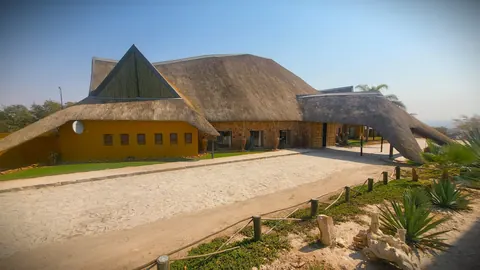
Opuwo is not a game stop. The two travellers who logged sightings for a tour operator at the hilltop lodge in 2019 recorded no animals, and one added that they had not gone out on a drive. The animals are in the broken country to the south, the highlands that run down toward the western end of Etosha, with peaks up to 1,800 metres.
Elephants live there among Herero villages, and they climb. Researchers who walked with community game guards in 2021 and 2022 found dung on ridge tops and on a 4x4 track they put at one in three or steeper. The guards say the herds go up for star-chestnut and corkwood on the rocky slopes, and that they can tell a hill elephant’s spoor because the soles are smoother. From June to December the herds keep to the hills by day and come to village water points on some nights. In the rains they come in far less often. So for someone driving the hill roads toward Sesfontein in the dry months, the odds of an elephant in daylight are poor. The researchers’ figure for the whole north-west is only about 300.
They were here long before the boreholes. On Georg Hartmann’s expedition of 1895 and 1896 the Swedish navy captain Eberhard Rosenblad sat up on a moonlit night at the water near Kaoko Otavi, south-west of today’s town, and shot two bulls as the herd finished drinking. Both had broken tusks. He called it unsporting and wrote that the party agreed never to hunt that way again. Major Manning’s patrol of 1917 was already warning headmen against killing elephants, and Manning called it lion country. What takes stock in the highlands now, going by the guards’ record books in one conservancy, is mostly spotted hyena, cheetah and leopard.
One more animal left by road. The black-faced impala in Etosha today come from animals caught in northern Kaokoland, most of them near the Kunene. In 1971 a capture team worked Enyandi, on the river upstream of Epupa, with a helicopter and drop nets, then trucked the impala over bad roads to the western end of the park in crates fitted with fans.
A staging post with a film star
Visitors who write about Opuwo treat it as a stop on the way to somewhere else. A couple heading for Epupa in 2016 called it a staging post and not very attractive, then praised the view from the hill above it as the surprise. A New Zealand pair in 2019 also wrote about the view. One Danish couple who came through in the dry August of 2019 wrote of dust everywhere and dead trees along the road up.
Hardly any of them mention that one of the best-known babies in cinema is from here. Ponijao, a Himba girl, is one of the four infants the French director Thomas Balmès followed through their first year in his 2010 documentary Babies, alongside children in Mongolia, Tokyo and San Francisco. Early in the film her mother rubs red ochre over her belly before the birth.
Map of Opuwo
See every place on this map as a list